
# Professional Plant Health Care in East Bridgewater, Massachusetts
Homeowners in East Bridgewater, MA 02333 face unique challenges keeping their trees healthy amid the town's semi-rural landscape, wetland corridors, and established neighborhoods like Elmwood, Joppa, and Cochesett. Your white pines towering over postwar lots, red oaks shading Washington Heights driveways, and sugar maples lining Prospect Hill streets demand specialized plant health care to thrive in Plymouth County's variable climate. Southeast Arborist, LLC, based in Plymouth and Cohasset, delivers ISA-certified plant health care programs tailored to South Shore Massachusetts properties, including East Bridgewater.
Plant health care East Bridgewater MA goes beyond basic pruning—it's a proactive strategy involving pest management, disease treatment, deep root fertilization, and trunk injections. Our ISA Certified Arborists follow ANSI A300 standards to diagnose issues like root destabilization near the Satucket River or overhead utility conflicts on residential streets in Brookside. With a population of 14,800, East Bridgewater's dense canopy of white pine, red oak, white oak, sugar maple, red maple, American beech, black cherry, and yellow birch regenerated after colonial-era deforestation and agricultural use. Today, these trees contend with oversized growth on aging lots, saturated soils undermining roots, and invasive pests threatening heritage specimens near the town center.
At Southeast Arborist, we customize plant health care programs for your property using integrated pest management (IPM), minimizing chemical use while maximizing tree vitality. Common treatments target spongy moth and winter moth outbreaks defoliating red maples in Joppa, emerald ash borer in nearby ash stands, and hemlock woolly adelgid impacting conifers along wetland edges. Deep root fertilization addresses nutrient deficiencies in East Bridgewater's sandy loam soils, prevalent in upland areas like Prospect Hill.
Safety protocols ensure our crews use aerial lifts and rigging systems compliant with OSHA standards, protecting your home, garage, and family during treatments. Whether your American beech in Elmwood shows dieback or black cherry in Cochesett battles borers, our approach extends tree lifespan, reduces liability from failing branches, and enhances curb appeal on moderate-sized lots. East Bridgewater's history ties back to the original Bridgewater settlement, where 19th-century sugar maples and American elms still stand as heritage trees—we maintain them with precision trunk injections and soil care.
Investing in plant health care East Bridgewater MA prevents costly removals. Homeowners along the Satucket River corridor often request hazard assessments after heavy rains expose destabilized roots in white oaks. Our programs start with a free site evaluation, leading to annual plans that monitor your trees year-round. Call Southeast Arborist at 508-369-5009 to schedule your consultation and safeguard your landscape legacy.
Why East Bridgewater Properties Need Plant Health Care
East Bridgewater's semi-rural setting in Plymouth County exposes trees to specific stressors that necessitate professional plant health care. Wetland corridors along the Satucket River saturate soils, destabilizing roots in species like white pine and red oak common on postwar lots in Elmwood and Joppa. Your property's white pines, often oversized from decades of unchecked growth, overhang garages and power lines, creating hazards during winter storms fueled by the region's nor'easter-prone climate.
Local soil conditions—sandy loams with low fertility in upland neighborhoods like Prospect Hill and Washington Heights—starve trees of nutrients. Sugar maples and red maples here suffer chlorosis from iron deficiencies, their leaves yellowing by midsummer. American beech trees near the town center, some dating to the 19th century, face beech bark disease, where scale insects and fungi cause cankers that weaken trunks. Black cherry and yellow birch in Brookside woodlands battle tent caterpillars and borers, exacerbated by the town's humid summers averaging 70-80°F with 45 inches of annual rainfall.
Climate shifts amplify these issues: warmer winters allow winter moth populations to surge, defoliating young red oaks in Cochesett. Spongy moth (formerly gypsy moth) outbreaks peak every 7-10 years, stripping white oaks bare and stressing their root systems already compromised by nearby wetlands. Overhead utility conflicts plague residential streets in Washington Heights, where low branches from yellow birch rub against lines during ice storms.
East Bridgewater's reforestation history means many trees form a dense canopy over neighborhoods, but aging postwar lots limit space for root expansion. White oaks near the Satucket develop girdling roots from compacted fill soil, leading to lean and failure. Emerald ash borer, though less common locally, threatens hybrid ashes in mixed stands, requiring vigilant trunk injections. Hemlock woolly adelgid infests eastern hemlocks along river edges, causing needle drop and branch dieback.
Without plant health care East Bridgewater MA, these problems escalate. Homeowners notice signs like wilting leaves on sugar maples in Prospect Hill or excessive sap from black cherry borer galleries in Joppa. Proactive IPM identifies issues early: soil tests reveal pH imbalances (often 5.5-6.5 locally), prompting deep root fertilization with micronutrients. Disease treatments, like fungicides for anthracnose on red maples, follow ANSI A300 specifications.
Practical advice for East Bridgewater residents: Inspect your trees monthly for bark cracks in white oaks or webbing on yellow birch. Mulch 3-4 inches deep around bases, keeping it 6 inches from trunks to prevent rot in humid conditions. Avoid fertilizing surface roots near wetlands, as it promotes shallow growth vulnerable to flooding. Our ISA Certified Arborists at Southeast Arborist assess these risks with resistograph testing for internal decay in American beech.
Nearby towns like Bridgewater and West Bridgewater share similar challenges, but East Bridgewater's unique mix of heritage trees and wetland proximity demands customized care. Untreated pests like winter moth can defoliate 50-70% of canopy, reducing photosynthesis and weakening trees against drought spells common in July-August. Plant health care restores vigor, ensuring your landscape withstands Plymouth County's Zone 6b hardiness with lows to -5°F. Schedule with us to protect your investment.
Our Plant Health Care Process in East Bridgewater
Southeast Arborist's plant health care process in East Bridgewater follows a structured, science-based protocol tailored to local trees and conditions. We begin with a **site evaluation** on your property in neighborhoods like Elmwood or Brookside. An ISA Certified Arborist arrives equipped with soil probes, increment borers, and anemometers to assess wind loads on white pines overhanging your home.
Step 1: **Diagnosis**. Using ANSI A300 tree risk assessment standards, we map your trees—red oaks in Joppa, sugar maples in Prospect Hill—identifying pests via magnification lenses. For spongy moth on white oaks, we count egg masses; winter moth gets pheromone traps. Soil augers sample sandy loams near Satucket wetlands, testing pH, compaction, and nutrients. Resistographs detect decay in American beech trunks.
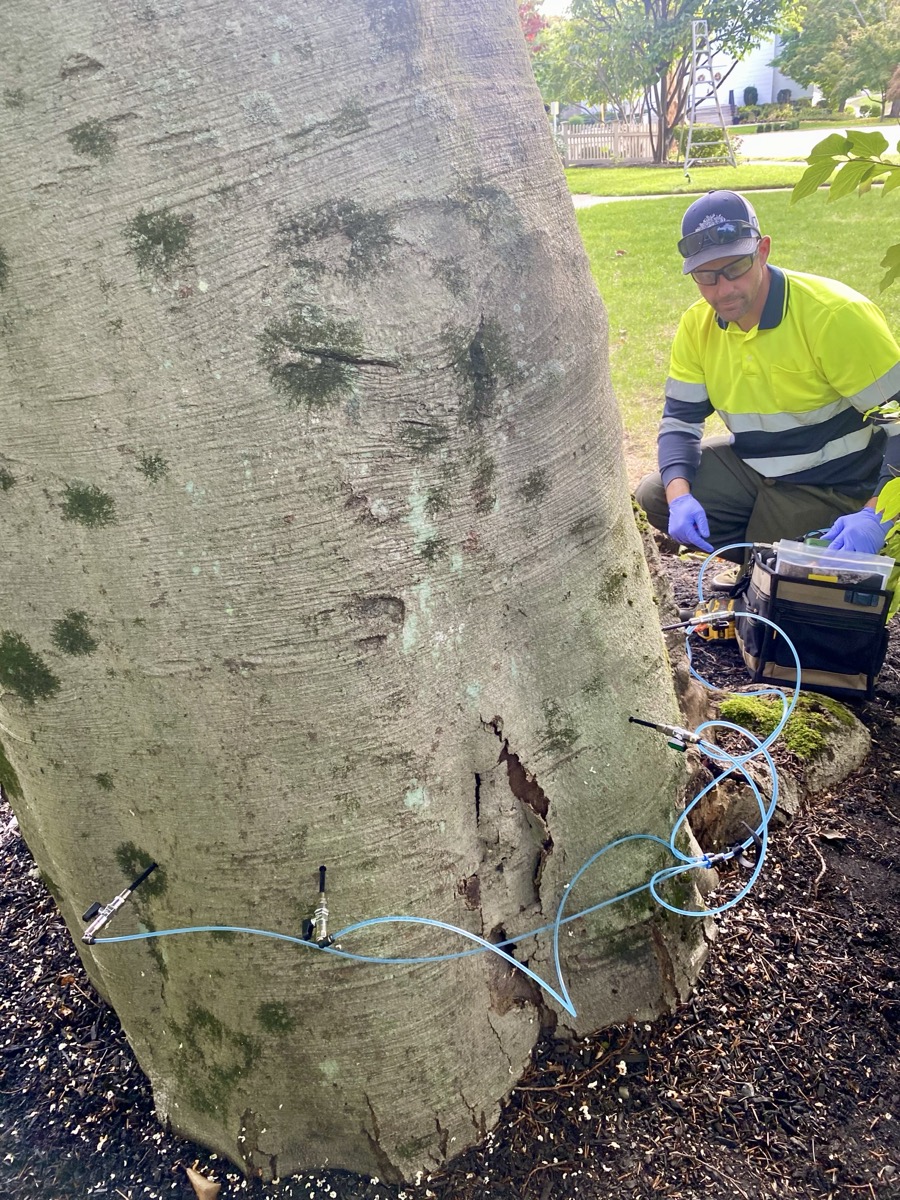
Step 2: **Custom Program Design**. Based on findings, we create an IPM plan. Deep root fertilization uses high-pressure injectors (300-500 psi) to deliver nitrogen, phosphorus, and iron 8-12 inches below grade, ideal for root-destabilized red maples in Cochesett. Trunk injections for emerald ash borer employ Arborjet systems, injecting imidacloprid directly into vascular tissue of ash hybrids near Washington Heights.
Step 3: **Treatment Application**. Our crews deploy macro-infusion for hemlock woolly adelgids, treating 1,000+ trees annually across South Shore MA. Spongy moth control involves BTK (Bacillus thuringiensis) sprays timed for larval hatch in May-June, minimizing impact on beneficial insects. Disease management for beech bark disease uses phosphite injections to boost tree defenses. All applications comply with Massachusetts Pesticide Bureau regulations, with safety protocols including PPE, spill kits, and 50-foot buffers from water bodies.
Step 4: **Monitoring and Follow-Up**. We install data loggers on high-risk white pines to track growth and health metrics quarterly. Annual reports detail progress, like 20-30% vigor increase post-fertilization in yellow birch. Equipment includes EAB detectors, soil moisture meters, and drones for canopy analysis over dense Prospect Hill lots.
Techniques prioritize minimal disruption: Radial trenching aerates compacted soils around black cherry without damaging roots. Soil care incorporates mycorrhizal fungi inoculants, enhancing water uptake in wetland-adjacent properties. For utility conflicts in Brookside, we integrate crown thinning with health treatments.
Safety is paramount—our climbers use ANSI Z133 harnesses and rescue-trained spotters. In East Bridgewater's wet springs, we schedule around nor'easters, using weather apps for real-time updates. This process yields measurable results: treated sugar maples regain full leaf-out, reducing energy costs by 10-15% through shading.
Homeowners benefit from transparent pricing and guarantees—retreatments if efficacy falls below 85%. Our Plymouth/Cohasset base ensures rapid response, often same-week for urgent winter moth in Joppa. Practical tip: Water deeply (1 inch/week) during treatments to activate root fertilizers. This end-to-end approach defines plant health care East Bridgewater MA. Contact Southeast Arborist at 508-369-5009 for your program.
Common Plant Health Care Projects in East Bridgewater Neighborhoods
In Elmwood, white pines dominate postwar lots, requiring crown cleaning and spongy moth treatments to prevent defoliation over homes. Homeowners here request deep root fertilization after noticing needle scorch from sandy soils.
Joppa properties along wetland edges face root destabilization in red oaks; we perform hazard assessments and trunk injections for borers, stabilizing trees before Satucket floods. Sugar maples get anthracnose sprays in spring.
Cochesett sees winter moth outbreaks on red maples shading garages—our BTK applications and monitoring traps restore canopy density. American beech treatments target bark disease with systemic injections.
Brookside's yellow birch along residential streets conflict with utilities; integrated IPM includes adelgid control for nearby hemlocks and soil amendments for nutrient-poor uplands.
Washington Heights features oversized white oaks leaning from compacted fill—deep root feeding and cabling complement health care, averting failures during ice storms.
Prospect Hill's heritage sugar maples near town center demand precise phosphite injections for verticillium wilt, preserving 19th-century specimens.
Common across East Bridgewater: Stump grinding follows hazard removals, but prevention via PHC saves costs. Black cherry in mixed stands gets borer injections. Our ISA arborists tailor projects to each neighborhood's microclimate—wetter Joppa vs. drier Prospect Hill.
Plant Health Care Costs in East Bridgewater, MA
Plant health care costs in East Bridgewater, MA vary by property size, tree count, and issues. A basic annual program for 5-10 mature trees (white pine, red oak) starts at $450-$750, covering two visits for monitoring and fertilization.
Factors influencing price: Site access in Elmwood's narrow streets adds $100 for specialized equipment. Wetland proximity in Joppa requires $150 environmental buffers. Tree species matters—emerald ash borer injections for one ash cost $200-$350/tree; hemlock woolly adelgid treatments run $25-$40/inch DBH.
Deep root fertilization averages $5-$8 per injection point (12-18 per tree), delivering value through 20-30% growth boosts. Spongy moth or winter moth sprays: $300-$600 per acre, far less than $2,000+ removal.
Custom programs scale: Small Brookside lots (under 0.5 acre) $400/year; larger Washington Heights properties $1,200+. Initial diagnosis: Free for South Shore clients.
Value proposition: PHC prevents $5,000-$15,000 removals. A $600 investment extends a Prospect Hill sugar maple's life by 10-20 years, increasing property value 5-10% via healthy landscaping. IPM reduces chemical costs 30-50% vs. reactive treatments.
Compared to nearby Brockton or Whitman, East Bridgewater rates 10-15% lower due to our local base. Payment plans available. ROI includes lower utility bills from shaded AC units and liability reduction. Transparent quotes detail line items—no surprises. Our ANSI-compliant work justifies every dollar.
When to Schedule Plant Health Care in East Bridgewater
Schedule plant health care East Bridgewater MA in early spring (March-April) for soil tests and fertilization before bud break on red maples. Winter moth treatments align with egg hatch in late April.
Summer (June-July) targets spongy moth larvae on white oaks—BTK sprays peak efficacy then. Monitor for drought stress in sandy Prospect Hill soils.
Fall (September-October) suits trunk injections for emerald ash borer and hemlock woolly adelgid, with trees translocating chemicals optimally.
Urgency signs: 20%+ canopy dieback in American beech, leaning white pines in Joppa post-rain, or borer holes in black cherry. Act within 2 weeks to prevent spread.
Annual timing: First visit post-winter thaw (March), mid-season check (June), pre-dormancy (October). Avoid scheduling during July heat waves over 90°F. Call 508-369-5009 for slots—we prioritize East Bridgewater.
Frequently Asked Questions About Plant Health Care in East Bridgewater
**What is plant health care in East Bridgewater?** Tailored programs using IPM for pest control, fertilization, and disease treatment on local species like white pine and sugar maple, preventing decline in wetland-influenced soils.
**How do I know if my trees need PHC?** Look for yellowing leaves on red oaks in Elmwood, defoliation from winter moth in Cochesett, or root exposure near Satucket in Joppa. Free inspections confirm.
**Are treatments safe for my family and pets?** Yes—IPM minimizes pesticides; BTK for spongy moth biodegrades in days. We notify pre-application and use low-toxicity options per MA regs.
**How often should I schedule PHC?** Annually for monitoring; 1-2 treatments/year based on diagnosis. Prospect Hill heritage maples need quarterly checks.
**Does PHC work on oversized white pines?** Absolutely—deep root feeding and crown thinning per ANSI A300 stabilize them, common on Washington Heights lots.
**What about emerald ash borer here?** Rare but monitored; trunk injections protect hybrids near Brockton borders, 90% effective.
**Can PHC prevent removals?** Yes—80% of hazard trees in Brookside recover with early intervention, saving $10K+.
**Is it worth the cost for my property?** ROI exceeds 5x via longevity and value; untreated trees fail, costing more in cleanup.
Plant Health Care Throughout East Bridgewater
Southeast Arborist serves all East Bridgewater neighborhoods: Elmwood's pines, Joppa's wetland oaks, Cochesett maples, Brookside birch, Washington Heights hardwoods, Prospect Hill heritage trees. We extend to nearby Bridgewater, West Bridgewater, Whitman, Hanson, and Brockton.
From Plymouth/Cohasset, we respond fast to your plant health care needs. Call ISA Certified Arborists at 508-369-5009 for a free evaluation. Protect your trees today.