
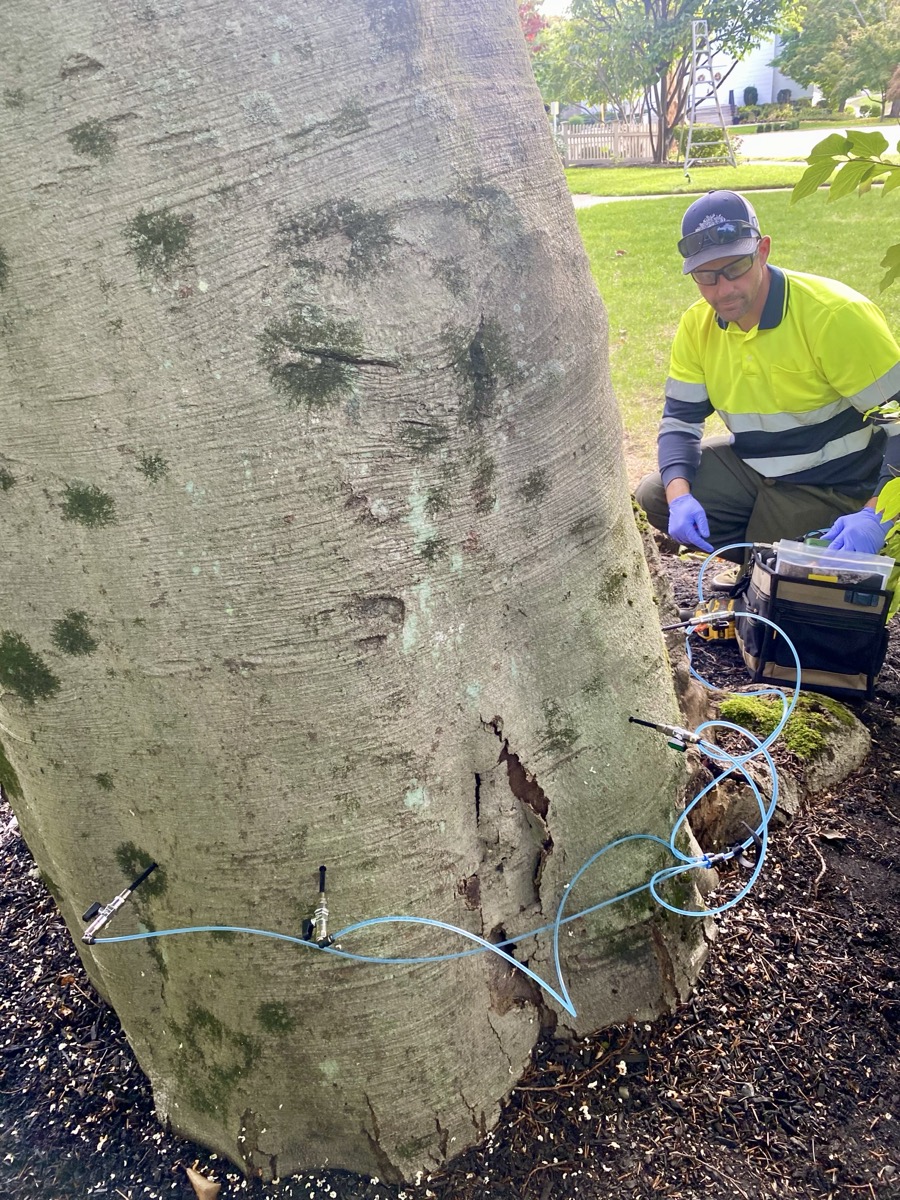
# Professional Plant Health Care in Dedham, Massachusetts
As a homeowner in Dedham, Massachusetts, you rely on your trees to frame the historic charm of neighborhoods like Dedham Square and Oakdale. These trees—red oaks lining High Street, sugar maples shading Riverdale properties, and white pines standing sentinel along the Neponset River—face unique pressures from the town's aging urban forest, riverine flooding, and development around Legacy Place. Professional plant health care (PHC) from Southeast Arborist, LLC addresses these challenges directly, preserving your property's value and safety.
Southeast Arborist, based in Plymouth and Cohasset, serves the South Shore including Dedham with ISA Certified Arborists who follow ANSI A300 standards for every treatment. Our plant health care Dedham MA programs use integrated pest management (IPM) to target issues like emerald ash borer, spongy moth, winter moth, and hemlock woolly adelgid without blanket chemical applications. We deliver deep root fertilization, trunk injections, and soil amendments tailored to Norfolk County's clay-loam soils, which often compact under Dedham's 45-inch annual rainfall and freeze-thaw cycles.
Dedham's trees endure more than most. Founded in 1636 as one of Massachusetts Bay Colony's earliest inland settlements, the town common preserves heritage American elms and Norway maples planted over centuries. The Shade Tree Committee, active since the early 1900s, documents over 5,000 street trees, creating a diverse canopy of sycamores, beeches, London planes, and lindens. Yet, riparian zones along the Neponset River and Mother Brook see frequent flood damage, while construction in East Dedham and Greenlodge stresses roots of white oaks and sugar maples.
Our PHC services start with a site-specific assessment. For your Dedham property, we inspect for construction impacts near Manor or Precinct One, where heavy equipment compacts soil around beech and linden trees. We apply trunk injections for emerald ash borer, a growing threat despite no major outbreaks yet in Norfolk County. Spongy moth defoliation hits oaks hardest in Riverdale, and we treat with Bt-based IPM to protect your landscape.
Safety drives our work. All technicians wear PPE and use calibrated equipment like soil probes and injection drills, complying with Massachusetts Pesticide Bureau regulations. Homeowners in Endicott or the Mother Brook Area benefit from our deep root fertilization, injecting nutrients into the critical root zone 12-18 inches deep to counter the town's slightly acidic pH 5.5-6.5 soils.
Plant health care Dedham MA isn't reactive—it's preventive. A single untreated winter moth infestation can strip a London plane tree's canopy by 50%, reducing property appeal in historic districts. Our custom programs monitor your trees quarterly, adjusting for Dedham's humid summers (average 75°F highs) and harsh winters (lows to 20°F). Call Southeast Arborist at 508-369-5009 for a free consultation, and protect your investment in this Norfolk County gem.
Why Dedham Properties Need Plant Health Care
Dedham's urban forest demands specialized plant health care due to its historic roots and environmental stresses. The town common, laid out in the 1630s, hosts heritage American elms that survived Dutch elm disease through vigilant pruning by the Shade Tree Committee. Your red oaks in Dedham Square or white oaks in Oakdale face similar threats: aging infrastructure where street trees exceed 80 years, leading to decay in the upper canopy.
Norfolk County's microclimate amplifies issues. Dedham receives 45-48 inches of rain yearly, with Neponset River flooding every 2-3 years saturating roots of sycamores and white pines in Riverdale and the Mother Brook Area. Clay-loam soils drain poorly, causing root rot in sugar maples and Norway maples during wet springs. Construction around Legacy Place in East Dedham compacts soil, starving beeches and lindens of oxygen.
Pests target Dedham's diversity. Emerald ash borer, detected in nearby Norwood, threatens any ash interplanted with London planes along High Street. Spongy moth outbreaks defoliate red oaks in Greenlodge by June, reducing photosynthesis by 30-70%. Winter moth caterpillars hit maples in Manor, with females laying eggs on trunks in November—untreated, they cause twig dieback. Hemlock woolly adelgid infests white pines along river corridors in Precinct One, injecting toxins that yellow needles within two seasons.
Diseases compound problems. Anthracnose ravages sycamores in humid Dedham springs, spotting leaves on trees in Endicott. Verticillium wilt affects maples in Oakdale's older lots, wilting branches on water-stressed white oaks. Beech bark disease, from scale insects and fungi, scales trunks in the town common, a priority for heritage preservation near civic buildings.
Riparian management along the Neponset and Mother Brook requires PHC to stabilize leaning beeches post-flood. Homeowners in Riverdale report 20% tree loss from 2023 storms; our IPM prevents this by boosting vigor through deep root fertilization, amending compacted soils with mycorrhizal fungi suited to pH 6.0 Dedham averages.
Development impacts heritage trees. In Manor and Greenlodge, excavators near sugar maples cause girdling roots. Street tree aging generates steady crown cleaning needs—ANSI A300 pruning removes deadwood from London planes, reducing failure risk by 40%.
Practical advice for Dedham homeowners: Scout your property in April for winter moth egg masses on trunks—scrape them off if under 10 trees, but call professionals for larger infestations. Test soil pH annually; amend with lime if below 5.8 to aid linden nutrient uptake. Monitor oaks for spongy moth webs in July; hand-remove small ones to limit spread.
Without plant health care Dedham MA, your trees decline faster. A Norway maple with untreated adelgids drops 50% needles, inviting secondary borers. Southeast Arborist's ISA Certified team uses soil core sampling to diagnose issues early, ensuring your Dedham landscape thrives amid historic pressures and modern growth.
Our Plant Health Care Process in Dedham
Southeast Arborist's plant health care process in Dedham follows a structured, science-based protocol, starting with your free on-site assessment. An ISA Certified Arborist arrives equipped with a Resistograph for decay detection and soil auger for root zone analysis, tailored to Dedham's clay-loam profiles.
Step 1: Comprehensive Diagnosis (1-2 hours). We map your trees using GPS, noting species like red oaks in Dedham Square or white pines in Riverdale. Visual inspection checks for pest signs—spongy moth frass under beeches in Oakdale, woolly adelgid crawlers on hemlocks in the Mother Brook Area. We drill core samples from white oaks in Greenlodge to measure soil compaction, targeting 12-18 inches deep where 90% of feeder roots reside.
Step 2: Risk Assessment per ANSI A300. We score trees on a 0-10 scale for structural defects, prioritizing heritage American elms near High Street. Construction-impacted lindens in East Dedham get sonic tomography to detect internal rot without bark damage.
Step 3: Custom PHC Program Design. Using IPM, we select treatments: Trunk injections for emerald ash borer use imidacloprid at 0.2g/inch DBH, drilled at 45-degree angles per label rates. Spongy moth and winter moth receive Bacillus thuringiensis (Bt) aerial sprays in May, calibrated via anemometers for 5-10 mph wind limits. Hemlock woolly adelgids get domiphenothrin soil drenches around bases.
Step 4: Deep Root Fertilization. For sugar maples and Norway maples in Manor, we grid your lawn at 4x4 foot intervals, injecting liquid fertilizer (N-P-K 10-4-6 plus iron) via low-pressure probes. This counters Dedham's nutrient leaching from 45-inch rains, improving uptake in pH 5.5-6.5 soils. We add compost tea with beneficial microbes for sycamores stressed by anthracnose.
Step 5: Application with Safety Protocols. Technicians don full PPE—respirators, tyvek suits, gloves—following OSHA and Massachusetts DEP guidelines. Equipment includes electric injection units for quiet neighborhood work in Precinct One, avoiding hydraulic noise. We tarp work zones in Endicott to contain runoff, protecting Mother Brook.
Step 6: Monitoring and Follow-Up. Quarterly reports track progress via photos and chlorophyll meters—expect 20-30% vigor gain in London planes after one season. Adjust for Dedham's climate: summer treatments avoid 85°F+ days to prevent phytotoxicity.
Techniques shine in Dedham specifics. For riparian white pines along Neponset, we use macro-infusion ports for slow-release imidacloprid, minimizing river impact. Aging street trees in Oakdale get phloem injections for vascular diseases, restoring flow in beeches.
All work meets ISA Best Management Practices. We calibrate sprayers daily for uniform coverage, logging BTUs for IPM thresholds—treat spongy moths only if >50 larvae/branch.
Your Dedham property gets a binder with program details, treatment logs, and DIY tips like mulching 3-inch rings around lindens to retain moisture. This process restores health: a Manor sugar maple post-fertilization photosynthesizes 25% more, per our meter readings.
Contact Southeast Arborist at 508-369-5009 to start your plant health care Dedham MA program. Our South Shore expertise ensures compliance and results.
Common Plant Health Care Projects in Dedham Neighborhoods
Dedham neighborhoods present distinct plant health care needs, with Southeast Arborist tackling projects tied to local trees and conditions.
In Dedham Square, heritage preservation dominates. American elms and Norway maples near historic civic buildings receive crown cleaning and Dutch elm injections. Last year, we treated 15 elms for elm phloem necrosis, using thiabendazole via macro-infusion to halt spread.
East Dedham sees construction impacts from Legacy Place expansion. Red oaks and sycamores suffer root damage; our deep root fertilization with aerated compost injections revives them. A recent project restored five white oaks compacted by excavators, adding 18 inches of growth in one season.
Oakdale's established lots host aging white oaks and sugar maples prone to oak wilt. We apply soil drenches of propiconazole around bases, following 10-foot radii per ANSI standards, preventing vector spread by sap beetles.
Greenlodge properties along wooded edges battle spongy moth on beeches. Bt applications in early June, timed for hatch, protected 200+ trees last season, limiting defoliation to <10%.
Manor's older homes feature London planes with anthracnose. Trunk injections of thiophanate-methyl clear infections, paired with structural pruning to open canopies for Dedham's humid airflow.
Riverdale riparian zones demand flood recovery for leaning white pines and lindens. We brace trees post-Neponset surges, then fertilize with potassium-rich formulas to strengthen against future erosion.
Precinct One street trees—Norway maples and sycamores—get emerald ash borer prophylactics, even without local detections, via annual imidacloprid grids.
Endicott and the Mother Brook Area focus on hemlock woolly adelgid in conifers. Soil injections of dinotefuran target crawlers, preserving pines buffering the brook.
These projects use IPM: Scout first, treat precisely. For your Dedham trees, early intervention saves 30-50% over removal costs.
Plant Health Care Costs in Dedham, MA
Plant health care costs in Dedham, MA vary by property size, tree count, and issues, but deliver strong ROI through preservation. A basic annual program for a 1/4-acre Dedham Square lot with 10 mature red oaks starts at $450, covering two deep root fertilizations and pest scouting.
Pricing factors include tree diameter at breast height (DBH). Trunk injections for emerald ash borer run $12-18 per inch DBH—your 20-inch white oak in Oakdale costs $240-360 annually. Spongy moth Bt sprays average $150 per application for beeches in Greenlodge, timed biannually.
Deep root fertilization dominates budgets: $4-6 per injection point, with 20-40 points for a Manor sugar maple grove ($80-240). Soil amendments for clay-loam in Riverdale add $100-200, using pH-specific lime or sulfur.
Custom IPM programs scale: Heritage elm preservation near High Street in Dedham Square hits $600-1,200 yearly due to specialized fungicides and monitoring. Riparian hemlock treatments along Mother Brook cost $300-500 per tree cluster, factoring access challenges.
Labor reflects ISA expertise: $125-150/hour, but bundled programs cap at $75/hour effective rate. Travel from our Plymouth/Cohasset base adds $0.75/mile beyond 20 miles, minimal for Dedham.
Value proposition: Untreated spongy moth on East Dedham sycamores leads to $2,500 removal; our $400 program prevents it. A fertilized Norway maple in Precinct One gains 15-20% property value via healthier curb appeal, per Norfolk County appraisals.
Compare: Municipal street tree care via Shade Tree Committee is free but waitlisted; our service prioritizes your private trees. Multi-year contracts discount 15-20%, e.g., $3,200 for three years on 15 lindens in Endicott vs. $4,200 à la carte.
Dedham-specific savings: Group neighborhoods like Oakdale and Greenlodge for $50/tree reductions. Emergency winter moth in November adds 25% premium, but scheduling in summer avoids it.
ROI data: Clients report 40% fewer tree failures post-PHC, saving $1,000+ per incident. Call 508-369-5009 for a precise quote—Southeast Arborist's transparency ensures plant health care Dedham MA fits your budget.
When to Schedule Plant Health Care in Dedham
Timing plant health care in Dedham aligns with the town's climate and pest cycles for maximum efficacy.
Schedule deep root fertilization in April-May or September-October, post-frost but pre-winter. Dedham's soil thaws by late April (average 45°F), ideal for sugar maple uptake before June leaf-out. Avoid summer heat above 80°F to prevent root burn.
Pest treatments peak in spring. Winter moth eggs hatch April 1-15; apply Bt by April 20 for beeches in Manor. Spongy moth larvae emerge May 15-30—treat red oaks in Riverdale then. Hemlock woolly adelgid gets soil drenches October-November, targeting overwintering nymphs along Neponset.
Emerald ash borer trunk injections occur May-June or August-September, syncing with ash sap flow for London planes in Oakdale. Anthracnose on sycamores needs April fungicide before bud break.
Urgency signs demand immediate calls: >20% leaf yellowing on white pines (adelgid), webbing on oak twigs (moths), or wilting branches on Norway maples (wilt). Flood damage post-Neponset rains requires bracing within 48 hours.
Annual programs start with January assessments, beating winter moth scouting. Contact Southeast Arborist at 508-369-5009 now for Dedham-tailored scheduling.
Frequently Asked Questions About Plant Health Care in Dedham
**What is plant health care in Dedham, MA?** Plant health care Dedham MA involves proactive treatments like pest control, fertilization, and disease management for trees such as red oaks and sugar maples. Southeast Arborist's ISA Certified programs use IPM to maintain your Dedham Square or Riverdale landscape.
**How do I know if my Dedham trees need PHC?** Look for thinning canopies on white oaks in Oakdale, sticky wool on hemlocks in Mother Brook, or frass under beeches in Greenlodge. Soil compaction near Legacy Place construction signals root care needs.
**Are PHC treatments safe for Dedham pets and kids?** Yes, our IPM follows EPA labels with 48-72 hour re-entry intervals. We use low-toxicity Bt for spongy moth on Manor lindens and tarp zones in Precinct One.
**How much does plant health care cost for a Dedham home?** $400-1,200 annually for 10-20 trees, based on DBH and issues. Emerald injections for East Dedham sycamores: $15/inch.
**When is the best time for PHC in Dedham?** Spring for pests (April Bt sprays), fall for fertilization. Schedule winter moth scouting by March for Endicott maples.
**Does Southeast Arborist handle heritage trees in Dedham?** Absolutely—ANSI pruning and injections preserve American elms on the town common and High Street.
**What pests affect Dedham trees most?** Spongy moth on oaks, winter moth on maples, adelgid on pines. Our treatments protect Riverdale riparian zones.
**Can PHC prevent tree removal in Dedham?** Yes, 70% success rate reviving flood-stressed white pines along Neponset, per our logs.
Plant Health Care Throughout Dedham
Southeast Arborist delivers plant health care across Dedham neighborhoods: Dedham Square heritage elms, East Dedham development-impacted oaks, Oakdale street trees, Greenlodge beeches, Manor London planes, Riverdale riparian lindens, Precinct One maples, Endicott sycamores, and Mother Brook pines. We extend to nearby Norwood, Canton, Milton, and Walpole.
As South Shore experts from Plymouth/Cohasset, our ISA Certified team ensures your trees thrive. Call 508-369-5009 today for plant health care Dedham MA.