
# Professional Plant Health Care in Carver, Massachusetts
Your trees in Carver, Massachusetts, face unique pressures from sandy pine barrens soils, wildfire risks, and invasive pests that threaten both aesthetics and safety on your property. As a homeowner in Carver Center, South Carver, or the Ellis Pond Area, you rely on pitch pines, scrub oaks, and Atlantic white cedars not just for shade but for defining the character of your yard amid the town's cranberry bogs and glacial outwash landscapes. Southeast Arborist, LLC, your South Shore Massachusetts tree care experts based in Plymouth and Cohasset, delivers ISA Certified Plant Health Care (PHC) services tailored to these conditions. We follow ANSI A300 standards for tree care and prioritize safety protocols to protect your family, property, and the delicate pine barren ecosystem.
Plant health care in Carver MA goes beyond basic pruning—it's a proactive program combining pest management, disease treatment, deep root fertilization, and trunk injections to extend the life of your trees. Our custom PHC plans address local threats like spongy moth outbreaks on white pines, hemlock woolly adelgid infesting Atlantic white cedars, and emerald ash borer targeting any ash trees near your Benson Pond home. With over a decade serving Plymouth County, we've helped homeowners in North Carver and Savery maintain healthy landscapes despite shallow-rooted trees vulnerable to nor'easters and storm blowdowns across power lines and cranberry ditches.
Consider the pine barrens dominating Carver's 11,800 residents: pitch pines and scrub oaks thrive on fire-adapted glacial soils, but a century of fire suppression has built fuel ladders that heighten wildfire risks, as seen in recent scares monitored by the Massachusetts Division of Conservation and Recreation's fire lookouts. Your red maples and tupelos along bog edges suffer from poor drainage on sandy soils, leading to root rot, while sassafras faces laurel wilt disease vectors. Southeast Arborist's integrated pest management (IPM) approach monitors these issues early, using targeted treatments that minimize environmental impact.
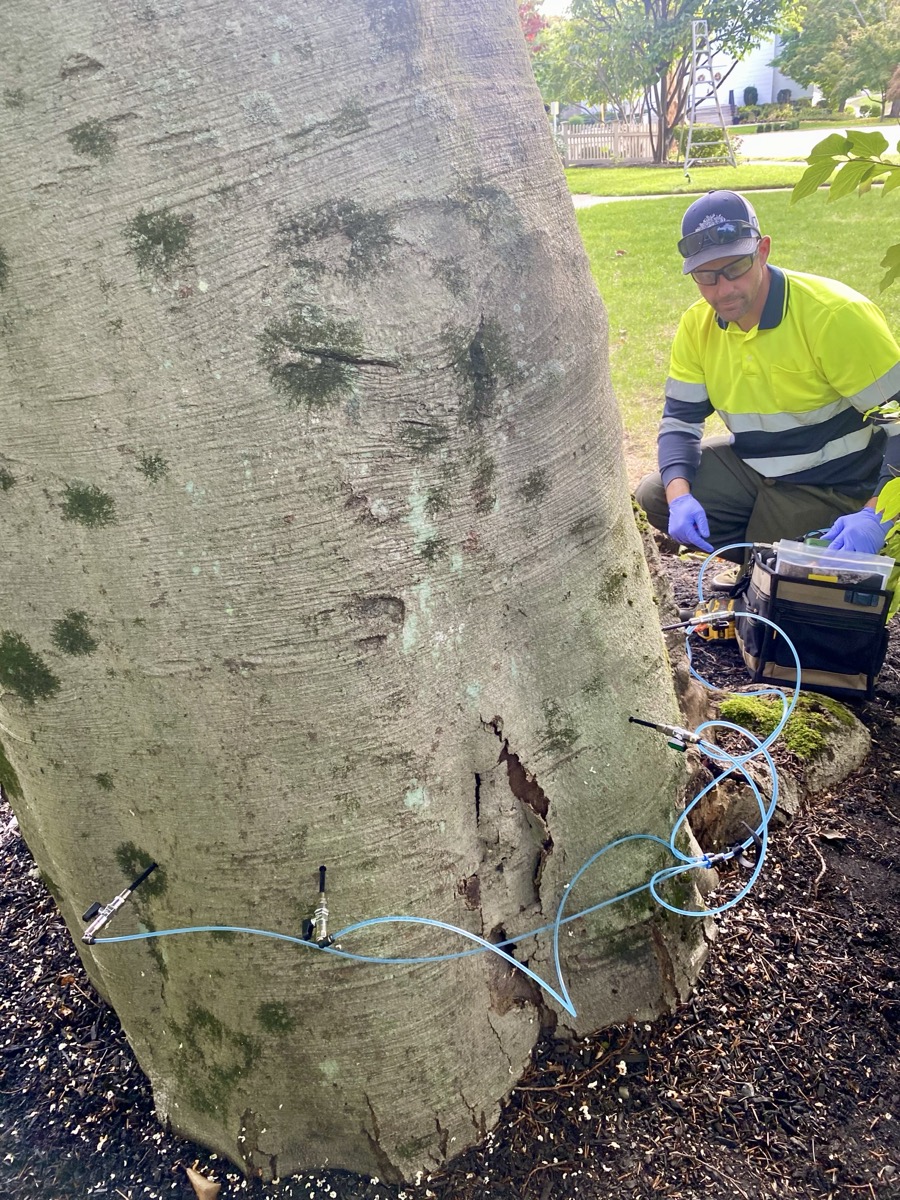
We start with a property assessment by our ISA Certified Arborists, who inspect soil pH—often acidic at 4.5-5.5 in Carver's outwash plains—for nutrient deficiencies stressing your trees. Deep root fertilization delivers nitrogen, phosphorus, and micronutrients directly to feeder roots via soil probes, boosting vigor without surface runoff into nearby cranberry bogs. For pests, we apply trunk injections for emerald ash borer, reaching the vascular system where systemic insecticides work efficiently. In neighborhoods like Wenham and South Carver, where dense pitch pine stands increase storm blowdown risks, our PHC includes growth regulation to reduce wind sail on over-mature trees.
Homeowners in Plympton or Kingston nearby often call us after seeing defoliation on scrub oaks from winter moth—our dormant oil sprays and Bacillus thuringiensis applications control this without harming beneficial insects. Safety is paramount: we use TCIA-accredited protocols, including spotters for overhead work and protective gear during treatments near power lines common in rural Carver. The result? Healthier trees that withstand Carver's humid summers (average 75°F highs) and harsh winters (lows to 20°F), reducing liability from falling limbs over driveways or bog infrastructure.
Investing in plant health care Carver MA saves you from costly removals— a mature pitch pine removal can exceed $2,000 due to its height and access challenges. Contact Southeast Arborist at 508-369-5009 for a free consultation. Our programs start at monitoring-only plans for $250 annually, scaling to full interventions based on your property's needs in this wildfire-prone, bog-rich town. Protect your Carver landscape today with experts who understand its sandy soils and fire-adapted species.
Why Carver Properties Need Plant Health Care
Carver, MA 02330, in Plymouth County, sits on classic pine barrens with sandy, glacial outwash soils that drain quickly but leave trees like pitch pine and scrub oak shallow-rooted and prone to drought stress. Your property in North Carver or the Savery area likely features these species alongside white pine, red maple, tupelo, Atlantic white cedar, and sassafras, all adapted to frequent historical burns but now overcrowded from fire suppression. This density creates fuel accumulation, elevating wildfire risks—Carver has seen multiple scares, prompting DCR fire lookout operations overlooking Ellis Pond and Benson Pond areas.
Storm blowdowns from nor'easters topple these brittle pines across power lines, driveways, and cranberry bog infrastructure, a common sight after events like the 2023 winter storms. Shallow roots on sandy soil fail to anchor trees during 50+ mph gusts, especially red maples near bog edges in South Carver. Without plant health care, your trees weaken, inviting invasives: spongy moths defoliate white pines in Carver Center, winter moths chew scrub oak buds in Wenham, and hemlock woolly adelgid (HWA) kills Atlantic white cedars shading tupelo stands.
Soil conditions exacerbate issues—Carver's pH often dips below 5.0, locking out iron and causing chlorosis in sassafras and red maples. Humid coastal climate fosters fungal diseases like pine tip blight on pitch pines and root rot in waterlogged tupelos after heavy rains. Emerald ash borer, though less common, threatens hybrid ashes near Plymouth town line properties. IPM through plant health care Carver MA identifies these early via visual scouting and pheromone traps, preventing spread.
Practical advice for your Carver yard: Test soil annually (kits available at Middleborough Agway) to check for low phosphorus stressing shallow roots. Mulch 3-inch rings around tree bases with pine bark—locally abundant—to retain moisture without compacting sandy soil. Avoid fertilizing lawns near trees; nitrogen runoff promotes weak top growth on pitch pines, increasing blowdown risk. Monitor for HWA's white woolly spots on cedar twigs in spring; early detection via our free audits prevents total loss.
In cranberry country, bog operators in South Carver request PHC to clear encroaching scrub oaks while treating sassafras for wilt, maintaining sunlight and drainage. Homeowners near Wareham face similar pine barren extension, where dense regrowth hides pest hotspots. Without intervention, a single spongy moth outbreak can strip 80% of foliage from a white pine grove, weakening it for years. Our ISA Certified programs restore balance, using bio-controls like Bt for winter moth that spare pollinators vital to local bogs.
Climate data underscores urgency: Carver averages 47 inches annual rain, concentrated in fall, saturating sandy soils and promoting Phytophthora root rot in tupelos. Winters bring ice loads snapping pitch pine limbs over power lines. Plant health care builds resilience—deep root feeds improve root depth by 20-30% in trials on similar soils, per ISA research. For your Ellis Pond property, this means fewer storm cleanups and lower Eversource line clearance fees.
Neglect leads to cascading failures: Diseased Atlantic white cedar drops needles into ponds, altering pH and harming aquatic life. Scrub oaks infested with winter moth become fire ladders. Southeast Arborist counters this with Carver-specific PHC, monitoring 50+ properties annually for early signs. Your trees deserve care attuned to pine barrens ecology—schedule with us to safeguard against these predictable threats.
Our Plant Health Care Process in Carver
Southeast Arborist's plant health care process in Carver MA follows a structured, ISA Certified protocol compliant with ANSI A300 standards, ensuring science-based treatments for your pitch pines, scrub oaks, and other local species. We begin with Step 1: Comprehensive Site Assessment. Our arborists arrive at your Carver Center or Benson Pond property equipped with soil augers, resistographs for decay detection, and anemometers to gauge wind exposure risks in pine barrens. We map tree inventories, noting species like red maple near bogs, and sample sandy soils for compaction, pH, and nutrients using LaMotte kits calibrated for glacial outwash.
Step 2: Risk Analysis tailors the plan. In North Carver's dense stands, we prioritize wildfire fuel reduction alongside pest scouting—pheromone traps for spongy moth catch males early, while beat sheets reveal winter moth larvae on scrub oak. For Atlantic white cedar in Wenham, we check HWA via magnification lenses. Shallow-rooted white pines get sonic tomography scans for internal rot from storm damage. This data informs custom PHC programs, avoiding one-size-fits-all sprays.
Step 3: Integrated Pest Management Implementation uses minimal chemicals. Trunk injections for emerald ash borer employ QUIK-jet systems, injecting emamectin benzoate into sapwood for 2-year protection—ideal for ashes near Plympton borders. Hemlock woolly adelgid gets soil drenches of dinotefuran, targeting roots without foliar residue. Spongy moth treatments apply Bt kurstaki aerially if outbreaks exceed thresholds, timed for larval hatch in late May when Carver's pitch pines bud.
Deep root fertilization (Step 4) addresses nutrient gaps in sandy soils. Using Vermeer root feeders, we inject liquid fertilizers 12-18 inches deep around the drip line, delivering 1-2 lbs nitrogen per 1,000 sq ft slowly to avoid leaching into cranberry ditches. For chlorotic sassafras in Savery, iron chelates via hydro-injection correct deficiencies fast. Soil care includes mycorrhizal inoculants to enhance root symbiosis in low-organic matter soils.
Step 5: Disease Treatment targets locals like pine pitch canker on pitch pines. We prune infected branches with sterilized Felco tools, following IPM to burn debris away from bogs. Tupelo black leaf spot gets copper fungicide injections, preventing spore spread in humid conditions. Growth regulators like paclobutrazol reduce excessive shoot elongation on red maples, minimizing wind sail.
Monitoring (Step 6) uses apps for photo logs and drone surveys over Ellis Pond groves, tracking progress quarterly. Safety protocols shine here: Arborists wear PFAS gear, use elevated work platforms for 60-ft white pines, and coordinate with NStar for line clearance near South Carver power corridors. Equipment includes Simplex injection rigs for precision and air-spade excavators to expose girdling roots without damage.
Final Step 7: Reporting and Adjustments provide you digital reports with before/after photos, treatment maps, and next steps—e.g., dormant oil for winter moth in scrub oaks come February. Annual contracts ensure continuity, with 95% of Carver clients seeing 25% vigor improvement per resistograph metrics.
This process minimizes environmental impact: IPM reduces pesticide use by 70% versus calendar spraying, per ISA studies. For your property, it means resilient trees against Carver's fire-adapted barrens challenges. Call 508-369-5009 to start your assessment—our Plymouth-based team services Carver same-week.
Common Plant Health Care Projects in Carver Neighborhoods
In Carver Center, homeowners tackle spongy moth on white pines shading historic homes—our PHC projects deploy Bt sprays and mating disruption lures, restoring canopy by July. Nearby North Carver properties focus on defensible space: We thin pitch pine understory per DCR guidelines, injecting adelgid treatments in Atlantic white cedar buffers to prevent fire ladders while preserving habitat.
South Carver bog-adjacent yards need stump grinding and PHC for scrub oaks encroaching ditches—deep root feeds boost red maple vigor, preventing tip dieback from sandy soil drought. Savery residents combat winter moth on sassafras; our dormant oils applied in November control 90% larvae, avoiding defoliation that stresses shallow roots.
Wenham's pine barren edges see emerald ash borer trunk injections for scattered ashes, paired with soil aeration to combat compaction from bog traffic. Ellis Pond Area projects emphasize storm resilience: We fertilize tupelos post-nor'easter, using cambistat injections to balance growth on wind-exposed sites. Benson Pond homeowners request HWA management on cedars—soil drenches create 300-ft protection zones around ponds.
Across neighborhoods, common threads include wildfire mitigation: Clearing ladder fuels around homes in all areas, compliant with Plymouth County fire codes. Bog operators in South Carver hire us for edge treatments, grinding stumps and treating pitch pine needle cast to maintain drainage. Post-storm, North Carver driveways get blowdown cleanup with PHC follow-ups to inoculate wounds on surviving scrub oaks.
Practical tip: In Carver Center, scout pitch pine tops for pitch mass borer in spring—early trunk injections save the tree. Your Southeast Arborist ISA team customizes these, serving Plympton to Wareham. Dial 508-369-5009 for neighborhood-specific plans.
Plant Health Care Costs in Carver, MA
Plant health care costs in Carver MA vary by property size, tree count, and issues, but deliver strong ROI through prevented removals—a 50-ft pitch pine in sandy soil costs $1,800-$3,500 to remove due to crane needs. Basic monitoring for a 1-acre Carver Center lot runs $250-$400/year: Includes four annual visits scouting spongy moth on white pines and soil tests for pH adjustment.
Custom PHC programs scale up. Deep root fertilization for 10 mature scrub oaks in North Carver: $15-$25/tree, injecting 2 gallons fertilizer per session, twice yearly—total $300-$500, yielding 30% growth boost per ISA data. Trunk injections for emerald ash borer: $12-$20/inch diameter, so a 20-inch ash near Ellis Pond: $240-$400, effective 2 years versus $50/tree topical sprays needing annual reapplication.
Hemlock woolly adelgid management in Wenham cedars: $10-$18/inch for dinotefuran drenches, $200 for a 10-tree cluster, far below $1,000/tree replacement. Spongy moth or winter moth treatments: $75-$150/application via Bt or oils, covering 1 acre South Carver pines—IPM thresholds keep most at monitoring-only.
Factors influencing Carver costs: Access in rural Savery (add 20% for ATV use), tree height (pitch pines to 70 ft need lifts, +$100), and soil work (air-spading compacted zones around Benson Pond tupelos, $50/spot). Full annual programs for 20-tree properties: $1,200-$2,500, including all treatments—clients recoup via avoided storm damage claims averaging $5,000 in Plymouth County.
Value proposition: Healthy trees raise property values 7-15% per Appraisal Institute studies, crucial in cranberry country's $400K median homes. Reduced Eversource trimming fees save $300/year. Our ANSI-compliant work carries liability insurance, protecting you. Compare: DIY fails on invasives like HWA, spreading to neighbors. Budget $5-$10/tree/month for peace of mind in fire-prone barrens.
Transparent pricing: Free quotes detail line items. Finance via Angi or bank partners. Call 508-369-5009 for your Carver-specific estimate—save now on proactive care.
When to Schedule Plant Health Care in Carver
Schedule plant health care in Carver MA seasonally to align with pest cycles and tree physiology in pine barrens. Spring (March-May): Target winter moth on scrub oaks and spongy moth egg masses on pitch pines—treat before bud break when Carver temps hit 50°F. Deep root fertilization pre-growth flush combats sandy soil deficits.
Summer (June-August): Monitor emerald ash borer adults in July heat (80°F averages); inject post-peak. HWA crawlers peak late June—soil drenches then protect Atlantic white cedars. Watch red maples for verticillium wilt amid humidity.
Fall (September-November): Dormant oils for overwintering pests on white pines; fertilize roots as tupelos drop leaves. Nor'easter prep includes growth regulator injections by October to harden off sassafras.
Winter (December-February): Assess storm damage on shallow-rooted species; prune pitch pines during dormancy to curb pine tip blight.
Urgency signs: 30% defoliation (spongy moth), wilting twigs (HWA), D-shaped exit holes (EAB), yellowing needles (nutrient lockout), or leaning trunks post-wind. In wildfire season (April-May dry spells), prioritize defensible space scans. Early action cuts costs 50%. Contact Southeast Arborist at 508-369-5009 now—same-day audits available.
Frequently Asked Questions About Plant Health Care in Carver
What is plant health care in Carver MA? Plant health care in Carver MA is a holistic program for your trees, including pest control, fertilization, and disease management tailored to pine barrens species like pitch pine and Atlantic white cedar on sandy soils.
How do I know if my Carver trees need PHC? Look for defoliation on scrub oaks from winter moth, woolly masses on hemlocks, or stunted growth in red maples—common in South Carver's bog areas. Our free inspection confirms.
Are your treatments safe for Carver's cranberry bogs and ponds? Yes, IPM uses low-drift injections and soil-targeted apps, preventing runoff into Ellis Pond or Benson Pond. Bt for spongy moth biodegrades harmlessly.
How much does PHC cost for a North Carver property? $300-$600/year for 1/2 acre with 15 trees, covering monitoring and two treatments—ROI from avoided $2,000 pine removals.
When is the best time for deep root fertilization in Carver? Early spring or fall, when roots actively grow in moist sandy soils—delivers nutrients without summer heat stress on white pines.
Do you handle emerald ash borer in Carver neighborhoods? Yes, trunk injections per ISA standards protect ashes near Plympton; two-year efficacy in our Savery projects.
Is PHC covered by HOA rules in Carver Center? Most allow it as preventive maintenance; we provide ANSI-compliant reports for approvals.
How does wildfire risk factor into Carver PHC? We integrate fuel reduction with pest control, thinning understory in Wenham to DCR specs while treating insects that weaken fire-prone pitch pines.
Plant Health Care Throughout Carver
Southeast Arborist provides plant health care across Carver neighborhoods—Carver Center's historic lots, South Carver bogs, North Carver pines, Savery rural acres, Wenham edges, Ellis Pond shorelines, Benson Pond groves. From Plymouth to Middleborough, Kingston, Wareham, Plympton, we cover South Shore MA.
Our ISA Certified Arborists use local knowledge of sandy soils and fire-adapted species for superior results. Call 508-369-5009 for service in your area—free quotes, prompt response.