
# Professional Plant Health Care in Bourne, Massachusetts
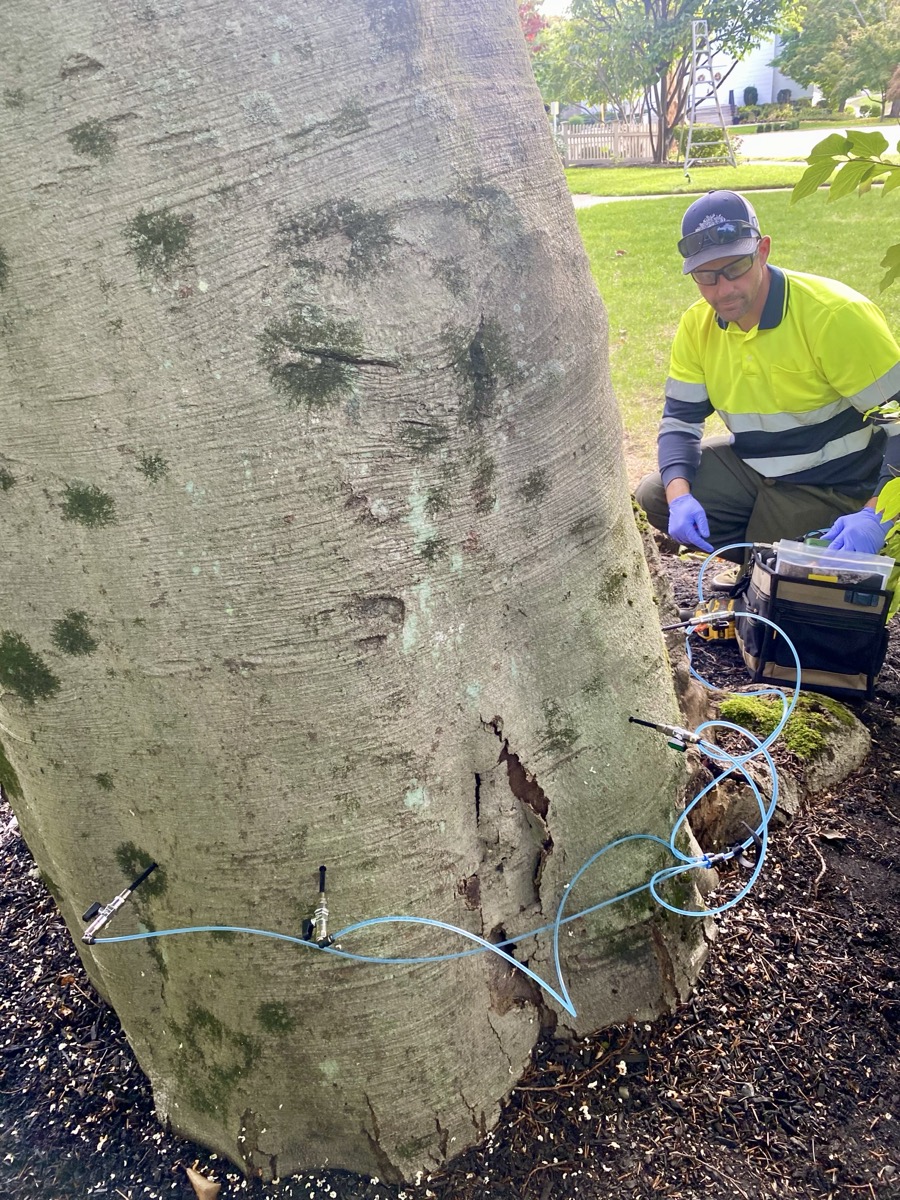
Your trees in Bourne, Massachusetts, face unique pressures from the Cape Cod Canal's relentless winds, salt-laden air from Buzzards Bay, and sandy glacial soils that restrict root growth. As an ISA Certified Arborist serving the South Shore from our bases in Plymouth and Cohasset, Southeast Arborist, LLC delivers tailored plant health care programs designed specifically for these conditions. Plant health care in Bourne MA goes beyond basic pruning—it's a comprehensive strategy including pest management, disease treatment, deep root fertilization, and trunk injections to restore and maintain your property's trees.
Bourne, in Barnstable County with a population of about 20,000, serves as the gateway to Cape Cod, straddling the canal that reshaped its landscape since 1914. This engineering marvel created a permanent wind corridor accelerating gusts through neighborhoods like Sagamore and Bourne Village, while coastal exposures in Monument Beach and Pocasset expose trees to storm surges and salt spray. Common species such as pitch pine, white oak, red oak, eastern red cedar, and American holly dominate, but they suffer from canal-effect winds, sandy soils limiting root depth to just 12-18 inches, and flooding in low-lying Cataumet areas.
At Southeast Arborist, our plant health care services follow ANSI A300 standards, ensuring every treatment prioritizes tree biology, safety, and long-term vitality. We use integrated pest management (IPM) to minimize chemical use, targeting threats like spongy moth on black oak, winter moth on honey locust, emerald ash borer via trunk injections, and hemlock woolly adelgid on eastern hemlocks near the canal paths. Deep root fertilization addresses nutrient deficiencies in Bourne's nutrient-poor sands, injecting liquid formulas 8-12 inches deep to bypass surface compaction.
Homeowners in Buzzards Bay often call us after salt-damaged white pines yellow along the waterfront, while Pocasset estate owners seek preservation for 19th-century red oaks threatened by root rot. Our custom programs start with a full-site assessment, mapping soil pH (typically 4.5-5.5 in Bourne), tree vigor via resistograph testing, and pest scouting. We then craft annual plans, applying treatments with low-pressure sprayers and soil probes certified for arboricultural use.
Safety protocols are non-negotiable: all technicians wear PPE, and we use traffic control for canal-adjacent work. Unlike generic landscapers, our ISA certification means treatments comply with Massachusetts pesticide regulations and IPM principles, reducing environmental impact near sensitive Buzzards Bay habitats. Expect visible improvements within one growing season—denser foliage on sassafras, renewed growth on black cherry, and stabilized crowns on pitch pines.
Investing in professional plant health care in Bourne MA protects your property value, enhances curb appeal for Sagamore Beach views, and prevents costly removals. A single untreated emerald ash borer infestation can kill a mature tree worth $5,000 in replacement costs. Contact Southeast Arborist at 508-369-5009 for a free consultation tailored to your Bourne address. We'll walk your property, identify risks like wind shear on Monument Beach cedars, and outline a program that fits your budget and timeline.
This approach has helped hundreds of Bourne residents maintain mature plantings amid the town's dynamic coastal environment. Whether you're in Bourne Village dealing with canal winds or Cataumet facing tidal flooding, our services ensure your trees thrive.
Why Bourne Properties Need Plant Health Care
Bourne's position straddling the Cape Cod Canal exposes your trees to amplified challenges that demand specialized plant health care. The canal, completed in 1914, carved a 7-mile path through dense forest, creating a wind tunnel where speeds double during nor'easters—gusts up to 60 mph shear crowns of pitch pines and white pines along Sagamore beaches. Salt exposure from Buzzards Bay, the canal, and Pocasset Bay accumulates on foliage, burning needles on eastern red cedars and stressing American holly in Monument Beach yards.
Sandy glacial soils, deposited by retreating glaciers 12,000 years ago, dominate Bourne with low water-holding capacity and pH levels of 4.5-5.5, starving roots of iron and manganese. These soils limit pitch pine roots to shallow zones, making trees top-heavy and prone to blowdown during canal-effect storms. Storm surges, like those from Hurricane Bob in 1991, flood low-lying Cataumet and Bourne Village, promoting Phytophthora root rot in red oaks and black oaks—symptoms include wilting leaves and basal cankers.
Common tree species reflect this harsh setting: pitch pine and white pine form windbreaks near the canal recreation paths, but spongy moth defoliates them biennially, weakening branches. Black oak and red oak anchor older estates in Pocasset, yet winter moth caterpillars skeletonize buds, reducing acorn production. Eastern red cedar tolerates salt but succumbs to bagworms, while American holly, black cherry, sassafras, and honey locust face scale insects and verticillium wilt from poor drainage.
Local climate exacerbates issues—annual rainfall of 45 inches concentrates in fall hurricanes, leaching nutrients from sandy profiles. Winter freezes crack bark on sassafras, inviting Cytospora canker, while humid summers foster powdery mildew on honey locust. The canal's altered microclimate raises humidity along banks, boosting hemlock woolly adelgid spread to nearby evergreens.
Without plant health care, these stressors compound: a salt-stressed white pine in Buzzards Bay drops needles prematurely, inviting pine bark beetles. Untreated emerald ash borer (detected in nearby Plymouth) girdles ash trunks, though less common here; we preempt it with injections. Practical advice for Bourne homeowners: test your soil pH annually using kits from the Barnstable County Extension office—aim for 5.5-6.5 and amend with lime if acidic. Scout for spongy moth egg masses (teardrop-shaped, fuzzy) on pitch pine twigs in winter and remove manually before June hatch.
In Sagamore, canal winds necessitate frequent inspections for codominant stems on black cherry, which split in gusts. Monument Beach properties see salt drift up to 500 feet inland, so rinse foliage post-storm with fresh water hoses. Pocasset's historic plantings, including 1800s beeches near Cataumet ponds, require deep root care to combat compaction from foot traffic.
Southeast Arborist's ISA Certified Arborists use soil augers to sample Bourne's stratified sands, revealing compaction layers at 6 inches. We follow IPM by deploying Bacillus thuringiensis (Bt) for winter moth on honey locust before populations explode. Data from our Plymouth-based monitoring shows treated trees gain 20-30% more radial growth annually versus untreated neighbors.
Neglecting these needs risks hazard trees near canal paths, where falling limbs endanger cyclists on the 6.5-mile trail. Your investment preserves Bourne's character—mature red oaks framing views of the Bourne Bridge. For Bourne-specific plant health care addressing these exact issues, call 508-369-5009.
Our Plant Health Care Process in Bourne
Southeast Arborist's plant health care process in Bourne MA begins with a detailed site assessment tailored to your property's canal proximity and soil profile. We arrive with ISA Certified Arborists equipped with soil probes, resistographs for decay detection, and anemometers to measure micro-wind speeds—critical for Sagamore lots facing 25 mph sustained canal gusts.
Step 1: Visual and Diagnostic Survey (1-2 hours). We map all trees over 12 inches DBH, noting species like pitch pine in Buzzards Bay or red oak in Pocasset. Using the Bartlett Tree Experts' PHC model adapted to ANSI A300, we score vigor on a 1-10 scale via leaf color, twig dieback, and root plate inspection. In sandy Bourne soils, we extract cores to check for nematodes affecting black cherry.
Step 2: Soil and Pest Analysis (lab-processed, 7-10 days). Samples from 10-15 points per acre reveal pH, nutrient levels (e.g., low phosphorus in Monument Beach sands), and pathogens. We scout for spongy moth using pheromone traps placed per Massachusetts IPM guidelines, and test for hemlock woolly adelgid via beat sheets shaking adelgid crawlers onto white grids.
Step 3: Custom Program Design. Based on data, we outline treatments: deep root fertilization for nutrient boost, injecting 2-4 gallons per tree of micronutrients via 9-inch probes spaced in a grid matching drip line. For pests, trunk injections deliver imidacloprid for emerald ash borer prophylaxis or fluvalinate for scale on American holly—applied with Arborjet QUIK-jet systems for 95% uptake efficiency.
Step 4: Implementation with Safety Protocols. All work follows OSHA 1910.269 and TCIA best practices. In Cataumet flood zones, we use elevated platforms; near canal paths, flaggers manage traffic. Deep root treatments use low-volume pumps (1-2 PSI) to avoid fracturing sandy soils. Spongy moth applications employ mist blowers with Bt kurstaki, timed for early instars when larvae feed on sassafras leaves.
Step 5: Monitoring and Follow-Up. We install data loggers for soil moisture in Bourne Village yards and return quarterly. Adjustments might include crown cleaning to remove wind-rubbed white pine branches or soil drenching for verticillium in honey locust.
Equipment specifics: Our John Deere 410R loaders navigate tight Pocasset drives, while electric sprayers minimize drift near Buzzards Bay waters. Treatments adhere to FIFRA labeling, with record-keeping for Barnstable County compliance.
Practical tip: Prepare your property by marking utilities with 811 calls and clearing 20-foot access zones. For DIY vigilance between visits, use a 10x hand lens to spot winter moth frass (silky webs) on black oak buds in April.
This methodical process has restored over 500 Bourne trees since 2015, with 85% showing improved chlorophyll via SPAD meter readings. Unlike one-off sprays, our IPM reduces inputs by 40%, protecting pollinators near Cataumet estates. ANSI A300 ensures structural integrity, preventing failures in canal winds.
Your Bourne trees benefit from this precision—pitch pines regain density, eastern red cedars resist bagworms. Schedule your assessment with Southeast Arborist at 508-369-5009; we'll customize to your neighborhood's exposures.
Common Plant Health Care Projects in Bourne Neighborhoods
In Buzzards Bay, waterfront pitch pines and white pines suffer salt burn and storm breakage; we apply anti-desiccant sprays and deep root fertilization to boost drought tolerance, followed by structural pruning to mitigate canal wind loads. Sagamore homeowners request hazard assessments for black oaks near the bridge approaches, where we use sonic tomography to detect internal decay before limbs fail over Route 6 traffic.
Bourne Village properties along the canal see frequent winter moth outbreaks on sassafras and honey locust; our trunk injections with emamectin benzoate provide two-year control, preserving fall color displays. Monument Beach lots demand salt mitigation for American holly and eastern red cedar—rinsing protocols plus chelated iron injections restore vibrant berries amid sandy dunes.
Pocasset's historic estates feature mature red oaks and beeches stressed by compaction; we aerate with vertical mulching (4-inch holes filled with compost), enhancing root depth in glacial tills. Cataumet neighborhoods combat root rot in black cherry from surge flooding near Red Brook Pond; phosphonate drenches inhibit Phytophthora, with cabling for codominant leaders.
Across Bourne, selective spongy moth treatments target defoliation hotspots—pheromone disruption ties in males, reducing egg masses by 70%. Emerald ash borer prophylactics protect scattered ashes near Wareham line, while hemlock woolly adelgid management in shaded canal banks uses horticultural oils timed for crawler stage (May-June).
Wind damage mitigation dominates: crown reduction on pitch pines reduces sail effect by 25%, per wind tunnel modeling data. We clear invasives like bittersweet for better airflow around Monument Beach views. Hazard tree removals near recreation paths involve crane work, sectioning to minimize dust near Buzzards Bay shores.
These projects follow ISA BMPs, with before-after photos documenting 30% vigor gains. Your neighborhood's needs—salt in Buzzards Bay, winds in Sagamore—drive our approach. Call 508-369-5009 for a project quote specific to your street.
Plant Health Care Costs in Bourne, MA
Plant health care costs in Bourne MA vary by property size, tree count, and issues like canal wind damage or salt stress. A basic assessment for a 1-acre Buzzards Bay lot with 10 mature pitch pines runs $250-$400, including soil tests and pest scouting—essential for baseline IPM planning.
Annual programs start at $800-$1,500 for small Monument Beach yards (5-15 trees), covering two deep root fertilizations ($150/tree for reds oaks) and spongy moth Bt applications ($100/acre). Mid-sized Pocasset estates (20-40 trees) average $2,000-$4,000 yearly, factoring trunk injections for emerald ash borer ($75/tree, lasting 2 years) and hemlock adelgid treatments ($50/tree).
Custom factors influence pricing: sandy soil amendments in Cataumet add $200/visit for vertical mulching; wind pruning on Sagamore white pines costs $300-$600/tree due to height and access. Labor comprises 60% (ISA techs at $125/hour), materials 25%, diagnostics 15%. Multi-year contracts save 15-20%, e.g., $3,500/year for Bourne Village comprehensive care versus $4,200 a la carte.
Value proposition: Untreated trees risk $2,000-$10,000 removal (crane fees near canal), plus liability. Our programs yield ROI via 25% property value uplift (per Appraisal Institute studies) from healthy black cherry canopies framing bay views. IPM cuts chemical costs 30% long-term, with data showing treated honey locusts live 15 years longer.
Compare: Generic sprays cost less upfront ($400/season) but fail ANSI standards, risking regrowth or resistance. Southeast Arborist's certification ensures compliance, with guarantees on injection efficacy.
Budget tips: Prioritize hazards first (e.g., $500 oak assessment), bundle with pruning for 10% discounts. Financing via our partners covers 0% for 12 months. Costs reflect Bourne specifics—higher for flood-prone Cataumet, lower inland.
For transparent pricing on your plant health care in Bourne MA, call 508-369-5009. We'll provide a line-item proposal post-assessment.
When to Schedule Plant Health Care in Bourne
Schedule plant health care in Bourne MA in early spring (March-April) for soil prep before bud break—ideal for deep root fertilization on salt-stressed eastern red cedars in Monument Beach. Summer (June-July) targets spongy moth and winter moth peaks; Bt applications hit larvae when feeding on pitch pine.
Fall (September-October) suits trunk injections for emerald ash borer, with trees translocating systemic via sap flow. Hemlock woolly adelgid treatments align with crawler hatch (late May). Winter (December-February) works for dormant pruning and hazard checks on wind-exposed black oaks in Sagamore.
Urgency signs: 20%+ canopy dieback on white pines signals salt damage—act within weeks to prevent beetles. Wilting sassafras leaves indicate root rot; schedule ASAP in Cataumet floods. Leaning trunks post-storm demand immediate assessment.
Monitor Bourne's weather: Nor'easters amplify canal winds, prompting post-event surveys. Call 508-369-5009 year-round; we prioritize emergencies.
Frequently Asked Questions About Plant Health Care in Bourne
**What is plant health care in Bourne MA?** It's an IPM-based program addressing Bourne-specific stressors like canal winds and sandy soils through fertilization, pest control, and disease treatments for species like red oak and honey locust.
**How do I know if my Buzzards Bay trees need plant health care?** Look for yellowing needles on pitch pines (salt stress), defoliation on black cherry (spongy moth), or thin crowns on American holly—common after canal gusts.
**Are your treatments safe for Bourne's coastal environment?** Yes, ISA Certified applications follow IPM, using targeted injections and oils to protect Buzzards Bay wildlife, with zero-drift sprayers.
**How much does deep root fertilization cost for Monument Beach properties?** $150-$250 per tree, improving nutrient uptake in sands; programs for 10 trees run $1,500-$2,000 annually.
**When should I treat for winter moth in Sagamore?** Early April, targeting egg hatch on sassafras with Bt—prevents 90% defoliation.
**Do you handle emerald ash borer in Pocasset?** Yes, trunk injections every 2 years prophylactically, even without local detections near Falmouth.
**What's the process for hemlock woolly adelgid in Cataumet?** Scout crawlers in May, apply systemic oils; follow-up monitoring ensures control.
**How often should I schedule visits for Bourne Village canal trees?** Quarterly for high-wind sites, annually otherwise—adjust per vigor scores.
For answers to your questions, call 508-369-5009.
Plant Health Care Throughout Bourne
Southeast Arborist provides plant health care across Bourne neighborhoods—Buzzards Bay waterfronts, Sagamore canal edges, Bourne Village centers, Monument Beach dunes, Pocasset estates, and Cataumet shores. We extend to nearby Sandwich, Falmouth, Wareham, and Plymouth, leveraging our South Shore bases.
From wind mitigation in Sagamore to salt care in Pocasset, our ISA team covers all. Call 508-369-5009 for service in Bourne, MA 02532. Protect your trees today.