
# Professional Ornamental Trimming in New Bedford, Massachusetts
If you own a home in New Bedford, Massachusetts, your landscape likely features ornamental trees that enhance curb appeal and property value amid the city's historic whaling heritage. Ornamental trimming in New Bedford MA demands precision to preserve the aesthetic and structural integrity of species like Japanese maples, dogwoods, magnolias, and weeping cherries, which thrive in your coastal climate but face unique stressors. Southeast Arborist, LLC, your South Shore Massachusetts tree care experts based in Plymouth and Cohasset, delivers ISA Certified arborist services tailored to Bristol County's urban forests.
New Bedford's 101,000 residents enjoy a diverse canopy shaped by 19th-century whaling wealth, which funded street trees and Buttonwood Park's Olmsted-designed landscapes with 1890s specimen trees. Yet, Buzzards Bay's salt-laden winds, dense urban soils, and pests like spongy moths challenge these trees. Common species such as red oaks, Norway maples, London planes, honey locusts, red maples, white pines, sycamores, pin oaks, littleleaf lindens, and eastern red cedars require ornamental trimming to maintain health and beauty.
Our ornamental trimming services focus on detail pruning for aesthetic enhancement, structural pruning for young trees, crown cleaning, thinning, shaping, and containment pruning for encroaching branches. We follow ANSI A300 standards, ensuring every cut promotes airflow to prevent diseases common in New Bedford's humid coastal conditions. For instance, improving circulation in your dogwood reduces anthracnose risk, while shaping your Japanese maple highlights its delicate form against Clark's Point's waterfront views.
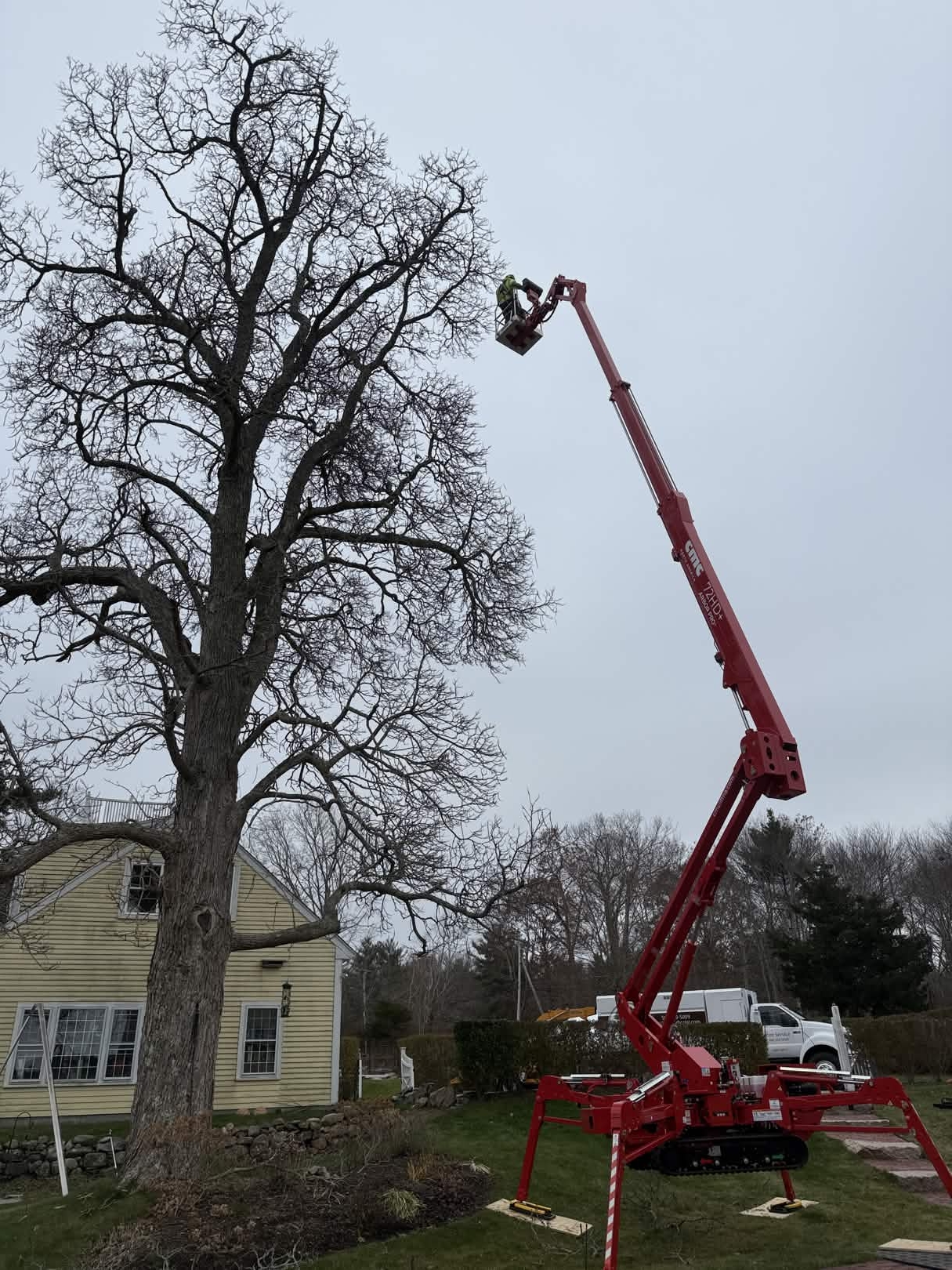
Homeowners in neighborhoods like South End, West End, North End, Near North, Acushnet Heights, Brooklawn Park, Clark's Point, and along the Dartmouth border rely on us for safe, efficient work. Our crews use bucket trucks, cranes, and low-impact rigging to navigate tight urban lots without property damage. Safety protocols include PPE, traffic control, and hazard assessments, critical in New Bedford's busy streets.
Consider the value: Properly trimmed ornamental trees boost your home's marketability in a city where historic districts demand maintained landscapes. A single neglected magnolia can drop debris onto sidewalks, inviting complaints from neighbors or city inspectors. Southeast Arborist's ISA Certified arborists assess your trees' specific needs—whether salt exposure at the harbor or spongy moth damage in western areas—delivering results that last years.
Emerging threats like emerald ash borer add urgency; while not yet widespread, proactive trimming strengthens your canopy's resilience. We serve New Bedford from our South Shore base, responding quickly to nor'easters that batter coastal properties. Practical tip: Inspect your trees annually for deadwood, especially after winter storms, as New Bedford's hurricane history (from 1938 to recent events) leaves cumulative damage.
Ornamental trimming in New Bedford MA isn't just maintenance—it's investment in your property's longevity. Contact Southeast Arborist at 508-369-5009 for a free consultation. Our expertise ensures your red maples, sycamores, and ornamentals flourish amid Bristol County's challenges.
Why New Bedford Properties Need Ornamental Trimming
New Bedford's coastal position in Bristol County exposes your ornamental trees to relentless salt spray from Buzzards Bay, compacted urban soils, and high winds that demand regular ornamental trimming. Historic whaling fortunes planted enduring street trees, but today's dense neighborhoods like South End and West End feature aging infrastructure where Norway maples and London planes overhang utilities, risking outages during nor'easters.
Common tree species in New Bedford—red oak, red maple, pin oak, white pine, sycamore, honey locust, littleleaf linden, and eastern red cedar—struggle with spongy moth outbreaks, particularly in Acushnet Heights and Brooklawn Park's oak stands. These pests weaken branches, creating hazards that ornamental trimming addresses through crown cleaning and thinning. Emerald ash borer looms as a threat, though ash trees are less prevalent; trimming bolsters overall canopy resilience.
Coastal exposure at Clark's Point and the harbor damages weeping cherries and magnolias with salt burn, manifesting as browned foliage and dieback. Your Japanese maples in Near North yards suffer from poor airflow in humid summers, fostering fungal issues like verticillium wilt. Urban density limits root expansion, stunting growth and causing instability—ornamental trimming reduces weight, preventing failures during 50+ mph gusts common in Buzzards Bay storms.
Buttonwood Park exemplifies New Bedford's tree legacy: Olmsted's 1890s design includes specimen sycamores and red oaks needing preservation pruning to retain form without natural regeneration. Homeowners near the park face similar issues; untrimmed honey locusts drop thorny pods, while littleleaf lindens develop cankers from trapped moisture.
Soil conditions exacerbate problems: New Bedford's sandy loams drain poorly near the Dartmouth border, leading to root rot in dogwoods. Alkaline soils from coastal deposition stress acid-loving ornamentals, causing chlorosis that thinning exposes for better nutrient uptake.
Practical advice for your property: Check for codominant stems in young red maples—these V-shaped forks split under wind load. Trim them early to establish a central leader. In North End's tight lots, containment pruning keeps eastern red cedars from encroaching on power lines, complying with city codes.
Storm history underscores urgency: Every major hurricane since 1938 has scoured New Bedford's waterfront, splintering white pines and toppling pin oaks. Post-storm, ornamental trimming removes broken limbs, preventing decay entry points.
Disease prevention drives need: Improved airflow from crown thinning cuts powdery mildew in littleleaf lindens by 40-50%, per ISA studies. Structural pruning on young honey locusts avoids included bark, common in New Bedford's fast-growing urban trees.
Neglect costs: A failing sycamore in West End can require full removal at $2,000+, versus $500 for preventive trimming. Your investment pays off in energy savings—thinned canopies reduce AC loads in humid Bristol County summers—and increased property values, as manicured landscapes appeal in historic districts.
Southeast Arborist's ISA Certified team identifies these issues during site visits, using ANSI A300 for science-backed cuts. We prioritize New Bedford's unique context, from Fairhaven's adjacent canopy to Acushnet's rural edges.
Our Ornamental Trimming Process in New Bedford
Southeast Arborist follows a meticulous, step-by-step ornamental trimming process in New Bedford, adhering to ANSI A300 standards for tree health and safety. First, our ISA Certified arborists conduct a site assessment on your property, evaluating species like Japanese maples or dogwoods for structural defects, disease, and coastal stressors.
Step 1: Hazard Tree Evaluation. We scan for deadwood, cracks, or lean in red oaks and sycamores, using resistograph tools to probe decay without damage. In Clark's Point's windy conditions, we measure wind throw risk with inclinometers.
Step 2: Pruning Plan Development. Tailored to your tree—detail pruning for magnolias removes water sprouts; structural pruning on young red maples eliminates rubbing branches. We sketch cuts, prioritizing 25% canopy removal max to avoid stress.
Step 3: Equipment Setup. For South End's urban lots, we deploy compact bucket trucks with 55-foot reach, minimizing footprint. Cranes handle heavy limbs from London planes near streets; low-impact rigging uses arborist blocks and friction savers on white pines.
Step 4: Safety Protocols. Crews don harnesses, helmets, and spikes only on felled sections. We establish drop zones, use spotters for North End traffic, and secure utilities with National Grid coordination—essential in New Bedford's overhead lines.
Step 5: Execution—Crown Cleaning. Remove dead, diseased, or broken branches first, starting top-down. For honey locusts, we target epicormic shoots; in pin oaks, excise spongy moth-defoliated twigs.
Step 6: Thinning and Shaping. Selectively thin interior branches to boost airflow, reducing anthracnose in dogwoods. Shaping weeping cherries maintains natural form, cutting to lateral buds at 45-degree angles.
Step 7: Containment Pruning. Reduce clearance over sidewalks in Acushnet Heights, subordinating branches without topping—illegal per ISA and harmful to littleleaf lindens.
Step 8: Detail Pruning. Precision work on Japanese maples: tip prune to outward buds, preserving layered structure against Buzzards Bay salt.
Techniques vary by species: Drop-crotch on codominant eastern red cedars; lion-tailing avoidance in Norway maples by retaining inner foliage.
Cleanup follows: Chip all debris on-site for mulch, rake thoroughly, and inspect stumps for flush cuts coated in tree paint only if needed.
Post-trim, we provide a report with photos, next steps, and wound closure advice—New Bedford's humid climate demands monitoring for fungal ingress.
Our process ensures compliance with New Bedford's tree ordinance, protecting heritage canopies like Buttonwood Park's. Equipment includes Stihl saws with carbide teeth for clean cuts, and we recycle 100% green waste.
Real-world example: A Brooklawn Park magnolia with storm-split limbs—our crane lifted 800 lbs safely, restoring shape in 4 hours.
This methodical approach delivers longevity: Trimmed trees withstand 20-30% more wind load, per research.
For your New Bedford property, call 508-369-5009 to start.
Common Ornamental Trimming Projects in New Bedford Neighborhoods
In New Bedford's South End, dense rows of Norway maples and red maples need containment pruning for utility wires, freeing 10-15 feet of clearance while enhancing dappled shade on historic streets.
West End properties feature aging London planes with included bark; our structural pruning redirects growth, preventing splits common after spongy moth defoliation.
North End homeowners request crown thinning on sycamores to improve airflow, combating sooty mold from harbor humidity and reducing debris on busy Kempton Street.
Near North yards host honey locusts encroaching on fences—containment cuts maintain thorny barriers without topping, preserving urban-tolerant form.
Acushnet Heights' pin oaks suffer storm damage from nor'easters; we perform crown cleaning post-event, removing 20-30% weak wood to halt decay.
Brooklawn Park's littleleaf lindens require detail shaping for lollipop form, enhancing views toward Buttonwood Park's Olmsted specimens.
Clark's Point coastal homes demand salt-mitigation trimming on white pines and eastern red cedars—thinning exposes salt-burned interiors for recovery.
Dartmouth border lots blend rural and urban: Red oaks here get reduction pruning to balance against prevailing winds, mimicking natural taper.
Common across neighborhoods: Japanese maple detail pruning in private gardens, excising crossed limbs for scarlet fall color; dogwood crown restoration after anthracnose; magnolia shaping to frame harbor views.
Buttonwood Park adjacency inspires projects—homeowners emulate its preserved red oaks with similar preservation pruning.
Emergency response spikes after storms: Clark's Point saw 50+ calls post-2023 nor'easter for broken weeping cherries.
Our ISA arborists customize: Urban street trees prioritize pedestrian safety; waterfront focuses on wind resistance.
Practical tip: In tight lots, request hand-saw work to avoid equipment scars.
These projects extend tree life 10-20 years, per ANSI data.
Ornamental Trimming Costs in New Bedford, MA
Ornamental trimming costs in New Bedford MA range from $350-$800 for small trees (under 20 feet) like Japanese maples, to $1,200-$3,000 for large sycamores or London planes, based on height, access, and complexity.
Key factors: Tree size drives 40% of cost—your 40-foot red oak in West End requires bucket truck, adding $200. Location matters: Clark's Point waterfront adds 20% for salt/sand prep and crane needs; South End street trees incur permits ($50-100).
Species influence: Thorny honey locusts or multi-trunk dogwoods take 25% longer, raising labor. Dense canopy in pin oaks post-spongy moth demands extra thinning time.
Access challenges in North End tight lots add $150 for rigging; easy Brooklawn Park backyards save $100.
Crew time: 2-4 hours for detail pruning on magnolias ($300 base); full crown reduction on white pines runs 6-8 hours ($800+).
Value proposition: Preventive trim at $500 averts $2,500 removal. ISA Certified work per ANSI A300 ensures regrowth savings—thinned trees need less frequent service (every 3-5 years vs. annually).
New Bedford-specific savings: Bulk neighborhood deals for Acushnet Heights streets cut 15%. Free assessments reveal issues like emerald ash borer risks early.
ROI: Trimmed ornamentals boost curb appeal 10-15% in Bristol County sales, per appraisals. Energy savings from airflow: 5-10% lower cooling bills.
Off-season (fall/winter) discounts 10-20%. No hidden fees—quotes include cleanup, disposal.
Compare: Uncertified crews risk fines under city codes; our safety record avoids liability.
Investment breakdown: $600 trim on your Near North littleleaf linden yields 15 years health, vs. decline/replacement.
Call 508-369-5009 for precise quote.
When to Schedule Ornamental Trimming in New Bedford
Schedule ornamental trimming in New Bedford during late fall (October-November) or winter (December-March), when deciduous trees like red maples and dogwoods lack leaves, easing access and reducing disease spread.
Spring (April-May) suits evergreens like eastern red cedars, post-frost but pre-bud break. Avoid summer heat, stressing sycamores.
Urgency signs: Deadwood over sidewalks in South End—trim immediately to prevent falls. Crossing branches rubbing on Japanese maples signal structural needs.
Post-nor'easter: Broken limbs on Clark's Point white pines within 48 hours halt rot. Spongy moth webs on pin oaks by June.
Annual checks: If canopy density blocks 50% light, thin now. Salt burn on harbor magnolias post-winter—spring trim.
Disease flags: Anthracnose spots on dogwoods demand prompt airflow improvement.
City timelines: Before May utility checks in West End.
Our South Shore team books fast—call 508-369-5009.
Frequently Asked Questions About Ornamental Trimming in New Bedford
What is ornamental trimming in New Bedford MA? Ornamental trimming enhances aesthetic form and health of trees like Japanese maples and magnolias through precise cuts, unlike utility pruning. In New Bedford, it counters coastal salt and urban density.
How often should I trim my trees in New Bedford neighborhoods? Every 3-5 years for mature red oaks in Acushnet Heights; annually for young honey locusts in North End. Post-storm every season at Clark's Point.
Does ornamental trimming hurt my trees? No, when ISA Certified like Southeast Arborist—ANSI A300 limits removal to 25%, promoting vigor. Your Brooklawn Park sycamore benefits from reduced wind sail.
What's the difference between trimming and topping? Topping stubs branches, causing decay in London planes; we use reduction pruning for natural shape on white pines.
Are permits needed for trimming in New Bedford? Street trees yes—near Buttonwood Park, notify city. Private lots no, but we handle utilities.
How do you handle coastal wind damage? Reinforce with drop-crotch on eastern red cedars; thinning for red maples withstands Buzzards Bay gusts.
Can you trim during spongy moth season? Yes, crown cleaning removes weakened oak limbs in West End, breaking pest cycles.
What equipment do you use in tight New Bedford lots? Bucket trucks, hand saws, rigging—minimal impact in Dartmouth border yards.
Ornamental Trimming Throughout New Bedford
Southeast Arborist provides ornamental trimming across New Bedford neighborhoods: South End street trees, West End hazard reductions, North End canopy thins, Near North detail work, Acushnet Heights storm recovery, Brooklawn Park shapings, Clark's Point coastal care, Dartmouth border balances.
We extend to nearby Fairhaven, Acushnet, Dartmouth from Plymouth/Cohasset base.
ISA Certified, ANSI-compliant, safe service for your trees.
Call 508-369-5009 for consultation.