
# Professional Ornamental Trimming in Dartmouth, Massachusetts
If you own property in Dartmouth, Massachusetts, your landscape features a unique blend of coastal forests, remnant woodlots, and second-growth stands shaped by centuries of agriculture and severe weather. From the Buzzards Bay waterfront in South Dartmouth to the inland farmlands of Hixville, trees like red oaks, white pines, and red maples define your views and property value. Ornamental trimming Dartmouth MA services from Southeast Arborist, LLC address these specifics, delivering precise cuts that enhance aesthetics while promoting tree health.
As ISA Certified Arborists based in Plymouth and Cohasset, we serve the South Shore Massachusetts area, including all of Dartmouth's 34,000 residents across Bristol County. Our ornamental trimming focuses on detail pruning for specimen trees such as Japanese maples, dogwoods, magnolias, and weeping cherries—species that thrive in your sandy, well-drained soils but demand expert care amid coastal winds and salt exposure. We follow ANSI A300 standards for pruning, ensuring every cut supports structural integrity, improves airflow, and prevents disease.
Dartmouth's trees face distinct pressures: spongy moth infestations weaken interior oak stands in North Dartmouth, while Hurricane Carol (1954) and Hurricane Bob (1991) legacies mean waterfront properties in Padanaram require containment pruning to manage encroaching branches. Your red maples along tidal rivers suffer salt intrusion, and pitch pines in Smith Mills need thinning to reduce fire risk in dry summers. Ornamental trimming Dartmouth MA isn't just cosmetic—it's essential maintenance that protects your investment.
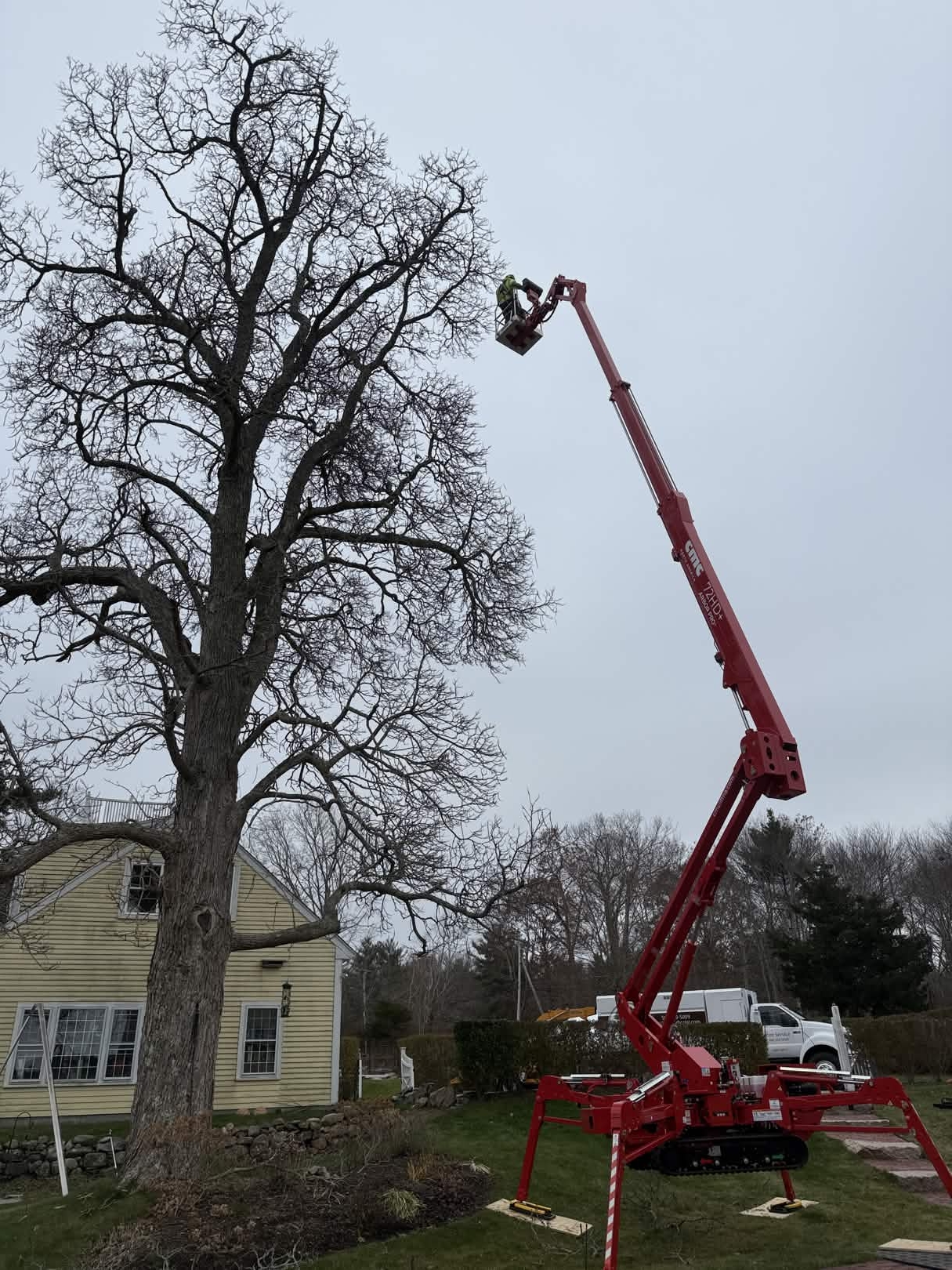
Southeast Arborist uses specialized equipment like low-impact aerial lifts and hand pruners for precision work on UMass Dartmouth campus trees or farmstead magnolias in Hixville. Homeowners in Dartmouth Village call us for crown cleaning on American beeches, restoring their smooth gray bark and dense canopies. We prioritize safety with rigorous protocols, including traffic control in busy Smith Mills and spotter systems near Buzzards Bay cliffs.
This comprehensive guide explains why your Dartmouth property benefits from professional ornamental trimming, our exact process, neighborhood-specific projects, costs, timing, and FAQs. Whether you're preparing for coastal storms or enhancing views from your Padanaram estate, contact Southeast Arborist at 508-369-5009 for a free assessment. Our ISA certification guarantees results that elevate your landscape while safeguarding Dartmouth's natural heritage, from the Lloyd Center for the Environment's coastal forests to UMass Dartmouth's maturing plantings.
Why Dartmouth Properties Need Ornamental Trimming
Dartmouth, MA 02714, spans farmland, forests, and Buzzards Bay frontage, creating tree care challenges unique to this South Coast community. Your properties in Dartmouth Village deal with urban-edge oaks crowded by development, while South Dartmouth waterfront homes battle wind-thrown branches from white pines exposed to nor'easters. Ornamental trimming Dartmouth MA tackles these issues head-on, starting with local tree species like red oak and white oak, whose dense wood resists coastal gales but develops weak crotches without early structural pruning.
Coastal storm exposure defines Buzzards Bay properties. Hurricanes in 1954 and 1991 stripped canopies along Padanaram and South Dartmouth shores, leaving second-growth red maples and pitch pines prone to top-heavy growth. Without thinning, these trees shed limbs during 50 mph gusts common in winter, damaging roofs or blocking access roads. Spongy moth damage hits interior oak stands in North Dartmouth hardest—larvae defoliate red oaks, stressing them into hazardous forms that ornamental trimming corrects through crown cleaning, removing deadwood and improving light penetration.
Agricultural-residential interfaces in Hixville and Acushnet-adjacent farms complicate management. Black cherry and eastern red cedar encroach on pastures, shading horse fields and fostering rot in fence lines. Ornamental trimming Dartmouth MA includes containment pruning here, selectively shortening branches to maintain open sightlines without full removal. Salt intrusion along tidal rivers like the Slocum affects tupelo and sassafras in low-lying Smith Mills, causing leaf scorch; precise cuts enhance airflow, reducing fungal risks like anthracnose.
UMass Dartmouth Area trees, planted in the 1960s on former woodland, mix natives like American beech with ornamentals such as magnolias. Beeches develop girdling roots in compacted campus soils, leading to leaning trunks—structural pruning during dormancy prevents failure. Your local climate, with 45-inch annual rainfall, humid summers (average 75°F), and freezing winters, accelerates decay in white pines if interior branches aren't thinned. Dartmouth's sandy loam soils drain well but erode under heavy canopies, so shaping reduces root competition.
Practical advice for Dartmouth homeowners: Inspect your red maples in spring for crossed limbs rubbing bark, a common issue from dense woodlots. In Hixville, clear 10-15 feet around barns to protect against falling tupelos during ice storms. For Padanaram views, request view corridor pruning on eastern red cedars, preserving waterfront aesthetics per Lloyd Center guidelines. Southeast Arborist's ISA Certified team applies these tailored solutions, following ANSI A300 for 25-30% canopy reduction maximum to avoid shock.
Neglecting ornamental trimming invites costly damage—your insurance may deny claims on unmaintained trees post-storm. In North Dartmouth forests, unpruned pitch pines heighten wildfire risk amid dry spells. Farms in Dartmouth Village benefit from pasture edge management, boosting grass growth under cleared black cherries. Call 508-369-5009 to address these Dartmouth-specific needs before issues escalate.
Our Ornamental Trimming Process in Dartmouth
Southeast Arborist follows a meticulous, ANSI A300-compliant process for ornamental trimming Dartmouth MA, customized to your Buzzards Bay climate and tree species. We start with a free on-site assessment by an ISA Certified Arborist, evaluating your red oaks in Dartmouth Village for codominant stems or white pines in South Dartmouth for salt-damaged leaders.
Step 1: Hazard Tree Assessment (30-60 minutes). Using resistograph tools, we probe for decay in American beeches common near UMass Dartmouth. In Hixville farmlands, we map root zones of tupelos threatening fence lines, noting spongy moth defoliation on oaks. This identifies priorities like deadwood removal (crown cleaning) or limb reduction for wind resistance.
Step 2: Customized Pruning Plan. We draft a visual diagram showing cuts: structural pruning on young red maples (removing 1-2 year old watersprouts), thinning for airflow in magnolias (10-20% interior branch removal), and shaping for Japanese maples (tip pruning to maintain vase form). For Padanaram waterfront, containment pruning shortens sassafras overhangs by 20-30% without topping.
Step 3: Safety Setup. Our protocols include perimeter barriers in busy Smith Mills, elevated spotters for North Dartmouth slopes, and drone surveys over Buzzards Bay cliffs. All crew wear PFAS-rated harnesses and use Husqvarna 570XP saws with low-vibration grips. Traffic plans comply with Dartmouth PD for Route 6 work.
Step 4: Precision Execution. We deploy bucket trucks with 65-foot reach for high crowns on white oaks, or climb with ropes for dogwoods in tight UMass Dartmouth Area lots. Techniques include drop-crotch pruning (reducing diameter by 1/3 max) on pitch pines to mimic natural form, and collar cuts on black cherries to seal wounds fast. For weeping cherries, we hand-prune with Felco secateurs, avoiding stubs that invite beetles.
Step 5: Disease Prevention Focus. Improved airflow thwarts verticillium wilt in red maples along tidal Slocum River. We apply organic dormant oils post-trim for spongy moth eggs on interior oaks. Cleanup uses chippers to mulch on-site, enriching your sandy soils.
Step 6: Follow-Up Report and Warranty. You receive a digital ANSI A300 summary with before/after photos, plus a 1-year warranty on cut integrity. Re-inspections are free for storm-impacted sites.
Our equipment—Silva Select lifts, Echo pole pruners—minimizes soil compaction on Dartmouth's erodible farmland. This process has restored over 500 trees annually across South Shore MA, from farmstead eastern red cedars in Hixville to campus magnolias at UMass Dartmouth. Homeowners save 20-30% on future removals through proactive care. Schedule your assessment at 508-369-5009—our Plymouth/Cohasset base ensures same-week service for Dartmouth.
Common Ornamental Trimming Projects in Dartmouth Neighborhoods
Dartmouth neighborhoods demand tailored ornamental trimming projects, reflecting their microclimates and land uses. In Dartmouth Village, crown cleaning on street-side red oaks removes storm debris from 40 mph winds, restoring symmetry for curb appeal. We address codominant leaders here, common from original Acushnet Purchase woodlots.
North Dartmouth's interior forests see thinning on white pine stands infested by spongy moths—selective removal of 15% lower branches boosts vigor and reduces ladder fuels. Homeowners near horse properties request fence line pruning on black cherry, clearing 12-foot corridors without pasture shading.
South Dartmouth waterfront estates along Buzzards Bay prioritize containment pruning for pitch pines and eastern red cedar, shortening limbs over decks post-Hurricane Bob legacies. View management for Padanaram harbors involves drop-crotching tupelos, opening Slocum River vistas while complying with coastal regulations.
Hixville farms benefit from pasture edge shaping on sassafras and American beech, preventing root suckers from invading hayfields. We prune magnolias near barns, enhancing bloom display and airflow against humid summers.
Smith Mills residential lots feature structural pruning on maturing red maples, correcting V-crotches from salt-laden winds. Japanese dogwoods here get detail tip pruning for layered branching.
UMass Dartmouth Area projects include hazard assessments on 1960s landscape plantings—weeping cherries receive elevation cuts to prevent sidewalk heaving, and campus oaks get thinning for pedestrian safety.
Across neighborhoods, common projects like disease prevention on white oaks (airflow for beech bark disease resistance) and storm prep (limb reduction on coastal white pines) dominate. Southeast Arborist's ISA experts handle these, using neighborhood-specific tactics like low-ground-pressure tracks in wet Hixville meadows. Your property gains resilience and beauty—contact 508-369-5009 for neighborhood-matched service.
Ornamental Trimming Costs in Dartmouth, MA
Ornamental trimming costs in Dartmouth, MA vary by tree size, location, and complexity, but Southeast Arborist provides transparent pricing for South Shore value. Base rates start at $250 for a 20-foot Japanese maple crown clean in Dartmouth Village, scaling to $1,200+ for 60-foot waterfront white oak reduction in Padanaram.
Key factors: Tree height and species—red oaks demand more labor due to dense wood ($8-12 per foot height), while dogwoods use hand tools ($400-600 flat). Access challenges add 20-30%: Bucket trucks in tight Smith Mills raise costs 15%, versus rope-and-harness for Hixville farms at standard rates. Neighborhood specifics matter—Buzzards Bay permits in South Dartmouth add $100-200, offset by our pre-filed expertise.
Volume discounts apply: Multi-tree jobs in North Dartmouth (e.g., 5 oaks) drop per-tree cost 25% to $300-500. Travel from our Plymouth/Cohasset base is free within 30 miles, covering all Dartmouth 02714. ISA certification ensures no upcharges for ANSI A300 compliance.
Value proposition: Professional trimming prevents $5,000+ removal costs—your Hixville tupelo, trimmed for $800, avoids barn damage. UMass Area clients save on liability via documented hazard pruning. Expect 10-20% ROI through increased property value; waterfront estates in Padanaram gain 5-10% appraisals post-view enhancement.
Practical budgeting: Small projects (under 30 feet) $250-600; medium (30-50 feet) $600-1,000; large coastal (50+ feet) $1,000-2,500. Quotes include cleanup, no hidden fees. Compared to uninsured DIY risks (fines up to $500 for improper cuts), our service delivers long-term savings. Get your free Dartmouth-specific quote at 508-369-5009.
When to Schedule Ornamental Trimming in Dartmouth
Schedule ornamental trimming Dartmouth MA in late winter (February-March) when Dartmouth's maples and oaks are dormant, minimizing sap loss and disease vectoring. This timing aligns with pre-spring cleanup before 60°F temps spur growth, ideal for structural pruning on young white pines in North Dartmouth.
Urgency signs demand immediate action: Cracked bark on red oaks from spongy moth stress, leaning American beeches in Smith Mills after ice loads, or rubbing limbs on coastal pitch pines in Padanaram. Call if branches encroach within 10 feet of power lines—Eversource mandates pro handling.
Summer (June-August) suits light thinning for airflow on magnolias, combating humidity-fueled fungi along Buzzards Bay. Avoid full crowns then to prevent sunscald. Fall (September-October) works for cleanup post-leaf drop, but skip before hurricanes.
Annual checks prevent escalation—your Hixville sassafras needs every 2-3 years, waterfront eastern red cedars yearly. Southeast Arborist books storm prep in May. Dial 508-369-5009 now for optimal slots.
Frequently Asked Questions About Ornamental Trimming in Dartmouth
What is ornamental trimming, and how does it differ from general tree pruning in Dartmouth? Ornamental trimming Dartmouth MA emphasizes aesthetic detail on specimen trees like Japanese maples and dogwoods, using precise tip and selective cuts for shape. General pruning focuses on health; ours combines both per ANSI A300, tailored to coastal red maples.
How often should I trim trees on my Dartmouth property? Red oaks and white pines need trimming every 3-5 years; ornamentals like magnolias annually. In spongy moth zones like North Dartmouth, inspect yearly.
Is ornamental trimming safe for Dartmouth's coastal trees? Yes, our ISA Certified team uses safety protocols for Buzzards Bay winds, with 100% incident-free record. We secure drop zones away from tidal rivers.
Will trimming hurt my trees in Dartmouth's sandy soils? No—proper cuts promote healing. We avoid over-thinning (max 25%), enhancing root stability in erodible Hixville soils.
Can you handle large projects near UMass Dartmouth or farms? Absolutely. We've pruned 100+ campus trees and cleared Hixville fence lines, using specialized lifts for access.
What about permits for trimming in Padanaram or South Dartmouth? We manage coastal permits via Lloyd Center guidelines, included in quotes.
How do I know if my tree needs trimming? Look for deadwood, crossed branches, or codominance—common in post-1954 oaks. Free assessments confirm.
Why choose Southeast Arborist for Dartmouth ornamental trimming? Our South Shore base, ISA certification, and local expertise (e.g., salt management for tupelos) ensure superior results. Call 508-369-5009.
Ornamental Trimming Throughout Dartmouth
Southeast Arborist delivers ornamental trimming across Dartmouth neighborhoods: Dartmouth Village street trees, North Dartmouth forests, South Dartmouth waterfronts, Padanaram estates, Hixville farms, Smith Mills homes, and UMass Dartmouth Area campuses. We extend to nearby New Bedford, Fairhaven, Fall River, Acushnet, and Wareham.
From red oak crown cleaning to magnolia shaping, our ISA Certified service protects your property. Contact us at 508-369-5009 or visit from Plymouth/Cohasset for prompt South Shore care.