
# Professional Oak Tree Specialist in Abington, Massachusetts
As a homeowner in Abington, Massachusetts, you rely on your mature oaks to provide shade, privacy, and property value in this compact suburban town of 16,700 residents. Red oaks and white oaks dominate many yards in Plymouth County, especially along streets lined with post-war era homes in Abington Center and North Abington. However, these trees face unique pressures from aging infrastructure, invasive diseases, and Abington's variable coastal climate. That's where Southeast Arborist, LLC steps in as your dedicated oak tree specialist in Abington, MA.
Based in Plymouth and Cohasset, our ISA Certified Arborists serve the South Shore Massachusetts region, including all of Abington (02351). We specialize in species-specific care for red oaks (Quercus rubra) and white oaks (Quercus alba), addressing everything from oak wilt prevention to structural pruning that follows ANSI A300 standards. Our team uses rigorous safety protocols, including TCIA accreditation guidelines, to protect your property, family, and the town's aging tree canopy.
Abington's tree challenges stem from its history as a shoe-manufacturing hub that transitioned to residential development mid-20th century. Most residential oaks date to that era, planted alongside silver maples and Norway maples that now compete for space. The 2008 ice storm devastated large silver maples on older streets like those in East Abington, but oaks survived—often with structural weaknesses that deferred maintenance has worsened. Ames Nowell State Park nearby preserves 700 acres of mature hemlock and American beech stands, reminding us of pre-settlement forests, yet urban oaks in Beaver Brook and Plymouth Street Area suffer surface roots cracking driveways and invading sewer lines.
As your oak tree specialist Abington MA trusts, we diagnose issues like anthracnose in humid springs or oak wilt vectored by sap-feeding beetles. Oak wilt, a fungal disease fatal to red oaks within months, spreads through root grafts in Abington's clay-loam soils, which retain moisture and promote fungal growth. We prevent it with critical pruning timing—never from February through July when beetles are active—and immediate wound sealing on every cut using ANSI-approved paints.
Our services extend beyond removal. We perform health assessments to identify gypsy moth defoliation scars on white oaks or two-lined chestnut borer attacks on stressed red oaks. In Island Grove, where white pines mix with oaks near the pond, we clear deadwood to reduce wind sail hazards during nor'easters. Homeowners in South Abington call us for utility clearance pruning along overhead lines on Washington Street, ensuring compliance with National Grid standards.
Practical advice for you: Inspect your oaks now for vertical cracks or codominant stems, common in Abington's wind-exposed sites. If you spot wilting leaves in summer or basal trunk cankers, contact an oak tree specialist Abington MA residents recommend—us at Southeast Arborist. Dial 508-369-5009 for a free assessment. We arrive with bucket trucks, cranes, and airborne-rated climbing gear, minimizing ground disturbance on your lot.
Investing in professional oak tree care preserves Abington's canopy, boosts curb appeal in neighborhoods like North Abington, and prevents costly failures. A single oak failure can damage foundations or vehicles, as seen after Hurricane Bob in 1991. Our track record includes crown cleaning on century-old red oaks near Island Grove Pond, restoring them to safe, healthy condition. Whether your property borders Ames Nowell State Park or sits in the Plymouth Street Area, our oak tree specialist services deliver long-term value tailored to Abington's conditions.
Why Abington Properties Need Oak Tree Specialist
Abington's compact suburban layout in Plymouth County amplifies oak tree risks on residential lots. Your red oaks and white oaks, planted during the 1950s housing boom, now tower over narrow driveways in Abington Center and outgrow foundations in North Abington. These species thrive in the town's sandy loam soils derived from glacial till, but Abington's humid continental climate—winters dipping to 10°F and summers reaching 85°F with high humidity—stresses them. Frequent nor'easters and microbursts from nearby Weymouth exacerbate leaning trunks on exposed sites like East Abington hills.
Common issues hit hard. Aging post-war oaks develop included bark unions, where stems fuse weakly, creating failure points. Surface roots from red oaks lift sidewalks along Plymouth Street, while white oak taproots struggle in compacted urban soils near sewer lines in Beaver Brook. Emerald ash borer threatens green ash neighbors, but oaks face their own foes: oak wilt in red oaks spreads via root grafts in dense plantings common in South Abington yards. Symptoms include vein browning on leaves from the tips inward, appearing by late June in Abington's warm microclimate.
Deferred maintenance leaves deadwood in crowns, a hazard during ice storms like 2008's, which snapped silver maple limbs but left oaks with fractured leaders. Norway maples, invasive cousins, shade out young oaks in Island Grove, promoting epicormic sprouts vulnerable to two-lined chestnut borer. Hemlock woolly adelgid weakens nearby hemlocks, altering canopy dynamics and increasing wind load on oaks. White pines drop needles that acidify soil around oak bases, slowing nutrient uptake in Abington's pH 5.5-6.5 soils.
Local context demands expertise. Abington lost 15-20% canopy in the 2008 storm, per town records, with silver maples along Randolph Street failing spectacularly. Oaks fared better but now show codominant stems from epicormic regrowth. In Ames Nowell State Park, mature beech and hemlock stands highlight ideal oak conditions—well-drained uplands—but suburban lots mimic these poorly, with poor drainage near the Shumatuscacant River fostering Phytophthora root rot in red oaks.
You need an oak tree specialist Abington MA properties depend on for species-specific diagnosis. Red oaks succumb faster to oak wilt due to their ring-porous wood, while white oaks resist better but crack from freeze-thaw cycles in Abington's clay pockets. Gypsy moth outbreaks, cyclic every 7-10 years, defoliate oaks in North Abington, weakening them for Armillaria root rot. Practical tip: Test soil pH annually; amend with lime if below 6.0 to counter white pine needle drop.
Climate specifics worsen problems. Abington's 45 inches annual precipitation concentrates in spring, fueling anthracnose—dark lesions on oak leaves that drop prematurely. Summer droughts stress trees near impervious surfaces in Plymouth Street Area, causing sunscald on south-facing trunks. Winter salt spray from Route 123 corrodes bark in East Abington, inviting hypoxylon canker.
Southeast Arborist's ISA Certified Arborists use diagnostic tools like resistographs to measure decay in oak trunks without invasive drilling. We follow ANSI A300 for pruning, targeting 25% max canopy removal to avoid stress. In Abington, we routinely address utility conflicts; overhead lines on Central Street snag oak branches, risking outages. Our safety protocols include spotters and air bags for high-risk removals.
Without specialist care, your oaks risk total loss. A 60-foot red oak failure in South Abington could cost $15,000+ in damages. Proactive health assessments spot issues early, like bacterial leaf scorch vectored by xylem-feeding bugs in humid Abington summers. Call 508-369-5009 to safeguard your investment in this tree-reliant town.
Our Oak Tree Specialist Process in Abington
Southeast Arborist's oak tree specialist process in Abington begins with a site-specific assessment tailored to your property's microclimate. Our ISA Certified Arborists arrive from our Plymouth/Cohasset base, equipped with soil probes, increment borers, and anemometers to measure wind exposure—critical in gusty East Abington. We map root zones, noting conflicts with patios in Abington Center or utilities in Beaver Brook.
Step 1: Visual and diagnostic inspection. We scan for oak wilt signs—wilting canopy sectors in red oaks—using binoculars and drones for high crowns. Resistographs quantify wood density; readings below 30% indicate decay needing intervention. In Island Grove's moist soils, we check for Armillaria mushrooms at bases.
Step 2: Risk assessment per ANSI A300 Part 1. We score targets (your home, driveway) and failure probability. A leaning white oak near Plymouth Street power lines gets a high hazard rating. We document with photos and TRAQ forms for insurance claims.
Step 3: Customized treatment plan. For oak wilt prevention, we trench root graft barriers 100 feet from infected trees, injecting fungicides like propiconazole under EPA labels. Pruning follows strict timing: late August to January only, avoiding beetle season. We seal all cuts immediately with latex paint to block Nitulidae beetles.
Techniques emphasize precision. Structural pruning subordinates codominant stems using reduction cuts, preserving live crowns. Crown cleaning removes deadwood—up to 15% volume—via handsaw from ropes or bucket trucks with 95-foot reach. In tight North Abington lots, we deploy spider lifts to navigate fences.
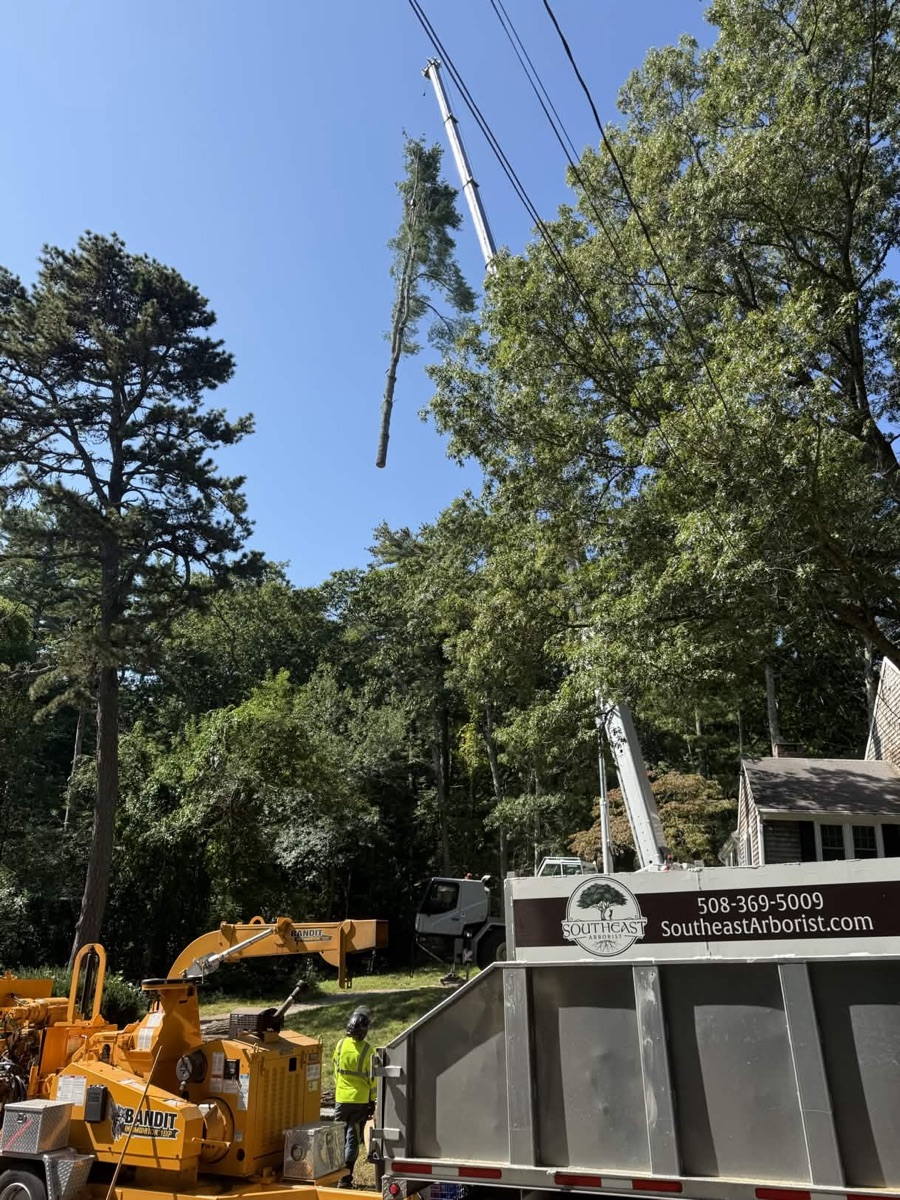
Equipment sets us apart. ArborMaster cranes lift 12-ton sections over homes in South Abington, using tag lines for control. Ground crews chip debris on-site with 18-inch Vermeer units, recycling into mulch compliant with Abington's yard waste rules. Safety protocols include two-way radios, hard hats, and fall arrest systems rated for 300 pounds.
Step 4: Execution with minimal impact. Climbing arborists use throw lines and ascenders, friction-sawing limbs directly into chippers. For stump grinding post-removal, 30HP grinders process to 12 inches below grade, backfilled with topsoil. We apply mycorrhizal inoculants to remaining oaks, boosting root health in Abington's nutrient-poor glacial soils.
Step 5: Post-care monitoring. We provide a report with before/after photos and schedule follow-ups. In hemlock-oak mixes near Ames Nowell, we recommend deer fencing to protect basal shoots from browsing.
Disease-specific protocols shine. For anthracnose, we rake fallen leaves in Abington's wet springs, applying copper fungicides pre-bud break. Bacterial leaf scorch gets imidacloprid trunk injections in fall. Structural care targets V-shaped crotches; we cable with steel rods installed via tree-friendly bore holes.
Practical advice: Water young oaks deeply (1 inch/week) during July droughts, mulching 3 inches deep but 6 inches from trunks to prevent girdling. Avoid staking; it weakens trunks in Abington winds.
Our process follows TCIA Best Management Practices, ensuring liability coverage. In a recent Plymouth Street Area job, we dismantled a 70-foot red oak threatening a garage, completing in one day without property damage. Costs reflect value: prevention saves 5x removal expenses.
This systematic approach makes Southeast Arborist the oak tree specialist Abington homeowners choose. Schedule via 508-369-5009.
Common Oak Tree Specialist Projects in Abington Neighborhoods
In Abington Center, we handle crown cleaning on red oaks shading historic homes along Washington Street. These 50-year-old trees accumulate deadwood from gypsy moth cycles, requiring selective removal to balance crowns without stimulating weak growth.
North Abington properties near Route 123 see frequent silver maple removals, but surviving oaks need structural pruning. We reduce overextended limbs threatening roofs, common after salt-induced stress weakens bark.
South Abington's denser lots feature white oaks with surface roots heaving driveways. Our projects include root barrier installation during pruning, paired with crown thinning to lessen soil compaction.
East Abington hills expose oaks to winds; we cable leaning red oaks near hilltops, using dynamic cabling that flexes in nor'easters. Deadwood removal here prevents ice accumulation failures.
Island Grove Pond areas mix oaks with white pines and hemlocks. Emerald ash borer scouts reveal healthy oaks, but we treat oak wilt risks with fungicide injections, especially where root grafts connect to park-edge trees.
Beaver Brook sees utility clearance pruning for oaks encroaching National Grid lines along Central Street. We elevate branches 15 feet over conductors, following utility specs.
Plymouth Street Area jobs focus on full removals of hazard oaks damaged in 2008 storms. Cranes hoist sections over bungalows, grinding stumps to enable replanting with disease-resistant cultivars.
Across neighborhoods, we address red oak wilt outbreaks—three cases last year near North Abington. Trenching and injections halt spread. White oak anthracnose in humid South Abington gets sanitation pruning.
Practical tip: In Island Grove, thin lower oak limbs 10 feet up to deter deer rubbing, which invites cankers.
Our neighborhood-specific expertise as oak tree specialists Abington MA relies on delivers targeted results.
Oak Tree Specialist Costs in Abington, MA
Oak tree specialist costs in Abington vary by project scope, tree size, and access. A basic health assessment for one red oak in Abington Center starts at $250, including resistograph testing and report.
Crown cleaning a 40-foot white oak in North Abington runs $800-$1,500. We remove 10-15% deadwood, using bucket trucks; tighter South Abington access adds $300 for spider lifts.
Structural pruning for codominant stems on a 60-foot red oak near East Abington power lines costs $1,200-$2,500. Cabling adds $500-$1,000, with dynamic systems lasting 20 years.
Oak wilt treatment—trenching and fungicide drench—for clustered oaks in Island Grove totals $2,000-$4,000 per tree cluster. Injections cost $25 per DBH inch, vital for Plymouth County soils.
Full removal of a hazard 70-foot oak in Beaver Brook, with crane and stump grinding, ranges $3,500-$6,000. Plymouth Street Area lots with overhead lines add $1,000 for line clearance certification.
Factors influencing price: DBH (diameter at breast height)—$50-$100 per inch for pruning. Height over 50 feet requires cranes (+30%). Root zones conflicting with sewers in Abington's clay soils demand hand-digging (+20%). Travel from Plymouth base is free within 20 miles.
Value proposition: Proactive care costs 20-30% of emergency removal. A $1,500 pruning prevents $10,000 damage. ISA certification ensures ANSI compliance, boosting insurance discounts. Mulch byproduct saves $200/yard on landscaping.
Compared to handymen, our $5M liability covers incidents. ROI: Healthy oaks add 5-10% property value in Abington's market.
Get a free quote: 508-369-5009.
When to Schedule Oak Tree Specialist in Abington
Schedule oak tree specialist services in Abington from late August through January to avoid oak wilt vectors active February-July. Fall pruning after leaf drop allows clean cuts on dormant red oaks.
Urgency signs demand immediate calls: Wilting leaves on branch tips (oak wilt), vertical trunk cracks, or leaning >20 degrees post-storm. Deadwood >25% canopy signals hazard in wind-prone East Abington.
Spring (March-May) suits assessments before bud break, spotting anthracnose overwintering sites. Avoid cuts until August.
Summer urgency: Drought-stressed oaks with sunscald—schedule injections. Post-nor'easter inspections prevent failures.
Winter (December-February) ideal for removals; bare crowns ease access in Island Grove.
Practical: Monitor for beetle exit holes in April. Call 508-369-5009 at first sign.
Frequently Asked Questions About Oak Tree Specialist in Abington
**What is oak wilt, and how does it affect Abington oaks?** Oak wilt, caused by Bretziella fagacearum, kills red oaks in weeks via root grafts common in Abington's dense lots. White oaks resist better. Symptoms: yellowing veins from leaf edges. We prevent with timed pruning and injections.
**When can you prune oaks in Abington, MA?** Never February-July; beetles spread fungus. Late summer-fall safest for Abington's climate.
**How do you diagnose oak diseases as Abington specialists?** ISA Arborists use lab cultures, PCR tests for oak wilt, and resistographs for decay. Free initial visual checks.
**What's the cost difference between pruning and removal in Abington?** Pruning $500-$2,500; removal $2,000-$6,000 based on size. Prevention saves long-term.
**Do you handle utility conflicts for oaks in Beaver Brook?** Yes, certified for National Grid clearance, elevating branches 15+ feet.
**Can you save a declining oak in North Abington?** Often—80% success with soil tests, fertilization, and cabling if decay <40%.
**What about emerald ash borer near my oaks?** It stresses neighbors; we monitor oaks for secondary pests like borers.
**How long does recovery take after oak specialist work?** Visible regrowth in 1-2 seasons; full health 3-5 years with watering.
Oak Tree Specialist Throughout Abington
Southeast Arborist provides oak tree specialist services across Abington neighborhoods: Abington Center's historic oaks, North Abington windbreaks, South Abington root issues, East Abington leaners, Island Grove pond-edge trees, Beaver Brook utilities, and Plymouth Street hazards.
We extend to nearby Rockland, Whitman, Hanover, Holbrook, and Weymouth. From Plymouth/Cohasset base, response times under 24 hours.
ISA Certified, ANSI-compliant, fully insured. Call 508-369-5009 for Abington oak care.