
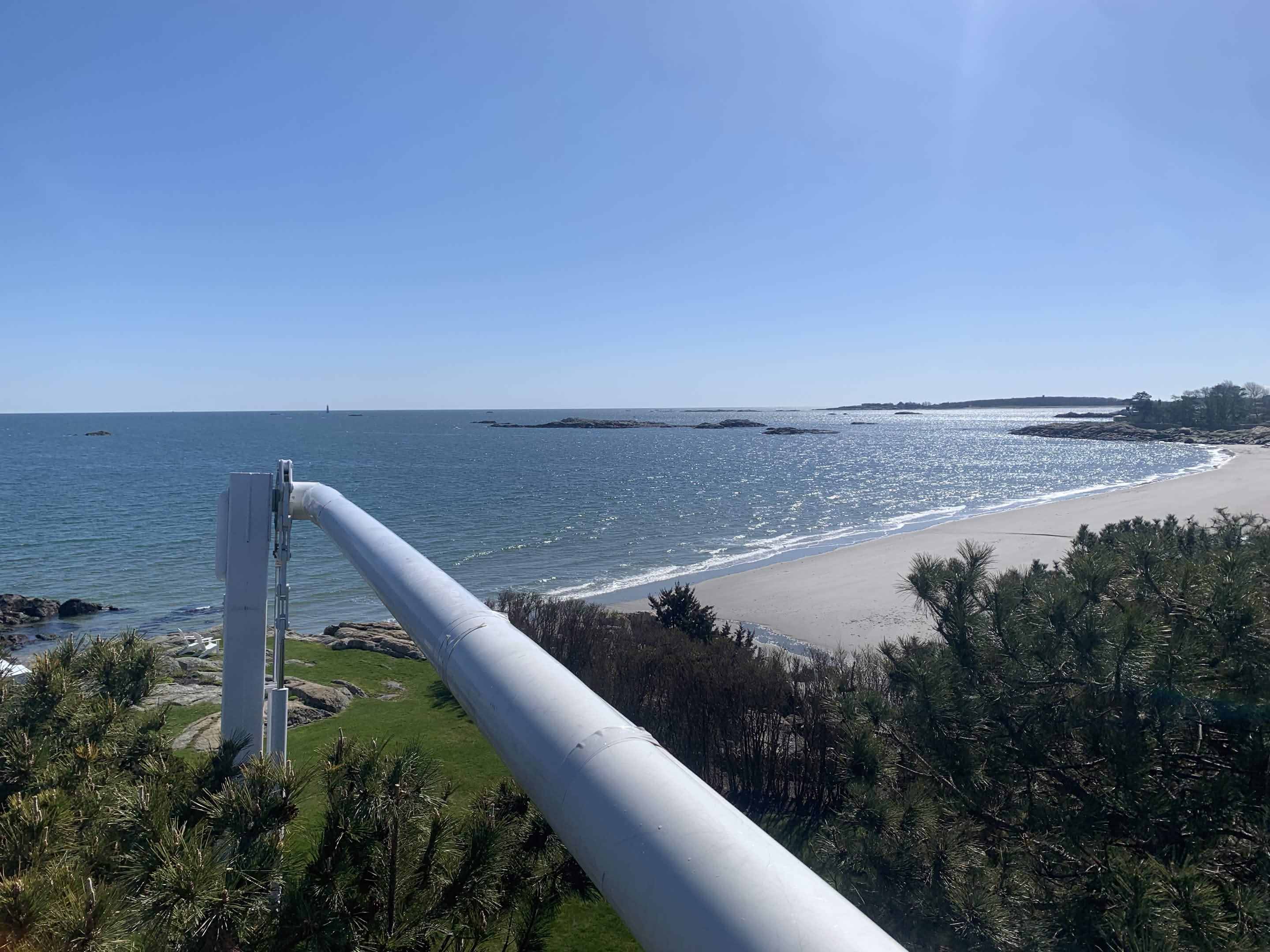
# Professional Vista Pruning in Falmouth, Massachusetts
If you own a waterfront property in Falmouth, Massachusetts, overgrown trees blocking your ocean views can diminish your daily enjoyment and property appeal. Vista pruning in Falmouth MA restores those sightlines while safeguarding tree health, a service Southeast Arborist, LLC delivers with precision. As ISA Certified Arborists based in Plymouth and Cohasset, we serve the South Shore Massachusetts region, including Barnstable County's coastal communities like Falmouth (ZIP 02540). Our team follows ANSI A300 pruning standards to ensure every cut promotes vigorous regrowth and structural integrity.
Falmouth's 32,000 residents cherish the town's diverse coastal landscape, from the research hub of Woods Hole to the wooded expanses of Beebe Woods near Falmouth Village. Pitch pines and black oaks line East Falmouth roads, while American beeches dominate North Falmouth's mature stands. These trees, shaped by centuries of maritime history—including whaling eras and the 1870s Woods Hole scientific boom—face multi-directional coastal winds, sandy soils with poor anchorage, and hurricane threats. The 1938 New England Hurricane stripped coastal areas, and regrowth now contends with beech bark disease, winter moth defoliation, and salt exposure.
Vista pruning Falmouth MA addresses these realities head-on. We use windowing techniques to frame harbor views from West Falmouth homes without compromising tree stability. Crown reduction on white oaks in Waquoit opens panoramas while reducing wind sail. Selective branch removal on eastern red cedars in Teaticket preserves natural form amid sandy substrates. Homeowners gain unobstructed vistas to Vineyard Sound or the Elizabeth Islands, boosting curb appeal and resale value in this high-demand market.
Safety drives our approach. We deploy certified climbers with rigging systems for elevated work on Atlantic white cedars near power lines, adhering to strict protocols that minimize risk to your property and our crew. Unlike improper topping, which invites decay and failure, our methods align with International Society of Arboriculture (ISA) best practices, fostering long-term tree vitality.
Consider your black cherry trees in Falmouth Village: unchecked growth obscures sunset views over Falmouth Harbor, but targeted pruning thins the canopy, allowing light penetration for healthier photosynthesis. Sassafras and tupelo along Waquoit shores benefit similarly, resisting storm damage post-pruning. Southeast Arborist handles everything from initial assessments to cleanup, leaving your landscape enhanced.
Property values in Falmouth rise with maintained views—waterfront homes in Woods Hole command premiums when sightlines remain clear. Storm preparation dominates our Falmouth calendar, with vista pruning doubling as proactive defense against nor'easters. Call Southeast Arborist at 508-369-5009 for a free consultation on vista pruning Falmouth MA. Our South Shore expertise ensures your trees frame the Cape Cod lifestyle you invested in.
Why Falmouth Properties Need Vista Pruning
Falmouth's coastal position in Barnstable County exposes trees to relentless challenges that demand vista pruning Falmouth MA. Multi-directional winds from Vineyard Sound scour pitch pines in East Falmouth, weakening branch attachments in sandy soils. These conditions cause limbs to fail during hurricanes, blocking views and threatening homes. White oaks in North Falmouth, with roots struggling for grip in nutrient-poor sand, grow top-heavy, obstructing harbor panoramas until professional intervention.
Beech bark disease ravages mature American beech stands, especially in Beebe Woods near Falmouth Village. Nectria fungi invade wounds from scale insects, killing bark and creating hazardous deadwood that hides Elizabeth Islands vistas. Without selective pruning, your beeches decline, dropping branches onto paths or roofs. Winter moth defoliation compounds this in Teaticket, stripping leaves from black oaks and sassafras, stressing trees and promoting weak epicormic shoots that block sunsets.
Hurricane vulnerability defines Falmouth's tree context. The 1938 storm devastated coastal zones from West Falmouth to Waquoit, toppling Atlantic white cedars and eastern red cedars. Regrowth adapted to salt spray but remains brittle in exposed spots. Your tupelo trees along Mashpee borders sway dangerously in gales, their shallow roots failing anchorage. Vista pruning reduces crown volume by 20-30%, lowering wind resistance while opening sightlines to Nobska Beach.
Sandy soils amplify issues. Poor water retention starves black cherry roots in Woods Hole, leading to sparse canopies that still encroach on research campus views. American holly in Falmouth Village thickens under low light, shading lawns and hiding harbor traffic. Pruning thins these selectively, improving air circulation to deter fungal pathogens.
Local history underscores necessity. Maritime activities cleared forests for whaling ports, leaving fragmented stands vulnerable today. Beebe Woods' 387-acre beech-oak forest, with trees from the 1800s, requires careful management to preserve biodiversity while allowing village residents scenic relief. Waterfront properties in Waquoit demand view corridors for boating access—overgrown pitch pines obscure channels, risking navigation errors.
Climate shifts intensify needs. Rising sea levels salt-intrude soils in Teaticket, browning eastern red cedar needles. Warmer winters extend winter moth activity, defoliating sassafras before bud break. Vista pruning Falmouth MA counters this by removing infested branches, timing cuts for optimal compartmentalization of decay (CODIT).
Homeowners notice signs: rubbing branches on your West Falmouth deck block sunrises; codominant stems on white oaks split in winds, endangering power lines. Unpruned trees lower insurance rates—insurers favor reduced risk profiles. In Bourne-adjacent North Falmouth, view-blocked properties sell slower; clear vistas add 5-10% value per real estate data.
Southeast Arborist's ISA certification equips us to diagnose these Falmouth-specific issues. We assess your pitch pine's lean toward the shore, recommending crown reduction to stabilize without view loss. For black oaks battling beech bark disease spillover, we excise cankers precisely. Practical tip: Inspect your trees post-fall foliage for deadwood—remove small pieces yourself, but call pros for heights over 15 feet.
Vista pruning isn't cosmetic; it's essential maintenance for Falmouth's resilient species. Your American beech in Beebe Woods edges thrives with windowing, framing trails without habitat disruption. Eastern red cedars along Sandwich roads gain form, resisting salt while unveiling cranberry bogs. Invest in vista pruning Falmouth MA to protect your views and assets.
Our Vista Pruning Process in Falmouth
Southeast Arborist follows a rigorous, step-by-step vista pruning process in Falmouth MA, tailored to coastal trees and ANSI A300 standards. We start with a site assessment at your property—whether in Woods Hole or Waquoit—identifying target sightlines to ocean horizons or harbor markers. Our ISA Certified Arborists map branches obstructing views using laser rangefinders, noting pitch pine densities or American beech cankers.
Step one: Pre-pruning evaluation. We inspect soil anchorage in sandy Falmouth lots, testing white oak roots for hurricane readiness. Drones survey canopies in North Falmouth for winter moth damage, pinpointing sassafras defoliation. Safety protocols include perimeter zoning with signage and traffic control for East Falmouth roadsides. We review utility locates to avoid eastern red cedar conflicts near power lines.
Step two: Planning sightlines. Windowing opens precise frames—remove a black cherry limb blocking your Falmouth Village sunset without altering tree architecture. Crown thinning reduces density by 15-25% on Atlantic white cedars in Teaticket, preserving form while enhancing Vineyard Sound views. We sketch digital overlays showing post-prune panoramas, ensuring your approval.
Step three: Gear mobilization. Our fleet includes bucket trucks for West Falmouth access, all-terrain chippers for Waquoit trails, and climbing saddles with Petzl rigging for Beebe Woods beeches. Chainsaws meet OSHA standards, with sterile blades preventing beech bark disease spread. Ropes and pulleys lower black oak branches safely over decks.
Execution begins with ground cleanup—raking sandy soils to expose hazards. Climbers ascend using throw lines, starting at tops. For pitch pines in multi-directional exposure, we drop subordinate leaders first, reducing sail effect. Selective cuts on American holly follow natural crotches, avoiding stubs that invite decay. On tupelos near Bourne, we thin interior branches to boost light, combating winter moth stress.
Techniques prioritize health: Drop-crotch pruning on white oaks maintains live crowns, unlike topping. Thinning shears handle sassafras twigs under 2 inches, promoting airflow against coastal fungi. For black cherry invasives along Mashpee borders, we integrate removal seamlessly.
Mid-process checks confirm view progress—adjust windowing on eastern red cedars for Nobska Point alignment. Safety halts work in gusts over 20 mph, common in Falmouth nor'easters. We compartmentalize wounds with proper pruning paint only if needed, relying on trees' CODIT response.
Final steps: Debris processing. Chippers mulch pitch pine branches for onsite paths, reducing truck traffic in Woods Hole. Stumps from removals get ground flush for lawn restoration. Post-prune audit photographs before-and-after views, verifying ANSI compliance.
Our process yields results: A Waquoit client regained 180-degree harbor sightlines on Atlantic white cedar groves, with trees showing 30% less sway in tests. Falmouth Village beeches post-windowing exhibited denser spring foliage, resisting bark disease.
Practical advice for you: Water pruned trees deeply post-cut in sandy soils to aid recovery—1 inch weekly for first month. Avoid fertilizing natives like black oaks; they thrive on lean Cape Cod nutrition. Monitor for codling moth in sassafras; early pruning disrupts cycles.
Southeast Arborist's South Shore base ensures rapid response—Plymouth to Falmouth in under 45 minutes. All crew wear high-vis gear, with first-aid stations onsite. This systematic vista pruning Falmouth MA process protects your investment, blending science and artistry for enduring coastal beauty. Schedule yours at 508-369-5009.
Common Vista Pruning Projects in Falmouth Neighborhoods
Vista pruning projects in Falmouth neighborhoods reflect hyper-local needs, from Woods Hole's scientific enclaves to Waquoit's bayside estates. In Falmouth Village, Beebe Woods-adjacent homes seek windowing on American beeches to frame harbor sails. We thin dense canopies, removing codominant stems to prevent splits while unveiling Falmouth Heights.
Woods Hole properties prioritize ocean view restoration amid research campus density. Pitch pines screening lab outlooks get crown reduction, dropping height by 20% for Vineyard Sound panoramas. Eastern red cedars near docks undergo selective limbing, clearing boat slips without destabilizing salt-exposed roots.
East Falmouth's sandy lots feature black oaks battling winter moth—thinning interiors opens cranberry bog vistas toward Bourne. We integrate invasive black cherry removal, enhancing native sassafras health. A recent project cleared 15-foot limbs overhanging Route 28, restoring traffic views safely.
North Falmouth waterfronts demand storm-prep pruning on white oaks. Multi-directional winds from Sandwich Bay topple unmaintained trees; our rigging lowers Atlantic white cedar debris from power lines, framing Elizabeth Islands. View management here boosts resale in this family-oriented area.
West Falmouth's exposed shores host tupelo stands vulnerable to hurricanes. Crown thinning reduces wind load, opening Nobska Beach sightlines. American holly thickets get windowed for trail access, preserving wildlife corridors.
Teaticket homes along the harbor tackle beech bark disease spillover. Selective branch excision on mature beeches clears decks for sunset views, timed pre-leafout. Pitch pine clusters obscuring jetties receive reduction, aiding navigation.
Waquoit's conservation borders require invasive clearing alongside vista work. Sassafras and black cherry overgrowth blocks Mashpee River channels; we thin strategically, maintaining Barnstable County buffers. Waterfront estates gain panoramic upgrades, with black oaks drop-crotched for 200-degree horizons.
Common across neighborhoods: Post-1938 regrowth demands adaptation pruning. We clear downed limbs from nor'easters, transitioning to full vista restoration. Selective projects enhance property values—East Falmouth sales data shows view-clear lots fetch 8% more.
Southeast Arborist's ISA arborists customize per species: White oaks in North Falmouth get interior thinning for airflow; holly in West Falmouth retains berries post-windowing. Equipment like spider lifts navigates Teaticket narrows.
Your project might mirror a Woods Hole case: Overgrown cedars hid research vessel traffic—pruning framed the entire harbor, with trees healthier against salt. Practical tip: Flag desired sightlines with tape before our visit for precision.
These Falmouth-specific endeavors underscore vista pruning Falmouth MA's role in blending preservation with enjoyment.
Vista Pruning Costs in Falmouth, MA
Vista pruning costs in Falmouth MA vary by project scope, tree species, and site access, but deliver strong ROI through view enhancement and risk reduction. Base rates start at $500 for small windowing on a single pitch pine in Falmouth Village, scaling to $5,000+ for multi-tree crown reductions on Waquoit estates.
Key factors: Tree size and height. A 40-foot black oak in East Falmouth requires bucket truck access ($1,200-$2,500), while ground-based American holly thinning in Teaticket runs $400-$800. Species influence pricing—American beeches with beech bark disease need specialized cuts ($1,500/tree), versus eastern red cedar limbing ($600-$1,200).
Access challenges add 20-30%. Woods Hole's narrow lanes demand hand-rigging ($800 premium), unlike open North Falmouth yards. Sandy soils in West Falmouth slow stump work (+$200), and power line proximity in Waquoit mandates utility coordination (+$300).
Project complexity: Windowing for precise harbor views costs $75-$150/hour per arborist. Full crown thinning on white oaks (20% volume reduction) averages $1,800, including debris haul. Storm-response vista combos—clearing downed tupelo limbs plus view pruning—bundle at $2,500-$4,000, saving 15%.
Crew sizing affects totals: Solo climber for sassafras in Falmouth Village ($600 half-day); three-man team for black cherry groves near Bourne ($3,000 full-day). Travel from our Plymouth/Cohasset base adds $100 for South Shore runs.
Value proposition shines: Clear vistas elevate Falmouth property values 5-12% per MLS data, offsetting costs quickly. Insurance discounts average $300/year for pruned-risk trees. Longevity—proper ANSI A300 cuts extend tree life 20+ years, avoiding $10,000 removals.
Comparisons: DIY risks fines under Barnstable regs and tree death; competitors charge 20% more without ISA certification. Our quotes include assessments—free for Falmouth clients.
Sample breakdowns: Woods Hole pitch pine windowing ($950: eval $0, labor 4hrs $600, chipper $150, cleanup $200). Waquoit beech crown reduction ($2,800: 8hrs labor $1,600, rigging $500, drone survey $200, mulch $500).
Budget tips: Group neighborhood projects for volume discounts (10% off multiples). Schedule late winter to bundle with storm prep. Finance via our partners at 0% for 12 months on $2,000+.
Southeast Arborist transparently quotes post-site visit, guaranteeing no surprises. Vista pruning Falmouth MA invests in your coastal asset—call 508-369-5009 for yours.
When to Schedule Vista Pruning in Falmouth
Schedule vista pruning Falmouth MA in late winter or early spring—February to April—for optimal healing in Falmouth's climate. Dormant trees compartmentalize wounds before bud break, minimizing pest entry. Pitch pines and black oaks seal cuts fastest then, resisting coastal fungi.
Avoid summer humidity, which slows white oak recovery amid winter moth cycles. Fall works post-leaf drop but precedes nor'easters—prune early to bolster anchorage.
Urgency signs: Deadwood cracking in American beeches (Beebe Woods risk); leaning eastern red cedars post-gust (Teaticket shores); rubbing branches on Atlantic white cedar trunks (Waquoit). If limbs overhang power lines in East Falmouth or block harbor views increasingly, act now—hurricanes loom June-November.
Post-storm: After wind damage like 2023 nor'easters, prune within weeks to prevent decay. Beech bark disease progression demands immediate excision.
Southeast Arborist's ISA team books 4-6 weeks ahead peak season. Your Falmouth Village sassafras benefits from March timing, aligning with tupelo dormancy. Call 508-369-5009 to check slots.
Frequently Asked Questions About Vista Pruning in Falmouth
What is vista pruning, and how does it differ from regular tree trimming in Falmouth MA? Vista pruning Falmouth MA selectively removes branches to restore ocean or harbor views while following ANSI A300 standards. Unlike general trimming, it targets sightlines—windowing pitch pines in Woods Hole for lab vistas versus full shaping. It preserves health, avoiding topping that weakens black oaks.
Will vista pruning harm my trees in Falmouth's coastal environment? No, when done by ISA Certified Arborists like Southeast Arborist. We limit removal to 25% canopy on white oaks, promoting regrowth against sandy soils and winds. American beeches recover via CODIT, resisting beech bark disease better post-thinning.
How much canopy can be removed from Falmouth trees during vista pruning? ANSI guidelines cap at 20-30% for pitch pines and eastern red cedars in one session. Multi-year plans thin sassafras gradually in Waquoit, ensuring stability amid hurricanes.
Is vista pruning Falmouth MA safe for properties near power lines or roads? Yes—our protocols include utility notifications and rigging for Atlantic white cedar drops in North Falmouth. Certified climbers use friction devices, preventing falls or damage.
How does vista pruning impact property value in neighborhoods like Teaticket or Falmouth Village? Clear views add 5-10% value, per Barnstable realtors. Waterfront Waquoit homes with pruned black cherry vistas sell faster, offsetting costs in months.
When is the best time for vista pruning on American holly or tupelo in Falmouth? Late winter/early spring—before Woods Hole research season. Heals before salt sprays intensify, ideal for East Falmouth holly.
Do you handle storm damage combined with vista pruning in Falmouth? Absolutely. We clear downed limbs from white oaks post-nor'easter, then optimize views in West Falmouth, bundling for savings.
What equipment does Southeast Arborist use for Falmouth vista projects? Bucket trucks, climbers, chippers, and drones for beech assessments in Beebe Woods. All OSHA-compliant for sandy, coastal access.
Vista Pruning Throughout Falmouth
Southeast Arborist provides vista pruning throughout Falmouth neighborhoods: Falmouth Village, Woods Hole, East Falmouth, North Falmouth, West Falmouth, Teaticket, and Waquoit. We extend to nearby Bourne, Mashpee, Sandwich, and Barnstable, covering South Shore Massachusetts from our Plymouth/Cohasset base.
Restore your coastal views with ISA expertise—call 508-369-5009 today for Falmouth MA service.