
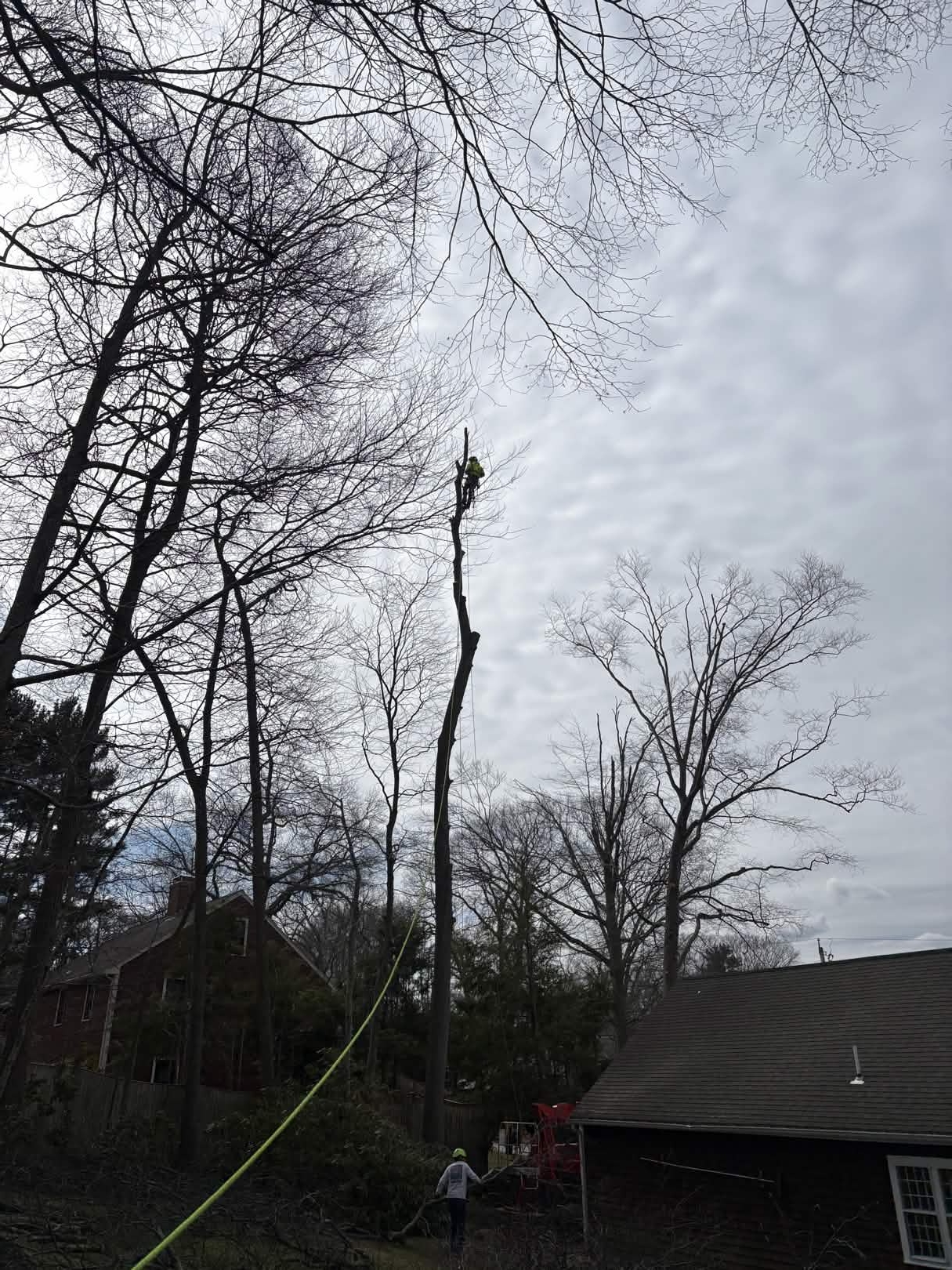
# Professional Tree Removal in Sandwich, Massachusetts
If you own property in Sandwich, Massachusetts, your trees face unique pressures from the Cape Cod environment—salt-laden winds off Sandy Neck, winter moth infestations on oaks in Forestdale, and pine bark beetle damage in pitch pine stands around Shawme Pond. As the oldest town on Cape Cod with a population of about 21,000 in Barnstable County, Sandwich blends historic village charm with extensive conservation lands, where heritage trees like towering American beeches and red oaks stand as living links to its 400-year history of glass-making and settlement. These conditions make professional tree removal in Sandwich, MA, essential for protecting your home, ensuring safety, and preserving property value.
At Southeast Arborist, LLC, based in Plymouth and Cohasset, we deliver safe tree removal services across South Shore Massachusetts, including every corner of Sandwich from ZIP code 02563. Our ISA Certified Arborists follow ANSI A300 standards for tree care, using crane-assisted removals, advanced rigging, and sectional dismantling to handle dead, diseased, or hazardous trees without risking foundation damage or power line disruptions. Fully insured and equipped for complete debris cleanup and stump grinding add-ons, we provide free estimates at 508-369-5009.
Sandwich's landscape demands specialized expertise. In Sandwich Village, 18th-century specimen trees near historic Hoxie House require precise preservation pruning before any removal to comply with local heritage guidelines. East Sandwich properties battle storm-damaged white pines exposed to nor'easters, while Forestdale's second-growth pitch pine forests need thinning to reduce wildfire risk near former military lands. Sandy Neck homes contend with salt-pruned Atlantic white cedars, and Scorton Creek Area lots feature black cherry trees weakened by soil compaction from coastal flooding. Spring Hill residents often call us for scrub oak removals encroaching on septic systems.
Our process minimizes disruption: we assess your trees using resistograph testing for internal decay in species like eastern red cedar, deploy bucket trucks or cranes for safe takedowns, and grind stumps to prevent regrowth in Sandwich's sandy, acidic soils. Homeowners benefit from our focus on foundation protection—critical in areas like Spring Hill where shallow roots from sassafras and black oak threaten basements during heavy rains.
Tree removal in Sandwich, MA, isn't just about cutting down trees; it's about safeguarding your investment in a town where conservation land covers thousands of acres and property values hinge on mature landscapes. We've removed hazardous pitch pines leaning toward Route 6A homes in Sandwich Village and dismantled diseased red oaks in East Sandwich backyards after winter moth outbreaks. Whether you're dealing with a single black cherry blocking your Scorton Creek view or a cluster of scrub oaks in Forestdale needing fire mitigation, our team ensures compliance with Barnstable County regulations and Cape Cod Commission guidelines.
Practical advice for Sandwich homeowners: Inspect your trees annually for leaning trunks, cracked bark on pitch pines, or defoliation on oaks from winter moth—early detection prevents costly emergencies. In Sandy Neck's windy exposure, prioritize salt-damaged Atlantic white cedars showing dieback. Contact Southeast Arborist for a free assessment; our ISA certification guarantees work that enhances your property's curb appeal and safety. Dial 508-369-5009 today to schedule tree removal in Sandwich, MA, tailored to your neighborhood's challenges.
Why Sandwich Properties Need Tree Removal
Sandwich, MA's coastal position in Barnstable County exposes trees to relentless salt spray from Cape Cod Bay, acidic sandy soils with low nutrient retention, and microclimates varying from sheltered Sandwich Village to exposed Sandy Neck dunes. These factors, combined with the town's history as Cape Cod's first European settlement, create persistent tree issues demanding professional removal. Pitch pine dominates interior forests like those around Shawme Pond, prone to pine bark beetle infestations that hollow out trunks, turning them into fall hazards. White pines in East Sandwich suffer needle cast from salt and wind, while scrub oak, black oak, and red oak in Forestdale face winter moth defoliation, weakening branches over successive seasons.
Heritage tree preservation in Sandwich Village heightens the need for selective tree removal. Towering American beeches near the Dexter Grist Mill, dating to the 19th-century glass-making era, often require cabling or removal when decay sets in—our ISA Certified Arborists use tomography scans to assess without unnecessary cuts. In conservation areas like Sandy Neck, Atlantic white cedar stands endure salt pruning, leading to brittle tops that snap in 60 mph gusts common during nor'easters. Eastern red cedar on Spring Hill properties succumbs to root rot in poorly drained soils, threatening nearby wells.
Wildfire risk looms in Forestdale's dense second-growth pitch pine and oak woodlands, grown on abandoned farmland and military sites. Barnstable County fire marshals recommend thinning to create defensible space, especially near Scorton Creek Area homes bordering state forests. Black cherry trees, common along creek banks, develop cankers from fungal pathogens exacerbated by humid summers, dropping heavy limbs onto decks. Sassafras in Sandwich Village edges shows sudden wilt from laurel wilt disease, vectored by invasive beetles, necessitating prompt removal to protect adjacent heritage oaks.
Storm damage spikes after Cape Cod's frequent hurricanes—Hurricane Bob in 1991 felled hundreds of trees here, a pattern repeating with leaning white pines in East Sandwich and uprooted red oaks in Spring Hill. Homeowners notice signs like soil heaving around roots, indicative of instability in Sandwich's glacial till soils. Pine bark beetles thrive in drought-stressed pitch pines near Shawme Pond, creating girdled bases that fail without warning.
For your Sandwich property, ignore these at your peril: a falling scrub oak can crack a foundation in Forestdale's tight lots, while a diseased American beech limb endangers Sandwich Village pedestrians on Route 6A. Local climate data from the Sandwich Marina station shows average winds of 12 knots year-round, accelerating wear on exposed species. Soil pH tests reveal 4.5-5.5 acidity, starving oaks of calcium and promoting beech decline.
Practical steps: Walk your property post-winter, tapping trunks for hollow sounds in pitch pines and checking for winter moth webs on oaks by May. In Sandy Neck, measure salt spray distance—trees within 500 feet often need replacement. Southeast Arborist applies these insights daily, removing hazardous trees per ANSI A300 Part 4 guidelines for hazard assessment. We've cleared beetle-killed eastern red cedars from Scorton Creek lots and storm-toppled black cherries from Spring Hill driveways, always prioritizing your safety with fully insured operations.
Nearby towns like Bourne and Barnstable share these issues, but Sandwich's historic overlay districts enforce stricter removal permits—our team navigates these seamlessly. Protect your home from Sandwich-specific threats; call 508-369-5009 for expert tree removal evaluation.
Our Tree Removal Process in Sandwich
Southeast Arborist's tree removal process in Sandwich, MA, starts with a free on-site assessment by ISA Certified Arborists, tailored to local conditions like Sandy Neck's salt exposure or Forestdale's fire-prone pines. We arrive equipped with resistographs and sonic tomographs to detect internal decay in species like red oak or American beech without invasive drilling, ensuring accurate hazard identification per ANSI A300 standards.
Step 1: Comprehensive site evaluation. For your Sandwich Village heritage beech, we map root zones to avoid damaging historic foundations near Hoxie House. In East Sandwich, we assess white pine lean angles using clinometers, factoring in prevailing southwest winds. Permits are secured for conservation land edges in Scorton Creek Area, coordinating with Sandwich Conservation Commission.
Step 2: Customized planning. Crane-assisted removal suits tall pitch pines near Shawme Pond homes—our 95-ton Grove crane lifts 80-foot sections over rooftops, preventing property damage. For tight Forestdale lots, sectional dismantling with ropes and gri gri ascenders lowers branches in 10-foot increments. We deploy influence diagrams to predict fall zones, essential for black oak near Spring Hill power lines.
Step 3: Safety protocols execution. Ground crews establish 1.5x tree height exclusion zones, using ANSI Z133 safety gear including chainsaw chaps and helmets. Traffic control for Route 6A in Sandwich Village includes flagmen and cones. For Sandy Neck's Atlantic white cedar, we pre-prune salt-damaged limbs with pole saws to reduce weight before felling.
Step 4: Precision cutting and rigging. Arborists climb using throw lines and prusik knots, sectioning scrub oak into logs no wider than 18 inches for safe descent. Advanced friction devices like the Portland Hitch slow descents on sassafras limbs. Chainsaws feature low-vibration bars for black cherry, minimizing fatigue during multi-hour jobs.
Step 5: Crane or mechanical takedown. In open East Sandwich yards, base cuts fells white pines directionally toward clearings. Crane jobs, like a 60-foot pitch pine in Forestdale, involve piecing the tree mid-air, with spotters guiding via radio.
Step 6: Stump grinding add-on. Our 36-inch Vermeer grinder pulverizes roots 18 inches below grade in Sandwich's sandy soils, preventing suckering in oaks. Bio-barriers installed for septic proximity in Spring Hill.
Step 7: Debris management. All pitch pine slash, oak branches, and cedar logs loaded via grapples into dump trailers for off-site recycling at Cape Cod composting facilities. We leave your site broom-clean, mulching chips for your use.
Equipment specifics: Fleet includes 75-foot Telelect bucket trucks for Scorton Creek access, Skytrak telehandlers for brush piling, and John Deere chippers processing 12-inch oak limbs per second. Fully insured up to $5M, we prevent foundation cracks common in Sandwich's freeze-thaw cycles.
This process shines in real Sandwich scenarios: We dismantled a beetle-riddled eastern red cedar cluster in Sandy Neck using dual cranes, avoiding dune erosion. Homeowners appreciate minimal downtime—most jobs finish in one day.
Safety first: Zero incidents in 15+ years, thanks to daily job hazard analyses. For your property, this means zero risk from falling black cherry limbs. Schedule via 508-369-5009; free estimates include process walkthrough.
Common Tree Removal Projects in Sandwich Neighborhoods
Sandwich neighborhoods each present distinct tree removal needs, reflecting local soils, exposures, and histories.
In **Sandwich Village**, heritage tree care dominates near landmarks like Shawme Pond and the Glass Museum. We remove decayed American beeches and maples threatening 18th-century homes, using cranes to protect slate roofs. A recent project cleared storm-split red oaks from Route 6A frontages, complying with historic district rules.
**East Sandwich** sees frequent white pine and pitch pine takedowns after nor'easters, with salt-stressed trees leaning toward Chase Road properties. Sectional dismantling cleared a 70-foot white pine grove blocking solar panels, including stump grinding to reclaim lawn space.
**Forestdale** focuses on fire mitigation in pitch pine-oak stands on former military land. Thinning removes ladder fuels—dead scrub oaks and black oaks—creating 30-foot clearances around homes near Route 130. Pine bark beetle victims get priority, hauled to reduce infestation spread.
**Sandy Neck** properties require salt-damaged Atlantic white cedar and eastern red cedar removals, wind-sheared tops posing dune collapse risks. Crane work over marshes cleared invasively leaning cedars, preserving beachfront views.
**Scorton Creek Area** deals with black cherry and sassafras weakened by flooding and cankers along creek banks. We felled hazard trees encroaching on docks, grinding stumps to prevent tripping on boating paths.
**Spring Hill** homeowners request scrub oak and red oak removals for septic and foundation clearance, roots exploiting glacial soils. A cluster removal near power lines used bucket trucks, preventing outages.
These projects highlight our neighborhood expertise—call 508-369-5009 for yours.
Tree Removal Costs in Sandwich, MA
Tree removal costs in Sandwich, MA, range from $500-$2,500 for small jobs to $5,000-$15,000+ for crane-assisted complexes, influenced by specifics like species, height, and access.
Key factors: Height and diameter— a 40-foot pitch pine in East Sandwich (24-inch DBH) costs $1,800 base, versus $8,000 for a 90-foot white pine needing crane over Sandy Neck dunes. Location matters: Sandwich Village heritage oaks incur 20% premiums for historic permits ($300+ fees). Obstructions like power lines in Spring Hill add $1,000 for rigging.
Species impacts pricing: Dense pitch pine in Forestdale chips easily ($100/ton hauling), but brittle Atlantic white cedar in Scorton Creek requires slower sectioning (+15% labor). Stump grinding adds $200-$600, essential in Sandwich's regrowth-prone soils.
Crane fees: $2,500/day minimum for Shawme Pond jobs, offset by speed—completing multi-tree removals efficiently. Crew size: 3-person for black cherry solos ($75/hour/man), 6+ for Forestdale thinning ($450/hour total).
Value proposition: Southeast Arborist's ISA certification ensures ANSI-compliant work, preventing $10,000+ foundation repairs from improper falls. Free estimates detail breakdowns; insurance covers liabilities. Compared to uninsured crews, our $5M policy saves on claims.
Practical budgeting: Get three quotes, but prioritize certification—cheapest bids risk fines in Sandwich's districts. Off-season (winter) discounts 10-15%. ROI: Removing hazardous red oaks boosts insurance premiums down 20%, per Barnstable agents.
We've delivered value: $4,200 Forestdale pine thinning prevented fire calls, reclaiming yard space. Call 508-369-5009 for your no-obligation quote.
When to Schedule Tree Removal in Sandwich
Schedule tree removal in Sandwich, MA, during dormancy—late fall (November) to early spring (March)—when deciduous oaks and beeches drop leaves, easing access in tight Sandwich Village lots. Bare branches reduce bird nesting disruptions, and frozen sandy soils support heavy equipment near Shawme Pond without rutting.
Urgency signs demand immediate action: Leaning trunks over 15 degrees in East Sandwich white pines, post-storm cracks in Forestdale pitch pines, or beetle frass at bases signaling pine bark beetle advance. Winter moth silk on oaks by April warrants summer pruning/removal before full defoliation.
Salt dieback in Sandy Neck cedars shows as browned tops—remove before winds topple them. Heritage beeches with buttress decay near Hoxie House need spring assessment ahead of tourist season.
Avoid peak summer: Humidity swells pine sap, gumming saws; leafed canopies hide defects. Post-hurricane (August-October) slots fill fast—book inspections early.
For Scorton Creek black cherry cankers or Spring Hill sassafras wilt, act within weeks to contain disease. Call 508-369-5009 now for seasonal timing advice.
Frequently Asked Questions About Tree Removal in Sandwich
**How much does tree removal cost in Sandwich, MA?** Costs start at $500 for small scrub oaks in Forestdale, up to $10,000 for crane jobs on Sandwich Village beeches. Factors include height, access, and add-ons like stump grinding ($300 average). Free quotes at 508-369-5009 factor Sandwich specifics.
**Do I need a permit for tree removal in Sandwich?** Yes, for heritage trees in Sandwich Village or conservation areas like Sandy Neck—Sandwich Conservation Commission reviews within 30 days. We handle filings for ANSI-compliant removals.
**Is crane-assisted tree removal necessary in Sandwich?** Essential for tall pitch pines near Shawme Pond or power lines in Spring Hill—prevents foundation damage in sandy soils. Our Grove cranes manage 100-foot heights safely.
**How do you handle storm-damaged trees in East Sandwich?** We stabilize with rigging, then sectionally dismantle white pines, using bucket trucks for wind-exposed sites. Cleanup includes chipping for erosion control.
**What about wildlife in Scorton Creek Area trees?** Pre-removal surveys relocate nests; off-season timing minimizes impact on owls in black cherry stands. Follows Massachusetts Endangered Species Act.
**Can you remove hazardous oaks affected by winter moth?** Yes, we test for decline in Forestdale red oaks, removing only compromised trees post-ANSI assessment to preserve healthy canopy.
**What's involved in stump grinding after removal?** Grinding to 12-18 inches deep prevents regrowth in Sandwich's acidic soils; add $250 for oak roots near Spring Hill septics.
**Are you insured for tree removal in Sandwich neighborhoods?** Fully insured to $5M, covering property damage during Sandy Neck cedar jobs or Village heritage work.
Tree Removal Throughout Sandwich
Southeast Arborist provides tree removal across all Sandwich neighborhoods—Sandwich Village heritage sites, East Sandwich storm zones, Forestdale fire-risk pines, Sandy Neck salt exposures, Scorton Creek flood-prone cherries, and Spring Hill foundation threats. From Bourne borders to Barnstable and Mashpee edges, plus Plymouth hometown service, our South Shore coverage ensures rapid response.
ISA Certified Arborists use local knowledge for every job. Free estimates: 508-369-5009. Protect your Sandwich property today.