
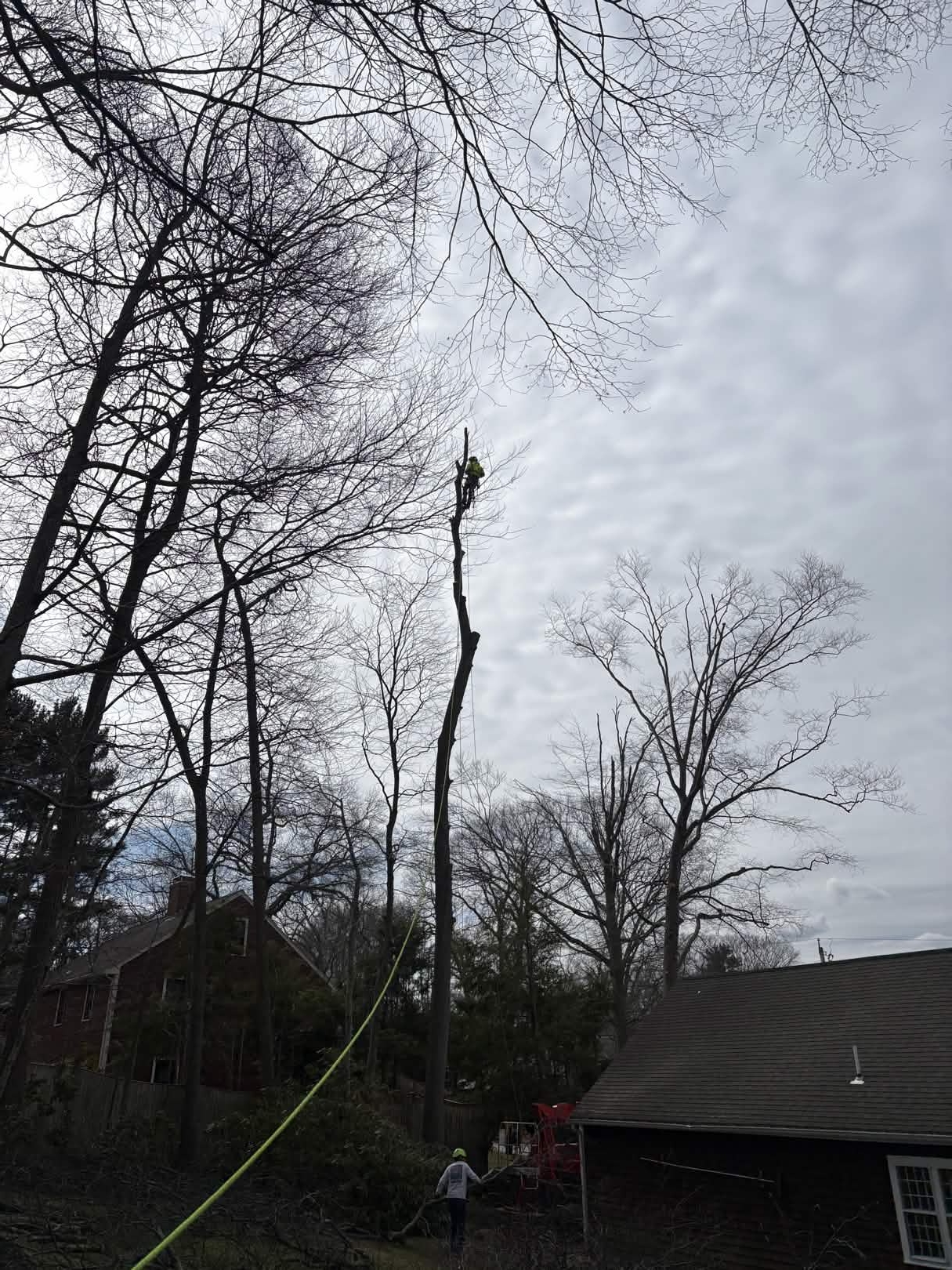
# Professional Tree Removal in Fairhaven, Massachusetts
If you own a home in Fairhaven, Massachusetts, your property likely features mature trees like red oaks and white pines that contribute to the town's dense residential canopy. These trees enhance curb appeal and provide shade, but they also pose risks when they decline due to coastal storms, salt spray, or pests. Southeast Arborist, LLC, your local ISA Certified Arborists based in Plymouth and Cohasset, specializes in safe tree removal Fairhaven MA homeowners rely on. Serving the South Shore Massachusetts region, we handle everything from hazardous red maples leaning toward your roof in Sconticut Neck to dying Norway maples along historic Main Street in Fairhaven Center.
Fairhaven's coastal location in Bristol County exposes trees to relentless challenges. With a population of around 16,000, this historic harbor town sees frequent wind damage from nor'easters and hurricanes, echoing the devastation of the 1938 and 1954 storms that ravaged Sconticut Neck. Philanthropist Henry Huttleston Rogers shaped the town's tree canopy in the late 1800s by funding street tree plantings—many sycamores and honey locusts still line Center Street. Yet, spongy moth outbreaks from 2016-2017 weakened oaks in North Fairhaven, while harbor-side flooding stresses eastern red cedars in East Fairhaven.
When your white oak shows spongy moth defoliation or your pitch pine leans precariously after a gale, professional tree removal prevents property damage. Our team follows ANSI A300 standards for pruning and removal, using crane-assisted techniques for precision in tight residential lots. Fully insured and equipped for sectional dismantling, we ensure foundation protection and complete debris cleanup. Homeowners in Oxford Village appreciate our stump grinding add-on to eliminate tripping hazards and pest attractors.
Tree removal Fairhaven MA demands expertise attuned to local conditions—sandy, salt-influenced soils and high winds up to 60 mph during storms. We prioritize safety with advanced rigging, preventing incidents that could harm your family or neighbors. Unlike DIY attempts that risk power line contact or structural collapse, our ISA certification guarantees compliance with Massachusetts regulations. Call Southeast Arborist at 508-369-5009 for a free estimate tailored to your Fairhaven property.
Our services extend beyond removal: we assess your entire canopy for disease management and recommend salt-tolerant replacements like black cherry for waterfront yards. In Poverty Point, where black cherry trees thrive despite occasional flooding, we preserve healthy specimens while removing hazards. Experience the difference of South Shore professionals who understand Fairhaven's unique tree issues. Whether you're preparing for winter storms or addressing storm damage in the aftermath, Southeast Arborist delivers results that protect your investment.
This comprehensive guide covers why tree removal matters in Fairhaven, our step-by-step process, neighborhood-specific projects, costs, timing, and FAQs. By the end, you'll know exactly when to act on that leaning honey locust and how to contact us for reliable service.
Why Fairhaven Properties Need Tree Removal
Fairhaven's coastal exposure and historic tree plantings create specific pressures on your residential canopy. Sconticut Neck properties face the brunt of Atlantic gales, where white pines and pitch pines snap or uproot during nor'easters, threatening seawall-adjacent homes. Salt spray from Buzzards Bay stresses red maples and sycamores in East Fairhaven, causing needle scorch and branch dieback that weakens entire trees over time. Inland in North Fairhaven, red oaks and white oaks suffer from spongy moth damage, with larvae stripping foliage and leaving stands vulnerable to secondary infections like Armillaria root rot in the town's acidic, sandy soils.
Henry Huttleston Rogers' legacy endures in Fairhaven Center, where aging honey locusts and Norway maples along Main and Center Streets exhibit decline. These heritage trees, planted over a century ago, now contend with girdling roots and cankers, risking pedestrian safety and historic district aesthetics. Harbor-side flooding in Poverty Point inundates roots of eastern red cedars and black cherry trees, promoting Phytophthora pathogens that lead to basal rot. Your property's trees face compounded threats: winter winds exceeding 50 mph, summer droughts drying clay-loam pockets, and pest cycles like the 2016-2017 spongy moth outbreak that defoliated 70% of oaks in Oxford Village.
Climate data from nearby New Bedford underscores urgency—Fairhaven averages 45 inches of annual precipitation, with 10-15 storm events causing tree failure. Soil pH around 5.5-6.5 favors oaks but amplifies salt uptake in waterfront yards, yellowing leaves on Norway maples. Homeowners notice leaning trunks after storms, cracked sidewalks from root upheaval, or deadwood accumulation signaling internal decay. Ignoring these invites disaster: a falling red oak could damage your Oxford Village ranch-style home's vinyl siding, while a toppled white pine in Sconticut Neck might breach a $500,000 property's foundation.
Practical advice for Fairhaven residents: Inspect your trees post-winter for V-shaped crotches prone to splitting, common in fast-growing red maples. Probe soil around bases for waterlogging, especially if your East Fairhaven lot borders salt marshes. Monitor for spongy moth egg masses on oaks in North Fairhaven—dark, fuzzy clusters up to 1.5 inches long. If branches rub against power lines near Fairhaven High School, schedule removal immediately to avoid outages.
Southeast Arborist's ISA Certified Arborists identify hazards using resistograph testing on heritage sycamores, confirming decay before failure. We prioritize dead, diseased, or hazardous tree removal Fairhaven MA properties demand, preventing liability under town ordinances requiring safe street trees. In coastal zones like Poverty Point, we address salt stress by removing susceptible honey locusts and suggesting resilient pitch pine successors. Your investment in proactive removal safeguards insurance rates and resale value in this tight-knit community of 16,000.
Our Tree Removal Process in Fairhaven
Southeast Arborist follows a meticulous, safety-first process for tree removal Fairhaven MA homeowners trust, adhering to ANSI A300 standards and OSHA protocols. We start with a free on-site assessment at your property—call 508-369-5009 to schedule. Our ISA Certified Arborists evaluate species-specific risks, like codominant stems in white oaks or included bark in red maples, using LiDAR mapping for precise hazard rating.
Step 1: Pre-job planning. We review utility locates via Dig Safe, essential for Fairhaven's underground lines in Fairhaven Center. For Sconticut Neck's tight lots, we deploy drones to assess crane access around seawalls. Permits from the Fairhaven Tree Warden are secured for public right-of-way trees, typically within 48 hours.
Step 2: Gear-up and site prep. Crews arrive in bucket trucks, chippers, and 65-ton cranes for complex jobs. We tarp sensitive areas like your Poverty Point perennial beds to protect landscaping. Traffic control in North Fairhaven neighborhoods includes cones and signage, minimizing disruption during peak commuter hours.
Step 3: Rigging and sectional dismantling. For hazardous trees near structures, advanced rigging with port-a-wraps and friction savers lowers 500-pound limbs precisely. In East Fairhaven, we dismantle Norway maples section-by-section from the crown down, using throw lines to pivot cuts away from your roof. This technique excels for leaning pitch pines post-storm.
Step 4: Crane-assisted felling. When space allows, cranes lift entire red oaks or white pines from Oxford Village backyards, preventing foundation impacts. Our Grove GMK crane handles 100-foot heights common in harbor-side sycamores, with spotters ensuring 10-foot clearances from power poles.
Step 5: Stump grinding add-on. Post-felling, we grind stumps to 8 inches below grade using 27-inch Vermeer cutters, ideal for black cherry roots invading Poverty Point driveways. This eliminates regrowth and prepares for turf restoration.
Step 6: Cleanup and hauling. We chip branches on-site for mulch—perfect for Fairhaven's community gardens—or haul via 20-yard dump trucks. Leaves and debris vanish, leaving your lot pristine. Final walkthrough confirms no damage to fences or patios.
Safety defines every step: climbers wear Petzl harnesses with shock-absorbing lanyards, and ground teams use two-way radios. Fully insured up to $5 million, we mitigate risks from Fairhaven's winds. For heritage honey locusts in Fairhaven Center, we integrate preservation cabling if viable sections remain.
Homeowners benefit from our process: no guesswork, zero property damage, and compliance with Bristol County codes. In coastal soils, we advise soil amendments post-removal to counter salt buildup. This structured approach ensures tree removal Fairhaven MA delivers lasting value for your home.
Common Tree Removal Projects in Fairhaven Neighborhoods
Fairhaven's neighborhoods each present distinct tree removal needs tied to microclimates and history. In Fairhaven Center, heritage tree removal targets aging sycamores and honey locusts along Main Street, where Rogers' plantings now show heartwood decay. We perform structural pruning first, but full removal follows for split crotches threatening Unitarian Memorial Church pedestrians.
North Fairhaven sees frequent oak removals after spongy moth damage—red oaks with 50% canopy loss get sectioned to protect ranch homes near Route 6. East Fairhaven waterfront lots demand white pine and red maple takedowns due to salt spray necrosis, with cranes navigating marsh edges for clean drops.
Oxford Village crews handle Norway maple and black cherry hazards invading sidewalks, grinding stumps to restore even lawns. Poverty Point flooding prompts eastern red cedar removals, as rot-prone bases fail during high tides near Nannaquaket Pond. Sconticut Neck's exposed pitch pines require storm-damage response, dismantling wind-sheared tops away from $1M oceanfront decks.
Local landmarks influence projects: Near Fairhaven Town Hall, we remove declining street trees blocking sightlines. Oxford Village's colonial homes benefit from lot-clearing for additions, targeting overcrowded white oaks. Call 508-369-5009 for neighborhood-specific service—our South Shore base ensures rapid response.
Tree Removal Costs in Fairhaven, MA
Tree removal costs in Fairhaven MA vary by factors like tree size, location, and complexity, averaging $800-$3,500 per tree. A 40-foot red oak in North Fairhaven's open yard runs $1,200-$1,800—straightforward felling with stump grinding. Crane-assisted removal for a 70-foot white pine near your Sconticut Neck home escalates to $2,500-$4,000 due to rigging and height.
Proximity to structures adds $500-$1,000; sectioning a leaning Norway maple over your East Fairhaven garage prevents siding damage. Species impacts pricing: Dense hardwoods like red oaks cost 20% more to process than soft pitch pines. Coastal access challenges in Poverty Point tack on $300 for marsh mats protecting turf.
Stump grinding adds $150-$400, essential for Fairhaven's resale market. Debris hauling to town transfer stations factors in $200-$500, based on volume. Free estimates from Southeast Arborist detail breakdowns—no surprises.
Value proposition: Our ISA expertise saves thousands in prevented damage. A falling sycamore in Fairhaven Center could cost $10,000 in roof repairs; proactive removal at $2,000 protects that. Bulk discounts for multiple trees in Oxford Village yield 15% off. Financing via GreenSky keeps it affordable.
Compared to New Bedford competitors, our Plymouth/Cohasset efficiency cuts travel surcharges. Invest in certified service—call 508-369-5009 for your quote. Long-term, salt-tolerant replacements reduce future costs.
When to Schedule Tree Removal in Fairhaven
Schedule tree removal Fairhaven MA in late fall (October-November) or early spring (March-April), when leaves are down for better visibility and soil is firm, minimizing rutting in sandy lots. Avoid summer heat stressing crews or winter ice on Sconticut Neck slopes.
Urgency signs demand immediate action: Mushrooms at white oak bases signal root rot; heavy deadwood in red maples indicates storm risk. Leaning trunks post-nor'easter, cracks in pitch pine bark, or spongy moth-ravaged oaks warrant same-week service.
Monitor Fairhaven's 20 mph sustained winds—call if limbs overhang power lines near Oxford Village schools. Pre-storm prep in September clears hazards. Southeast Arborist prioritizes emergencies; dial 508-369-5009 anytime.
Frequently Asked Questions About Tree Removal in Fairhaven
How do I know if my tree needs removal in Fairhaven? Look for leaning over 15 degrees, soil heaving at the base, or 30% dead canopy, common in salt-stressed sycamores in East Fairhaven. ISA Arborists confirm via sonic tomography.
Is tree removal permitted in Fairhaven's historic district? Yes, with Tree Warden approval for public trees in Fairhaven Center. We handle applications for heritage honey locusts.
How long does tree removal take in Fairhaven neighborhoods? A standard red oak in North Fairhaven: 4-6 hours. Crane jobs in Sconticut Neck: full day. Stump grinding adds 1 hour.
Do you handle storm damage tree removal near New Bedford? Absolutely—serving Fairhaven to Dartmouth/Acushnet, we respond within 24 hours post-storm for white pines.
What's involved in crane-assisted tree removal? Cranes lift sections over obstacles, ideal for black cherry near Poverty Point homes, ensuring zero property contact.
Will you clean up after tree removal in Oxford Village? Yes—complete chipping, hauling, and site raking. Stump grinding leaves ready for seeding.
Are your arborists certified for Fairhaven work? Southeast Arborist employs ISA Certified Arborists following ANSI A300, insured for Bristol County jobs.
Can I replant after removal in coastal soils? Yes—we recommend salt-tolerant pitch pines for Sconticut Neck, with soil testing for pH adjustment.
Tree Removal Throughout Fairhaven
Southeast Arborist provides tree removal across Fairhaven neighborhoods: Fairhaven Center heritage streets, North Fairhaven oak stands, East Fairhaven salt-affected yards, Oxford Village residential lots, Poverty Point flood zones, and Sconticut Neck coastal exposures. We extend to nearby New Bedford, Acushnet, and Dartmouth.
From Main Street to harbor edges, our South Shore team covers ZIP 02719. Free estimates ensure tailored service. Protect your Fairhaven property—call ISA Certified experts at 508-369-5009 today.