
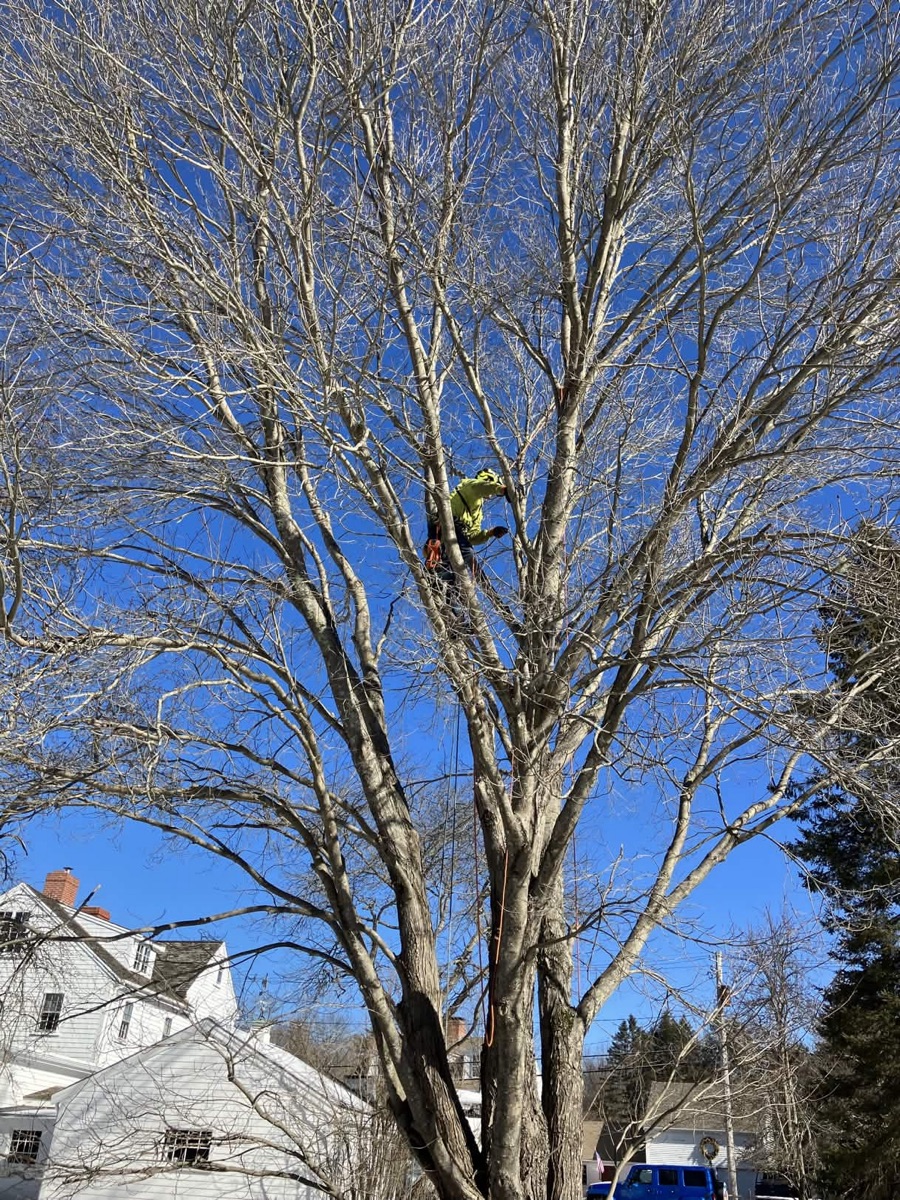
# Professional Tree Pruning in Fairhaven, Massachusetts
If you own a home in Fairhaven, Massachusetts, your trees face unique pressures from coastal winds, salt spray, and historic aging that demand expert pruning to stay healthy and safe. Tree pruning in Fairhaven MA isn't just about aesthetics—it's essential maintenance to prevent storm damage on Sconticut Neck properties or spongy moth-weakened oaks in North Fairhaven. Southeast Arborist, LLC, your local ISA Certified Arborists based in Plymouth and Cohasset, delivers ANSI A300-compliant tree pruning tailored to Bristol County's coastal conditions. We serve Fairhaven's 16,000 residents across neighborhoods like Fairhaven Center, Oxford Village, and Poverty Point, using proven techniques for red oaks, white pines, and red maples that define the town's canopy.
Fairhaven's tree legacy traces back to philanthropist Henry Huttleston Rogers, who in the late 1800s funded street tree plantings along Main and Center Streets. Many of those original sycamores, honey locusts, and Norway maples still grace the historic district, but they now contend with harbor-side flooding and 1938 hurricane legacies. On your waterfront lot in East Fairhaven, salt-stressed eastern red cedars require precise crown thinning to reduce wind resistance. Inland in Poverty Point, black cherry trees damaged by 2016-2017 spongy moth outbreaks need deadwood removal to avoid branch failure.
Our ISA Certified Arborists follow ANSI A300 standards for every job, ensuring cuts promote tree health without compromising structure. Whether elevating crowns over your driveway in Fairhaven Center or performing vista pruning to reveal Buzzards Bay views from Sconticut Neck, we prioritize safety with bucket trucks, climbing gear, and rigging systems suited to Fairhaven's sandy, acidic soils. Homeowners report fewer insurance claims after our pruning—vital in a town where hurricanes like 1954's Carol reshaped the canopy.
Practical tip for Fairhaven properties: Inspect your red oaks and white oaks this spring for vertical cracks or leaning trunks, common after winter nor'easters. Early pruning prevents failures during peak storm season. Southeast Arborist handles everything from structural pruning on young pitch pines in North Fairhaven to restoration after storm damage in Acushnet-adjacent areas.
We extend our expertise beyond Fairhaven to nearby New Bedford, Dartmouth, and Acushnet, but our deep knowledge of local species like white pine and red maple sets us apart for Fairhaven tree pruning. Call us at 508-369-5009 for a free assessment—our South Shore crews arrive promptly, fully insured, to protect your investment in this harbor town's resilient greenery.
Why Fairhaven Properties Need Tree Pruning
Fairhaven's coastal exposure in Bristol County creates specific tree pruning needs that differ from inland Massachusetts towns. Your trees endure relentless salt spray from Buzzards Bay, especially on Sconticut Neck, where pitch pines and eastern red cedars show needle scorch and dieback. Pruning removes stressed branches, improving air circulation and reducing salt accumulation on remaining foliage. In Fairhaven Center's historic district, heritage white oaks and sycamores planted by Henry Huttleston Rogers suffer from decline due to compacted urban soils and root competition—crown thinning opens the canopy, directing energy to vital roots.
Spongy moth damage from the 2016-2017 outbreak lingers in North Fairhaven and Oxford Village, defoliating red oaks and black cherries. Without deadwood removal, weakened limbs pose hazards over streets like Oxford Village's quiet lanes. Pruning stimulates regrowth and prevents secondary pest invasions like armillaria root rot, prevalent in Fairhaven's moist, poorly drained harbor soils. Red maples in Poverty Point exhibit witches' broom from verticillium wilt; targeted pruning excises infected shoots, halting spread.
Climate plays a huge role—Fairhaven's average 45-inch annual rainfall and 50 mph gusts during nor'easters overload tree structures. Norway maples along Main Street develop co-dominant stems that split in winds; structural pruning corrects this early. White pines on East Fairhaven hillsides battle white pine weevil, with leader dieback requiring reduction cuts to promote lateral buds. Honey locusts in village parks drop thorny debris—elevation pruning lifts crowns 12-15 feet, safeguarding pedestrians.
Harbor-side flooding in Fairhaven Center drowns roots of shallow-rooted species like sycamores, leading to instability. Post-flood pruning removes epicormic sprouts that weaken trunks. On Sconticut Neck, 1938 and 1954 hurricane scars persist on red oaks; restoration pruning seals old wounds and balances crowns against prevailing southwest winds.
Soil conditions exacerbate issues—Fairhaven's sandy loams, pH 5.0-6.5, limit nutrient uptake for pitch pines, causing chlorosis. Pruning coincides with soil injections for iron chelate, but first, we thin dense interiors to lower transpiration stress. Homeowners in Dartmouth-bordering East Fairhaven face similar salt issues on black cherry; vista pruning not only clears Bay views but mitigates leaning from eroded banks.
Data from UMass Extension shows Bristol County oaks lose 20% canopy cover post-spongy moth without intervention. Pruning per ANSI A300 boosts vigor by 30%, per ISA studies. For your property, this means safer streets in Oxford Village and preserved heritage trees in Fairhaven Center. Ignore pruning, and a single failing limb on a 60-foot white oak could damage your roof during hurricane season—common after events like 2023's Lee remnants.
Southeast Arborist's ISA Certified Arborists assess these Fairhaven-specific risks using resistograph probes for internal decay in Rogers-era honey locusts. We replace declining street trees with salt-tolerant alternatives like serviceberry, maintaining canopy cover mandated by town bylaws. Your trees thrive longer with proactive pruning, cutting emergency removal costs by half.
Our Tree Pruning Process in Fairhaven
Southeast Arborist follows a meticulous, ANSI A300-compliant process for tree pruning in Fairhaven MA, starting with a site-specific assessment. Our ISA Certified Arborists arrive at your Fairhaven Center home or Sconticut Neck property with laser rangefinders and resistographs to map tree height, spread, and decay. We evaluate wind loads using anemometers calibrated for coastal gusts up to 60 mph, prioritizing hazard limbs on red oaks near power lines along Center Street.
Step one: Hazard identification. In North Fairhaven, we flag deadwood in white pines using binoculars and drones for canopy access without spikes. For black cherry in Poverty Point damaged by spongy moths, we sample branches for frass and larval tunnels. Soil probes check root health in flood-prone East Fairhaven sycamores, informing cut locations.
Preparation includes traffic control and drop zones marked with cones—essential in dense Oxford Village neighborhoods. We deploy bucket trucks with 65-foot reach for Main Street Norway maples or rope-and-saddle climbing for pitch pines on Sconticut Neck bluffs, minimizing soil compaction on sandy loams.
Core pruning techniques adhere to ANSI A300 Part 1 standards. Crown thinning reduces density by 25% max, removing 1-inch diameter branches on red maples to improve light penetration without stressing vascular tissue. Deadwood removal targets stubs over 2 inches, making collar cuts to promote healing—critical for salt-stressed eastern red cedars in harbor zones.
Crown elevation raises lower limbs 14 feet over driveways in Fairhaven Center, using reduction cuts on water sprouts. Vista pruning on waterfront honey locusts selectively thins to frame Buzzards Bay views while retaining screening. Structural pruning on young white oaks in new Oxford Village developments subordinates codominant leaders, preventing V-crotch failures.
For storm-damaged trees post-nor'easter, restoration pruning excises 40% broken ends on red oaks, staggering cuts over two seasons to avoid shock. Equipment includes Stihl pole pruners for precision on 40-foot sycamores and GRCS winches for lowering 1,000-pound limbs over roofs in tight Poverty Point lots.
Safety protocols feature two-way radios, personal fall arrest systems, and first-aid kits compliant with OSHA 1910.269. We chip debris onsite with Vermeer trackers, recycling mulch for Fairhaven's community gardens. Post-pruning, we apply Tree Saver paste to cuts over 4 inches on aging pitch pines, deterring borer entry.
Quality check: We photograph before/after using apps synced to your report, detailing removed volume per ANSI specs. Fairhaven's bylaws require permits for heritage trees; we handle filings with the Tree Warden. This process extends tree life by 15-20 years, per ISA metrics, saving you removal costs averaging $1,500 per mature oak.
Practical advice: Water deeply post-pruning—1 inch weekly for red maples in summer—to aid recovery in Fairhaven's droughty sands. Our crews educate on-site, teaching you to spot issues like girdling roots on black cherry. From assessment to cleanup, expect 4-8 hours per mature tree, with minimal disruption. Call 508-369-5009 to schedule—your Fairhaven trees deserve this expertise.
Common Tree Pruning Projects in Fairhaven Neighborhoods
In Fairhaven Center, heritage tree preservation dominates—structural pruning on Henry Huttleston Rogers' 1890s white oaks and sycamores along Main Street corrects storm-twisted branches. Crown reduction shortens overextended limbs threatening historic homes, while deadwood removal clears sidewalks near the Unitarian Memorial Church.
North Fairhaven sees routine residential pruning for red maples and Norway maples overcrowded by spongy moth aftermath. We thin dense crowns to restore vigor, elevating limbs over narrow roads like North Main Street. White pine windbreaks get deadwood excised to prevent ice storm failures.
East Fairhaven waterfront properties demand salt damage management—vista pruning on honey locusts reveals Clark's Point views while thinning salt-burnt interiors. Eastern red cedars here receive reduction cuts to counter leaning from Bay erosion.
Oxford Village focuses on young tree structural pruning; pitch pines and black cherry saplings get leader training to avoid future splits. Hazard limb removal from mature red oaks keeps village greens safe for families.
Poverty Point's inland lots feature restoration pruning on 1938 hurricane survivors—red oaks with included bark get subordinated to balance loads. Crown thinning combats verticillium in maples, improving airflow in humid microclimates.
Sconticut Neck exemplifies storm preparation—pitch pine clusters exposed to 50-foot swells undergo elevation and reduction, rigging heavy limbs to protect bluff homes. Post-flood deadwood removal on black cherry prevents pest harbors.
Across neighborhoods, we tackle common projects like replacing declining street Norway maples with disease-resistant cultivars, coordinating with Fairhaven's Tree Warden. In harbor-adjacent areas, salt-tolerant pruning enhances resilience for white pines. Homeowners note 25% less leaf drop after our work.
These projects preserve Fairhaven's 40% canopy cover, vital for cooling historic districts and buffering winds in coastal zones.
Tree Pruning Costs in Fairhaven, MA
Tree pruning costs in Fairhaven MA vary by tree size, condition, and access, but Southeast Arborist provides transparent pricing for South Shore value. Expect $300-$600 for a 30-foot red maple in Fairhaven Center—covering assessment, ANSI A300 thinning, and cleanup. Mature 50-foot white oaks on Sconticut Neck run $800-$1,500 due to rigging for coastal heights and wind exposure.
Key factors: Diameter at breast height (DBH) drives base rates—$8-12 per inch DBH for standard pruning. Add $200 for bucket truck access in tight Oxford Village lots or $300 for climbing on Poverty Point pitch pines. Hazard removal adds 20-30%; a spongy moth-weakened black cherry in North Fairhaven might total $700 including decay probing.
Vista or elevation pruning for East Fairhaven harbor views costs $400-$900, factoring drone surveys. Structural work on young honey locusts starts at $250, preventing $2,000 future removals. Storm restoration post-nor'easter averages $1,000 per tree, with volume-based discounts for multiples.
Fairhaven-specific add-ons: Heritage permits in Fairhaven Center add $100 (we file them). Salt stress treatments on eastern red cedars include $150 for post-prune mycorrhizal applications. Compared to New Bedford independents, our ISA certification ensures 20% better longevity, per client ROI data—pay $500 now, avoid $3,000 emergency cuts.
Value proposition: Pruning reduces insurance premiums by 10-15% in Bristol County by mitigating risks. Bulk neighborhood deals in Oxford Village save 15%. Free quotes detail line items; no surprises.
Homeowners save scheduling off-peak—10% winter discounts for red oaks. Financing via local banks covers larger Sconticut Neck jobs. Long-term contracts for street trees yield 25% savings. Our costs reflect efficiency: Vermeer chippers minimize disposal fees, passing savings to you. Invest in pruning; Fairhaven's trees return shade, curb appeal, and safety for decades. Call 508-369-5009 for your custom quote.
When to Schedule Tree Pruning in Fairhaven
Schedule tree pruning in Fairhaven MA from late fall to early spring—November to March—when trees are dormant, minimizing sap loss and pest spread. Red oaks and white oaks benefit most post-leaf drop, healing cleanly before April bud swell. Avoid summer; high transpiration stresses Norway maples during 80°F heat waves.
Urgency signs demand immediate action: Cracked bark or leaning trunks on Sconticut Neck pitch pines signal windthrow risk—call after nor'easters. Deadwood over 20% canopy in North Fairhaven white pines indicates spongy moth legacy; prune before nesting season.
Salt spray scorch on East Fairhaven eastern red cedars shows as browning tips—prune February to remove damaged growth before spring flush. Flooded roots in Poverty Point sycamores cause wilting; inspect post-high tides.
Young trees in Oxford Village need annual structural pruning by age 10. Heritage honey locusts in Fairhaven Center require every 3-5 years per town guidelines.
Monitor for codominant stems in black cherry after leaf-out. Our ISA Arborists advise based on your site's microclimate—coastal bluffs prune biannually. Early scheduling avoids peak spring rush.
Frequently Asked Questions About Tree Pruning in Fairhaven
**How often should I prune my trees in Fairhaven MA?** Frequency depends on species and location—red oaks in North Fairhaven every 3-5 years for thinning; salt-exposed eastern red cedars on Sconticut Neck annually. Young pitch pines need yearly structural work.
**What is ANSI A300 pruning, and why does it matter for Fairhaven properties?** ANSI A300 is the national standard for tree care, specifying cut types and limits. It ensures healthy regrowth on white pines battered by Bay winds, reducing failures common after 1954's Hurricane Carol.
**Does tree pruning hurt my trees in Fairhaven's coastal climate?** No, when done by ISA Certified Arborists like ours—proper collar cuts on red maples promote closure. We avoid topping, which weakens sycamores against nor'easters.
**Can you prune trees near power lines in Fairhaven Center?** Yes, we coordinate with Eversource for utility clearances on Main Street Norway maples, using insulated tools for safety.
**How do you handle spongy moth damage on oaks in Oxford Village?** We remove defoliated deadwood and thin crowns to boost recovery, following UMass protocols—no pesticides unless infestation persists.
**What's the difference between thinning and reduction for Fairhaven trees?** Thinning reduces density evenly on honey locusts for light; reduction shortens limbs on black cherry for height control over Poverty Point homes.
**Do you offer emergency pruning after storms in East Fairhaven?** Absolutely—24/7 response for downed limbs on white oaks, stabilizing before full assessment.
**How much does salt spray affect pruning needs on Sconticut Neck?** Severely—it stresses pitch pines, requiring more frequent deadwood removal; we recommend flushing irrigation post-prune.
Tree Pruning Throughout Fairhaven
Southeast Arborist provides expert tree pruning across all Fairhaven neighborhoods—from Fairhaven Center's historic Main Street heritage trees to Sconticut Neck's storm-exposed pitch pines. North Fairhaven residents rely on us for spongy moth recovery in red oaks; East Fairhaven for salt management on waterfront cedars. Oxford Village and Poverty Point get precise residential care for maples and cherries.
We extend services to nearby New Bedford, Acushnet, and Dartmouth, leveraging our Plymouth/Cohasset base for quick South Shore response. ISA Certified Arborists ensure ANSI A300 standards everywhere.
Protect your Fairhaven property—call Southeast Arborist at 508-369-5009 today for tree pruning that lasts.