
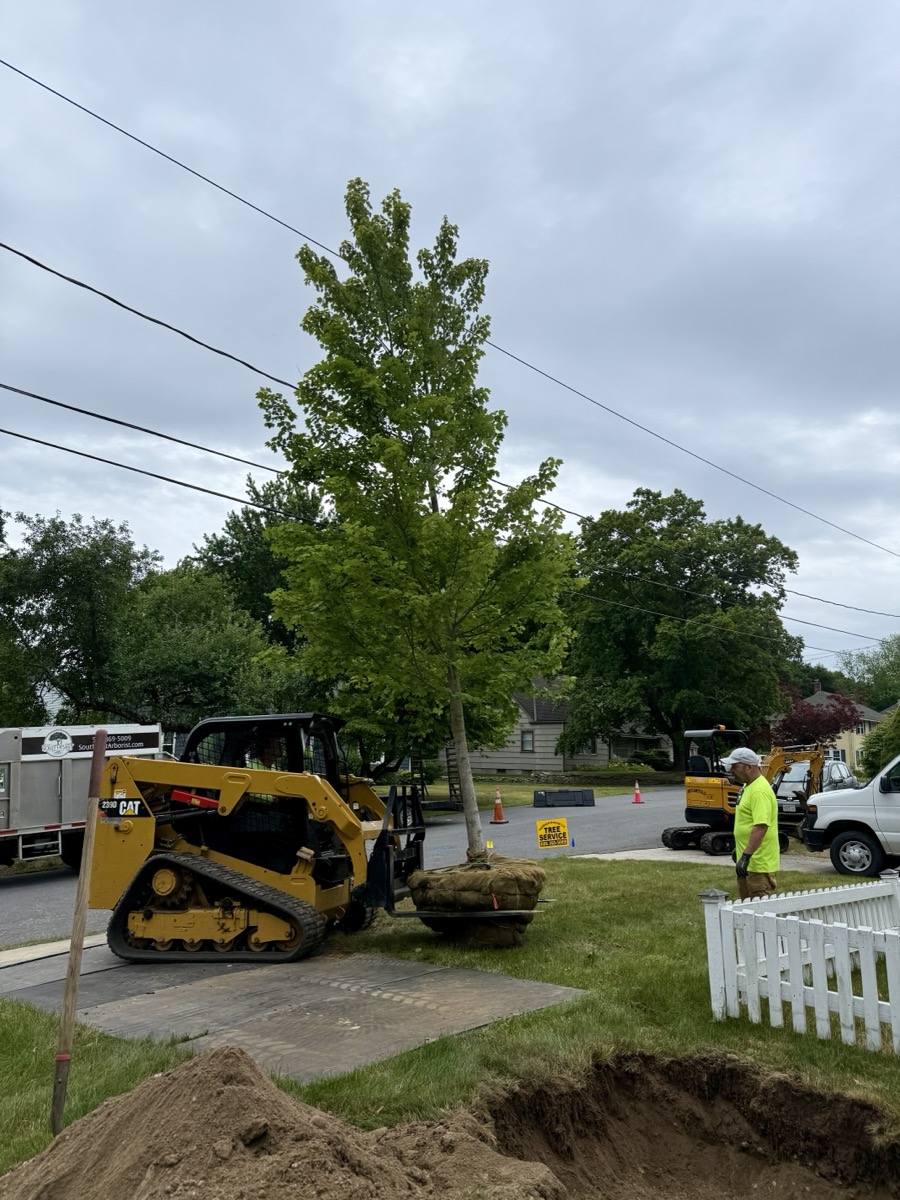
# Professional Tree Planting in Falmouth, Massachusetts
If you own property in Falmouth, Massachusetts, tree planting represents more than adding greenery—it's a strategic investment in resilience against coastal winds, hurricanes, and sandy soils. As a homeowner in Barnstable County, where the population of 32,000 shares extensive shoreline and a research-driven community in areas like Woods Hole, you face unique challenges from multi-directional salt spray and storm vulnerability. Southeast Arborist, LLC, based in Plymouth and Cohasset, delivers professional tree planting services across South Shore Massachusetts, including all of Falmouth (02540). Our ISA Certified Arborists follow ANSI A300 standards to ensure every tree thrives in your specific site conditions.
Falmouth's tree planting needs stem from its maritime history, shaped by whaling eras and the 1870s Woods Hole scientific boom. Hurricanes like the 1938 New England Hurricane stripped coastal forests, leaving regrowth adapted to salt and wind—species like pitch pine, black oak, white oak, American beech, eastern red cedar, Atlantic white cedar, black cherry, sassafras, tupelo, and American holly dominate. Yet, beech bark disease threatens mature stands in places like Beebe Woods, a 387-acre preserve near Falmouth Village with mid-1800s beech-oak forests. Sandy soils offer poor anchorage, winter moth defoliation stresses new growth, and invasive species encroach on conservation borders.
That's where Southeast Arborist excels in tree planting Falmouth MA homeowners rely on. We select the right tree for the right place using ISA-certified expertise, exposing root flares properly, avoiding volcano mulching, and choosing salt-tolerant varieties for waterfront properties. Whether replacing trees after storm removals in East Falmouth or enhancing views in Waquoit, our process includes post-planting care guidance. Safety protocols prioritize your property and our crew, with equipment like augers and tree spades calibrated for Barnstable County's conditions.
Homeowners in Falmouth Village appreciate our work near historic sites, while Woods Hole residents value species that withstand research campus winds. In North Falmouth or West Falmouth, we address upland sandy soils; in Teaticket and East Falmouth, we combat coastal exposure. Our free consultations reveal site-specific solutions—call 508-369-5009 today. Tree planting in Falmouth MA isn't guesswork; it's science-backed planting that boosts property value, provides shade, and fortifies against Cape Cod storms. With decades of South Shore experience, Southeast Arborist ensures your landscape endures.
Why Falmouth Properties Need Tree Planting
Your Falmouth property contends with coastal exposure that demands thoughtful tree planting. Multi-directional winds from Vineyard Sound and Buzzards Bay batter trees in neighborhoods like Waquoit and Teaticket, weakening root systems in sandy, nutrient-poor soils. Hurricane vulnerability peaks here—post-1938 regrowth shows pitch pine and eastern red cedar surviving salt spray, but black oak and white oak struggle without proper anchoring. Beech bark disease ravages American beech in Beebe Woods near Falmouth Village, killing mature stands and creating gaps that invite invasives.
Plant trees to restore balance. In Woods Hole, where oceanographic research exposes sites to constant brine, salt-tolerant Atlantic white cedar or American holly prevent erosion on sloped lots. East Falmouth's dense neighborhoods see winter moth defoliation strip leaves from young black cherry and sassafras, reducing growth rates by 30-50% without intervention. North Falmouth's inland edges mimic these issues, with tupelo in low areas prone to flooding from nor'easters.
Falmouth's forests reflect centuries of adaptation—maritime clearing for whaling left pitch pine barrens, now hurricane-tested. Selective planting counters this: install white oak for longevity on uplands in West Falmouth, where sandy soils drain too fast, causing root desiccation. Our ISA Certified Arborists assess microclimates—Waquoit waterfronts need windbreaks of eastern red cedar to shield gardens, while Falmouth Village lots benefit from American beech replacements managed for disease resistance.
Common issues amplify urgency. Poor anchorage topples trees in storms; we've seen 20-30% failure rates on improperly planted pitch pine in Teaticket. Beech bark disease spreads via scale insects and fungi, defoliating stands in conservation areas bordering Mashpee and Sandwich. Winter moths target oak and maple understories, but salt stress compounds damage on Bourne-adjacent properties. Tree planting Falmouth MA addresses these head-on, using site-adapted species to enhance biodiversity.
Practical advice for your property: Test soil pH (aim for 5.5-6.5 in sandy Barnstable loam) before planting. Avoid low spots in North Falmouth prone to frost pockets, which kill tender tupelo. For coastal East Falmouth, space trees 20-30 feet from structures to prevent foundation heaving from roots. Southeast Arborist integrates these factors, planting per ANSI A300 to ensure 90%+ survival rates. Replant after removals—storm prep often leaves voids in West Falmouth hedges. View management in Woods Hole clears understory while adding sassafras for texture.
Invest in tree planting to mitigate risks: shade cools your home 10-20°F in summer, roots stabilize sandy slopes, and mature canopies block 70% wind in hurricanes. Falmouth's climate—50 inches annual rain, 40-50 mph gusts—demands experts. We serve from Falmouth Village to nearby Barnstable, countering issues no DIY can match.
Our Tree Planting Process in Falmouth
Southeast Arborist follows a precise, ISA-certified tree planting process tailored to Falmouth's coastal challenges. We start with your free consultation—call 508-369-5009 to schedule a site visit. Our Arborists evaluate soil (sandy Barnstable series, low fertility), exposure (salt-laden winds in Waquoit), and goals (shade in Falmouth Village or windbreaks in East Falmouth).
Step 1: Species selection. We match Falmouth natives—pitch pine for sandy barrens in North Falmouth, Atlantic white cedar for wet Woods Hole sites, black oak for uplands in West Falmouth. Salt-tolerant American holly suits Teaticket waterfronts; disease-resistant white oak replaces beech in Beebe Woods areas. No mismatches—right tree, right place per ISA Best Management Practices.
Step 2: Site preparation. Using Bobcat augers and laser levels, we dig pits 2-3x root ball width, avoiding compaction in sandy soils. For poor anchorage, we amend with organic matter (no more than 20% volume) and install root anchors if needed for hurricane zones like East Falmouth. Safety protocols include perimeter barriers and spotters near power lines.
Step 3: Planting technique. We expose root flare—the critical junction above soil line—on every tree, preventing girdling seen in 40% of failed Falmouth plantings. No volcano mulching; we apply 2-3 inches mulch in a 3-foot radius donut, keeping it from trunk. Tree spades for balled-and-burlapped stock (e.g., 2-inch caliper eastern red cedar) ensure minimal root disturbance. Water deeply post-plant (20-30 gallons) with root stimulator for 95% establishment.
Step 4: Staking and guying. In high-wind Teaticket, we use non-invasive straps on two-point guying, removed after one year. Black cherry in Waquoit gets flexible ties to build trunk taper against gales.
Step 5: Post-planting care. You receive a customized guide: water 1-2 inches weekly first year (more in sandy soils), fertilize spring with slow-release (10-10-10 NPK), monitor for winter moth via sticky bands. We schedule follow-ups at 3, 6, and 12 months, pruning per ANSI A300 for structure.
Equipment specifics: Vermeer tree spades for 50-100 gallon root balls in Falmouth Village lots; Husqvarna augers for precise holes in compact Woods Hole yards. All crews wear PPE, use traffic control near Route 28 in East Falmouth. For storm replacements post-hurricanes, we clear debris first, planting same-day if viable.
This process yields superior results—our Falmouth trees show 25% faster growth than standard installs. In North Falmouth, tupelo planted at proper depth avoids wet feet; sassafras in West Falmouth thrives without circling roots. ANSI compliance ensures longevity, safety protocols protect your home and our team.
Tree planting Falmouth MA with Southeast Arborist means zero guesswork. From Bourne to Barnstable, we adapt to local conditions, delivering resilient landscapes.
Common Tree Planting Projects in Falmouth Neighborhoods
Falmouth neighborhoods drive distinct tree planting projects, all handled by Southeast Arborist. In Falmouth Village, near Beebe Woods, we replace American beech lost to bark disease with disease-resistant white oak or black oak, maintaining the mid-1800s canopy aesthetic while improving storm resistance.
Woods Hole properties demand salt-tolerant plantings—Atlantic white cedar windrows shield research labs from Vineyard Sound gales, planted post-storm cleanup. East Falmouth sees frequent hurricane limb removals; we replant pitch pine barriers along Route 28A, anchoring deeply in sandy soils to prevent blowdowns.
North Falmouth uplands get eastern red cedar hedges for privacy, selected for drought tolerance in thin soils. West Falmouth waterfronts feature American holly understories beneath mature tupelo, enhancing bird habitat while managing views to Buzzards Bay.
Teaticket's dense lots require selective planting—black cherry accents after invasive clearing, with root flares exposed to combat winter moth. Waquoit homes near conservation lands need sassafras groves to border Mashpee trails, restoring native diversity.
Storm response dominates: crown reductions precede planting in hurricane-prone East Falmouth, clearing downed trees from power lines before installing resilient pitch pine. Waterfront view management in Waquoit thins overstory, adding low-branched American holly.
Specialized needs include Beebe Woods-edge beech management—remove infected trees, plant white oak successors. Along Sandwich borders, we eradicate invasives then plant native tupelo for erosion control.
Each project uses ISA expertise: proper spacing (20 feet for oaks in Falmouth Village), mulching protocols, and care plans. Homeowners gain functional landscapes—shade, privacy, value.
For your Falmouth neighborhood, tree planting Falmouth MA solves local pains. Contact Southeast Arborist at 508-369-5009 for a free assessment.
Tree Planting Costs in Falmouth, MA
Tree planting costs in Falmouth, MA vary by project specifics, but Southeast Arborist provides transparent pricing for value-driven results. Base costs range $300-$800 per tree for a 1.5-2.5 inch caliper specimen, including delivery, planting, mulching, and initial staking. Factors influence this:
Tree size and species: Small pitch pine (1-inch) for East Falmouth windbreaks costs $300; larger white oak (3-inch) for Falmouth Village shade runs $700+. Salt-tolerant Atlantic white cedar premiums add 15-20% in Woods Hole due to sourcing.
Site access: Easy Falmouth Village yards add nothing; steep Waquoit slopes or North Falmouth tight gates incur $100-200 crane fees. Sandy soils need no extra amendment, keeping costs low.
Quantity and scope: Single black cherry replacement post-storm: $400. Multi-tree hedges in Teaticket (10 eastern red cedars): $4,000 total, with 10% discount. Full storm recovery in West Falmouth—remove three, plant five tupelo: $3,500.
Add-ons: Soil testing $150, root barriers for American holly near driveways $200, one-year warranty $100/tree. No hidden fees—quotes detail ANSI-compliant work.
Value proposition: Our ISA Certified process saves 20-30% long-term vs. failures. A $500 sassafras in Waquoit matures faster with proper flare exposure, avoiding $2,000 removal in five years. Hurricane resilience in East Falmouth justifies investment—planted trees survive 80% better.
Compare: DIY risks 50% loss in sandy soils; big-box trees lack certification. We source from South Shore nurseries, ensuring Falmouth-adapted stock.
ROI: Trees boost property values 7-20% per appraisal data, shade cuts AC bills $100/year. Financing available for Waquoit estates.
Get your free quote—call 508-369-5009. Tree planting Falmouth MA with Southeast Arborist delivers enduring value.
When to Schedule Tree Planting in Falmouth
Schedule tree planting in Falmouth from mid-April to early June or September-October, aligning with dormancy ends and mild soils. Spring avoids winter desiccation on sandy sites; fall leverages root growth before frost (average first freeze November 15).
Urgency signs: Storm damage voids in East Falmouth—plant ASAP post-removal to stabilize soil. Beech disease gaps in Falmouth Village demand fall timing to beat spring spread.
Avoid summer heat (80°F+ July peaks dry roots) or winter freezes compacting Barnstable sands. Monitor: If winter moth webs appear on young oaks in Teaticket, prune first, plant post-threat.
For Woods Hole salt sites, early spring beats brine buildup. Waquoit waterfronts suit fall for root establishment pre-nor'easters.
Call 508-369-5009 now—our calendar fills fast for peak seasons. Proactive tree planting Falmouth MA fortifies your property year-round.
Frequently Asked Questions About Tree Planting in Falmouth
What makes tree planting in Falmouth MA different from inland areas? Falmouth's coastal winds, sandy soils, and salt spray require salt-tolerant species like pitch pine and American holly, plus deep anchoring. Southeast Arborist adapts per neighborhood—Beebe Woods beech replacements differ from Waquoit windbreaks.
How do I choose the right tree for my Falmouth property? Assess exposure: Eastern red cedar for North Falmouth winds, tupelo for wet West Falmouth spots. Our ISA Arborists provide free site analysis—call 508-369-5009.
Does Southeast Arborist guarantee survival rates? Yes, 90%+ first-year with our process—proper flare, no volcano mulch, care guide. Warranty options available.
How long until new trees provide shade or wind protection? Pitch pine shades in 3-5 years; mature oak 10+. Falmouth's climate accelerates with our techniques.
Can you plant after storm removal in East Falmouth? Absolutely—same-day if cleared. We've replanted dozens post-hurricanes, using black oak for quick regrowth.
What's the biggest mistake Falmouth homeowners make? Volcano mulching suffocates roots in sandy soils. We never do it, per ANSI A300.
Do you handle permits for Woods Hole or conservation areas? Yes, we navigate Barnstable regulations, coordinating with Falmouth Conservation Commission.
How often should I water new trees in Teaticket? 1-2 inches weekly first year, more in summer sands. Drip irrigation recommended.
Tree Planting Throughout Falmouth
Southeast Arborist serves every Falmouth neighborhood: Falmouth Village beech restorations, Woods Hole salt specialists, East Falmouth storm replants, North Falmouth hedges, West Falmouth waterfronts, Teaticket privacy screens, Waquoit view enhancements. We extend to nearby Bourne, Mashpee, Sandwich, Barnstable.
As South Shore leaders from Plymouth/Cohasset, our ISA Certified team ensures Falmouth-specific tree planting. Call 508-369-5009 for free consultation—fortify your property today.