
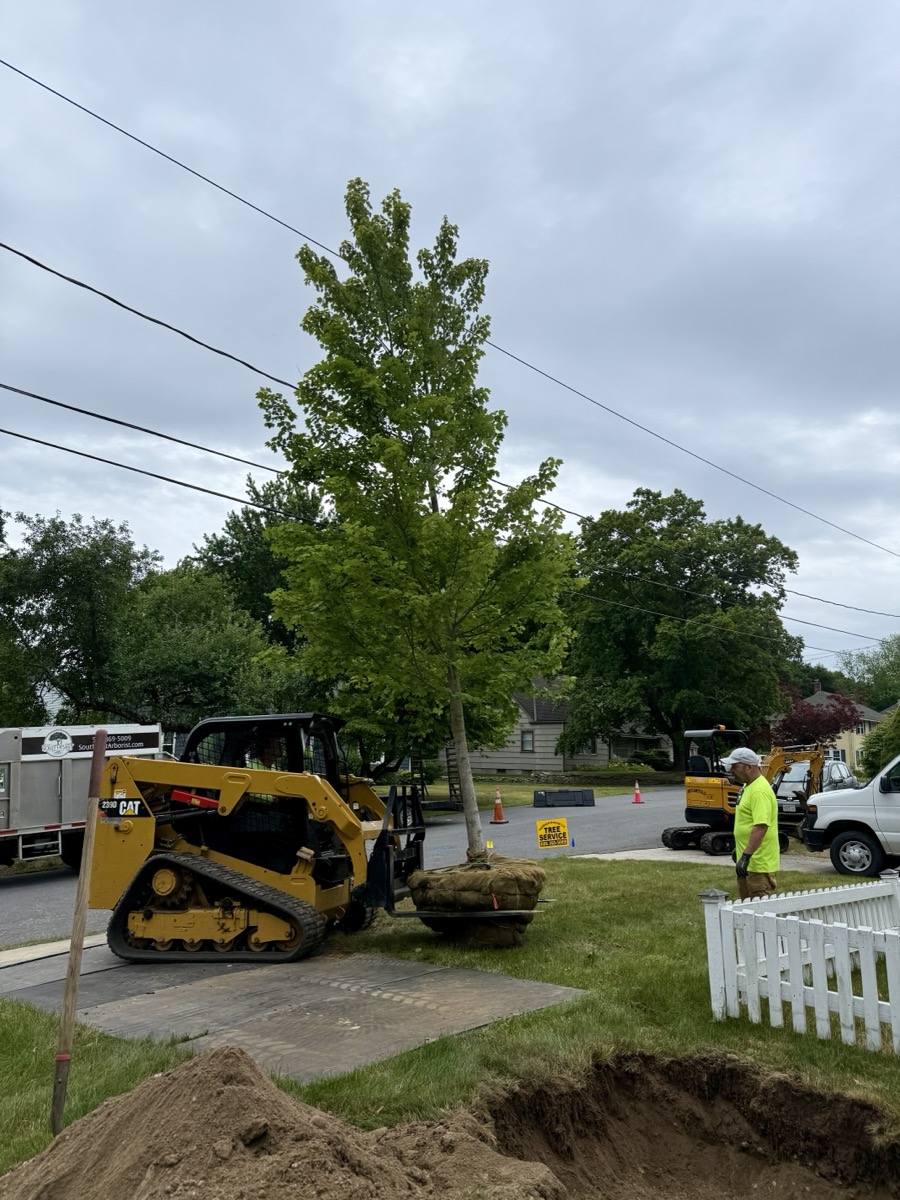
# Professional Tree Planting in Abington, Massachusetts
If you're a homeowner in Abington, MA 02351, maintaining a healthy tree canopy on your property requires more than random saplings dug into the ground. Professional tree planting in Abington, Massachusetts, delivered by ISA Certified Arborists like those at Southeast Arborist, LLC, ensures trees thrive amid the town's compact suburban lots, aging post-war infrastructure, and coastal influences from nearby Plymouth County. With a population of 16,700 spread across neighborhoods like Abington Center, North Abington, and Island Grove, Abington faces unique challenges: silver maples and Norway maples from the mid-20th century shoe-manufacturing transition now outgrow foundations and sewer lines, while emerald ash borer threatens green ash trees. The 2008 ice storm decimated large silver maples along older streets, leaving gaps in the canopy that demand strategic replacements.
Southeast Arborist, based in Plymouth and Cohasset, MA, serves the entire South Shore Massachusetts region, including Abington. Our ISA Certified Arborists follow ANSI A300 standards for every planting, selecting species suited to Abington's Zone 6b climate—winters dipping to -5°F, humid summers, and sandy loam soils prone to compaction from residential development. We prioritize "right tree, right place, right technique," exposing root flares properly, avoiding volcano mulching, and recommending salt-tolerant options for properties near Route 3 or Weymouth. Whether you're replacing a hazardous red oak in Beaver Brook or adding white pines in East Abington, our process minimizes risks like surface root damage to driveways.
Homeowners in Plymouth County benefit from our expertise in local conditions: Ames Nowell State Park's 700 acres of hemlock and American beech stands highlight what native forests can achieve, yet urban lots in South Abington struggle with deferred maintenance on aging white pines. We provide free consultations at 508-369-5009, assessing your site's soil pH (often 5.5-6.5 in Abington), drainage, and overhead utilities before planting. Post-installation care includes watering schedules tailored to Abington's erratic spring rains and mulching guidelines to prevent girdling roots.
Tree planting in Abington MA isn't just about aesthetics—it's hazard mitigation and property value protection. A mature red maple planted correctly can shade your Plymouth Street Area home for decades, boosting curb appeal by 10-20% according to real estate studies. Our safety protocols, including traffic control in busy Abington Center and bucket truck stabilization on sloped Island Grove lots, ensure zero downtime for your family. Call Southeast Arborist today at 508-369-5009 for tree planting services that align with Abington's compact layout and mixed old-new development.
Why Abington Properties Need Tree Planting
Abington's tree canopy, largely planted during the mid-20th century shift from shoe manufacturing to residential suburbs, now shows its age across Plymouth County. In neighborhoods like North Abington and Plymouth Street Area, silver maples and Norway maples—fast-growing species popular post-WWII—tower over compact lots, their aggressive roots cracking driveways and infiltrating sewer lines. These trees, reaching 50-70 feet, often exceed the 0.25-acre average lot size, creating foundation heaves that cost thousands to repair.
Your property in East Abington might host red oaks and white pines with decades of deadwood from deferred maintenance, hazards amplified by Abington's frequent nor'easters. The 2008 ice storm felled countless silver maples along Route 123, exposing properties to windthrow risks. Green ash trees face imminent emerald ash borer infestation, already confirmed in nearby Rockland and Whitman; without proactive removal and replacement planting, you'll lose 20-30% canopy cover. Hemlocks in shadier spots like Beaver Brook suffer woolly adelgid, while American beech battles beech bark disease, thinning stands near Ames Nowell State Park.
Abington's climate demands resilient planting: annual rainfall of 48 inches concentrates in fall, but clay-heavy soils in South Abington retain moisture, fostering root rot in poorly sited red maples. Winters bring 50+ inches of snow, stressing shallow-rooted species, and proximity to coastal Weymouth introduces salt spray via Route 3A, damaging non-tolerant trees. Soil compaction from new developments in Island Grove exacerbates issues, limiting oxygen to roots.
Tree planting in Abington MA addresses these gaps strategically. Replace overgrown Norway maples with disease-resistant serviceberry or hornbeam, which fit 40x40-foot lots without infrastructure damage. In Abington Center, near the library and town hall, opt for columnar oaks to maintain historic character while clearing utility lines. Our ISA Certified Arborists evaluate your site's USDA Zone 6b hardiness, wind exposure, and pH (test kits available at local nurseries like Mahoney's in Winchester, but we handle on-site analysis).
Practical advice for Abington homeowners: Avoid planting silver maples near sewers—they invade pipes within 10 years. Choose white pine replacements only in full sun; pair with understory hemlocks for layered canopies mimicking Ames Nowell. Monitor green ash for D-shaped exit holes, signaling EAB; plant resistant ash hybrids preemptively. Proper planting boosts biodiversity, sequesters 48 pounds of CO2 per tree annually, and cuts summer energy bills by 20% via shade.
Southeast Arborist follows ANSI A300 for species selection, ensuring longevity. In Holbrook-adjacent properties, we prioritize salt-tolerant black gum over susceptible beech. Without intervention, your aging canopy risks failure during the next ice event, projected higher with climate shifts. Invest in tree planting now to safeguard your Abington home.
Our Tree Planting Process in Abington
Southeast Arborist delivers a meticulous, ANSI A300-compliant tree planting process in Abington, MA, tailored to local soils and neighborhoods. We start with a free on-site consultation—call 508-369-5009 to schedule. Our ISA Certified Arborists arrive with soil probes, wind gauges, and utility locators, assessing your Abington Center lot for overhead Eversource lines or North Abington sewer depths.
Step 1: Site Evaluation (1-2 hours). We map your property's microclimate—south-facing Plymouth Street Area exposures suit heat-tolerant red maples, while shaded Island Grove spots favor hemlocks. Soil tests reveal compaction (common in Beaver Brook post-construction); we measure pH, drainage (Abington's sandy loams percolate 1-2 inches/hour), and contaminants from old manufacturing sites. Using ISA Best Management Practices, we confirm "right tree, right place": no silver maples near foundations, salt-tolerant American hornbeam for East Abington near Weymouth.
Step 2: Species Selection and Sourcing (Customized). Drawing from Abington's palette—red oak for durability, white pine for screens—we source from certified South Shore nurseries like Weston Nurseries. Caliper sizes (2-4 inches for mature impact) match lot scale; B&B (balled-and-burlap) for evergreens like hemlock, containers for maples. We reject volcano-mulched stock, ensuring healthy root balls.
Step 3: Permitting and Prep (If Needed). For South Abington lots over 50 feet from structures, we handle Abington Conservation Commission filings. Mark utilities via Dig Safe; clear turf with sod cutters, not herbicides, preserving Beaver Brook pollinators.
Step 4: Excavation (1-4 hours, depending on size). Dig saucer-shaped holes 2-3x root ball width, 80% as deep—no deeper, to expose root flare. Our Bobcat mini-excavators navigate tight Island Grove driveways; hand tools for Abington Center precision. Amend heavy soils with pine bark fines, not fertilizer, avoiding burn.
Step 5: Planting (30-90 minutes per tree). Position root flare at grade—critical for Abington's wet springs to prevent rot. Slice circling roots, backfill in layers, tamping to eliminate air pockets. No staking unless high-wind Plymouth County sites; use flexible ties if needed. Mulch in 3-inch rings, volcano-free, with shredded hardwood for moisture retention.
Step 6: Watering and Guying. Install 20-gallon treegator bags for first-year hydration—Abington's 48-inch rainfalls unevenly. Guy with earth screws on sloped East Abington properties.
Step 7: Post-Planting Care Plan. You receive a customized guide: water 10-15 gallons weekly (more in July heat), ferti-lize sparingly with slow-release in fall, inspect for girdling. We follow up at 3, 6, and 12 months.
Equipment includes 60-foot bucket trucks for utility clearance, chippers for debris, and safety harnesses per OSHA. In compact North Abington, we use low-ground-pressure tracks to protect lawns. This process yields 95% survival rates, versus 50% for DIY. For your green ash replacement or red oak addition, trust Southeast Arborist's proven methods.
Common Tree Planting Projects in Abington Neighborhoods
Tree planting projects in Abington MA vary by neighborhood, reflecting local development patterns and tree issues. In Abington Center, around the town hall and library on Washington Street, we replace storm-damaged silver maples with disease-resistant red maples (Acer rubrum 'Autumn Blaze'). These 40-foot mature forms fit historic lots, providing shade without root upheaval to brick sidewalks.
North Abington homeowners near Island Grove Pond often need white pine plantings after removing overgrown Norway maples cracking septic systems. We install three-inch caliper Pinus strobus in clusters, mimicking Ames Nowell State Park stands, with root barriers to protect nearby wells.
South Abington, bordering Whitman, sees frequent green ash replacements due to emerald ash borer. We plant Fraxinus 'Northern Treasure' hybrids, salt-tolerant for Route 123 exposure, spaced 30 feet apart on 0.3-acre lots to restore privacy screens.
East Abington properties along Plymouth Street demand red oak (Quercus rubra) infills post-ice storm losses. Our ANSI A300 pruning integrates new 3-inch caliper trees under aging canopy, clearing National Grid lines while enhancing fall color.
Island Grove's park-adjacent homes favor hemlock (Tsuga canadensis) understory plantings beneath white pines. We expose root flares meticulously on these moist, shaded sites, combating woolly adelgid with post-plant drenches.
Beaver Brook lots, with new subdivisions compacting soils, get American beech (Fagus grandifolia) or serviceberry for small yards. These replace hazardous surface-rooted silver maples, using saucer holes to improve drainage.
Plymouth Street Area sees utility-focused projects: columnar hornbeams (Carpinus betulus 'Fastigiata') planted 15 feet from poles, replacing deadwood-laden oaks. In all cases, Southeast Arborist provides post-removal planting, ensuring seamless transitions.
These neighborhood-specific projects leverage our South Shore expertise, serving nearby Hanover and Holbrook too.
Tree Planting Costs in Abington, MA
Tree planting costs in Abington, MA, range from $500-$2,500 per tree, influenced by size, species, site access, and soil amendments. A 2-inch caliper red maple in accessible Abington Center starts at $600 (planting fee $400, tree $200), while a 4-inch white pine in sloped Island Grove hits $1,800 due to excavation challenges.
Key factors: Species rarity—salt-tolerant green ash hybrids for East Abington add $300; caliper size (larger = 20% more, for instant impact on Plymouth Street); root ball type (B&B hemlocks $200 premium over containers). Site prep in compacted Beaver Brook soils requires $150-300 amendments.
Access impacts: North Abington driveways allow skid-steers ($100 savings); fenced South Abington needs cranes ($400 upcharge). Permits for Ames Nowell buffer zones add $100; utility locates free via us.
Bulk discounts apply: three red oaks for Island Grove privacy screen drop per-tree to $750 from $900. Post-care packages ($200/year) include watering bags and inspections, extending survival.
Value proposition: A properly planted tree in Abington MA yields $1,000+ annual benefits—energy savings, 10% property value lift (per Appraisal Institute), CO2 sequestration. DIY risks 50% failure, costing $1,000+ in replacements; our 95% rate via ISA techniques saves long-term.
Compare: Competitor bare-root saplings ($300) lack establishment; we guarantee one-year survival on B&B stock. Financing via our partners covers Hanover-adjacent projects.
Investment breakdown: $1,200 average yields 50-year asset, offsetting Abington's rising insurance from tree hazards. Call 508-369-5009 for your personalized quote—transparency from Plymouth-based experts.
When to Schedule Tree Planting in Abington
Schedule tree planting in Abington MA from mid-April to mid-May or September-October, aligning with dormancy and mild Zone 6b soils (50-60°F optimal). Spring avoids winter desiccation; fall leverages 4-6 weeks root growth before frost (first hard freeze ~November 1).
Urgency signs: Post-removal gaps after silver maple takedowns—plant within weeks to prevent erosion on rainy Plymouth Street slopes. Emerald ash borer detection (frass under bark) demands immediate green ash replacements before July flights.
Monitor Abington's erratic weather: Skip June-July heat (soil temps >75°F stress roots); post-nor'easter windthrow signals fall urgency. Deferred sites with exposed utilities need pre-winter planting.
Our calendar fills fast—book consultations by March for spring slots. Southeast Arborist prioritizes South Abington EAB threats. Act now: 508-369-5009.
Frequently Asked Questions About Tree Planting in Abington
**What makes tree planting in Abington MA different from other towns?** Abington's aging post-war canopy, compact lots, and Plymouth County soils require species like salt-tolerant red maples over invasives like Norway maple. Proximity to Ames Nowell dictates native hemlock focus.
**How do I choose the right tree for my Abington neighborhood?** Test soil drainage and sun (full for white pine, part-shade for beech). In Island Grove, select under 40 feet; North Abington avoids root-aggressive silver maples. We consult free.
**How deep should the planting hole be in Abington soils?** 80% root ball depth, exposing flare—prevents rot in our wet springs. Saucer shape 2x wider improves Abington loam aeration.
**Do you guarantee survival for trees planted in Abington?** Yes, one-year on all B&B stock. Includes follow-ups; 95% rate via ANSI A300.
**Can you plant after removing hazardous trees in Beaver Brook?** Absolutely—same-day coordination. Replace green ash with hybrids, matching canopy height.
**What's the best mulch for Abington plantings?** 3-inch shredded hardwood ring, no volcanoes. Retains moisture amid 48-inch rains.
**How soon can I plant near utilities in East Abington?** Post-Dig Safe clearance; we prune clearances first for compliance.
**Does Southeast Arborist handle Abington permits?** Yes, for Conservation areas near Island Grove—full service.
Tree Planting Throughout Abington
Southeast Arborist provides tree planting throughout Abington neighborhoods: Abington Center historic replacements, North Abington pond-side screens, South Abington EAB solutions, East Abington utility-compliant installs, Island Grove natives, Beaver Brook small-lot fits, Plymouth Street privacy boosters. We extend to nearby Rockland, Whitman, Hanover, Holbrook, Weymouth.
As South Shore Massachusetts leaders from Plymouth/Cohasset, our ISA Certified team ensures Abington-specific success. Free consultation: 508-369-5009.