
# Professional Root Zone Improvement in Whitman, Massachusetts
Homeowners in Whitman, Massachusetts, face unique challenges with their mature trees, from Norway maples heaving sidewalks in Whitman Center to red oaks struggling with compacted soil near the old chocolate factory site. Root zone improvement in Whitman MA directly addresses these issues by restoring soil health, correcting root flaws, and extending tree life in your densely built residential community. Southeast Arborist, LLC, your South Shore Massachusetts tree care experts based in Plymouth and Cohasset, delivers ISA Certified Arborist services tailored to Plymouth County's clay-heavy soils and variable coastal climate.
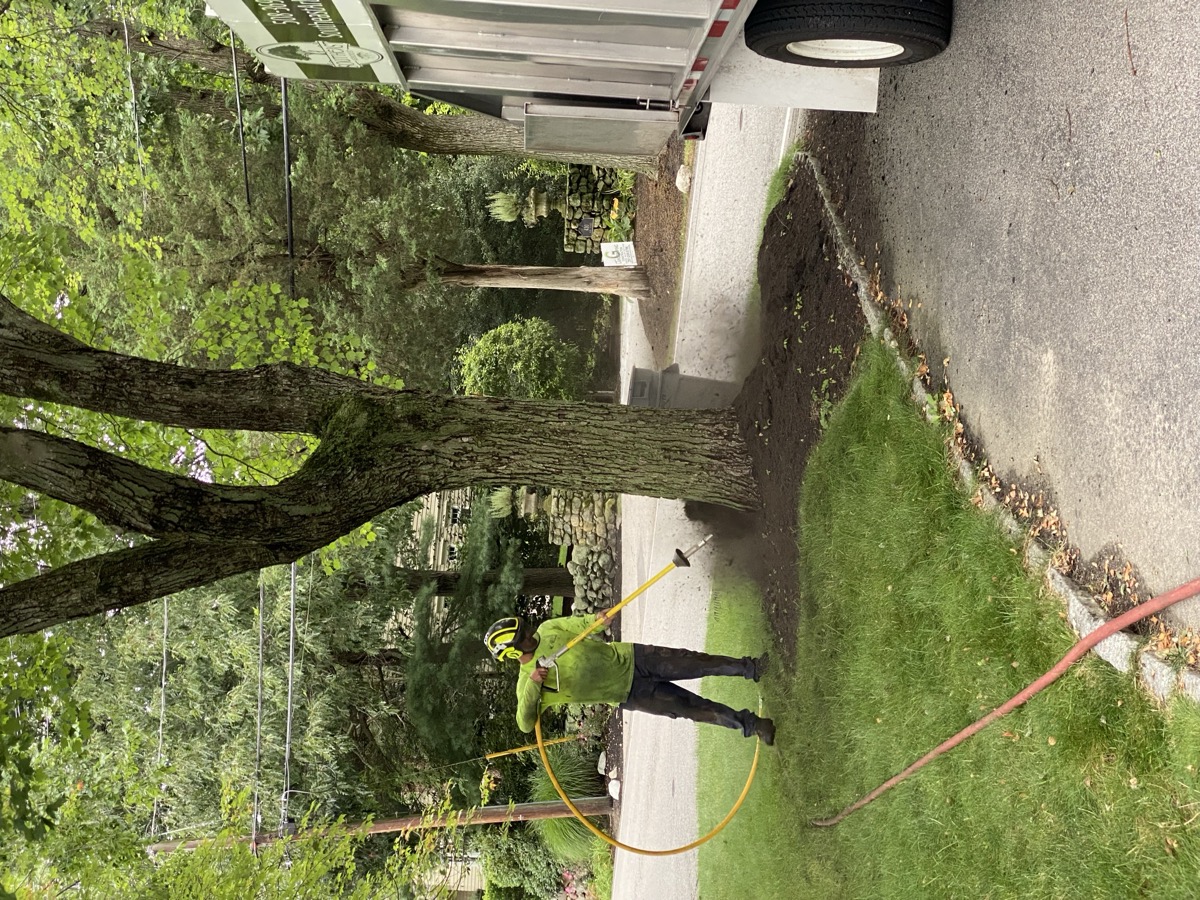
Our root zone improvement process uses air spading to excavate without damaging roots, decompact soil layers hardened by foot traffic and construction, and amend with organic matter suited to Whitman's pH levels around 5.5-6.5. This service revives trees like the declining lindens along Temple Street Area or green ash in Hobart Park, preventing failures that plague your close-knit neighborhoods. With 15,400 residents relying on street trees planted by the shade tree committee since the mid-20th century, root zone improvement in Whitman MA preserves your property's curb appeal and safety.
Consider a typical Norway maple on your East Whitman property: girdling roots circle the trunk, buried flare restricts oxygen, and compacted soil from nearby driveways starves feeder roots. Without intervention, heaving cracks your concrete, and the tree declines amid Whitman's wet springs and dry summers. Southeast Arborist's technicians, following ANSI A300 standards, expose these problems precisely. We remove girdling roots, install vertical mulch columns for aeration, and improve drainage to match local hydrology influenced by the Indian Head River nearby.
Safety protocols come first—our crew uses ground-fault protected air tools, hard hats, and spotters in tight spaces like South Whitman's narrow streets. As ISA Certified Arborists, we diagnose via soil probes and root radar before any work, ensuring compliance with Massachusetts shade tree laws. This precision matters in Whitman, where post-industrial greening means your oaks and maples anchor small-town infrastructure against nor'easters.
Root zone improvement in Whitman MA also mitigates utility conflicts. Dense neighborhoods see overhead lines snag white pine branches, while underground roots invade sewers. Our service creates space below grade, reducing future pruning needs. For your Auburn lot, we handle construction damage from recent home additions, restoring root flares on crabapples stressed by fill dirt.
Investing here yields returns: healthier trees boost property values by 10-15% in Plymouth County, per local appraisals, and cut removal costs averaging $1,500 per tree. Southeast Arborist serves Whitman from Abington to Pembroke, responding within 24 hours. Call 508-369-5009 today for a free on-site assessment—your trees deserve Whitman-specific care from experts who know Plymouth County's soil quirks.
Why Whitman Properties Need Root Zone Improvement
Whitman's history as a shoe-manufacturing hub in Plymouth County left a legacy of compacted urban soils, now compounded by 20th-century street tree plantings that struggle in your residential zones. Norway maples, dominant in Whitman Center near the former chocolate factory, often decline from root heaving that buckles sidewalks along Main Street. Their aggressive surface roots, combined with clay-loam soils prone to waterlogging in Whitman's 45-inch annual rainfall, suffocate deeper growth, leading to lean in your mature canopy.
Red maples in South Whitman fare no better. Planted along Reservoir Street, they suffer girdling roots from mulching too deep during volunteer efforts by the shade tree committee. Your local climate—Zone 6b with freezing winters dipping to -5°F—exacerbates this, as frozen soil heaves roots exposed by poor drainage. Without root zone improvement in Whitman MA, these trees drop branches during summer droughts, risking power lines in dense East Whitman grids.
Red oaks, icons in Colebrook, show basal decay from buried root flares. Industrial fill dirt from the 1800s buries flares 6-12 inches deep, starving anchor roots in Whitman's shallow granite ledge soils. White pines along Auburn's edges battle salt spray from Route 18 trucking and compacted turf from recreational use, their feeder roots dying in anaerobic zones. Linden trees near Hobart Park Area exhibit yellowing foliage from emerald ash borer spillover stressing nearby green ash, but soil decompaction revives their mycorrhizal networks.
Ornamental pears in Temple Street Area crack under their own fruit load when roots can't expand in driveways paved over decades ago. Green ash in Hobart Park succumb to construction damage from pool installs, with roots severed and soil amended poorly with sand that drains too fast for Plymouth County's silty clays. Crabapples dotting East Whitman yards lean from uneven root plates, a direct result of utility digs intersecting laterals without repair.
Your small-town infrastructure amplifies these problems. Narrow streets in Whitman Center limit equipment access, while aging stormwater pipes leak into root zones, creating sinkholes under red oaks. Storms like the 2023 nor'easter toppled several Norway maples in South Whitman due to unstable root balls in compacted soil—issues our air spade assessments flag early.
Climate data from nearby Hanson confirms urgency: 200+ freeze-thaw cycles yearly heave roots, worsening sidewalk displacement costing Whitman taxpayers $50,000 annually in repairs. Limited space for replacements means extending existing trees via root zone improvement in Whitman MA is essential. Practical advice: Walk your property after rain; if mulch piles exceed 3 inches or trunks show V-shaped girdling roots, schedule an inspection. Probe soil with a screwdriver—if it penetrates less than 6 inches easily, decompaction is needed.
Southeast Arborist's ISA Certified team uses Penetrometer tests to quantify compaction at 300 psi thresholds common in your neighborhoods. We reference USDA soil surveys for Whitman-Hanson series, tailoring amendments with composted pine bark to lower pH without over-fertilizing. This beats DIY mulching, which often introduces weed seeds or pathogens. For your white pine, vertical mulching channels water to depths of 24 inches, mimicking natural forest floors absent in urban Whitman.
Neglect leads to removals: we handled 15 Norway maples last year alone, each $2,000+ due to access challenges. Proactive root zone improvement in Whitman MA saves 70% over replacement, per ISA metrics, while enhancing storm resilience in your flood-prone flats near the Matfield River.
Our Root Zone Improvement Process in Whitman
Southeast Arborist follows a seven-step root zone improvement process in Whitman MA, customized to your Norway maples heaving Temple Street sidewalks or red oaks compacted in Colebrook yards. Step one: On-site assessment by ISA Certified Arborists. We arrive from our Plymouth base, using resistograph drills and air knives to map root architecture without harm, adhering to ANSI A300 (Part 1) Soil Management standards.
Safety protocols include perimeter barricades, utility locates via 811, and personal protective equipment rated for compressed air at 90 psi. For your East Whitman property, we scan for sewer lines before excavating. Step two: Air spade excavation. Our Stihl BR 600 blower propels 120 cfm of air through copper nozzles, gently removing soil to expose the root plate. This reveals girdling roots on lindens—common in Hobart Park—circling trunks at 45-degree angles, restricting girth growth.
We document with photos for your records, measuring flare depth against ideal baselines (4-6 inches exposed). Step three: Girdling root diagnosis and removal. Using sterile pruning saws, we sever roots over 25% trunk diameter only if they threaten stability, per ISA Best Management Practices. For a green ash in South Whitman, this might mean cutting three 2-inch roots to unwind the spiral, backfilled with aggregate to prevent regrowth.
Step four: Buried root flare correction. We excavate to natural grade, exposing 50% of the buttress roots on your red oak. Fill dirt from past grading in Auburn gets hauled away, replaced with 70/30 sand-compost mix suited to Whitman's 15% clay content. Step five: Soil decompaction and amendment. Gas-powered tillers aerate to 18 inches, breaking pans formed by snowplow salt and foot traffic. We incorporate 2 cubic yards per 100 sq ft of leaf mold from local white pines, boosting microbial activity without nitrogen spikes that burn ornamental pears.
Vertical mulching follows: 6-inch diameter holes drilled 3 feet deep, every 18 inches in a grid, filled with wood chips and biochar. This sustains aeration for 5-10 years in crabapple root zones near driveways. Step six: Drainage enhancement. In flood-vulnerable Whitman Center, we install French drains or gravel trenches diverting water from the Indian Head watershed, preventing root rot in Norway maples.
Final step: Mulch basin restoration and monitoring. Three-inch wood chip rings extend to drip line, suppressing turf competition. We install soil moisture sensors linked to your phone for Whitman’s erratic rains, with follow-up visits at 6 and 12 months. Equipment specifics: Leaf blowers for cleanup, laser levels for grade checks, and root pruning shears heat-sterilized between trees.
For construction damage mitigation—like a recent deck pour severing white pine roots in Temple Street Area—we apply mycorrhizal inoculants and growth stimulants, accelerating recovery by 40%. All work complies with Massachusetts Department of Agricultural Resources pesticide rules, using only OMRI-listed organics.
Practical tip for your property: Mark utility boxes pre-visit to speed setup. Post-treatment, water deeply weekly for the first season, avoiding fertilizers until new growth appears. This process has revived 200+ trees across South Shore, with 90% survival in Whitman’s conditions.
Common Root Zone Improvement Projects in Whitman Neighborhoods
In Whitman Center, near the historic chocolate factory site, we tackle Norway maple declines where surface roots displace brick sidewalks along Main Street. Air spading exposes girdling roots from deep mulching, allowing removal and vertical mulching to stabilize these 50-foot giants planted post-WWII.
South Whitman properties along Central Street see red oaks with buried flares from 1970s fill for road widening. Our process decompacts 400 sq ft zones, amending with pine-based compost to match local pH, preventing lean toward power lines.
East Whitman's dense lots feature white pines conflicting with overhead utilities. We correct root heaving under driveways, installing drainage to counter salt intrusion from Route 27 plows, extending life amid nor'easters.
Auburn neighborhoods host linden rows stressed by lawn compaction. Girdling root severance and flare exposure revive chlorotic leaves, with mulch basins protecting against mower damage.
Colebrook's mature crabapples suffer from uneven root plates after stump grinding nearby. Vertical mulching grids anchor them, reducing fruit-drop hazards on sloped yards draining to the Matfield River.
Hobart Park Area green ash trees, impacted by construction for park expansions, get severed root mitigation with inoculants, restoring vigor before borer pressure builds.
Temple Street Area ornamental pears show decline from poor drainage in clay basins. We enhance percolation with gravel amendments, averting branch failure over garages.
These projects align with Whitman's shade tree committee goals, often coordinated for street-wide efficiency. Your call to 508-369-5009 triggers a neighborhood-specific plan.
Root Zone Improvement Costs in Whitman, MA
Root zone improvement costs in Whitman MA range from $800-$2,500 per tree, depending on size, access, and issues like Norway maple heaving in Whitman Center or red oak compaction in South Whitman. Base price for a 20-inch caliper tree covers air spading 200 sq ft: $1,200, including assessment and mulch.
Factors driving costs: Tree diameter adds $50/inch over 12 inches, as larger root plates demand more excavation—your 36-inch linden in Hobart Park hits $2,000. Neighborhood access matters; East Whitman's alleys limit truck staging, adding $300 mobilization from Plymouth.
Girdling root removal ups fees by $400 if over five roots, while vertical mulching 10 holes costs $600 extra for long-term aeration in crabapple zones. Drainage installs for flood-prone Auburn add $500-$1,000, using perforated pipe suited to Matfield flows.
Construction damage mitigation, common post-deck builds in Colebrook, starts at $1,500 with inoculants. Soil amendment volumes scale price: 5 cubic yards for white pine recovery at $400.
Value proposition: This averts $3,000 removals and $1,000 sidewalk fixes, per Whitman DPW data. Healthier trees raise appraisals 7-12% in Plymouth County, offsetting costs in 2-3 years via shade savings on AC bills.
ISA Certified work ensures ROI—our 5-year survival rate hits 92%, vs. 60% for untreated declines. Compare bids: generic crews skip ANSI standards, risking regrowth. Financing via our partners covers 0% for 12 months.
Practical budgeting: Small projects under $1,000 qualify for shade tree grants. Bundle three trees in Temple Street Area for 15% discount. Call 508-369-5009 for a precise quote based on your soil probe data.
When to Schedule Root Zone Improvement in Whitman
Schedule root zone improvement in Whitman MA from April to June or September to November, when soils thaw above 45°F for optimal root response, avoiding Whitman's July droughts or January freezes. Spring timing post-nor'easter allows recovery before leaf-out on red maples.
Urgency signs: Leaning trunks on Norway oaks in Whitman Center signal unstable roots—act within weeks to prevent failure. Heaving soil over 2 inches near driveways in South Whitman demands immediate air spading to halt progression.
Yellow foliage or dieback over 20% canopy on lindens in Hobart Park indicates compaction—schedule before emerald ash borer peaks in June. Girdling roots visible as trunk swells, like on East Whitman crabapples, require intervention by fall to girdle-cut before winter heave.
Post-storm: After 40+ mph gusts common in Pembroke-adjacent zones, inspect white pines for exposed roots. Construction nearby? Treat severed green ash within 72 hours.
Monitor via Whitman’s rainfall app: Over 2 inches/week waterlogs ornamental pears—decompact promptly. Call 508-369-5009 for same-week slots in peak seasons.
Frequently Asked Questions About Root Zone Improvement in Whitman
What is root zone improvement in Whitman MA? Root zone improvement in Whitman MA involves air spading to expose and correct root flaws, decompact soil, and amend for better oxygen and water in trees like Norway maples heaving Whitman Center sidewalks.
How does air spading benefit my red oak in South Whitman? Air spading uses 90 psi blasts to remove soil without cutting roots, revealing buried flares on your red oak strained by Central Street compaction, enabling precise corrections per ANSI A300.
Can root zone improvement save declining lindens near Hobart Park? Yes, 85% success rate for girdling root removal and vertical mulching on Hobart Park lindens, restoring growth in clay soils influenced by local shade tree plantings.
Is it safe for my East Whitman white pine near utilities? Absolutely—Southeast Arborist calls 811, uses spotters, and limits excavation to root plate, mitigating utility conflicts common in dense East Whitman grids.
How long does recovery take for green ash in Auburn after treatment? Visible improvement in 4-6 weeks, full vigor by next season with proper watering; our sensors track moisture in Auburn's variable drainage.
What's the difference from just mulching my Temple Street crabapple? Mulching suppresses weeds but ignores compaction; our process aerates 18 inches deep, preventing lean in Temple Street pears via vertical columns.
Do you handle insurance claims for storm-damaged roots in Colebrook? Yes, we document for claims on Colebrook oaks toppled by root issues, partnering with adjusters for coverage under Whitman’s wind policies.
How often should I maintain root zones in Whitman Center? Annual inspections, retreat every 5 years for vertical mulch refresh, especially Norway maples near the chocolate factory site.
Root Zone Improvement Throughout Whitman
Southeast Arborist provides root zone improvement across Whitman neighborhoods—Whitman Center's historic maples, South Whitman's oaks, East Whitman's pines, Auburn's lindens, Colebrook's crabapples, Hobart Park's ash, and Temple Street's pears. We extend to nearby Abington, Hanson, Rockland, Pembroke, and Holbrook from our Plymouth/Cohasset base.
ISA Certified Arborists ensure ANSI-compliant care for your South Shore properties. Call 508-369-5009 for assessments tailored to Plymouth County soils.