
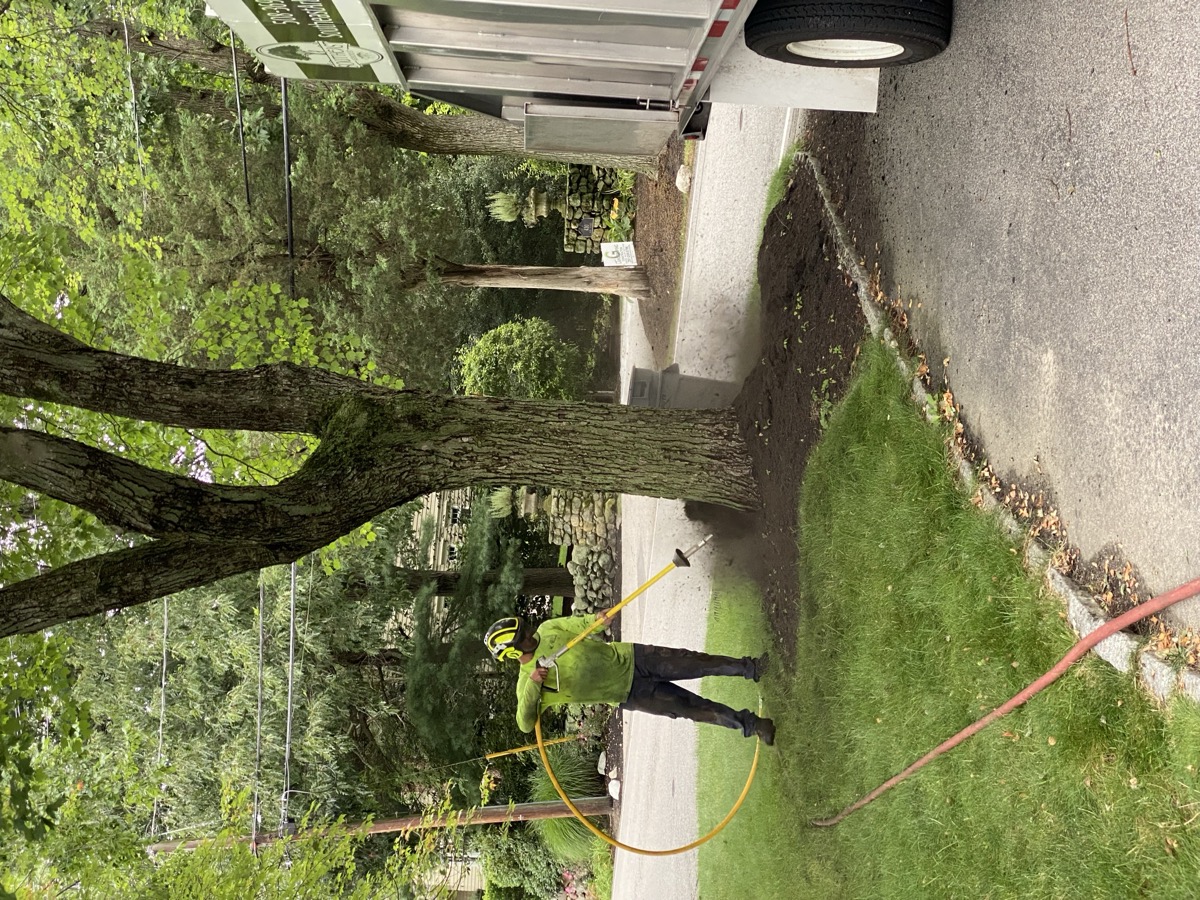
# Professional Root Zone Improvement in Weymouth, Massachusetts
If you own property in Weymouth, Massachusetts—whether in the bustling streets of Columbian Square, the coastal edges of North Weymouth, or the developing lots near Old South Weymouth Naval Air Station—your trees face unique pressures from the town's diverse soils, salty coastal winds, and aging infrastructure. Root zone improvement in Weymouth MA addresses these challenges head-on, restoring soil health around tree bases to promote vigorous growth and longevity. At Southeast Arborist, LLC, our ISA Certified Arborists deliver this specialized service across South Shore Massachusetts, including all Weymouth neighborhoods like South Weymouth, East Weymouth, Weymouth Landing, Wessagusset, Jackson Square, and Lovell's Corner.
Weymouth's 57,500 residents spread across Norfolk County's varied villages create distinct tree care demands. Red maples line Whitman's Pond parkland, while white pines endure coastal exposure in Wessagusset. The 2008 ice storms felled thousands of trees town-wide, and recovery plantings now struggle with compacted soils from redevelopment, like the Southfield site. Your red oaks in Jackson Square or silver maples in Weymouth Landing may show declining vigor due to girdling roots or poor drainage—issues our air spade techniques correct precisely.
Root zone improvement Weymouth MA isn't just soil aeration; it's a targeted intervention using ANSI A300 standards to excavate, decompact, amend, and mulch root zones. We mitigate construction damage from nearby Braintree or Quincy projects spilling into Weymouth borders, ensuring your London planes or green ashes thrive amid utility conflicts. Homeowners in East Weymouth report trees leaning from buried root flares; we expose and correct them safely, following strict safety protocols with TCIA accreditation.
This service prevents costly removals. A Norway maple with decompacted soil and vertical mulching can add decades to its life, stabilizing your property value in a community where trees define curb appeal. Southeast Arborist, based in Plymouth and Cohasset, serves Weymouth directly—no subcontractors, just certified experts with the right equipment for coastal clay-loam soils. We've handled emergency root work post-storms along the Back River in Great Esker Park, where unique glacial esker ecology demands gentle handling.
Consider your willows at Whitman's Pond: waterlogged roots rot without drainage improvements. Or ornamental pears in Lovell's Corner, stunted by village street compaction. Our process boosts oxygen to feeder roots, reducing stress from Weymouth's humid summers and freeze-thaw cycles. Expect visible recovery—denser foliage, straighter trunks—within one growing season.
Ready to assess your trees? Call Southeast Arborist at 508-369-5009 for a no-obligation consultation. We prioritize Weymouth properties, from dense North Weymouth streets to expansive South Weymouth yards, delivering root zone improvement that withstands local conditions.
Why Weymouth Properties Need Root Zone Improvement
Weymouth MA's tree canopy reflects its geography: coastal northern neighborhoods battle salt spray, while inland villages like Columbian Square grapple with urban compaction. Root zone improvement Weymouth MA becomes essential when soils around your red maples, red oaks, or white pines compact from foot traffic, construction, or poor grading—common in a town rebounding from 2008 ice storm losses.
Start with coastal exposure in North Weymouth and Wessagusset. Salt-laden winds from the Back River stunt roots of silver maples and willows, which prefer moist but aerated soils. Weymouth's Norfolk County clay-loams hold water tightly, leading to oxygen deprivation. Without intervention, your trees develop shallow roots, toppling in nor'easters. We've seen green ashes in East Weymouth decline from this, their root flares buried under fill dirt from nearby Hingham developments.
Aging infrastructure exacerbates issues town-wide. In Jackson Square and Lovell's Corner, utility lines conflict with Norway maple roots, forcing girdling growth that strangles trunks. Dense village street tree management in Weymouth Landing means pavements seal soils, starving ornamental pears of nutrients. Redevelopment at Southfield and Old South Weymouth Naval Air Station introduces heavy equipment compaction, mirroring lot clearing needs across Holbrook borders.
Local climate amplifies urgency. Weymouth's Zone 6b winters bring freeze-thaw heaving, cracking root zones of London planes. Humid summers foster fungal pathogens in poorly drained white pine sites near Quincy. Whitman's Pond parkland willows suffer anaerobic soils; red maples there yellow from iron deficiencies in alkaline pockets. Great Esker Park's glacial ridge hosts unique plant communities on sandy eskers, but surrounding lawns compact feeder roots.
Specific tree vulnerabilities demand action. Red oaks in South Weymouth yards form taproots intolerant of surface compaction—air spading reveals and relieves this. Norway maples, invasive yet prevalent, girdle from poor planting depths. White pines, Weymouth's evergreens, decline from salt and compaction, dropping needles prematurely. Willows and silver maples near waterways rot roots without decompaction. London planes in Columbian Square tolerate pollution but not buried flares. Green ashes face emerald ash borer plus soil stress; ornamental pears crack sidewalks but weaken from root confinement.
Homeowners notice signs: sparse canopy, dieback, leaning trunks, mushroom growth at bases. Test your soil—Weymouth averages pH 6.0-7.0, but compaction exceeds 90% in village centers. Probe with a screwdriver; if it penetrates less than 6 inches, roots suffocate.
Post-2008 recovery plantings in Braintree-adjacent areas now mature into problem trees without root zone care. Utility clearance pruning in older residential zones wounds roots further. Construction damage mitigation in Rockland-overflow projects protects your investments.
Southeast Arborist's ISA Certified team follows ANSI A300 (Part 1) for soil management, using science-backed amendments like mycorrhizal fungi suited to Weymouth's mix. Improve your property's resilience—healthy roots mean storm-resistant trees, enhancing biodiversity in Great Esker Park-like settings. Delay risks removal costs exceeding $2,000 per mature tree.
Our Root Zone Improvement Process in Weymouth
Southeast Arborist employs a precise, step-by-step root zone improvement process in Weymouth MA, tailored to local soils and species. Our ISA Certified Arborists start with a site assessment, inspecting your red oaks in Jackson Square or willows in Weymouth Landing for compaction, girdling roots, or drainage issues.
**Step 1: Diagnostic Assessment (1-2 hours).** We arrive with soil probes, resistographs, and sonic tomography to map root zones non-invasively. In North Weymouth's coastal clays, we measure penetration resistance—over 300 psi signals compaction. For your silver maple near Wessagusset beaches, we check salt buildup via conductivity tests. ANSI A300 standards guide us; we photograph buried flares common in East Weymouth fills.
**Step 2: Air Spade Root Excavation (Core Technique).** Using compressed air at 90-120 psi from our state-of-the-art air spade (no digging blades to damage roots), we excavate 12-18 inches deep across the critical root zone—drip line to trunk. This reveals girdling roots on Norway maples in Columbian Square, which we diagnose via cross-sectioning. In Lovell's Corner ornamental pears, we expose 70-80% of the root plate gently, preserving mycorrhizae.
**Step 3: Girdling Root Diagnosis and Removal.** Common in Weymouth's poorly planted street trees, girdling roots choke vascular tissue. We identify via visual inspection and remove only problematic ones—less than 25% of total roots—per ISA Best Management Practices. For red maples at Whitman's Pond, this straightens leaning trunks immediately.
**Step 4: Buried Root Flare Correction.** Weymouth's grading buries flares under 6-12 inches of soil on white pines and London planes. We excavate fully, reshaping the grade to expose 4-6 inches of trunk above soil line, preventing decay. Safety protocols include spotters and barriers, essential in dense South Weymouth yards.
**Step 5: Soil Decompaction and Amendment.** Compacted soils (bulk density >1.6 g/cm³) get fractured via air tool, then amended with 50/50 compost-sand blends pH-adjusted for Norfolk County loams (target 6.2-6.8). We add organic matter at 3-5% volume, incorporating slow-release fertilizers and bio-stimulants. For green ashes in Old South Weymouth Naval Air Station sites, we include insecticidal drenches.
**Step 6: Drainage Enhancement.** In water-prone Weymouth Landing or Back River areas, we install French drains or gravel trenches around willow root zones, sloping 1-2% away. This counters 50+ inches annual rainfall.
**Step 7: Vertical Mulching for Long-Term Improvement.** We bore 6-8 inch diameter holes 18-24 inches deep in a grid (3x3 feet spacing) within the drip line, filling with 70% compost, 20% sand, 10% perlite. This creates oxygen channels for your London planes, lasting 5-10 years. In Great Esker Park sandy soils, we adjust to coarser mixes.
**Step 8: Construction Damage Mitigation and Finish.** For Southfield-adjacent properties, we apply root zone barriers pre-work. Final mulching (3-inch organic layer, no volcano piles) and staking if needed complete the job. Post-care includes watering protocols: 10-20 gallons weekly for first season.
Equipment includes 400 CFM air compressors, vacuums for debris containment (zero mess in village streets), and pH meters. All work complies with Massachusetts pesticide laws and OSHA safety. Weymouth-specific: we navigate narrow North Weymouth roads with compact rigs.
Results? Your trees gain 20-50% more fine roots within months, per follow-up air spade checks. Call 508-369-5009 to schedule.
Common Root Zone Improvement Projects in Weymouth Neighborhoods
Weymouth's villages each present tailored root zone improvement needs, from coastal North Weymouth to inland South Weymouth.
In **North Weymouth**, salt-exposed white pines and silver maples need decompaction to counter wind-thrown soils. We've air spaded dozens post-storm, adding salt-tolerant amendments near Back River paths.
**South Weymouth** yards host mature red oaks conflicted with aging utilities. Girdling root removal and vertical mulching stabilize them amid Southfield redevelopment vibrations.
**East Weymouth** sees Norway maples buried by 1950s fills; flare corrections prevent topples onto Holbrook Road traffic.
**Weymouth Landing**'s dense streets feature stunted ornamental pears. Our process includes sidewalk-adjacent excavation, amending for village compaction.
**Wessagusset** coastal lots demand drainage for willows, tying into Great Esker Park ecology. Decompaction reveals sandier root zones needing minimal amendments.
**Columbian Square**'s London planes endure foot traffic; vertical mulching grids boost gas exchange under commercial pavements.
**Jackson Square** green ashes get EAB-prep root invigoration, with utility clearance integration.
**Lovell's Corner** recovery red maples from 2008 storms benefit from full soil restoration, enhancing park-like appeal.
**Old South Weymouth Naval Air Station** redevelopment sites require construction mitigation—root barriers and pre-clearance air spading for legacy trees.
These projects restore canopy cover lost to ice storms, using Weymouth-specific mixes for clay-loams.
Root Zone Improvement Costs in Weymouth, MA
Root zone improvement costs in Weymouth MA vary by project scope, tree size, and neighborhood access, but deliver unmatched ROI for your property.
Base pricing starts at $500-$800 for small trees (DBH <12 inches) in accessible South Weymouth yards—includes assessment, air spading, and basic mulching. Medium trees (12-24 inches DBH), like red oaks in Jackson Square, range $1,000-$2,000, factoring girdling root work.
Large specimens (24+ inches DBH), such as Whitman's Pond willows, hit $2,500-$4,500 due to extensive excavation in wet East Weymouth soils. Add $300-$600 for vertical mulching grids on Norway maples in Columbian Square.
Neighborhood modifiers: North Weymouth coastal access adds 10-15% for equipment transport; dense Weymouth Landing streets incur $200 setup fees. Redevelopment zones like Old South Weymouth Naval Air Station tack $500 for mitigation barriers.
Key factors: - **Tree Count/Species:** Multi-tree discounts (10% off second+); silver maples need pricier drainage ($400 extra). - **Issues Severity:** Buried flares or compaction double labor; air spade efficiency keeps it precise. - **Site Conditions:** Lovell's Corner slopes require shoring ($300); Wessagusset salt tests add $150. - **Add-Ons:** Amendments ($100/cubic yard), post-care fertigation ($250).
Compare value: A $1,500 investment extends a London plane's life 20+ years, avoiding $3,000+ removal. Insurance often covers storm-damaged roots. Weymouth property values rise 5-10% with healthy trees, per local appraisals.
Southeast Arborist quotes transparently—no surprises. ISA certification ensures ANSI-compliant work, backed by warranties. Financing via local banks available. Save long-term: healthy roots cut watering 30%, pruning needs 40%.
Get your free estimate—call 508-369-5009. Factors like Quincy proximity don't inflate our South Shore rates.
When to Schedule Root Zone Improvement in Weymouth
Schedule root zone improvement in Weymouth MA during late fall (October-November) or early spring (March-April), when trees are dormant. Weymouth's mild Zone 6b allows this window before leaf-out, minimizing stress on red maples or white pines.
Avoid summer heat (July-August), when humid 80°F days dehydrate exposed roots. Winter (December-February) freezes clay-loams solid, hindering air spading.
Urgency signs demand immediate action: - Leaning trunks in North Weymouth winds. - Mushroom rings or wet mulch in Weymouth Landing willows. - Thin canopy/dieback on Jackson Square green ashes. - Cracked soil/heaving around Columbian Square London planes.
Post-storm (like 2008 ice events), act within weeks—exposed roots dry out. Pre-construction in Southfield areas, schedule mitigation first.
Monitor via annual walks: Check drip line penetration. If your ornamental pear in Lovell's Corner wilts despite rain, roots suffocate.
Early intervention in East Weymouth prevents failures. Call 508-369-5009 now—our Plymouth base ensures prompt Weymouth response.
Frequently Asked Questions About Root Zone Improvement in Weymouth
**What is root zone improvement, and why do Weymouth trees need it?** It's excavating, decompacting, and amending soils around tree roots using air spading. Weymouth's compaction from villages and coasts stresses red oaks and silver maples—restoration boosts health 30-50%.
**How long does root zone improvement take in Weymouth neighborhoods?** Small jobs in South Weymouth: 4-6 hours. Large North Weymouth trees: 1-2 days. We stage efficiently around local traffic.
**Is it safe for my family's Weymouth yard?** Yes—air spading avoids blade damage. ISA Certified crews use barriers, complying with OSHA and town noise ordinances.
**Will it fix girdling roots on my Jackson Square Norway maple?** Absolutely. We diagnose and remove selectively, per ANSI A300, straightening trunks over 1-2 years.
**How much soil amendment for Weymouth's clay-loams?** 3-5 cubic yards per large tree, custom-blended for pH 6.2-6.8 and drainage, suiting local red maples.
**Can you do it near utilities in East Weymouth?** Yes, we hand-clear and coordinate with DigSafe, common for utility-conflicted London planes.
**What results for post-2008 recovery trees in Lovell's Corner?** Denser foliage, upright growth in one season; vertical mulching sustains 5-10 years.
**Do you serve all Weymouth areas like Wessagusset?** Fully—from coastal Wessagusset to inland Columbian Square. Call 508-369-5009.
Root Zone Improvement Throughout Weymouth
Southeast Arborist provides root zone improvement across all Weymouth neighborhoods: South Weymouth estates, North Weymouth shores, East Weymouth suburbs, Weymouth Landing villages, Wessagusset beaches, Columbian Square hubs, Jackson Square homes, Lovell's Corner parks, and Old South Weymouth Naval Air Station sites. We extend to nearby Hingham, Braintree, Holbrook, Rockland, and Quincy.
Our Plymouth/Cohasset base ensures 24-48 hour response for your white pines or green ashes. ISA Certified, ANSI-compliant service with full safety protocols.
Protect your Weymouth trees today—call 508-369-5009 for expert root zone improvement.