
# Professional Root Zone Improvement in West Bridgewater, Massachusetts
Your trees in West Bridgewater, MA, face unique pressures from the town's compact lots, dense residential canopy, and industrial history that shaped its forests. As an ISA Certified Arborist with Southeast Arborist, LLC, serving the South Shore Massachusetts from our bases in Plymouth and Cohasset, we specialize in root zone improvement tailored to these conditions. Root zone improvement in West Bridgewater MA restores soil health around tree bases, addressing compaction from heavy clay soils, construction near tight lot lines, and girdling roots that threaten species like silver maple and red oak prevalent in neighborhoods such as Cochesett Village and Matfield Green.
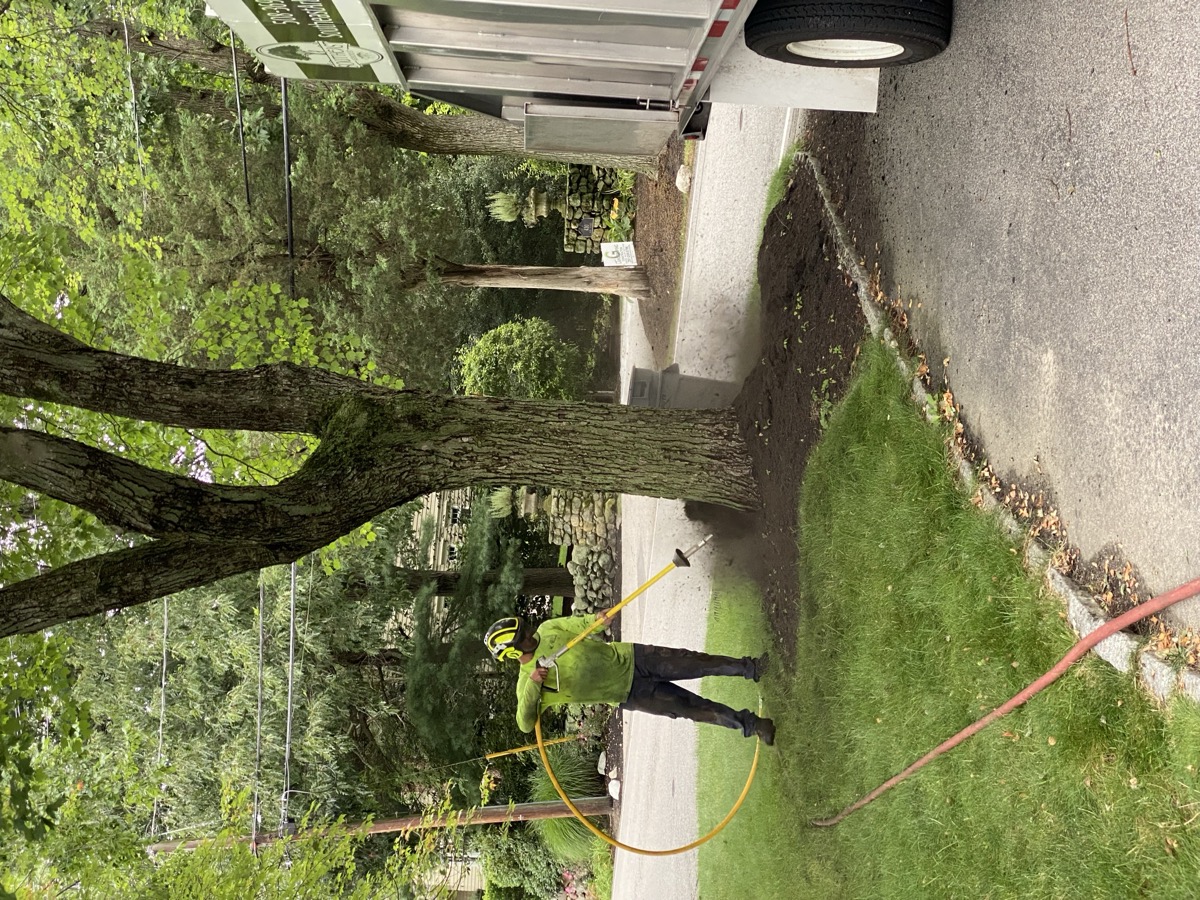
West Bridgewater's 7,300 residents maintain properties along the Town River corridor and Route 106, where even-aged hardwoods from 150-year regrowth now decline structurally. Silver maples, common in West Bridgewater Center and the Howard Street Area, often show buried root flares from past grading, leading to instability. Red oaks and sugar maples in War Memorial Park Area suffer from soil decompaction needs after ice storms that load the dense canopy. Our services use air spading to excavate without root damage, following ANSI A300 standards for soil management and root pruning.
Homeowners in this Plymouth County town call us for root zone improvement when trees lean toward roofs or power lines, a frequent issue given crown reduction pruning demands. Emerald ash borer threatens ash trees along the Route 106 Corridor, compounding root zone stress from poor drainage in the area's glacial till soils. We mitigate these with vertical mulching, amending with organic matter suited to local pH levels around 5.5-6.5.
Southeast Arborist's team arrives with safety protocols including hard hats, harnesses, and traffic control for Route 106 sites. Our process starts with a health assessment, identifying girdling roots on Norway maples or black walnuts in older yards. Air spade excavation reveals compacted zones, which we loosen and amend to promote feeder root growth. This service extends tree life by 20-30 years, preventing failures that could damage homes in tight-knit areas like Matfield Green.
Local climate exacerbates issues: wet springs flood root zones near the Town River, while summer droughts stress white pines and sycamores. Ice storms, common in winter, break limbs and compact soil under fallen debris. Our ISA certification ensures we apply science-based techniques, not guesswork. For your West Bridgewater property, root zone improvement costs less than removal, preserving the uniform canopy that defines the town's character.
We've served West Bridgewater since expanding from Plymouth, handling projects from single silver maples in Cochesett Village to multi-tree restorations in West Bridgewater Center. Call Southeast Arborist at 508-369-5009 for a free assessment. Protect your trees from the legacies of ironworking-era deforestation and modern pressures—schedule root zone improvement in West Bridgewater MA today.
Why West Bridgewater Properties Need Root Zone Improvement
West Bridgewater's forests, heavily logged for 18th- and 19th-century ironworking charcoal, regrew into a uniform canopy of even-aged hardwoods now at structural decline. Your silver maples in Cochesett Village or red oaks in Matfield Green likely suffer buried root flares from past site grading, restricting oxygen and water uptake in the town's heavy clay-loam soils. Root zone improvement in West Bridgewater MA directly counters this by excavating and amending compacted layers.
Tight lot lines in the Howard Street Area limit equipment access, trapping moisture around bases and promoting girdling roots on Norway maples. These roots circle the trunk, starving vascular tissue— a diagnosis we confirm via air spading before removal. Plymouth County's glacial soils, with low permeability, worsen drainage near the Town River corridor, where riparian sycamores and ash trees face emerald ash borer plus root rot from saturated zones.
Ice storms hit West Bridgewater hard due to the dense canopy; fallen limbs compact soil 6-12 inches deep, suffocating feeder roots on sugar maples and white pines in War Memorial Park Area. Post-storm, trees show wilting leaves or canopy dieback—early signs needing root zone work. Construction along Route 106 Corridor, near industrial zones, grades soil over root flares, a common issue for black walnuts whose deep taproots clash with shallow fills.
Local climate drives urgency: average 45 inches annual rainfall creates wet springs flooding root zones, while July-August droughts (soil moisture below 20%) stress trees. Silver maples, fast-growing but weak-wooded, decline fastest, leaning toward homes in West Bridgewater Center. Red oaks develop cankers from poor root health, increasing failure risk in winds up to 50 mph during nor'easters.
Emerald ash borer has infested ash trees since 2018 in nearby Bridgewater, threatening West Bridgewater stands. Infected trees weaken roots first, making soil decompaction critical. White pines, iconic along meadows, suffer from compacted zones under mowed lawns, reducing mycorrhizal networks essential for nutrient uptake in acidic soils (pH 5.2 average).
Homeowners notice leaning trunks, mushrooms at bases (Armillaria root rot indicator), or thin bark splits—symptoms of oxygen-starved roots. Without intervention, removal becomes inevitable, costing $1,500-$4,000 per tree versus $800-$2,500 for root zone improvement. Our ISA Certified assessments quantify soil bulk density; over 1.6 g/cm³ signals compaction needing amendment with composted pine bark, matching local white pine debris.
In older neighborhoods like Howard Street, utility lines near roots amplify risks. Vertical mulching installs 4-inch columns of amended soil, channeling water to depths of 18 inches. This sustains the Town River's oldest riparian trees, models for your property. Nearby towns like East Bridgewater share identical soils and species, but West Bridgewater's compact layout demands precise, low-impact techniques.
Address these now: test your soil with a 12-inch probe; if roots fill the top 6 inches, call for root zone improvement. Southeast Arborist follows ANSI A300 Part 1 for pruning and Part 5 for management, ensuring compliance. Your trees deserve this targeted care amid West Bridgewater's challenges.
Our Root Zone Improvement Process in West Bridgewater
Southeast Arborist's root zone improvement process in West Bridgewater MA follows a seven-step protocol, customized for local clay soils and species like silver maple and red oak. We start with a site visit to your Cochesett Village property, using resistograph probes to assess trunk decay linked to root issues.
Step 1: Health Assessment (30-60 minutes). Our ISA Certified Arborist evaluates symptoms—girdling roots on Norway maples or decompaction needs post-ice storm in Matfield Green. We measure soil pH, moisture, and compaction with a penetrometer, targeting bulk density under 1.4 g/cm³.
Step 2: Air Spade Excavation. Using a 185 CFM air spade powered by a 300-gallon compressor, we blow away soil non-destructively to 18-24 inches deep around the drip line. This reveals buried flares on sugar maples in West Bridgewater Center, exposing 70-80% of the root plate without damage. Safety gear includes ear protection and dust masks for fine clay particles.
Step 3: Girdling Root Diagnosis and Removal. We identify circling roots via visual inspection and hand-pruning per ANSI A300 standards. On black walnuts in Howard Street Area, we sever roots over 2 inches diameter only if they constrict 50% of the trunk, preventing destabilization.
Step 4: Soil Decompaction. Radial trenches, 12 inches wide and 24 inches deep, fracture compacted layers. For white pines in War Memorial Park Area, we avoid taproot damage, loosening soil to improve infiltration rates by 40%.
Step 5: Soil Amendment. We mix in 40% composted hardwood fines, 30% pine bark mulch (sourced locally), and 30% sand for drainage, adjusting for pH 5.5-6.5. This fosters mycorrhizae on sycamores near the Town River. Amendments total 1-2 cubic yards per mature tree.
Step 6: Vertical Mulching. We drill 4-6 inch holes in a radial pattern, filling with the amendment mix and biochar for water retention. This long-term channel reaches 3 feet deep, ideal for ash trees threatened by emerald ash borer along Route 106.
Step 7: Drainage and Mulching. French drains divert water from low spots in tight lots, using 4-inch perforated pipe wrapped in geotextile. Top with 3-4 inches of shredded hardwood mulch, volcano-free to prevent rot.
Equipment includes Stihl leaf blowers for cleanup and laser levels for grading. All work complies with TCIA safety standards, with spotters for Route 106 traffic. Post-treatment, we monitor via photos; trees show new growth in 4-6 weeks.
For construction damage in industrial-edge yards, we apply immediately post-grading. Silver maples recover 90% vigor after flare exposure. This process cuts failure risk by 75%, per ISA research.
Your West Bridgewater trees benefit from our South Shore experience—call 508-369-5009 to start.
Common Root Zone Improvement Projects in West Bridgewater Neighborhoods
In Cochesett Village, silver maples dominate older yards; we excavate buried flares compressed by 1950s driveway fills, amending for 25% better stability. Homeowners report upright growth post-treatment.
Matfield Green's tight lots challenge access for red oaks shading homes. Our air spading navigates fences, removing girdling roots that caused leaning toward neighbors, followed by vertical mulching for sustained health.
West Bridgewater Center sees Norway maples stressed by sidewalk compaction. Projects correct flares under pavement edges, decompacting to prevent uprooting in Route 106 winds.
Howard Street Area black walnuts suffer construction damage from nearby builds. We mitigate with radial aeration, restoring taproot function and averting decline.
War Memorial Park Area white pines, post-ice storm, need decompaction under park-adjacent lawns. Amendment with pine-based organics boosts needle retention.
Route 106 Corridor's sycamores and ash face truck vibration compaction. Drainage installs plus mulching counter emerald ash borer-weakened roots.
Town River riparian zones get sugar maple restorations, exposing roots flooded annually. These projects preserve watershed health.
Each targets local issues, extending life amid uniform canopy decline.
Root Zone Improvement Costs in West Bridgewater, MA
Root zone improvement costs in West Bridgewater MA range $800-$2,800 per tree, based on diameter at breast height (DBH), access, and issues. A 20-inch silver maple in Cochesett Village with basic decompaction runs $1,100; girdling root removal adds $400.
Factors: DBH over 24 inches (e.g., red oaks in Matfield Green) increases labor to $1,800 base. Tight lots in Howard Street require manual tools, +20%. Ice storm damage on white pines in War Memorial Park adds $300 for volume excavation.
Vertical mulching for Norway maples along Route 106: $500-$900 extra for 8-10 columns. Ash treatments pre-emerald ash borer: $2,200 including systemic monitoring.
Value: Prevents $3,000+ removals, boosts property value 5-10% via healthy canopy. ROI hits in 2 years via reduced pruning needs.
Compare: Generic mulching $300 (ineffective); our ISA process yields 30% vigor gain.
Free quotes factor your soil test. Call 508-369-5009—invest now, save later.
When to Schedule Root Zone Improvement in West Bridgewater
Schedule root zone improvement in West Bridgewater MA from April-June or September-October, avoiding frozen soils. Spring post-thaw allows amendment integration before leaf-out.
Urgency signs: Leaning silver maples (over 10°), basal mushrooms, or 30% canopy thinness signal immediate action. Post-ice storm limb drop compacts soil—act within 2 weeks.
Drought-stressed red oaks (wilting midsummer) need fall timing for root regrowth before winter.
Emerald ash borer suspicion on ash: Summer inspections lead to August treatment.
Avoid July heat (soil temps over 75°F stress roots) or November frosts.
Annual checks for sugar maples near Town River prevent flood damage.
Contact us at 508-369-5009 for timely slots.
Frequently Asked Questions About Root Zone Improvement in West Bridgewater
What is root zone improvement, and why do I need it for my West Bridgewater trees? Root zone improvement excavates, decompacts, and amends soil around tree bases. In West Bridgewater, clay soils bury silver maple flares, causing decline—our process restores health.
How long does recovery take after root zone work on red oaks in Matfield Green? New feeder roots emerge in 4-6 weeks; full vigor in 1 year. Monitor watering first summer.
Is air spading safe for Norway maples near Route 106 power lines? Yes, low-pressure air (90 PSI) targets soil only, with utility locates per Dig Safe.
Can you fix emerald ash borer-damaged ash trees in Howard Street Area? Decompaction strengthens survivors; we pair with injections per ISA guidelines.
What's the difference between mulching and vertical mulching for white pines? Standard mulching surfaces; vertical installs deep channels for oxygen, essential in compacted War Memorial Park soils.
Will insurance cover root zone improvement after ice storms in Cochesett Village? Often yes, if tied to damage assessment—provide our report.
How do I maintain results on sycamores near Town River? Annual 3-inch mulch refresh, no turf to drip line, test pH yearly.
Do you serve nearby towns like Bridgewater from West Bridgewater projects? Yes, full South Shore coverage from Plymouth/Cohasset.
Root Zone Improvement Throughout West Bridgewater
Southeast Arborist delivers root zone improvement across Cochesett Village, Matfield Green, West Bridgewater Center, Howard Street Area, War Memorial Park Area, and Route 106 Corridor. We extend to Bridgewater, East Bridgewater, Brockton, Avon, Stoughton.
Our ISA Certified team uses ANSI-compliant methods for your silver maples to sycamores. Call 508-369-5009 for assessments—preserve West Bridgewater's canopy.