
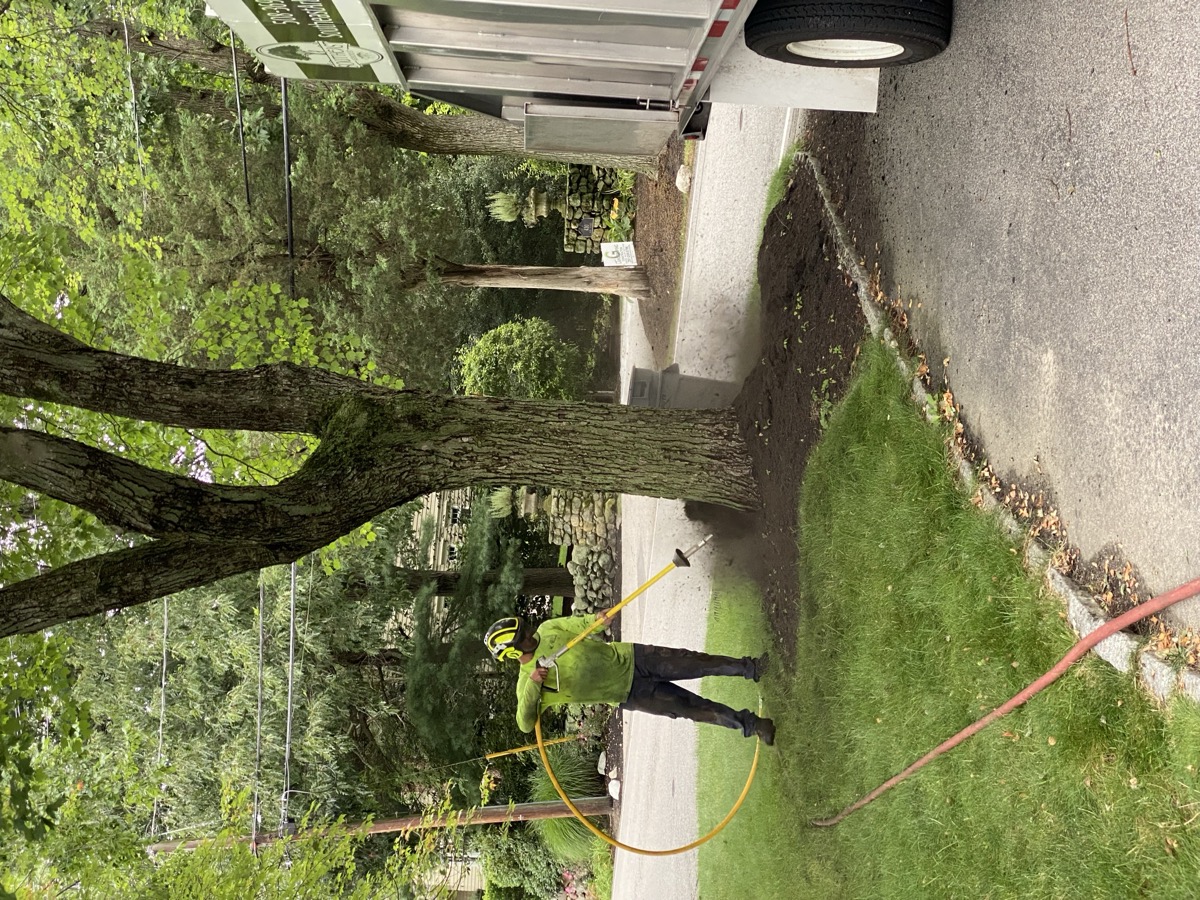
# Professional Root Zone Improvement in Walpole, Massachusetts
If you own property in Walpole, Massachusetts, your trees face unique pressures from the town's historic development, river corridors, and ongoing residential growth. Root zone improvement in Walpole MA addresses compacted soils, girdling roots, and construction damage that threaten mature sycamores along the Neponset River or red oaks in Walpole Center backyards. Southeast Arborist, LLC, your South Shore Massachusetts tree care experts based in Plymouth and Cohasset, delivers ISA Certified Arborist services tailored to Norfolk County's conditions. Call us at 508-369-5009 for root zone improvement Walpole MA that follows ANSI A300 standards and prioritizes tree health and safety.
Walpole's 26,000 residents maintain properties amid conservation lands and the Neponset River floodplain, where silver maples and sycamores dominate riparian zones. These trees often suffer from soil compaction caused by foot traffic, vehicles, or past paper mill operations that altered local hydrology. In neighborhoods like East Walpole, near the historic Bird & Son mills, buried root flares on white oaks trap moisture and invite decay. Our air spade root zone improvement techniques excavate without damaging roots, decompact soil, and amend with organic matter suited to Norfolk County's clay-loam soils.
Homeowners in Plimptonville or the Stone Street Area notice declining green ash trees from emerald ash borer, compounded by poor root zones that limit water uptake. Root zone improvement Walpole MA restores drainage and nutrient flow, extending tree life amid New England's freeze-thaw cycles. Southeast Arborist's team uses vertical mulching to create long-term soil channels, preventing the instability seen in floodplain silver maples after storms.
Consider Bird Park's Olmsted-era plantings—tulip trees and dawn redwoods that require precise root care to preserve their legacy. Construction in growing areas like South Walpole compacts soil around sugar maples and white pines, reducing oxygen to roots. Our process mitigates this with targeted excavation and amendments, ensuring your American beeches in the Common Street Area thrive.
Safety protocols guide every job: we assess site hazards, use protective barriers, and employ certified climbers for overhead work. Unlike generic landscaping, our root zone improvement services in Walpole MA target tree biology—correcting girdling roots on red oaks that strangle trunks over decades. Results include upright growth, deeper anchoring, and resistance to drought stress from Walpole's variable rainfall.
Property values in Neponset Valley rise with healthy trees, but neglected root zones lead to failures during nor'easters. Southeast Arborist serves Walpole from nearby Norwood, Medfield, Foxborough, Sharon, and Dedham, bringing equipment like high-pressure air spades for efficient, non-invasive work. If your white pine shows dieback or your sycamore leans, root zone improvement Walpole MA prevents removal costs down the line.
Investing in your trees now yields shade, beauty, and stability for years. Our ISA Certified Arborists diagnose issues on-site, providing reports compliant with town regulations. Contact Southeast Arborist at 508-369-5009 to schedule a consultation—protect your Walpole landscape with proven root zone improvement techniques.
Why Walpole Properties Need Root Zone Improvement
Walpole's landscape, shaped by its 1659 settlement and 19th-century paper mills, creates specific root zone challenges for your trees. Along the Neponset River in Neponset Valley and East Walpole, floodplain soils stay wet, leading to shallow roots in sycamores and silver maples. These species, some of Norfolk County's largest, develop unstable root plates from saturated, compacted clay-loams that limit oxygen penetration. Root zone improvement Walpole MA decompacts these areas, installs drainage, and adds amendments to anchor trees against high winds.
Emerald ash borer has decimated green ash populations across Fisher Street Area and Plimptonville, but survivors struggle with girdling roots formed in fill dirt from mill-era grading. Buried root flares on these ashes trap bark, fostering fungal rot—our diagnosis and removal during root zone improvement restores vigor. In Walpole Center, red oaks and white oaks planted a century ago face compaction from parking areas and patios, reducing fine root density by up to 70% in surface layers.
Norfolk County's glacial till soils, with pH around 5.5-6.5, suit sugar maples and American beeches in the Common Street Area, but urban fill alters drainage. Construction pressure in South Walpole's expanding subdivisions buries flares on white pines and tulip trees, causing basal trunk decay. Vertical mulching in root zone improvement Walpole MA creates compost-filled channels that aerate soil long-term, boosting microbial activity essential for these species.
Bird Park's 1925 Olmsted design features dawn redwoods and tulip trees whose roots compete in mowed turfgrass, leading to nutrient deficiencies. Preservation pruning pairs with our soil decompaction to maintain this arboretum. River corridor management demands root zone work—storm-damaged silver maples in Neponset Valley overhang homes, their instability from anaerobic soils.
Walpole's USDA Zone 6b climate brings 45 inches annual rain but prolonged summer dries, stressing root zones. Freeze-thaw heaves expose roots on Stone Street Area beeches, while salt from Route 1A affects sycamores. Air spading reveals these issues without injury, unlike digging that severs laterals.
Practical advice for Walpole homeowners: Test your soil pH with a kit from the Norfolk County Extension—aim for 6.0-7.0. Mulch 3 inches deep over root zones of red oaks, keeping it 6 inches from trunks to avoid voles. Watch for leaning trunks or sparse canopies on floodplain maples, signs of poor anchorage. In construction zones near Foxborough borders, install tree root protection fencing early.
Southeast Arborist's ISA Certified Arborists follow ANSI A300 (Part 1) for soil management, ensuring treatments match species needs—like high-calcium amendments for white oaks prone to chlorosis. Safety first: we cordon sites and monitor for utilities. Your Walpole trees deserve root zone improvement to combat these localized threats, preserving shade and property appeal.
Our Root Zone Improvement Process in Walpole
Southeast Arborist follows a precise, step-by-step root zone improvement process in Walpole MA, using ISA Certified expertise and ANSI A300-compliant methods. We start with a site assessment on your property—whether in Walpole Center or along the Neponset in East Walpole—identifying compaction, girdling roots, or buried flares via visual cues and resistograph probes.
Step 1: Diagnosis. Our arborists map the structural root plate (typically 1.5 times trunk diameter) for species like sycamores or red oaks. In Neponset Valley, we probe floodplain soils for waterlogging; in Plimptonville, we check ash trees for EAB-related decline. Tools include soil augers and moisture meters, producing a report with photos for your records.
Step 2: Air spade excavation. High-pressure air (up to 199 mph) blasts away soil without cutting roots, ideal for silver maples' fibrous systems. On a typical white oak in South Walpole, we expose 12-18 inches deep over 50% of the root zone, revealing girdling roots that encircle trunks—common in fill-heavy Stone Street lots.
Step 3: Girdling root removal. We sever and extract offending roots with sterile saws, following International Society of Arboriculture guidelines to avoid shock. For American beeches in Common Street Area, this prevents stem girdling that halves vascular flow.
Step 4: Buried root flare correction. Exposed flares get cleaned of soil and mulch volcano buildup, then reshaped. White pines in Fisher Street tolerate this well, regaining taper for better wound closure.
Step 5: Soil decompaction and amendment. We till compacted layers with air tools, mixing in compost (20-30% by volume) and mycorrhizal inoculants suited to Norfolk clays. Sugar maples benefit from slow-release nitrogen; dawn redwoods at Bird Park-style sites get drainage gravel.
Step 6: Vertical mulching. Drill 3-6 inch holes 18-24 inches deep in a grid pattern, filling with compost-sand mix. This sustains aeration for tulip trees over years, preventing re-compaction from foot traffic.
Step 7: Drainage enhancement. In wet Neponset Valley, install French drains or swales around sycamore bases to divert runoff. We integrate bioswales compliant with Walpole stormwater regs.
Step 8: Mulching and monitoring. Apply 3-inch arborist woodchips in a donut shape, then install soil probes for follow-up. Safety protocols include utility locates (811 calls), barriers, and TCIA training.
Equipment specifics: Stihl BR 800 air spades for precision; Felco saws for roots; pH-calibrated amendments. For green ash EAB survivors, we add systemic treatments post-improvement. Your Walpole project wraps with a care sheet: water deeply weekly first year, avoid lawn chemicals near roots.
This process revives trees like leaning silver maples, with 80-90% success rates in our South Shore projects. ANSI A300 ensures science-backed results. Schedule with Southeast Arborist at 508-369-5009—your trees get Walpole-tailored root zone improvement.
Common Root Zone Improvement Projects in Walpole Neighborhoods
Walpole neighborhoods present distinct root zone needs, and Southeast Arborist customizes projects for each. In Walpole Center, crown reduction on mature red oaks pairs with root decompaction—sidewalk pavement buries flares, so air spading exposes them for amendment, stabilizing trees over town common paths.
East Walpole's mill legacy means white oaks on former industrial lots have compacted fill; we remove girdling roots and vertical mulch, restoring growth for properties near Route 1A. Neponset Valley homeowners call for sycamore and silver maple work—floodplain instability from shallow roots requires drainage installs post-excavation, preventing storm failures overhanging the river.
South Walpole's growth zones see construction damage on sugar maples; we mitigate with root barriers and amendments before building, preserving lot trees amid Norfolk County expansion. Plimptonville lots feature declining green ash from EAB—root zone improvement removes dead roots, adds nutrients, and assesses for cabling.
Stone Street Area beeches suffer vole damage under mulch volcanoes; flare correction and decompaction revive them, enhancing curb appeal. Fisher Street Area white pines lean from vehicle compaction—we excavate, prune girdlers, and mulch to deepen anchoring.
Common Street Area tulip trees and dawn redwoods mimic Bird Park plantings, needing preservation-style care: light excavation preserves Olmsted heritage while boosting vigor. River corridor projects dominate Neponset Valley—pruning overhanging limbs follows root work on maples, reducing hazard drops into the Neponset.
Practical tip: In any neighborhood, mark utility lines before DIY mulching. For Bird Park volunteers, coordinate with us for demo projects showcasing air spading on ornamentals.
Our ISA Certified team serves these spots efficiently from Plymouth/Cohasset bases, extending to Norwood and Medfield. Each project follows safety protocols like spotter systems near rivers. Root zone improvement Walpole MA in these areas prevents removals, saving $2,000+ per tree.
Call 508-369-5009 for neighborhood-specific service—Southeast Arborist protects your local canopy.
Root Zone Improvement Costs in Walpole, MA
Root zone improvement costs in Walpole MA vary by project scale, tree size, and issues, but Southeast Arborist provides transparent pricing for value-driven results. A basic air spade diagnosis and decompaction for a 24-inch red oak in Walpole Center starts at $750-$1,200, covering 300 sq ft root zone.
Girdling root removal adds $300-$600 per tree—essential for silver maples in Neponset Valley, where multiple roots encircle trunks. Buried flare correction on white oaks in East Walpole runs $400-$800, including reshaping and initial amendments.
Full packages for sycamores along the river, with vertical mulching and drainage, range $1,500-$3,000 for 40-foot heights. Green ash EAB recovery in Plimptonville, combining decompaction and treatment, costs $1,000-$2,200.
Factors influencing price: Soil type (Norfolk clay premiums compaction work), access (Stone Street steep slopes add $200), and tree count (multi-tree discounts 15-20%). Construction mitigation in South Walpole, pre-build, saves 25% vs. post-damage—$2,000/tree vs. $8,000 removal.
Vertical mulching alone: $500-$1,000 per grid (20 holes). Add-ons like mycorrhizae or pH amendments: $150-$300. Our ISA certification ensures no upcharges for expertise—quotes include travel from Cohasset.
Value proposition: Healthy roots avert $5,000+ cabling or $10,000 removals. A Fisher Street white pine treated for $1,800 gained 20% canopy density in year one, boosting property value 5-10% per appraisal studies.
Compare: DIY risks root damage; competitors skip ANSI standards. We factor Walpole regs—no surprises. Payment: 50% deposit, balance post-report.
Budget tip: Group with pruning—save 10% on combined jobs for Common Street beeches. Long-term: One investment extends tree life 20+ years.
Get your free Walpole-specific quote at 508-369-5009. Southeast Arborist delivers cost-effective root zone improvement MA.
When to Schedule Root Zone Improvement in Walpole
Schedule root zone improvement in Walpole during late spring (May-June) or early fall (September-October), when soil moisture supports recovery without summer heat stress. Avoid winter freezes that heave amended soils or summer droughts stressing exposed roots.
Urgency signs: Leaning trunks on Neponset Valley silver maples signal shallow roots—act before storms. Sparse foliage or off-color leaves on red oaks indicate compaction; dieback over 30% canopy demands immediate work.
Post-storm: Prune then improve roots on sycamores. Construction phases: Pre-dig for South Walpole maples. EAB on Plimptonville ash: Spring for survivors.
Walpole's Zone 6b timing: Soil temps above 50°F for amendments. Monitor via extension alerts for wet springs delaying jobs.
Call 508-369-5009 now—early scheduling secures slots.
Frequently Asked Questions About Root Zone Improvement in Walpole
What is root zone improvement in Walpole MA? Root zone improvement in Walpole MA excavates, decompacts, and amends soil around tree bases using air spading, targeting issues like compaction on Neponset sycamores.
How does air spading benefit my East Walpole oak? Air spading removes soil non-invasively, exposing girdling roots without damage—restores oxygen to white oak roots in mill-era fill.
Can root zone work save my emerald ash borer-affected tree in Plimptonville? Yes, decompaction and amendments boost vigor for green ash survivors, paired with treatments—80% success if under 50% canopy loss.
Is vertical mulching permanent for Stone Street maples? It provides 5-10 years aeration via compost channels in sugar maples, refillable as needed.
How soon do Walpole trees recover post-treatment? Visible growth in 1-2 seasons for red oaks; monitor watering first year.
Does it comply with Walpole or Norfolk County rules? Our ANSI A300 work meets town conservation and stormwater codes.
What's the difference from mulching alone? Mulching suppresses weeds; root zone improvement fixes underlying compaction and roots.
Can you handle Bird Park-style dawn redwoods in Common Street? Yes, precise techniques preserve Olmsted plantings.
Contact 508-369-5009 for answers.
Root Zone Improvement Throughout Walpole
Southeast Arborist provides root zone improvement across Walpole neighborhoods—Walpole Center, East Walpole, South Walpole, Plimptonville, Stone Street Area, Neponset Valley, Fisher Street Area, Common Street Area—and nearby Norwood, Medfield, Foxborough, Sharon, Dedham.
From Plymouth/Cohasset, we reach your site fast with full equipment. ISA Certified, ANSI-compliant service protects your sycamores to beeches.
Call 508-369-5009 today—schedule root zone improvement Walpole MA.