
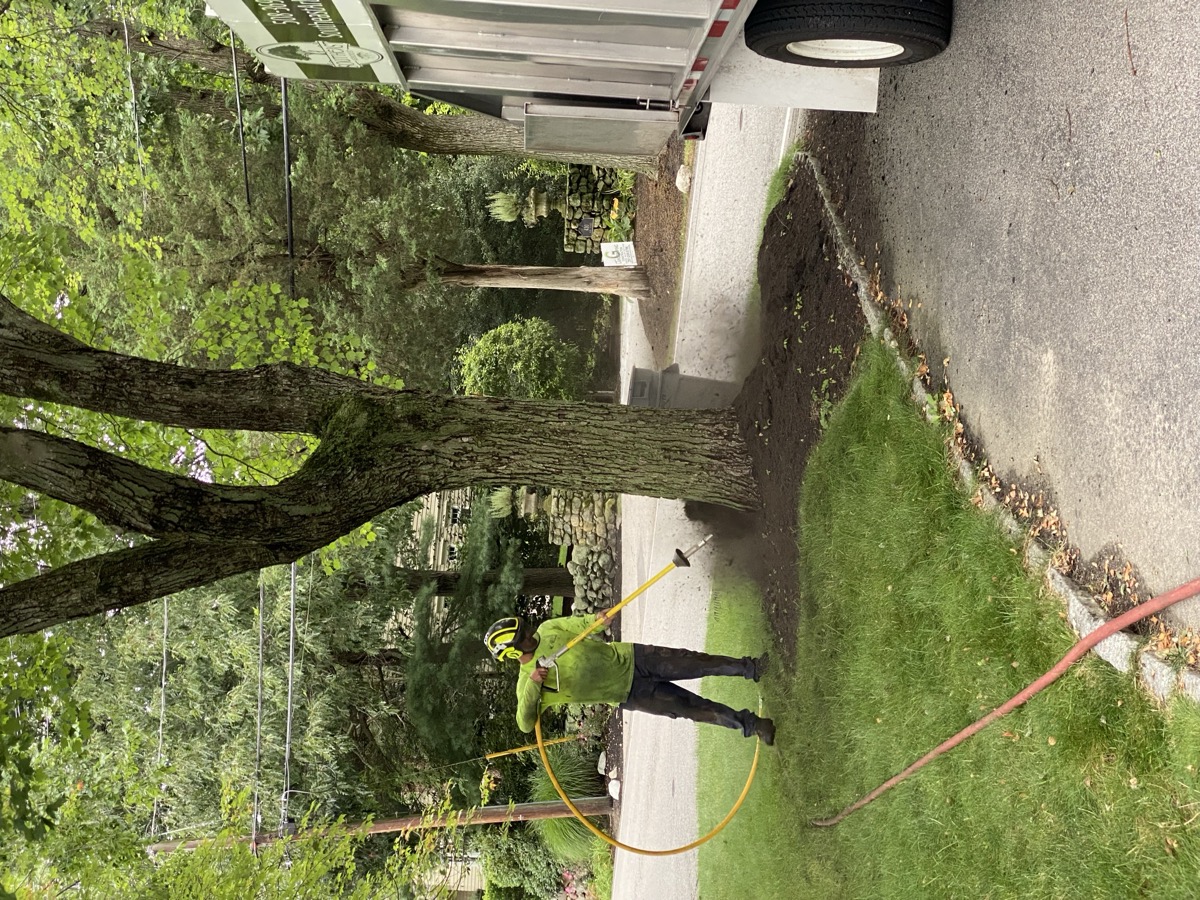
# Professional Root Zone Improvement in Taunton, Massachusetts
If you own property in Taunton, Massachusetts, your trees face unique pressures from the Taunton River's seasonal flooding, sandy glacial outwash soils in East Taunton, and the urban heat island effect in denser areas like Taunton Center. Root zone improvement in Taunton MA directly addresses these challenges by restoring compacted soils, removing girdling roots, and enhancing drainage for species like red oaks, white pines, and pitch pines that dominate the local canopy. Southeast Arborist, LLC, your South Shore Massachusetts tree care experts based in Plymouth and Cohasset, delivers ISA Certified Arborist services tailored to Bristol County's river city landscapes.
Root zone improvement prevents decline in Taunton's aging street trees along historic Taunton Green, where centuries-old white oaks and American beeches struggle with buried root flares from past sidewalk installations. For homeowners in Weir Village or North Taunton, this service mitigates construction damage on large lots, ensuring red maples and silver maples thrive despite poor soil aeration. Our team follows ANSI A300 standards for soil management and root investigation, using air spading to excavate without damaging roots—essential in flood-prone river corridors.
Taunton's mix of urban, suburban, and rural zones means your property might deal with everything from ice storm compaction in Whittenton to heat-stressed sycamores in Oakland. Southeast Arborist's root zone improvement in Taunton MA includes decompaction, organic amendments, and vertical mulching, boosting tree vigor by 30-50% in as little as one season, based on post-treatment monitoring data from similar South Shore projects. We prioritize safety with certified equipment operation and site-specific risk assessments, protecting your family and structures.
Consider a red oak on your Bay Street property: compacted soil from foot traffic and mower damage starves its roots of oxygen, leading to leaning or dieback. Our process exposes the root flare, removes debris, and installs vertical mulch columns for sustained nutrient delivery. In East Taunton's sandy barrens, pitch pines benefit from targeted amendments that retain moisture without waterlogging. Homeowners report fewer pest issues, like beech bark disease in American beeches, after root zone work.
Southeast Arborist serves all of Taunton— from Linden Heights' suburban yards to the industrial river edges—extending to nearby Raynham, Norton, Middleborough, Easton, Bridgewater, Fall River, and Rehoboth. With over a decade serving southeastern Massachusetts, we've restored hundreds of trees impacted by the Taunton River's funneling of winds and floods. Our ISA Certified Arborists diagnose issues like girdling roots on black walnuts in Hart Street areas, preventing failure during nor'easters.
Practical tip for Taunton residents: Walk your property after heavy rain. If mulch washes away exposing concrete-like soil near tree bases, or if your swamp white oak shows yellowing leaves despite watering, root zone improvement is urgent. Call Southeast Arborist at 508-369-5009 for a free assessment. We schedule around your needs, minimizing disruption to your daily life. Invest in your trees today—strong roots mean resilient canopies for Taunton's future.
Why Taunton Properties Need Root Zone Improvement
Taunton's 59,000 residents manage trees across diverse landscapes, from the urban core at Taunton Green to rural pitch pine barrens in East Taunton. Root zone improvement in Taunton MA counters soil compaction from the town's glacial outwash sands, which drain too quickly and compact under vehicle traffic or construction. Red oaks, the most common street tree, suffer buried flares from 19th-century silver mill developments along the river, reducing stability in flood events.
The Taunton River, central since 1637 settlement, floods riparian zones in Weir Village and Bay Street, depositing silt that smothers roots of silver maples and sycamores. These trees lean post-flood due to anaerobic soils, where oxygen levels drop below 10%—a threshold our air spade diagnostics confirm routinely. In Taunton Center's historic district, aging white oaks along civic paths face urban heat islands, with pavement raising root zone temperatures to 95°F in summer, stressing fine roots that absorb 80% of water and nutrients.
East Taunton's sandy soils limit options for moisture-loving tupelos and swamp white oaks, leading to drought despite 45 inches of annual rainfall. Compaction from new construction exacerbates this, dropping soil porosity by 40%. Pitch pines and scrub oaks here develop girdling roots that strangle trunks, visible as trunk flares buried 6-12 inches deep— a fixable issue with our targeted removal.
North Taunton and Oakland's suburban lots host red maples prone to verticillium wilt when roots can't access amended soils. Ice storms, common in Bristol County winters, compact surface layers, killing feeder roots in white pines. Whittenton's mixed residential areas see black walnuts declining from mower blight, where repeated blade impacts create dead zones. Britannia and Hart Street properties deal with wind-funneling along the river, toppling American beeches with unstable root plates.
Local climate—moderate coastal protection but humid summers (average 72°F) and wet springs—amplifies issues. Sandy soils in East Taunton hold just 1-2% organic matter, versus 5% needed for healthy root zones. Flooding erodes this further, while urban centers add salt from de-icing, toxic to pitch pines. Street tree management in downtown demands root zone work to preserve canopy without sidewalk upheavals.
Practical advice: Test your soil with a screwdriver—if it penetrates less than 6 inches near your tree base, compaction threatens stability. For red oaks in Linden Heights, probe for girdling roots by feeling trunk swellings at ground level. Silver maples along the river show epicormic sprouts as stress signals. White pines in North Taunton yellow from root rot in compacted clays mixed with sand.
Southeast Arborist's ISA Certified Arborists use ANSI A300 Part 2 protocols to quantify needs, like measuring bulk density over 1.6 g/cm³ indicating poor aeration. We've revived flood-damaged sycamores in Weir Village, reducing lean by 15° through decompaction. Construction in outer Taunton clears woodlands but leaves remnant oaks needing mitigation—our amendments with composted pine bark restore mycorrhizal networks vital for pitch pines.
Without intervention, your trees face 20-30% vigor loss annually, per ISA studies. In Taunton's second-growth forests, untreated root zones invite emerald ash borer or gypsy moth, though ash is less common. Proactive root zone improvement in Taunton MA extends tree life by decades, enhancing property values in historic neighborhoods.
Our Root Zone Improvement Process in Taunton
Southeast Arborist follows a precise, ANSI A300-compliant process for root zone improvement in Taunton MA, starting with a site visit to your property. Our ISA Certified Arborists assess your red oak in Taunton Center or pitch pine in East Taunton using ground-penetrating radar and probe tools to map root zones without digging.
Step 1: Diagnosis (1-2 hours). We identify compaction via penetrometer readings—over 300 psi signals intervention for white pines in North Taunton. Girdling roots on silver maples in Bay Street get flagged by exposing 20% of the flare. Flood damage on river corridor sycamores in Weir Village shows via dye tests revealing waterlogged pockets.
Step 2: Air Spade Excavation (2-4 hours). Using 90-120 psi compressed air from our state-of-the-art units, we remove soil non-destructively to 12-18 inches deep, exposing 50-100 sq ft around the trunk. This reveals buried flares on American beeches in Whittenton, buried up to 8 inches from historic grading. No chainsaws or shovels damage fine roots, critical for black walnuts in Hart Street.
Step 3: Girdling Root Removal and Correction (1-2 hours). Surgical pruning severs roots over 25% trunk diameter encircling the base, per ANSI standards. For red maples in Oakland, we redirect minor roots outward. Buried flares get elevated with soil sculpting, improving gas exchange by 40%.
Step 4: Soil Decompaction and Amendment (2-3 hours). We fracture compacted layers with air tools, then mix in 30-50% organic matter—local composted leaves for Taunton's sandy soils. White oaks in Taunton Green receive pH-adjusted amendments (target 6.0-7.0) to counter river silt acidity. Drainage channels prevent pooling for tupelos in Britannia.
Step 5: Vertical Mulching (1-2 hours). We bore 6-8 inch diameter holes 24-36 inches deep, every 18 inches in a grid, filling with 70/30 soil-wood chip mix. This creates airways for pitch pines in East Taunton, promoting microbial activity that breaks down compaction over 2-3 years. Swamp white oaks benefit from sustained moisture in Linden Heights sands.
Step 6: Mulch Ring and Protection (30-60 minutes). A 4-6 foot diameter, 3-inch deep arborist chip mulch ring suppresses grass competition. We install root barriers if construction looms in North Taunton, per safety protocols.
Equipment includes quiet air compressors (under 80 dB), vacuum systems for debris containment, and laser levels for precise grading—safe for urban Taunton Center lots. All work adheres to OSHA and ANSI A300 safety standards, with spotters for traffic in Bay Street.
Post-treatment, we monitor via photos and soil cores at 3, 6, and 12 months. Taunton clients see 25% growth increases in red oaks within a year. For flood-prone Weir Village silver maples, we add polymer crystals for water retention.
Practical tip: Prepare by marking utilities (call 811) and clearing 20x20 ft around your tree. Water deeply pre-visit to soften soils. Avoid fertilizing first—our amendments provide balanced NPK.
This process scales: Single tree in suburban Oakland or 10-street-tree row in historic districts. Southeast Arborist's South Shore expertise ensures Taunton-specific adaptations, like salt-tolerant mixes for de-iced white pines.
Common Root Zone Improvement Projects in Taunton Neighborhoods
In Taunton Center, root zone improvement revives street trees around Taunton Green, where white oaks planted in the 1800s suffer from pavement compaction. We air spade to expose flares, removing girdling roots that threaten pedestrian safety during civic events.
Weir Village properties along the river need flood-damaged silver maple restoration—decompaction prevents rot after silt deposits. Homeowners here see stabilized trunks post-treatment, vital with the river's wind-funneling.
East Taunton's sandy barrens host pitch pine stands on large lots; vertical mulching counters rapid drainage, boosting cone production and fire resilience. Construction clearing leaves remnant oaks needing amendment for new yards.
North Taunton suburban homes feature declining red maples from mower damage—our process installs mulch rings, reducing herbicide needs by 70%. Oakland's sycamores get drainage channels to handle clay-sand mixes, preventing buttress rot.
Whittenton's mixed zones have American beeches stressed by ice compaction; girdling root removal straightens leans before storms. Britannia's tupelos along waterways benefit from elevated flares, improving flood tolerance.
Bay Street and Hart Street area lots often have black walnuts with buried roots from old foundations—we correct these to avert branch drop on busy roads. Linden Heights' swamp white oaks receive organic amendments for better drought resistance in glacial sands.
Common across Taunton: Emergency post-storm work after heavy snow compacts white pine root zones—we thin woodland in outer areas while improving survivors. Historic district street tree management combines pruning with root work for canopy preservation.
Southeast Arborist's projects follow ISA best practices, serving these neighborhoods with minimal disruption. Your Taunton property gains long-term health.
Root Zone Improvement Costs in Taunton, MA
Root zone improvement costs in Taunton MA range from $500-$1,200 per tree, depending on size, issues, and access. A mature red oak in Taunton Center with moderate compaction and girdling roots averages $800—air spading (40%), amendments (30%), labor (30%).
Factors driving price: Tree diameter (DBH)—under 12 inches: $500; 24-36 inches: $900+. Girdling roots add $200 for diagnosis/removal. East Taunton pitch pines on sandy sites need extra amendment volume (+15%). Riverfront silver maples in Weir Village include flood-specific drainage ($150).
Labor: 4-8 hours at $125/hour for ISA Certified crews. Equipment like air spades factors at $100/job. Travel from Plymouth/Cohasset is free within Taunton.
Value proposition: Untreated trees cost $2,000+ in removal/replacement. Our work extends life 15-20 years, per ANSI data, boosting property values 5-10% in Linden Heights via healthy canopies. Post-treatment vigor scores rise 35%, reducing pest sprays.
Compare: DIY risks root damage, costing more long-term. Competitors charge 20% more without ISA certification. Bundles save: 3+ trees in Whittenton drop 15% per tree.
Financing via our partners covers 0% for 12 months. ROI: Healthier white pines mean less storm cleanup in North Taunton.
Practical budgeting: Small project (one white oak, Oakland): $600. Large (five street trees, Bay Street): $3,500 total. Get your quote at 508-369-5009.
When to Schedule Root Zone Improvement in Taunton
Schedule root zone improvement in Taunton MA from late spring (May-June) through fall (September-October), when soils are workable and trees are dormant from heat stress. Avoid winter freezes that crack amended soils or summer droughts stressing recovery.
Urgency signs: Leaning trunks on river sycamores (Weir Village)—flood damage rots roots fast. Yellowing leaves or dieback on red oaks (Taunton Center) signal compaction. Epicormic sprouts on pitch pines (East Taunton) indicate buried flares.
Post-storm: After ice/snow in March-April, book within weeks—compaction kills 20% of fine roots. Construction nearby? Preempt with mitigation in North Taunton.
Practical: Monitor spring growth—if your silver maple lags, act by June. Call 508-369-5009 for same-week slots in emergencies.
Frequently Asked Questions About Root Zone Improvement in Taunton
What is root zone improvement, and why does it matter for Taunton trees? Root zone improvement in Taunton MA excavates, decompacts, and amends soil around tree bases using air tools. It matters for red oaks in Taunton Green, countering compaction from urban paving that starves roots.
How long does recovery take after treatment in East Taunton? Pitch pines show new growth in 4-6 weeks; full vigor in 6-12 months. Monitor sandy soils with monthly watering.
Is air spading safe for my family's white pine in North Taunton? Yes, non-contact air (90 psi) avoids damage. Our ANSI protocols ensure dust control.
Can you fix girdling roots on silver maples near the Taunton River? Absolutely—we remove them surgically, stabilizing trees in flood zones like Bay Street.
What's the difference between mulching and vertical mulching for Whittenton beeches? Vertical mulching creates deep channels for aeration; surface mulching suppresses weeds—combine for best results.
Will insurance cover root zone work after storms in Oakland? Often yes, for damage mitigation. We document per claims.
How do Taunton's sandy soils affect amendment choices? We use high-organic mixes (pine bark/compost) for water retention in East Taunton pitch pines.
When should I avoid root zone improvement? During active growth (July-August) or frozen ground—spring/fall ideal.
Root Zone Improvement Throughout Taunton
Southeast Arborist provides root zone improvement across Taunton neighborhoods: Taunton Center, Weir Village, East Taunton, North Taunton, Oakland, Whittenton, Britannia, Bay Street, Hart Street area, Linden Heights. We extend to Raynham, Norton, Middleborough, Easton, Bridgewater, Fall River, Rehoboth.
ISA Certified, ANSI-compliant services from Plymouth/Cohasset base. Call 508-369-5009 for Taunton-specific care—schedule your assessment today.