
# Professional Root Zone Improvement in Swansea, Massachusetts
Homeowners in Swansea, Massachusetts, face unique challenges with their trees due to the town's position along the Warren and Palmer Rivers and its exposure to Mount Hope Bay. Tidal influences erode riverbanks, salt spray stresses coastal species, and compacted soils from waterfront properties limit root growth. If your red oaks in Swansea Center show dieback or your pitch pines in Ocean Grove lean from unstable roots, root zone improvement in Swansea MA delivers targeted solutions. Southeast Arborist, LLC, your ISA Certified Arborists based in Plymouth and Cohasset, specializes in these services across South Shore Massachusetts, including Swansea's 02777 zip code.
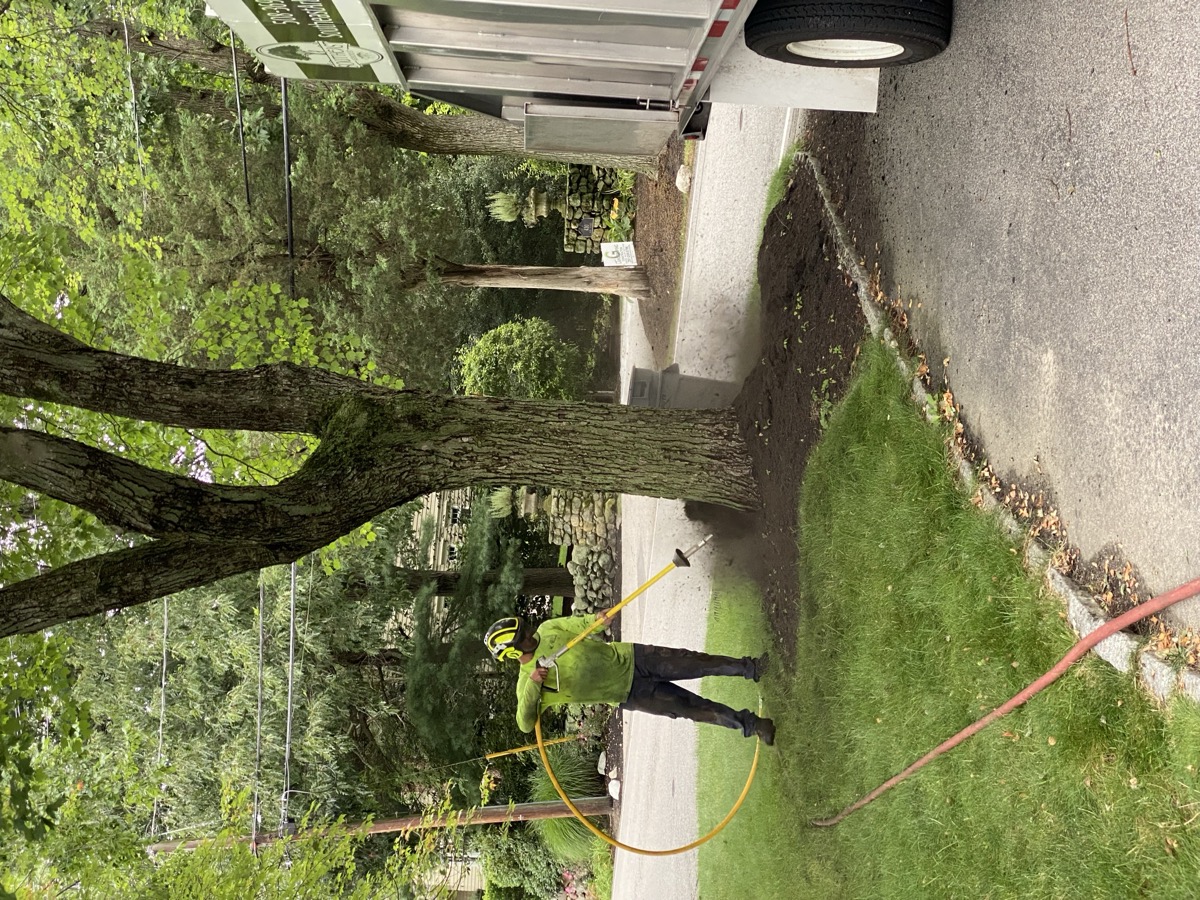
Root zone improvement restores soil health around tree bases, addressing compaction, poor drainage, and physical barriers that starve roots of oxygen and nutrients. In Swansea's Bristol County setting, where mature white oaks and eastern red cedars dominate river corridors, this service prevents decline from bank erosion and salt exposure. Our team uses air spading to excavate without damaging roots, removes girdling roots, and amends soil to match local conditions—sandy loams near the bay and heavier clays inland.
Swansea's history as an early Plymouth Colony settlement, scarred by King Philip's War in 1675, left regrown forests of mixed hardwoods and pines vulnerable to modern pressures. Today's 16,500 residents in neighborhoods like Hortonville and Barneyville rely on stable trees for shade, windbreaks, and property value. Without root zone improvement, spongy moth damage on oaks compounds with soil issues, leading to tree failure during coastal storms.
Southeast Arborist follows ANSI A300 standards for tree care, ensuring every project enhances tree longevity and safety. We mitigate construction damage on new waterfront builds in the Warren River Area and correct buried root flares on established lots in Luther's Corner. Call our experts at 508-369-5009 for a site assessment—our process identifies issues like vertical mulching needs for red maples stressed by agricultural interfaces.
This service isn't just maintenance; it's investment in your Swansea property. Healthy root zones support vigorous canopies, reducing storm risks from nor'easters that batter Mount Hope Bay shores. Whether your American beech in Palmer River Area suffers from poor drainage or your sassafras in rural woodlands shows stunted growth, root zone improvement in Swansea MA from Southeast Arborist restores balance. Our safety protocols, including traffic control and root protection during excavation, prioritize your family's security.
In Swansea's rural woodland and waterfront mix, trees like black cherry and sycamore thrive post-treatment, providing ecological benefits amid tidal fluctuations. Schedule with us to safeguard your landscape against erosion undermining roots along riverbanks.
Why Swansea Properties Need Root Zone Improvement
Swansea's coastal-rural character creates specific root zone stressors absent in inland towns. Riverbank erosion along the Warren and Palmer Rivers undercuts roots of shoreline red oaks and white pines, exposing them to desiccation and instability. Mount Hope Bay's salt-laden winds deposit sodium on soils, inhibiting uptake in sensitive species like American beech and red maples. Homeowners in Ocean Grove notice salt burn on eastern red cedars, where compacted fill soil from waterfront development blocks aeration.
Local soils vary: sandy, saline loams near the bay compact easily under foot traffic or equipment, while clay-heavy uplands in Hortonville retain water, leading to root rot in pitch pines. Bristol County's humid maritime climate—average 45 inches annual rainfall plus winter nor'easters—exacerbates drainage issues. Spongy moth defoliation weakens oak stands in Swansea Center, but underlying root zone compaction from mower damage prevents recovery.
Your Swansea trees, regrown from post-1675 forests, include mature hardwoods along river corridors and pine-oak mixes on uplands. Red oaks in Barneyville develop girdling roots in amended lawns, circling the trunk and strangling vascular tissue. White oaks near Luther's Corner bury their flares under mulch volcanoes, inviting fungal pathogens like Armillaria. Eastern red cedars and pitch pines on Ocean Grove bluffs tolerate salt but fail when construction compacts their zones.
Agricultural-residential interfaces in the Palmer River Area see fence-line black cherry trees stressed by herbicide drift and soil tillage spillover. Sycamores along Warren River banks lean from eroded, waterlogged roots. Coastal storms, like those following hurricanes, topple trees with compromised anchors—your property's vulnerability rises without intervention.
Practical advice for Swansea homeowners: Inspect bases annually for mulch buildup or soil grade exceeding 2-4 inches above flares. Probe gently with a screwdriver; resistance signals compaction. In salt-exposed Ocean Grove, flush soils with fresh water post-storm to leach sodium. Test pH—Swansea averages 5.5-6.5; amend acidic spots for white pines.
Root zone improvement in Swansea MA counters these: air spading reveals issues invisible above ground, like severed laterals from utility digs. Decompaction restores pore space, boosting oxygen to mycorrhizal fungi vital for sassafras nutrient uptake. Amendments with organic matter improve water retention without fostering anaerobia in tidal zones.
ISA Certified Arborists at Southeast Arborist diagnose via soil cores and root sampling, tailoring to Swansea's microclimates. We address spongy moth aftermath by enhancing vigor, reducing reattack risks. For farm windbreaks in rural Swansea, treatments stabilize red maples against wind shear.
Neglect leads to costly removals—$1,500+ per mature tree. Proactive root zone work extends life 20-30 years, preserving shade for your Swansea Center home or privacy screens in Seekonk-adjacent lots. Nearby Somerset and Fall River share similar bay influences, but Swansea's river confluences amplify erosion. Contact us at 508-369-5009 to assess your site's risks.
Our Root Zone Improvement Process in Swansea
Southeast Arborist employs a precise, ANSI A300-compliant process for root zone improvement in Swansea MA, starting with a non-invasive assessment. Our ISA Certified Arborists visit your property—whether in Swansea Center or Palmer River Area—to evaluate soil profiles, root architecture, and symptoms like canopy thinning on red oaks. We use penetrometers to quantify compaction and moisture meters for drainage baselines, noting Swansea-specific factors like salt crusting near Mount Hope Bay.
Step 1: Air spade excavation. High-pressure air (90-120 PSI) from our 185 CFM compressors gently removes soil around the root plate, exposing up to 24 inches deep without lacerating laterals. For your white pine in Hortonville, this reveals girdling roots—thick laterals encircling trunks—that we diagnose via ANSI standards and sever only if >50% circumferential.
Step 2: Girdling root removal and flare correction. In Ocean Grove eastern red cedars, we excavate buried flares, regrading soil to expose 4-6 inches of trunk base. This prevents decay entry in Swansea's humid climate. We document pre/post photos for your records, ensuring compliance.
Step 3: Soil decompaction. Radial tills or hand tools fracture compacted layers without pulverizing structure. For clay soils in Barneyville red maples, we incorporate 20-30% organic compost (e.g., pine bark fines) to 12-18 inches depth, matching local sandy loam textures. Avoid heavy topdressing to prevent smothering.
Step 4: Targeted amendments. pH adjustments use dolomitic lime for acidic Swansea riverbank soils (target 6.0-7.0). Mycorrhizal inoculants boost white oak associations. Drainage channels divert tidal overflow in Warren River Area, using gravel backfill for permeability.
Step 5: Vertical mulching. We bore 3-4 inch diameter holes, 12-18 inches deep, in a grid pattern (spaced 12 inches apart) around the drip line. Fill with 70/30 compost-sand mix fosters deep rooting in pitch pines. This long-term technique counters mower compaction on your Luther's Corner lawn.
Step 6: Construction damage mitigation. For new builds near Rehoboth borders, we install root barriers pre-excavation and monitor during paving. Post-damage, air spading retrieves severed roots, applying growth stimulants like seaweed extracts.
Safety protocols include perimeter barriers, spotters for traffic on Route 136, and PPE per OSHA. Equipment: quiet air spades minimize noise in residential Swansea Village. Post-treatment, we apply 3-4 inches arborist chips—no volcanoes—suppressing weeds while feeding microbes.
Follow-up: 6-month check-ins verify stability, with soil tests confirming improved infiltration rates (target >2 inches/hour). For sycamores storm-damaged by nor'easters, we integrate cabling if anchorage lags.
This process revives black cherry windbreaks on farm edges, enhancing drought tolerance amid Swansea's variable rainfall. Homeowners see new shoot growth within one season. Our Plymouth-based crews serve Swansea efficiently, arriving in under 45 minutes. Call 508-369-5009 for a customized plan—your trees deserve this expertise.
Common Root Zone Improvement Projects in Swansea Neighborhoods
Swansea neighborhoods present distinct root zone needs, shaped by topography and land use. In Swansea Center, historic homes with red oaks and white oaks suffer buried flares from decades of landscaping. We air spade and regrade, restoring access for your shade trees amid village foot traffic.
Ocean Grove waterfront properties demand salt-mitigation for pitch pines and eastern red cedars battered by Mount Hope Bay spray. Erosion from tidal surges compacts zones; our vertical mulching improves drainage, stabilizing leans before storms hit.
Hortonville's rural lots feature white pines undermined by wet meadows. Decompaction and amendment prevent windthrow, common after winter gales. Red maples here show girdling from old field fills—we remove them precisely.
Barneyville agricultural interfaces need black cherry and sycamore treatments along fence lines. Tillage compacts soils; our process creates mulched strips, boosting vigor against spongy moths.
Warren River Area sees severe bank erosion on American beech and sassafras. We excavate exposed roots, amend with erosion-control fabrics, and install drainage to counter tidal flooding.
Palmer River Area waterfronts mirror this, with red oaks failing from scour. Vertical mulching extends roots into stable uplands, vital for properties near Somerset.
Luther's Corner established neighborhoods have sycamores with construction scars from expansions. Flare exposure and inoculants revive them, enhancing curb appeal.
Common across Swansea: storm response post-nor'easters, treating snapped root zones on mixed pine-hardwoods. Farm windbreaks in outskirts get decompaction for longevity.
Our ISA team tailors to these—e.g., lighter amendments for saline Ocean Grove vs. organic boosts inland. Practical tip: Mulch drip lines annually to mimic our effects. Serving nearby Fall River, Rehoboth, Seekonk, we cover Swansea comprehensively. Dial 508-369-5009 for neighborhood-specific advice.
Root Zone Improvement Costs in Swansea, MA
Root zone improvement costs in Swansea MA range from $500-$2,500 per tree, depending on size, issues, and access. A 20-inch DBH red oak in Swansea Center with basic decompaction and mulching starts at $600—air spading (1-2 hours labor) plus amendments. Complex cases, like Warren River erosion repair on a 40-inch white pine, hit $1,800+ with drainage and vertical mulching.
Key pricing factors: Tree diameter (DBH >24 inches adds $10-15/inch), root zone extent (drip line coverage), soil type (saline Ocean Grove requires salt-leaching additives, +20%), and travel (flat rate for 02777). Girdling root removal adds $200-400; construction mitigation $300+.
Swansea-specific: Waterfront Palmer River projects factor erosion control ($400-700), while inland Hortonville farms bundle windbreak treatments for $1,200/tree savings.
Value proposition: One treatment yields 15-25 years ROI via avoided removals ($2,000-5,000/mature tree) and 20-30% vigor gains, per ISA studies. Property values rise 5-10% with healthy landscapes in Bristol County. Insurance discounts apply for storm-risk reductions.
No surprises: Free assessments quote exacts. Payment plans available. Compare: DIY risks root damage, costing more long-term. Our ANSI methods ensure efficacy.
Budget tip: Group 3+ trees for 15% off. Offshore accounts unnecessary—transparent billing. Serving Seekonk to Fall River, we're Swansea's cost-effective choice. Call 508-369-5009 for your quote.
When to Schedule Root Zone Improvement in Swansea
Schedule root zone improvement in Swansea MA during late spring (May-June) or early fall (September-October), when soil moisture supports recovery without summer drought stress or winter freezes. Avoid July-August heat, which slows root regrowth on red maples.
Urgency signs: Leaning trunks (e.g., pitch pines in Ocean Grove), basal cracks, or >25% canopy dieback on oaks signal immediate action—delay risks failure in nor'easters. Soil heaving around bases post-thaw or persistent wetness in Palmer River clays demands spring intervention.
Post-storm: After coastal events, treat within 2 weeks to stabilize exposed roots. Spongy moth defoliation? Schedule by July to aid rebound.
Annual cycles: Swansea's 210 frost-free days favor dormant-season work for minimal disruption. Monitor via Level 2 assessments.
Contact Southeast Arborist at 508-369-5009 now—early slots fill fast for waterfront urgency.
Frequently Asked Questions About Root Zone Improvement in Swansea
**What is root zone improvement in Swansea MA?** It involves excavating, decompacting, and amending soil around tree roots to improve health, using air spading for Swansea's compacted waterfront soils.
**How does air spading benefit my Ocean Grove cedars?** Air removes soil non-destructively, exposing salt-compacted roots without damage, ideal for salt-tolerant species like eastern red cedar.
**Can you fix girdling roots on Swansea Center oaks?** Yes, we diagnose and remove per ANSI A300, preventing decline in red and white oaks common here.
**How long does recovery take for treated trees?** New growth appears in 4-6 weeks; full stabilization by next season for pitch pines in Barneyville.
**Is vertical mulching suitable for Palmer River properties?** Absolutely—deep holes promote drainage in erosion-prone zones, suiting sycamores and beeches.
**What about costs for multiple trees in Hortonville?** Bundles save 15%; e.g., three red maples $1,500 total, factoring rural access.
**Does it help storm-damaged trees in Warren River Area?** Yes, decompaction strengthens anchorage against tidal surges and winds.
**Are you licensed for Swansea's coastal regulations?** ISA Certified, we comply with Bristol County wetland rules, using erosion controls.
**When's the best time near Fall River borders?** Spring/fall; call 508-369-5009 for seasonal scheduling.
Root Zone Improvement Throughout Swansea
Southeast Arborist delivers root zone improvement across Swansea neighborhoods: Swansea Center shade trees, Ocean Grove coastal pines, Hortonville meadows, Barneyville farms, Warren and Palmer River waterfronts, Luther's Corner estates. We extend to nearby Somerset, Fall River, Rehoboth, Seekonk from our Plymouth/Cohasset base.
ISA Certified, ANSI-compliant, safety-first. Protect your Swansea trees today—call 508-369-5009 for assessment.