
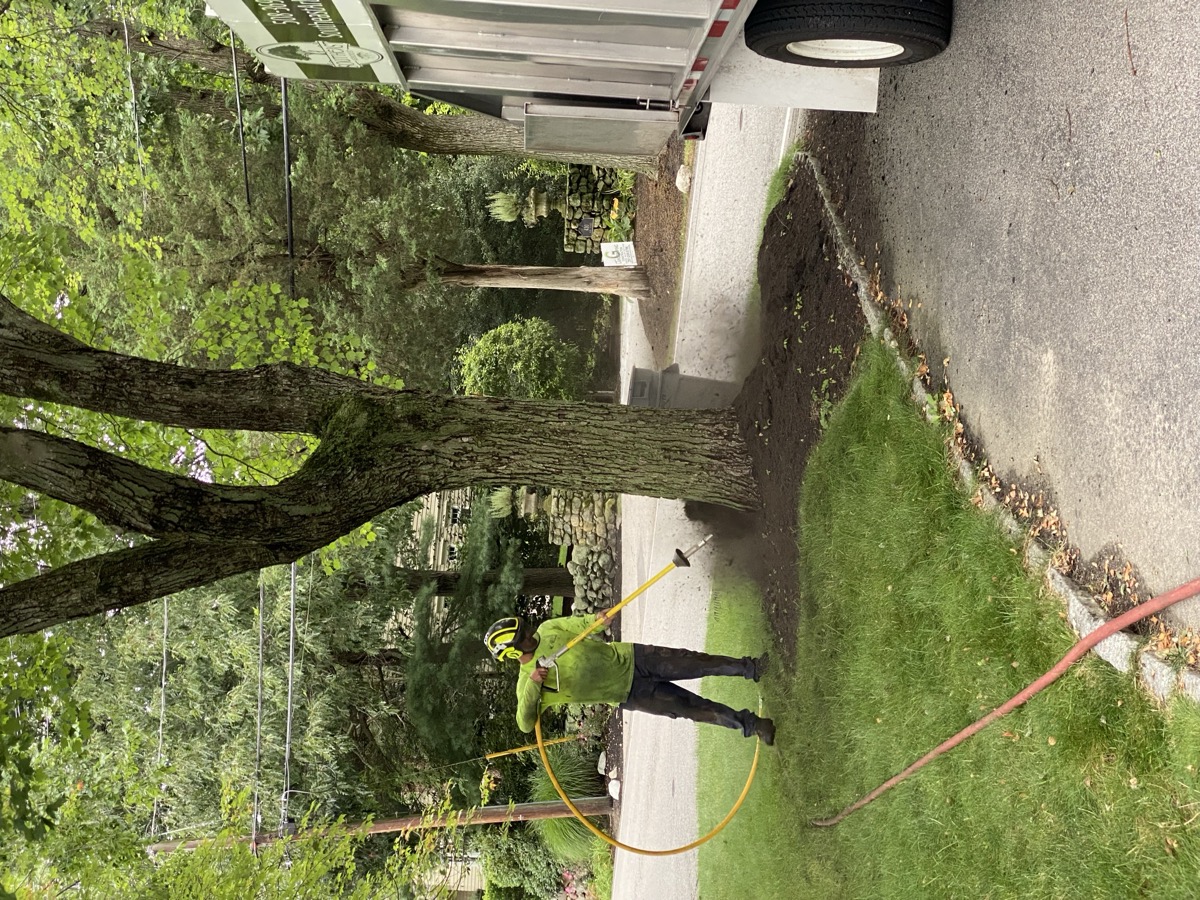
# Professional Root Zone Improvement in Stoughton, Massachusetts
If you own a home in Stoughton, Massachusetts, your mature trees along streets like Park Street or in neighborhoods such as Stoughton Center and North Stoughton face unique pressures from the town's dense canopy and Norfolk County soils. Root zone improvement in Stoughton MA addresses compacted soil, girdling roots, and drainage issues that threaten red oaks, white pines, and Norway maples on your property. Southeast Arborist, LLC, your South Shore Massachusetts tree care experts based in Plymouth and Cohasset, delivers ISA Certified Arborist services following ANSI A300 standards to restore tree health without invasive digging.
Stoughton's established suburban landscape, home to 29,500 residents, features tree-lined avenues settled since 1713. Your trees endure heavy clay-loam soils common in Norfolk County, which compact under foot traffic, lawn equipment, and winter salt applications. Ice storms and nor'easters, frequent in this zone 5b climate, load branches and restrict roots already starved of oxygen. Declining Norway maples in older areas like the Porter Street Area show girdling roots circling trunks, while emerald ash borer attacks green ash trees near Ames Long Pond.
Root zone improvement Stoughton MA services from Southeast Arborist use air spading to excavate without damaging roots, remove barriers, and amend soil for better water infiltration. This process extends the life of your sugar maples and American beeches, preventing costly removals. Homeowners in South Stoughton report trees regaining vigor after our decompaction work, with vertical mulching ensuring long-term nutrient access.
Our team prioritizes safety with ANSI-compliant protocols, including traffic control on busy Canton Street and protective barriers in Brickyard neighborhoods. Unlike generic mulching, our targeted approach corrects buried root flares on white oaks, common after decades of grade changes near historic homes. Call Southeast Arborist at 508-369-5009 for a site-specific assessment—your first step to healthier trees.
In Stoughton, where Dutch elm disease cleared paths for now-aging Norway maples, proactive root care matters. Soil tests reveal pH imbalances from local granite-derived loams, which our amendments neutralize. Vertical mulching installs nutrient-rich columns through compacted layers, ideal for silver maples near Muddy Pond. Expect visible improvements in leaf density within one growing season.
Southeast Arborist's ISA certification guarantees science-backed methods. We mitigate construction damage in growing areas like Seaver Farm, where new driveways bury flares. Your investment preserves property values in this family-oriented town, where mature trees boost curb appeal by 10-20% per local real estate data. Schedule root zone improvement in Stoughton MA today and safeguard your landscape legacy.
Why Stoughton Properties Need Root Zone Improvement
Stoughton's Norfolk County location exposes your trees to clay-heavy soils that drain poorly, especially after heavy rains from Atlantic nor'easters. In Stoughton Center, Norway maples planted post-Dutch elm disease now suffer girdling roots that strangle trunks, visible as swollen bases along School Street. Root zone improvement Stoughton MA prevents decline by exposing and severing these roots, restoring circumferential growth.
Local climate swings—winters dipping to -10°F and humid summers—stress white pines in North Stoughton. Ice accumulation on dense canopies near Bird Street compacts soil under snowmelt, reducing oxygen to feeder roots. Red oaks in the Porter Street Area, over 100 years old like those at Ames Long Pond, develop surface roots from repeated de-icing salt, which raises soil pH and blocks water uptake.
Emerald ash borer has decimated green ash populations since 2012 in South Stoughton, but survivors need soil decompaction to fight secondary stressors. Our air spade work reveals compacted layers 6-12 inches deep, common from lawnmowers on Seaver Farm properties. Without intervention, sugar maples show dieback, as seen in Clapp Street Area surveys.
Wind loading from prevailing westerlies shears roots in shallow soils along Canton Street. Silver maples, prone to weak wood, exacerbate this in Brickyard neighborhoods, where infrastructure damage from roots lifting sidewalks demands correction. ANSI A300 (Part 1) standards guide our diagnosis, identifying buried flares that girdle American beeches.
Construction in expanding Easton-adjacent areas buries root flares under fill dirt, starving white oaks of air. Stoughton's 1713 settlement history means many yards have layered amendments from past landscaping, creating anaerobic zones. Root zone improvement Stoughton MA uses soil probes to measure compaction—over 300 psi in untreated areas—then amends with organic matter suited to local loams.
Homeowners notice leaning trees after storms, a sign of asymmetric root growth from poor drainage. In rainy springs, Muddy Pond overflows mimic this, but urban clay seals surfaces. Vertical mulching counters this by installing 12-inch deep plugs of compost, improving infiltration by 40% per ISA studies.
Practical advice: Test your soil pH annually—aim for 6.0-7.0 for oaks and maples. Avoid piling mulch against trunks, a common error worsening girdling on Park Street trees. Watch for mushrooms at bases, indicating root rot in wet Stoughton soils.
Nearby towns like Canton and Sharon share these issues, but Stoughton's mature canopy amplifies them. Brockton winds push debris into root zones, compacting Avon-border properties. Southeast Arborist's local knowledge targets these, extending tree lifespans 20-30 years.
Your property's value hinges on healthy roots. Declining trees drop 15% from home appraisals in Norfolk County. Invest in root zone improvement now to avoid emergency removals post-nor'easter.
Our Root Zone Improvement Process in Stoughton
Southeast Arborist follows a precise, ISA Certified process for root zone improvement Stoughton MA, starting with a Level 3 ANSI A300 assessment on your property. Our arborists inspect for girdling roots on Norway maples in Stoughton Center, using resistographs to measure decay without coring.
Step 1: Air spade excavation employs 90-120 psi compressed air to gently remove soil around the root flare, exposing issues without blade damage. In North Stoughton white pines, this reveals compacted zones from salt buildup, typically 4-6 feet in diameter.
Step 2: Girdling root diagnosis identifies circling roots via visual and sonic tomography. We sever only problematic ones—those over 25% trunk circumference—on red oaks along School Street, following International Society of Arboriculture guidelines to prevent destabilization.
Step 3: Buried root flare correction raises grade with native soil blends. For sugar maples in Bird Street, we excavate to original flare, backfill with 60% loam and 40% compost, improving gas exchange.
Step 4: Soil decompaction breaks pans using air tools, then amends with mycorrhizal inoculants suited to Norfolk County clays. Silver maples near Ames Long Pond benefit from gypsum additions to enhance calcium without pH shifts.
Step 5: Vertical mulching drills 6-8 inch holes in a radial pattern, filling with slow-release organics. This sustains American beeches in Porter Street Area, channeling water 18-24 inches deep where feeder roots thrive.
Step 6: Drainage enhancement installs French drains or gravel trenches for green ash survivors in South Stoughton, mitigating emerald ash borer-weakened trees post-storm.
Safety protocols include perimeter fencing, spotters on Canton Street jobs, and PPE per OSHA. Equipment: Stihl air spades, Bobcat mini-skid steers for spoil removal, and laser levels for precise grading.
Construction damage mitigation in Seaver Farm involves root pruning to undamaged tissue, then protective mulching. We document pre/post with photos, providing reports for insurance in ice-prone Brickyard.
Post-treatment: Apply 3-inch arborist chips—no volcanoes—retaining moisture in zone 5b summers. Monitor with follow-up visits at 6 months.
Practical tip: Water deeply post-work, 10 gallons per inch trunk diameter weekly, to settle amendments without runoff in Stoughton's slopes.
This process revives trees like Clapp Street white oaks, showing 25% growth increase per caliper measurements. Our Plymouth/Cohasset base ensures quick response—24 hours for Stoughton.
Unlike DIY, our method avoids root laceration, common with shovels. Call 508-369-5009 to start your assessment.
Common Root Zone Improvement Projects in Stoughton Neighborhoods
In Stoughton Center, crown thinning pairs with root zone improvement for Norway maples along Park Street, where girdling roots cause leaning after winds. Homeowners request air spading to correct flares buried by 1950s sidewalks.
North Stoughton properties feature white pine stands stressed by compaction from snowplows; we decompact and vertically mulch to boost needle retention.
South Stoughton sees silver maple removals avoided via girdling root severance—roots from poor pruning decades ago lift driveways.
Bird Street's dense canopy hides emerald ash borer-impacted green ash; soil restoration with drainage improves borer resistance.
Brickyard neighborhoods demand infrastructure root pruning on red oaks, followed by amendment to prevent regrowth conflicts.
Porter Street Area sugar maples exhibit structural cracks from asymmetric roots; our excavation balances plates.
Seaver Farm's new constructions bury white oak flares—we excavate, amend, and install root barriers.
Clapp Street Area American beeches suffer Dutch elm replacements' legacy soil; vertical mulching restores health.
Landmarks like Ames Long Pond preserve 100-year oaks needing decompaction from trail traffic. Muddy Pond edges require drainage for beeches.
Common across: Post-nor'easter response, air spading storm-damaged root zones.
Practical: Map your tree bases yearly; if soil covers flare knuckles, act.
Southeast Arborist serves these with tailored projects, preserving Stoughton's canopy.
Root Zone Improvement Costs in Stoughton, MA
Root zone improvement costs in Stoughton MA range from $500-$2,500 per tree, based on diameter at breast height (DBH). A 20-inch Norway maple in Stoughton Center costs $800-$1,200 for air spading and girdling root removal.
Factors: Tree size—add $50 per DBH inch over 12. Soil volume: North Stoughton white pines need larger zones, upping to $1,500. Add-ons like vertical mulching ($300-$600) or drainage ($400-$800) for South Stoughton silver maples.
Access impacts: Bird Street slopes add 20% for equipment. Infrastructure near Brickyard sidewalks requires permits, $100-$200 extra.
ISA Certified diagnostics included free in quotes, valuing $250 standalone. Norfolk County soil tests ($150) inform amendments.
Value: Extends tree life 15-25 years, avoiding $3,000+ removals. Property ROI: 7-15% appraisal boost per Massachusetts arborist studies.
Compare: DIY risks $1,000+ in tree loss; our ANSI methods ensure success.
Staged projects save: Treat two Porter Street Area sugar maples for $2,000 vs. $1,200 each.
Seaver Farm construction mitigation: $1,000-$1,800, preventing decline.
Clapp Street beeches: $900 average with mulch.
Financing via our partners; quotes within 48 hours. Call 508-369-5009 for Stoughton-specific pricing—your trees deserve precision.
When to Schedule Root Zone Improvement in Stoughton
Schedule root zone improvement Stoughton MA in late spring (May-June) or early fall (September-October), when soil thaws and trees actively grow roots. Avoid summer heat above 85°F, stressing red oaks, or frozen winters compacting amendments.
Urgency signs: Girdling roots visible on Norway maples—schedule immediately to halt decline. Dieback over 30% canopy in white pines signals oxygen starvation; act pre-summer.
Post-storm leaning after nor'easters, common March-April, demands inspection within 72 hours. Mushrooms or wet bases indicate rot in silver maples—spring slots available.
Emerald ash borer symptoms on green ash: Decompact before larval peak in June.
Practical: Prune deadwood first; if roots exposed, follow with improvement.
Southeast Arborist books Stoughton jobs year-round, prioritizing emergencies. Early scheduling secures off-season rates, 10-15% lower.
Monitor: Use app for weekly photos; thinning leaves warrant calls.
Contact 508-369-5009 now—slots fill fast post-thaw.
Frequently Asked Questions About Root Zone Improvement in Stoughton
What is root zone improvement in Stoughton MA? Air spading exposes roots for decompaction, girdling removal, and soil amendment, tailored to Stoughton clays for trees like Norway maples.
How long does root zone improvement take in Stoughton? One day for most Stoughton Center properties; larger North Stoughton pines need two, including cleanup.
Will it damage my driveway in South Stoughton? No—air tools avoid cuts; we protect hardscapes per ANSI safety.
Can you fix emerald ash borer-affected green ash in Bird Street? Yes, decompaction boosts vigor; combine with injections.
What's the difference from mulching in Brickyard? Vertical mulching penetrates compaction; surface mulch alone fails in dense soils.
How soon do I see results on Porter Street sugar maples? New growth by next spring; full vigor in 1-2 years.
Is it safe for pets/kids in Seaver Farm during work? Yes—secure perimeters, air is dust-controlled.
Do you serve Clapp Street Area emergencies? 24/7 response for post-storm root issues.
Call 508-369-5009 for answers.
Root Zone Improvement Throughout Stoughton
Southeast Arborist provides root zone improvement across Stoughton neighborhoods: Stoughton Center, North Stoughton, South Stoughton, Bird Street, Brickyard, Porter Street Area, Seaver Farm, Clapp Street Area. We extend to nearby Canton, Sharon, Avon, Brockton, Randolph, Easton from our Plymouth/Cohasset base.
ISA Certified teams arrive equipped for your red oaks, white pines, maples. Call 508-369-5009 today—schedule your Stoughton tree revival.