
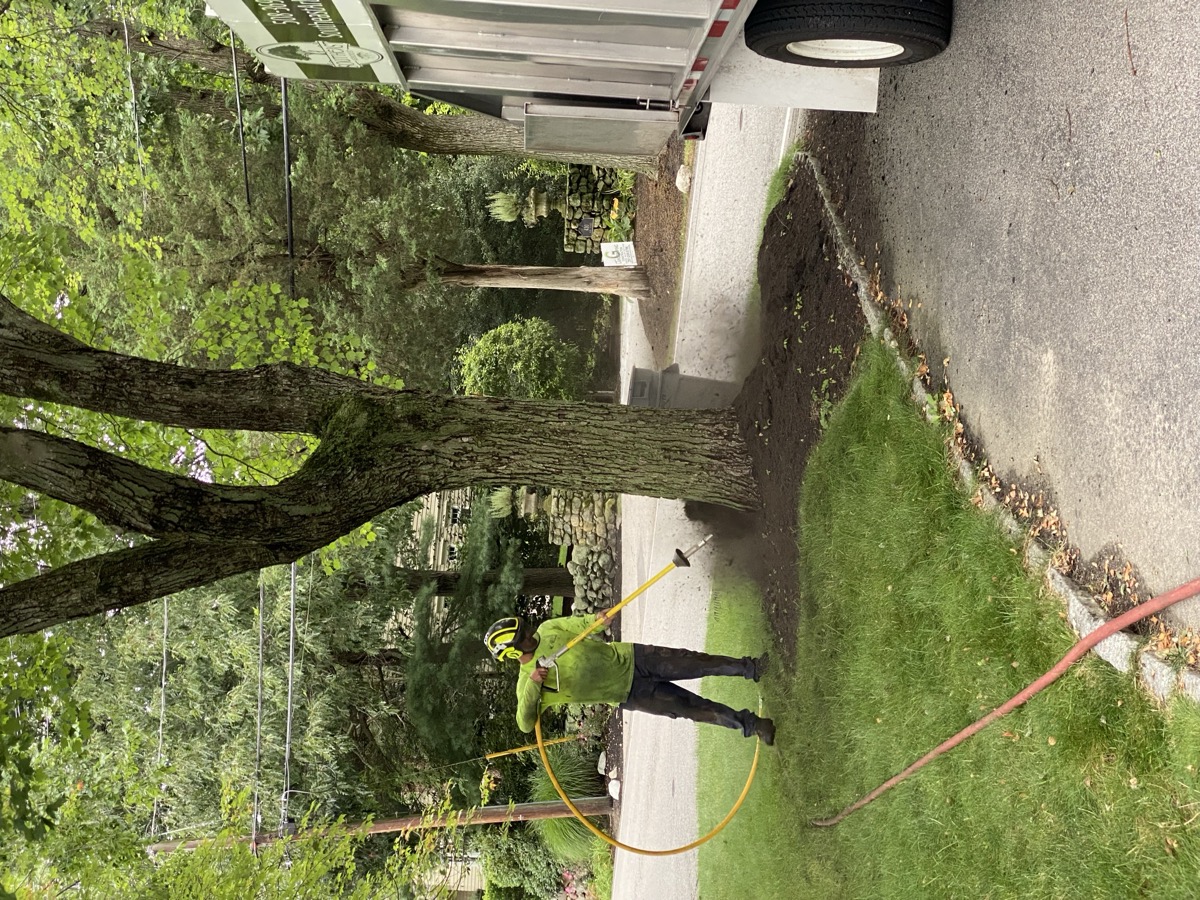
# Professional Root Zone Improvement in Somerset, Massachusetts
If you own property along the Taunton River in Somerset, Massachusetts, your trees face unique pressures from tidal fluctuations, bank erosion, and compacted soils typical of this Bristol County community. Root zone improvement in Somerset MA addresses these challenges directly, restoring soil health and tree stability for species like red oaks, white pines, and green ashes that define local landscapes. Southeast Arborist, LLC, your South Shore Massachusetts tree care experts based in Plymouth and Cohasset, delivers ISA Certified root zone improvement services tailored to Somerset's 18,500 residents. Call us at 508-369-5009 to assess your trees today.
Somerset's position on the Taunton River creates waterfront properties in neighborhoods like Riverside and Slade's Ferry where salt water intrusion stresses silver maples and sycamores. Inland in Pottersville and South Somerset, aging residential canopies on compact lots suffer from soil decompaction needs after decades of foot traffic and construction. Our team uses air spading to excavate and amend root zones without damaging feeder roots, following ANSI A300 standards for tree care. This service prevents decline in red maples and American beeches, common on former farmlands now supporting Somerset Village homes.
Homeowners in Somerset often notice leaning white oaks near Brayton Point or girdling roots on sugar maples in established yards—signs that root zone improvement can correct. Unlike basic mulching, our process includes vertical mulching for long-term aeration and drainage enhancement, critical in Somerset's clay-heavy soils prone to waterlogging from river proximity. We've mitigated construction damage in the Brayton Point redevelopment area, where new projects compact soils around young landscape trees.
Root zone improvement in Somerset MA extends tree lifespans, reduces removal risks, and boosts property values in a town blending industrial heritage with residential appeal. For your waterfront red pine or backyard green ash threatened by emerald ash borer, our safety protocols ensure minimal disruption. ISA Certified Arborists evaluate soil pH, compaction levels, and root architecture specific to Bristol County's coastal conditions. Schedule a consultation to protect your investment—contact Southeast Arborist at 508-369-5009.
This service matters now as Somerset's canopy ages amid climate shifts, with warmer winters increasing pest pressures on white oaks. Our equipment, like high-pressure air spades, removes buried root flares precisely, allowing oxygen to reach mycorrhizal networks vital for nutrient uptake in sycamores along Slade's Ferry. Expect visible improvements in leaf density and growth rates post-treatment, backed by our commitment to science-based care.
Why Somerset Properties Need Root Zone Improvement
Somerset's Taunton River waterfront exposes trees to constant bank erosion, undermining root zones of red oaks and white pines in Riverside and Brayton Point. Tidal influences push salt water upstream, stressing silver maples and sycamores whose roots struggle in saline, compacted soils. Test your soil near the river: if it holds water like clay after rain, decompaction via root zone improvement in Somerset MA is essential to restore permeability.
Inland neighborhoods like Somerset Village and Pottersville feature compact lots where foot traffic and lawn equipment compact soils around sugar maples and American beeches. These trees, regenerated on former farmland, develop girdling roots that choke trunks, leading to instability. Emerald ash borer has decimated green ashes across South Somerset, leaving survivors with weakened root zones needing amendment for recovery.
Bristol County's clay-loam soils in Somerset retain moisture but limit oxygen to roots, especially after heavy spring rains from the region's 45-inch annual precipitation. Red maples on Slade's Ferry banks show chlorosis from salt intrusion, while white oaks in Pottersville lean from eroded anchors. Without intervention, these issues escalate: your white pine may topple in river winds gusting 40+ mph during nor'easters.
Construction in Brayton Point's redevelopment compacts topsoil, burying root flares on new landscape trees. Aging residential canopies, planted post-WWII industrial boom, face decline on lots under 0.5 acres. Vertical mulching creates channels for air and water, countering Somerset's high water table influenced by the Taunton River.
Climate specifics amplify needs: Somerset's USDA Zone 6b sees freeze-thaw cycles heaving roots in poorly drained soils. Persistent humidity fosters fungal pathogens in green ash root zones post-emerald ash borer attack. Check your red oak: mulch volcanoes or grade changes from past paving signal buried flares needing air spade correction.
Waterfront properties in Riverside require salt-tolerant amendments like gypsum to leach sodium from sycamore roots. Inland white pines in South Somerset suffer needle scorch from compacted, acidic soils (pH 5.0-6.0 common here). Root zone improvement boosts microbial activity, enhancing drought tolerance amid rising summer temperatures averaging 80°F.
Practical advice for Somerset homeowners: Probe soil 6-12 inches deep with a screwdriver—if resistance exceeds 2 inches, compaction threatens your trees. Inspect for leaning trunks or soil heaving near bases, hallmarks of girdling roots in red maples. Early action prevents costly removals, preserving Somerset's tree-lined streets.
Our ISA Certified team identifies these issues during free assessments, using soil probes and resistographs. Following ANSI A300 (Part 1) pruning standards integrates root work with canopy care. In Fall River-adjacent Somerset, similar river dynamics demand proactive care—your property's trees deserve it.
Our Root Zone Improvement Process in Somerset
Southeast Arborist's root zone improvement in Somerset MA starts with a site-specific assessment by ISA Certified Arborists, evaluating your red oak or green ash for compaction, salt stress, or erosion damage. We arrive with soil corers to sample Taunton River-influenced clays, measuring bulk density—over 1.6 g/cm³ signals decompaction needs common in Somerset Village yards.
Step one: Air spade excavation uses 90-120 PSI compressed air to gently remove soil from the critical root zone (dripline extent). This exposes girdling roots on sugar maples in Pottersville without severing laterals, unlike mechanical digging. For your waterfront sycamore in Riverside, we map tidal erosion patterns, preserving anchor roots.
Next, girdling root diagnosis: Visual inspection identifies circling roots throttling white pine trunks. We sever and remove them per ANSI A300 standards, redirecting growth downward. Buried root flare correction follows—elevating soil 6-18 inches reveals the trunk's true base, often 12+ inches deep from past grading in Brayton Point redevelopments.
Soil decompaction employs the air spade to fracture compacted layers, increasing porosity by 30-50%. We amend with composted organics (5-10 cubic yards per tree, depending on DBH), targeting Somerset's low-organic (2-4%) soils. Gypsum neutralizes salt in Slade's Ferry silver maples, while mycorrhizal inoculants boost white oak resilience.
Vertical mulching creates 3-6 inch diameter, 24-36 inch deep holes filled with coarse compost, spaced 18 inches apart in a grid. This provides long-term channels for water and air infiltration, ideal for compact South Somerset lots. For construction-damaged red maples, we install radial trenches to aerate beyond the dripline.
Drainage enhancements include French drains for waterlogged green ashes near the Taunton River, routing excess tidal flow. Safety protocols mandate spotters and barriers, complying with OSHA tree care standards. Post-treatment, we apply 3-4 inches of arborist chips—no more than 6 inches from the trunk—to suppress weeds without volcano mulching.
Monitoring follows: We revisit after 6 months to measure soil moisture and root growth via minirhizotrons. Equipment includes Stihl BR 600 air spades, Vermeer mini-skid steers for spoil removal, and Felco tools for precise root pruning. All work adheres to ISA Best Management Practices, ensuring your American beech thrives.
Practical tip: Water amended zones deeply (1-2 inches weekly) for the first season to establish roots in Somerset's sandy-loam mixes. Avoid fertilizing immediately—amendments supply nutrients. This process revives trees stressed by emerald ash borer or bank erosion, extending lifespans 20+ years.
From Plymouth-based operations, our crews serve Somerset efficiently, arriving in marked trucks with TCIA safety gear. Trust our 15+ years mitigating South Shore soil issues.
Common Root Zone Improvement Projects in Somerset Neighborhoods
In Somerset Village, root zone improvement targets aging sugar maples on narrow lots, where sidewalk paving buries flares. We air spade to expose and correct, amending with compost to counter foot traffic compaction.
Riverside waterfront homes see frequent projects on silver maples undermined by Taunton River erosion. Our process removes salt-laden soil, installs drainage, and vertical mulches to stabilize against tidal scour—critical after nor'easters.
Pottersville's inland red oaks often have girdling roots from old farm grading. We diagnose via air excavation, prune restrictives, and decompact to restore anchorage on clay slopes.
Brayton Point redevelopment drives site clearing followed by root zone prep for new white pines. Construction damage mitigation includes radial aeration for landscape trees, preventing transplant shock in industrial-zoned soils.
Slade's Ferry properties feature sycamores stressed by persistent winds and salt spray. Vertical mulching and gypsum amendments enhance root spread, reducing lean in these exposed specimens.
South Somerset residential canopies include declining green ashes hit by emerald ash borer. Post-infestation treatment involves decompaction and inoculants to aid survivor recovery on compact lots.
White pines in Somerset Village stands need flare correction from mulch buildup; we excavate and amend for better drainage amid high humidity. Red maples in Riverside get erosion barriers post-root work.
American beeches in Pottersville yards suffer compacted soils from lawn mowers—we vertical mulch to improve gas exchange, alleviating beech bark disease susceptibility.
Call 508-369-5009 for neighborhood-specific projects—our ISA team handles them all.
Root Zone Improvement Costs in Somerset, MA
Root zone improvement costs in Somerset MA range from $500-$2,500 per tree, based on diameter at breast height (DBH). A 12-inch red oak in Somerset Village might cost $800 for air spading and amendment, while a 24-inch waterfront sycamore in Riverside adds $1,200 for erosion mitigation and drainage.
Key factors: Tree size drives labor—larger white pines in Pottersville require more excavation (add $100 per 6 inches DBH). Soil conditions matter; Taunton River clays need extra amendments ($200-400), versus inland loams.
Girdling root removal adds $300-600, common in sugar maples. Vertical mulching (10-20 holes) costs $400-800, essential for compact South Somerset lots. Salt stress treatments in Slade's Ferry, like gypsum apps, tack on $150-300.
Construction damage in Brayton Point pushes prices to $1,500+ per tree, including radial trenching. Crew travel from Plymouth/Cohasset is included for Somerset; nearby Fall River jobs match rates.
Value proposition: One treatment prevents $3,000+ removal and replanting. Boosted growth rates (20-30% post-work) enhance property values in Bristol County's rising market (median home $450K). ISA Certified work ensures longevity, cutting future costs.
Compare: DIY risks root damage; unlicensed services skip ANSI standards. Our quotes factor free assessments, 1-year warranties, and safety insurance.
Budget tip: Group 3+ trees for 15% discounts. Seasonal off-peak (late fall) saves 10%. Long-term ROI: Healthier trees lower insurance premiums by reducing failure risk.
Transparent pricing: $75-125/hour per arborist, $150 minimum. Get your Somerset-specific quote at 508-369-5009.
When to Schedule Root Zone Improvement in Somerset
Schedule root zone improvement in Somerset MA from late fall (October-November) through early spring (March-April), when trees are dormant and soils are workable. Avoid summer heat (80°F+ averages) stressing red oaks during excavation.
Urgency signs: Leaning trunks in Riverside white pines signal eroded roots—act before winter winds. Girdling roots visible at sugar maple bases in Pottersville demand immediate correction to prevent girdle.
Chlorosis or dieback in silver maples along Slade's Ferry indicates salt-compacted zones; schedule post-tide events. Post-emerald ash borer thinning in South Somerset green ashes needs spring amendment for vigor.
Soil heaving after freeze-thaw (common Zone 6b) or water pooling near Brayton Point trunks flags poor drainage—target early spring.
Practical: Inspect now—if probe test fails or mulch hides flare, book before growth flush. Delays risk failure in Somerset's 50 mph gusts.
Contact 508-369-5009 for timely slots.
Frequently Asked Questions About Root Zone Improvement in Somerset
**What is root zone improvement, and why do Somerset trees need it?** Root zone improvement in Somerset MA excavates, decompacts, and amends soil around tree bases. Taunton River erosion and compaction threaten red oaks and green ashes—our air spade process restores health.
**How long does root zone improvement take in Somerset neighborhoods?** A standard 18-inch white pine in Somerset Village takes 4-6 hours. Waterfront Riverside jobs extend to 8 hours with drainage. We minimize disruption.
**Will root zone improvement save my declining silver maple near Slade's Ferry?** Often yes—removing salt-compacted soil and amending revives 70% of stressed trees. ISA assessment predicts success for your property.
**Is air spading safe for my kids/pets in Pottersville?** Yes, our safety protocols include barriers and spotters. Dust settles quickly; we tarp work areas per OSHA.
**How much soil amendment do you use for Brayton Point red maples?** 5-10 cubic yards of compost per tree, tailored to DBH and soil tests. Vertical mulching ensures longevity.
**Can you combine root zone work with pruning for South Somerset beeches?** Absolutely—ANSI A300 integrated care. Pruning follows root treatment for holistic health.
**What results can I expect after root zone improvement on my green ash?** Improved growth, deeper color, stability within 1 season. Emerald ash borer survivors gain resilience.
**Do you serve nearby towns like Swansea or Fall River?** Yes, from Plymouth base, covering Somerset and South Shore. Call 508-369-5009.
Root Zone Improvement Throughout Somerset
Southeast Arborist provides root zone improvement across Somerset neighborhoods: Somerset Village sugar maples, Riverside waterfront sycamores, Pottersville red oaks, Brayton Point new plantings, Slade's Ferry silver maples, South Somerset green ashes.
We extend to nearby Swansea, Rehoboth, Taunton, Fall River—your South Shore solution. ISA Certified, ANSI-compliant, safe.
Protect your trees: Call 508-369-5009 for Somerset MA root zone improvement today.