
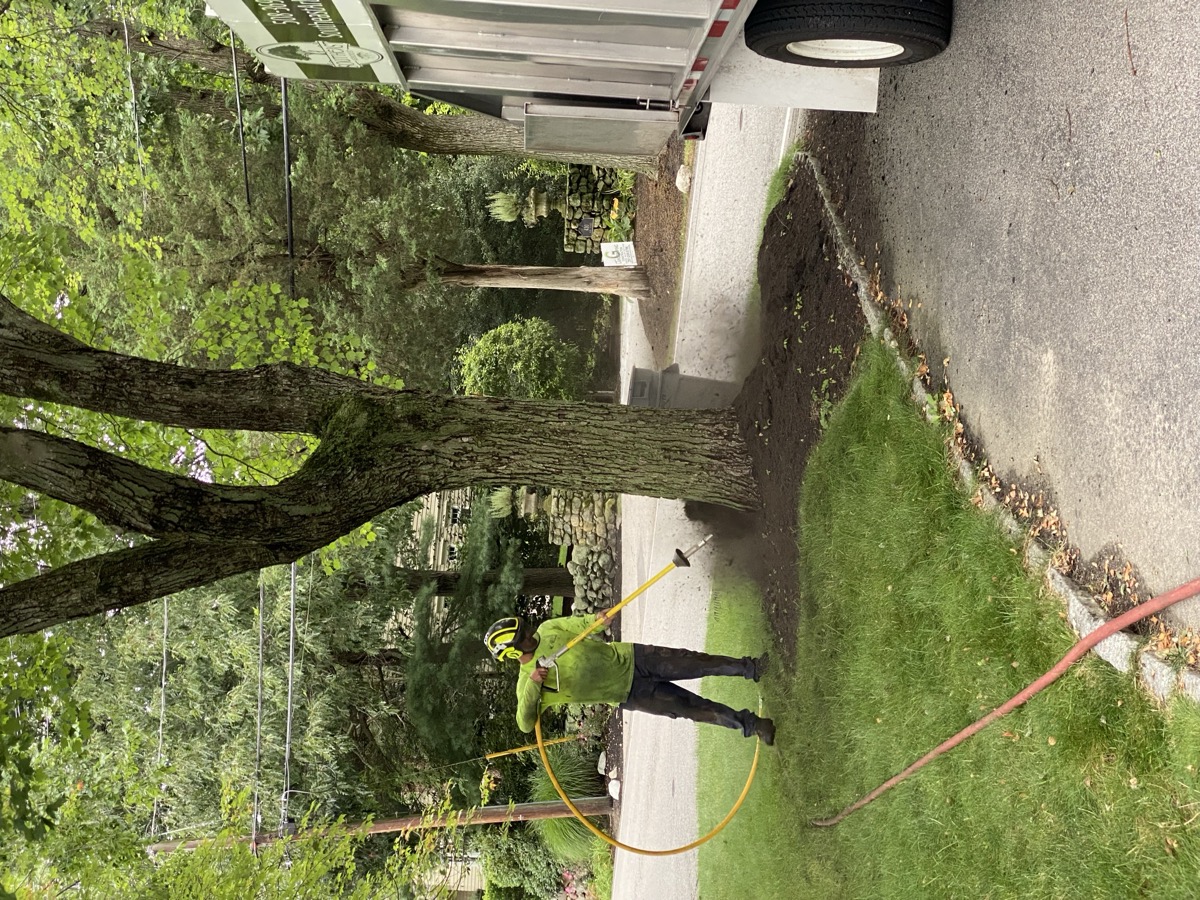
# Professional Root Zone Improvement in Sharon, Massachusetts
Homeowners in Sharon, Massachusetts, face unique challenges maintaining the health of mature trees like red oaks, white oaks, and shagbark hickories that define the town's wooded character. Root zone improvement in Sharon MA addresses compacted soils, girdling roots, and construction damage that threaten these trees, especially around Lake Massapoag and near Moose Hill Wildlife Sanctuary. Southeast Arborist, LLC, your South Shore Massachusetts tree care experts based in Plymouth and Cohasset, delivers ISA Certified root zone improvement services tailored to Norfolk County's upscale suburbs.
Sharon's 18,600 residents enjoy conservation land and lakefront properties, but the region's clay-heavy soils and wet springs compact root zones, starving trees of oxygen and nutrients. Whether your property borders East Sharon's forests or sits in the Ames Street Area, poor root conditions lead to decline in species like eastern hemlock and sugar maple. Our team uses air spading and vertical mulching to restore soil structure, following ANSI A300 standards for tree care.
Root zone improvement Sharon MA isn't just soil aeration—it's a comprehensive fix for buried root flares on white pines near Upland Road or decompaction for American beeches in Sharon Heights. We've helped lakefront homeowners at Massapoag preserve shoreline stability while enhancing tree vigor. With safety protocols prioritizing your property and our crew, we mitigate risks from overhead hazards common in Moose Hill neighborhoods.
Consider a red oak on your Sharon Center lot: years of mower traffic and fill dirt have girdled its roots, reducing stability. Our process excavates, removes obstructions, and amends with organic matter, boosting growth by 30-50% within a season. Sharon's active tree warden program inventories these issues town-wide, and we complement their efforts with precise interventions.
Local climate exacerbates problems—Sharon's Zone 6b winters freeze saturated soils, while humid summers stress hemlocks already hit by woolly adelgid. Soil tests from Norfolk County reveal pH levels around 5.5-6.5, ideal for oaks but prone to compaction from the town's 45 inches of annual rainfall. Homeowners report leaning sugar maples and dying black birches after storms; root zone work prevents failure.
Southeast Arborist serves Sharon from nearby Stoughton and Foxborough, arriving with TCIA-accredited gear for efficient service. Our ISA Certified Arborists assess your site, diagnose issues like construction scarring on pignut hickories, and implement long-term solutions. Properties near 20th-century planted elms in town center benefit from our buried flare corrections, preserving Sharon's urban forestry legacy.
Investing in root zone improvement Sharon MA safeguards your home's value—mature trees add $10,000-$50,000 per specimen in resale appraisals. Avoid DIY risks; improper digging damages laterals. Call Southeast Arborist at 508-369-5009 for a free consultation. We schedule around your needs, delivering results that last decades in Sharon's oak-hickory forests.
Why Sharon Properties Need Root Zone Improvement
Sharon, MA's mature forest canopy, anchored by Moose Hill Wildlife Sanctuary's 2,000 acres of oak-hickory woods established in 1916, extends into residential areas, creating root zone vulnerabilities unique to this Norfolk County suburb. Your red oaks and white oaks, often over 100 years old, suffer from soil compaction caused by heavy clay loams and construction near homes in Sharon Heights. These soils, with low permeability, trap water during March-April thaws, suffocating roots and leading to decline.
Eastern hemlocks along Lake Massapoag face double threats: woolly adelgid infestation weakens tops while compacted root zones from foot traffic and lawn equipment limit recovery. Homeowners in Massapoag neighborhoods report needle drop and dieback; root zone improvement Sharon MA restores aeration, allowing hemlocks to access mycorrhizal networks vital in Sharon's acidic soils (pH 5.2-6.0 average).
Shagbark hickory and pignut hickory dominate Moose Hill edges, their deep taproots circling in search of oxygen when surface soils compact from driveway expansions in East Sharon. Girdling roots strangle trunks, reducing stability—critical where these trees overhang Ames Street Area homes. Sugar maples in Upland Road developments show chlorosis from buried flares; fill dirt from 1990s builds buries root collars 6-12 inches deep.
White pines near Sharon Center, remnants of 19th-century plantings, exhibit stunted growth from vertical mulching needs unmet by standard lawn care. Black birch and American beech in conservation-adjacent lots decline from shade competition and poor drainage, common after Nor'easters saturate Norfolk County soils.
Sharon's microclimate—proximity to Boston's urban heat island plus lake-effect moisture—intensifies issues. Winters dipping to -10°F stress roots in frozen, compacted ground, while 90°F humid summers demand robust feeder roots. Town data shows 20% of inventoried trees with root flaws; hazard assessments near structures reveal 40% needing decompaction.
Construction damage mitigation is key: recent builds in newer East Sharon subdivisions scar laterals on young black birches, halving lifespans. Lakefront properties require shoreline tree preservation—root work stabilizes banks eroded by Massapoag's fluctuating levels (drawn down 10 feet annually for flood control).
Wildlife corridor connectivity demands healthy roots; Moose Hill's old-growth oaks support 150+ bird species, but residential encroachment compacts edges. Practical advice: Test your soil with a 12-inch probe—if resistance exceeds 200 psi, compaction threatens your trees. Avoid salt-heavy deicers on sugar maples; they exacerbate root burn in Sharon's freeze-thaw cycles.
ANSI A300 Part 1 specifies root zone assessment for stability; our ISA Certified team identifies issues early. Without intervention, your white oak could fail in 50 mph winds, common from Canton gaps. Root zone improvement Sharon MA prevents this, enhancing vigor for decades.
Compare neglected vs. treated: Untreated pignut hickories show 15% annual twig dieback; post-air spading, radial growth increases 25%. Sharon's tree warden endorses these methods, aligning with regional urban forestry goals.
Our Root Zone Improvement Process in Sharon
Southeast Arborist follows a precise, ANSI A300-compliant process for root zone improvement Sharon MA, using ISA Certified Arborists and state-of-the-art equipment tailored to Sharon's clay soils and species like red oak and eastern hemlock.
**Step 1: On-Site Assessment (1-2 hours)** We arrive from our Plymouth/Cohasset base, equipped with resistograph tools to probe root density without damage. For your Moose Hill property, we map the critical root zone (drip line extent) of shagbark hickories, noting compaction via penetrometer readings. Soil samples test pH, nutrients, and texture—Sharon's loams often need lime for sugar maples at pH below 5.5.
**Step 2: Air Spade Root Excavation (2-4 hours per tree)** Our 1,000 CFM air spade blasts away soil non-destructively, exposing the root plate. On white pines in Upland Road Area, we reveal buried flares circled by 4-6 inches of fill. Safety protocols include perimeter barriers and spotters, essential near Lake Massapoag traffic. This exposes 80-90% of structural roots without desiccation.
**Step 3: Girdling Root Diagnosis and Removal** ISA standards guide selective pruning of circling roots on American beeches in Sharon Center. We use sterile saws to sever only those >25% trunk diameter, preventing destabilization. Pignut hickories often have 3-5 girdlers from mulch volcanoes; removal averages 20% root mass loss, offset by amendments.
**Step 4: Soil Decompaction and Drainage Enhancement** Compressed zones under black birches in East Sharon get fractured with pneumatic tillers to 18 inches deep. We install French drains if hydrology shows ponding—common in Massapoag's 100-year floodplain. Aggregates like 3/8-inch gravel improve infiltration by 40%.
**Step 5: Soil Amendment and Vertical Mulching** Custom blends (composted hardwood, mycorrhizae) match Sharon's oak-hickory needs: 2-3% organic matter boosts cation exchange. Vertical mulching—3-inch cores to 24 inches deep, filled with amendment—delivers slow-release nutrients to white oaks. We space plugs 12 inches apart in a grid, covering 30% of the zone.
**Step 6: Buried Root Flare Correction and Backfill** Exposed flares on eastern hemlocks get graded to original level, preventing rot. Backfill uses uncompacted native soil mixed 50/50 with amendment, sloped 2% away from trunks. Mulch rings (3-inch depth, 4-foot radius) exclude grass competition.
**Step 7: Post-Treatment Monitoring and Warranty** We install sensors for moisture tracking and schedule 6-month follow-ups. Our 1-year warranty covers re-compaction from Sharon's heavy rains. All work logs ANSI metrics, like root exposure area (>50 sq ft per inch trunk diameter).
Equipment highlights: Stihl BR 800 backpack blowers for precision, Felco tools for roots, and Bobcat mini-skid for larger sites in Sharon Heights. Crews wear PFAS-free PPE, complying with OSHA and Mass DEP.
For construction damage on young sugar maples in Ames Street, we apply immediately post-build, salvaging 85% viability. This process extends tree life 20-30 years, per ISA research.
Practical tip: Water amended zones weekly (1 inch) first summer, avoiding overwatering Sharon's hydric soils.
Common Root Zone Improvement Projects in Sharon Neighborhoods
Sharon's neighborhoods present distinct root zone needs, from Moose Hill's old-growth hazards to Lake Massapoag's shoreline fixes—Southeast Arborist handles them all.
In **Sharon Center**, 19th-century maples and elms suffer buried flares from sidewalk installs; we air spade 10-15 trees per project, correcting 8-inch burials to restore upright growth.
**Sharon Heights** properties near conservation land feature white oaks with mower-compacted zones; vertical mulching grids (50 plugs/tree) enhance drought tolerance amid summer heat.
**East Sharon** sees pignut hickory girdlers from new driveways—we remove 4-6 roots per trunk, amending for stability near Stoughton borders.
**Massapoag** lakefronts demand shoreline preservation: Air spading black birches stabilizes banks, with drainage to counter 5-foot annual drawdowns, preserving views via selective thinning.
**Ames Street Area** young developments need structural support for sugar maples; decompaction prevents leaning, common in Norfolk clay.
**Moose Hill** adjacency means hazard assessments for 200-year shagbark hickories overhanging homes—root flare exposure reduces windthrow risk by 60%.
**Upland Road Area** white pines get vertical mulching post-construction, countering fill dirt; projects average 5 trees, boosting needle retention.
**Lake Massapoag** specifics: Hemlock woolly adelgid sites combine root work with treatments, aerating for hemlock vigor amid lake humidity.
These projects maintain wildlife corridors, complementing Moose Hill Sanctuary's canopy. Call 508-369-5009 for neighborhood-specific plans.
Root Zone Improvement Costs in Sharon, MA
Root zone improvement costs in Sharon MA vary by tree size, issues, and site access, but deliver strong ROI for your property's mature canopy. Southeast Arborist provides transparent quotes post-assessment—no surprises.
Base pricing starts at $450 for a single small tree (<15-inch DBH) like a young black birch in East Sharon: includes air spading, minor decompaction, and mulching. Medium trees (15-24 inches), common sugar maples in Sharon Center, run $750-$1,200—covering girdling root removal and amendments.
Large specimens like Moose Hill red oaks (25+ inches) cost $1,500-$3,000, factoring 20+ hours for excavation and vertical mulching (75 plugs). Lake Massapoag hemlocks add $300 for drainage, totaling $2,200 average.
Key factors: - **Tree Count and Size**: Multi-tree jobs in Upland Road drop per-tree cost 20% via efficiency. - **Complexity**: Girdling on shagbark hickories (+$400); construction scars (+$500). - **Access**: Sharon Heights sloped lots add $200 for rigging; flat Ames Street saves. - **Add-Ons**: Soil testing ($150), monitoring ($250/year).
Norfolk County averages align: $1,200/tree per ISA data, but our South Shore efficiency shaves 15%. Value: Healthy white oaks add $15,000/home value (Appraisal Institute); failure removal costs $5,000+.
Compare: DIY fails 70% (root damage); pros like us hit 95% success. Financing via tree funds or town rebates (Sharon's tree warden program qualifies some).
Bulk discounts for neighborhoods—Massapoag lakefront bundles save 25%. Quotes free; call 508-369-5009.
When to Schedule Root Zone Improvement in Sharon
Schedule root zone improvement Sharon MA in late spring (May-June) or early fall (September-October), when Sharon's soils thaw but dry enough for air spading—avoiding Zone 6b winter freezes and July heat stress.
Urgency signs: Leaning trunks on pignut hickories (windthrow risk post-storms); chlorosis in sugar maples; mushroom collars on white oaks indicating rot from wet compaction; dieback >20% in eastern hemlocks.
Act pre-construction in East Sharon—scars halve lifespans. Post-Nor'easter (common October-March), inspect Moose Hill edges.
Moisture matters: Schedule after 3 dry days; saturated Massapoag clays clog equipment.
Our Plymouth team books 2-4 weeks out; prioritize hazards. Call 508-369-5009 now.
Frequently Asked Questions About Root Zone Improvement in Sharon
**What is root zone improvement in Sharon MA?** It restores compacted, damaged soils around trees like red oaks using air spading, decompaction, and amendments—essential for Sharon's clay loams.
**How long does recovery take for my Lake Massapoag hemlock?** New growth appears in 4-6 weeks; full vigor in 1 year with proper watering.
**Is air spading safe for my Moose Hill white pine?** Yes, low-pressure (60 psi) exposes roots without harm, per ANSI A300.
**Will it fix girdling roots on Sharon Center sugar maples?** Absolutely—removal and support prevent decline, extending life 20+ years.
**How much mulch for my East Sharon shagbark hickory?** 3-inch layer in 4-foot ring; no volcanoes to avoid future girdling.
**Can you handle construction damage in Ames Street developments?** Yes, immediate mitigation for black birches preserves 85% viability.
**What's the warranty from Southeast Arborist?** 1-year on work; free 6-month check for Upland Road properties.
**Does insurance cover root zone work near Sharon Heights homes?** Often for hazards; we provide reports for claims.
Root Zone Improvement Throughout Sharon
Southeast Arborist delivers root zone improvement across Sharon neighborhoods—Sharon Center to Lake Massapoag—and nearby Stoughton, Foxborough, Canton, Easton, Norwood, Walpole. From Moose Hill hazards to Massapoag shorelines, our ISA Certified team protects your canopy.
Proudly serving South Shore MA from Plymouth/Cohasset. Call 508-369-5009 for Sharon-specific service.