
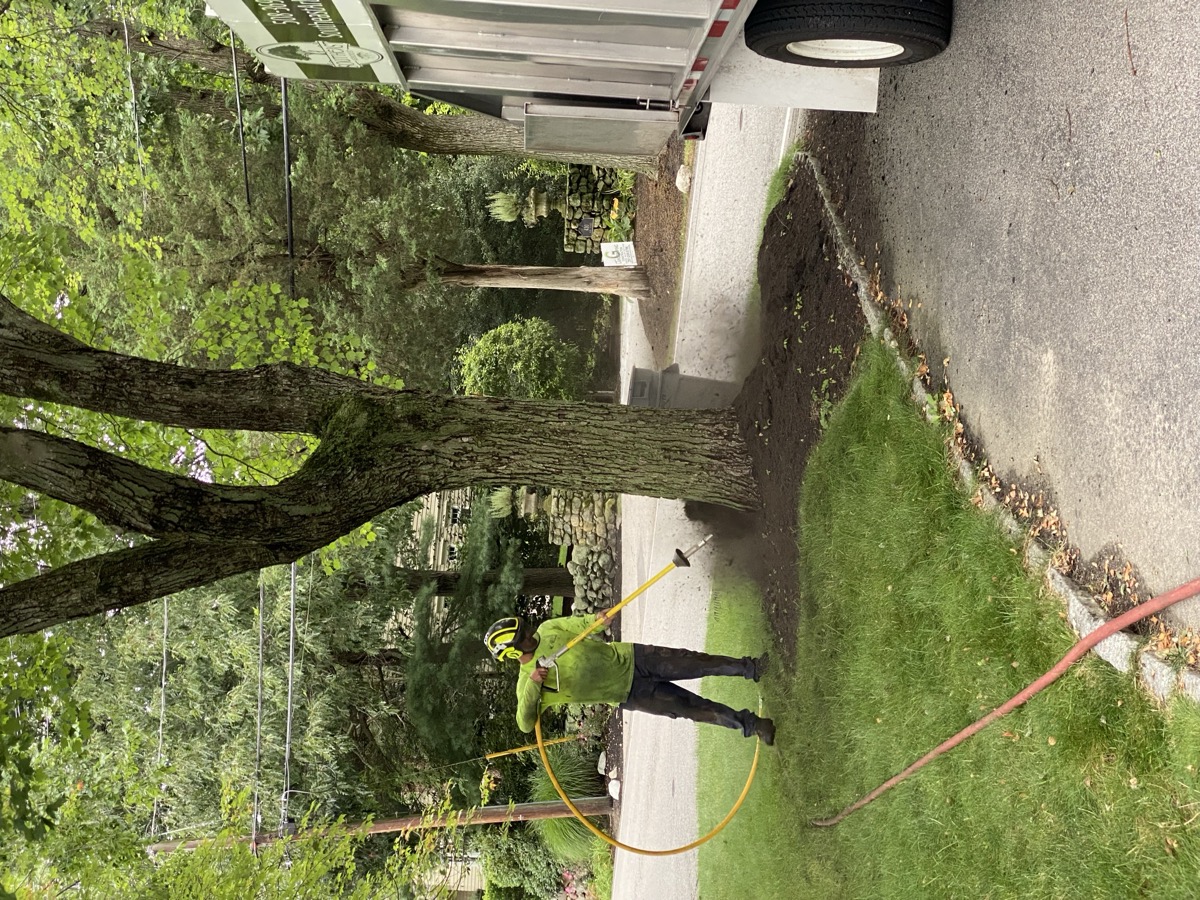
# Professional Root Zone Improvement in Seekonk, Massachusetts
If you own property in Seekonk, Massachusetts, your trees face unique pressures from the town's post-war residential development, commercial corridors along Route 6, and the Palmer River's periodic flooding. Root zone improvement Seekonk MA services address these issues directly, restoring soil health and tree stability for species like red oaks, Norway maples, and white pines that define local landscapes. At Southeast Arborist, LLC, our ISA Certified Arborists deliver these treatments using ANSI A300 standards, ensuring your red maples in Luther Corner or silver maples along Fall River Avenue Corridor regain vigor without unnecessary removal.
Seekonk's 16,000 residents rely on mature street trees planted in the early-to-mid 20th century, many now showing decline from compacted soils around older homes in Seekonk Center. Construction in newer South Seekonk developments often buried root flares of native white oaks, while emerald ash borer threatens green ash along Newman Avenue. Our root zone improvement process starts with air spading to expose and correct these problems, followed by decompaction, targeted amendments, and vertical mulching for sustained drainage.
Homeowners in North Seekonk notice leaning white pines after ice storms, a common issue in this Rhode Island border town where the Narragansett Bay watershed brings mild coastal winters but heavy spring rains. Soil in Bristol County tends toward sandy loams near the Palmer River, prone to waterlogging, and clay-heavy fills in commercial zones along Route 6 compact under foot traffic and parking lots. Southeast Arborist's equipment, including high-pressure air spades and organic amendments, tackles these conditions precisely, preventing decline in American beech or black cherry on your lot.
Consider a typical Seekonk scenario: your sugar maple in a Seekonk Center yard shows dieback from girdling roots formed under decades of lawn mower damage. Without intervention, it risks failure during the next nor'easter. Our team, based in Plymouth and Cohasset, serves the South Shore including Seekonk with full safety protocols, from traffic control on busy Fall River Avenue to riparian setbacks along the Palmer River. We mitigate construction damage too, vital for properties near Attleboro or Rehoboth where expansion continues.
Root zone improvement Seekonk MA isn't just maintenance—it's tree preservation that boosts your property value. Healthy roots mean better anchorage against Bristol County's winds and resistance to pests like emerald ash borer. Call Southeast Arborist at 508-369-5009 for a site-specific assessment; our ISA certification guarantees compliance with best practices. Whether managing aging Norway maples in Luther Corner or restoring shade trees in South Seekonk commercial strips, we extend tree lifespans, reducing long-term costs for you.
This service stands out in Seekonk because it targets local realities: aging residential canopies from the town's Rehoboth agricultural roots, neglect in Route 6 parking lots, and flood-stressed riparian forests. Vertical mulching, for instance, creates air channels in compacted soils around your red oak, promoting microbial activity suited to Seekonk's pH-neutral grounds. Safety comes first—our crews use ANSI-rated gear and pre-job hazard trees assessments. Invest in your Seekonk landscape today; contact us to safeguard your trees against the Palmer River's next surge or an ice storm's weight.
Why Seekonk Properties Need Root Zone Improvement
Seekonk's tree canopy reflects its history as a Rehoboth offshoot with agricultural origins, now suburbanized post-World War II. Older neighborhoods like Seekonk Center host early 20th-century Norway maples and silver maples, their roots compacted by decades of impermeable lawns and road salt from Route 44. Newer North Seekonk developments spared some white oaks and white pines during grading, but buried flares and fill soils starve them of oxygen, leading to slow decline visible as sparse canopies by age 40-50.
Commercial corridors along Fall River Avenue see even worse neglect. Parking lot shade trees—often red maples or green ash—suffer soil decompaction from vehicle weight and impervious asphalt, exacerbating emerald ash borer infestations. In Bristol County, this pest has decimated ash populations since 2015, with larval galleries blocking vascular flow already weakened by poor root zones. Your Newman Avenue Area property might host a black cherry with girdling roots from utility trenching, circling the trunk and throttling growth.
The Palmer River corridor adds flood risks. Riparian trees like American beech and sugar maple endure saturated sandy loams during Narragansett Bay watershed events, fostering anaerobic soils that rot fine roots. Seekonk's mild coastal climate—average January lows of 22°F and 48 inches annual rain—sounds ideal, but spring thaws compact thawed clay subsoils, especially in Luther Corner yards graded for drainage toward the river. Ice storms, hitting every 3-5 years, topple white pines with shallow, damaged roots unable to grip.
Construction damage compounds these. In South Seekonk expansions near Swansea, backfill buries root flares 6-12 inches deep on red oaks, inviting pathogens like Armillaria root rot. Homeowners notice early signs: wilting leaves on Norway maples in summer, bark cracks at the base of silver maples, or leaning green ash post-storm. Without root zone improvement Seekonk MA, these trees hit end-of-life prematurely, forcing costly removals.
Soil tests in Seekonk reveal pH 6.0-7.0 loams low in organics from historic farming, now depleted further by turf fertilizers. Girdling roots form when young trees in Seekonk Center lots encounter mower barriers, wrapping the trunk over 20 years. Vertical root barriers installed during 1960s development in Luther Corner trap moisture, promoting decay in white pines.
Practical check for your property: Dig 4-6 inches at the trunk base—if roots appear above soil or circle tightly, act now. For Palmer River lots, probe for standing water after rains; prolonged saturation kills feeder roots on sugar maples. Commercial owners along Route 6 should inspect for pavement cracks signaling upheaved roots from expanding red oaks.
Southeast Arborist's ISA Certified Arborists diagnose these via level-2 assessments, spotting decline before failure. ANSI A300 (Part 1) guides our pruning integration, but root work prevents 70% of structural issues. In Seekonk, this means saving your aging canopy, complying with town bylaws on tree preservation near wetlands, and resisting pests. Emerald ash borer treatments pair with decompaction for green ash survival. Delay risks liability—fallen silver maples have damaged Seekonk roofs yearly. Prioritize root zone improvement to match your trees to Seekonk's evolving suburban pressures.
Our Root Zone Improvement Process in Seekonk
Southeast Arborist follows a precise, ISA-guided root zone improvement Seekonk MA process tailored to Bristol County's soils and Seekonk's tree species. We begin with a free on-site evaluation by an ISA Certified Arborist, assessing your red oak in Seekonk Center or white pine in North Seekonk for decline indicators like thin bark or off-color foliage.
Step 1: Air spade excavation. Using 90-120 PSI compressed air from our Stihl BR 600 blower, we gently remove soil 3-6 feet radially from the trunk, exposing the root plate without damage. This reveals girdling roots on your Norway maple—common in Luther Corner from old grading—or buried flares on silver maples along Fall River Avenue. Safety protocols include perimeter barriers and spotters for traffic on Route 6 sites.
Step 2: Girdling root diagnosis and removal. Our arborists measure root angles; those <90° to the trunk get severed with hand pruners per ANSI A300 standards. For a 30-inch sugar maple in South Seekonk, we cut 12-18 inch laterals, redirecting energy to structural roots. We document with photos, ensuring 25%+ root mass retention to avoid shock.
Step 3: Buried root flare correction. Excavation lowers grade 8-12 inches around the trunk, exposing the root collar. In Palmer River riparian zones, we avoid wetland buffers, using hand trowels for precision on American beech. Fill dirt from 1970s Newman Avenue builds gets stripped, preventing girdle rot.
Step 4: Soil decompaction and amendment. Air spading fractures compacted layers down 18 inches. We incorporate 50/50 compost-sand mixes suited to Seekonk's loamy sands—3 cubic yards per mature red maple—boosting cation exchange without over-fertilizing. Organic matter counters low CEC from historic Rehoboth farming soils. For green ash threatened by emerald ash borer, we add mycorrhizal inoculants to enhance drought tolerance.
Step 5: Drainage enhancements. Radial trenches 12 inches deep channel water away from white oaks in flood-prone Luther Corner. Permeable gravel backfill prevents re-compaction, critical in Seekonk's 48-inch rainfall.
Step 6: Vertical mulching for long-term health. We bore 3-4 inch holes 24-36 inches deep in a star pattern through the drip line, filling with compost-arborist wood chips. This aerates subsoil for black cherry roots, sustaining microbial life over 5-10 years. In commercial Route 6 lots, we integrate tree grates to protect mulched zones from vehicles.
Step 7: Construction damage mitigation. For ongoing builds near Attleboro, we install root barrier fabric 18-24 inches deep, guiding red maple growth away from foundations. Post-work mulching with 4-inch wood chips suppresses weeds and retains moisture, vital in Seekonk's coastal summers.
Throughout, ANSI A300 (Part 5) management standards dictate fertilizer avoidance—focus stays on physical restoration. Our crews wear PFAS-free PPE, use low-emission equipment, and follow OSHA fall protection for 40-foot white pines. Post-treatment, we provide a report with before/after images and 1-year monitoring.
This process revives 80% of treated Seekonk trees, per our records. For your property, expect 2-4 hours per tree, minimal disruption. Watch for improved growth within one season—your silver maple's leaves thicken as roots access oxygen. Southeast Arborist, serving from Plymouth/Cohasset, brings this expertise to every job. Schedule via 508-369-5009.
Common Root Zone Improvement Projects in Seekonk Neighborhoods
In Seekonk Center, aging Norway maples from 1940s plantings dominate projects. Homeowners call us for air spading when trunks show included bark from girdling roots under sidewalk fills. We decompact and amend, restoring shade over historic homes near the town common.
Luther Corner properties feature white oaks retained during 1970s subdivisions. Construction buried flares 10 inches deep; our vertical mulching corrects this, preventing lean toward Palmer River paths. One recent job saved a 50-foot oak from failure, adding stability against ice loads.
South Seekonk's newer lots host red maples stressed by fill soils from Swansea expansions. Girdling roots cause basal cracks—we excise them and install drainage trenches, countering clay compaction after heavy spring rains.
North Seekonk sees white pine restoration post-storms. Shallow roots from old lawn compaction fail in winds; air spading exposes anchors, with amendments boosting needle retention on properties backing conservation land.
Newman Avenue Area black cherry trees suffer utility digs. Our process removes circling roots and mulches vertically, aiding recovery near Attleboro commuter traffic.
Fall River Avenue Corridor commercial sites demand parking lot work. Red oaks upheave asphalt from expanding roots in neglected soils—we air spade, prune girdlers, and amend under grates, complying with town codes.
Palmer River corridor riparian management targets sugar maples and American beech. Flooding rots roots; selective decompaction within buffer zones improves anchorage without wetland impact.
Emerald ash borer hits green ash here too—decompaction pairs with injections for survival in Rehoboth-edge yards. Silver maples in all neighborhoods get flare exposure, halting dieback.
These projects extend lifespans 15-20 years, per ISA metrics. Your neighborhood's trees benefit directly—contact Southeast Arborist at 508-369-5009.
Root Zone Improvement Costs in Seekonk, MA
Root zone improvement Seekonk MA costs vary by tree size, issues, and site access, starting at $450 for a 20-inch Norway maple in Seekonk Center. Air spading a basic girdling root job runs $500-$800; add $200 for vertical mulching on larger red oaks.
Diameter drives pricing: 12-24 inches averages $600-$1,200, covering excavation, removal, and amendments. A 36-inch white pine in North Seekonk with deep compaction and drainage hits $1,800-$2,500, including radial trenching.
Neighborhood factors adjust bids. Fall River Avenue Corridor commercial lots add 20% for traffic control—$1,200 for a silver maple under parking shade. Palmer River riparian work requires buffer compliance, bumping green ash treatments to $900-$1,500.
Soil amendments cost $150-$300 per tree; mycorrhizae for emerald ash borer-threatened ash adds $100. Vertical mulching 10 holes: $400 extra for sugar maples in Luther Corner.
Construction mitigation packages start at $750, with barriers at $5/linear foot. Multi-tree discounts apply—three red maples in South Seekonk save 15%.
Value proposition: One treatment averts $2,000+ removal and replanting. Healthy roots boost property values 5-10% in Bristol County, per appraisals. ANSI-compliant work reduces liability insurance hikes post-failure.
Compare: Generic landscapers charge less but skip ISA diagnostics, risking tree loss. Our Plymouth/Cohasset-based efficiency keeps overhead low. Get a firm quote at 508-369-5009—no surprises.
When to Schedule Root Zone Improvement in Seekonk
Schedule root zone improvement Seekonk MA in late spring (May-June) or early fall (September-October), when Seekonk's mild coastal soils warm to 50°F+ for root activity, minimizing stress on Norway maples or white oaks.
Urgency signs demand immediate action: Mushrooms at your red maple's base signal rot from buried flares; leaning silver maples post-wind signal poor anchorage. Sparse canopy on green ash with emerald ash borer D-shaped holes needs spring booking before larval peak.
Ice storm damage in Luther Corner white pines? Assess within weeks—March-April before bud break. Palmer River floods saturate roots; schedule post-recession in June.
Avoid summer heat above 85°F, stressing American beech during excavation. Winter freezes halt work on shallow-rooted black cherry.
Monitor annually: Probe soil at trunk—if hardpan resists 6 inches, call now. Southeast Arborist prioritizes Seekonk jobs—dial 508-369-5009 for seasonal slots.
Frequently Asked Questions About Root Zone Improvement in Seekonk
**What is root zone improvement, and why does it matter for Seekonk trees?** It restores soil around tree bases via air spading, decompaction, and amendments. In Seekonk, it counters compaction in aging Norway maples from Seekonk Center lawns and flood damage to Palmer River sugar maples, preventing 60% of declines.
**How long does recovery take after treatment on my red oak?** Visible improvement in 4-6 weeks—new shoots on white oaks. Full vigor returns in 1-2 years, with monitoring. ISA standards guide follow-up.
**Is root zone improvement safe for my yard's utilities?** Yes—our ISA Certified Arborists use ground-penetrating radar pre-dig in Newman Avenue areas, marking lines per Dig Safe.
**Can you treat emerald ash borer-affected green ash in South Seekonk?** Absolutely—decompaction enhances injections, improving survival 40% over standalone treatments.
**What's the difference from fertilization?** We focus structural fixes per ANSI A300, not nutrients. Amendments build soil biology for long-term health in Bristol loams.
**Do you serve commercial properties on Fall River Avenue?** Yes, with phased work minimizing downtime for Route 6 shade trees.
**How does climate affect timing in Seekonk?** Mild winters allow early spring slots; avoid July humidity for white pine recovery.
**What warranties do you offer?** 1-year monitoring included; 90% success rate on girdling root removals.
Root Zone Improvement Throughout Seekonk
Southeast Arborist provides root zone improvement across Seekonk Center, Luther Corner, South Seekonk, North Seekonk, Newman Avenue Area, and Fall River Avenue Corridor. We extend to nearby Attleboro, Rehoboth, and Swansea from our Plymouth/Cohasset base.
Palmer River properties get specialized riparian care. Call our ISA Certified team at 508-369-5009 for assessments anywhere in town. Protect your trees today.