
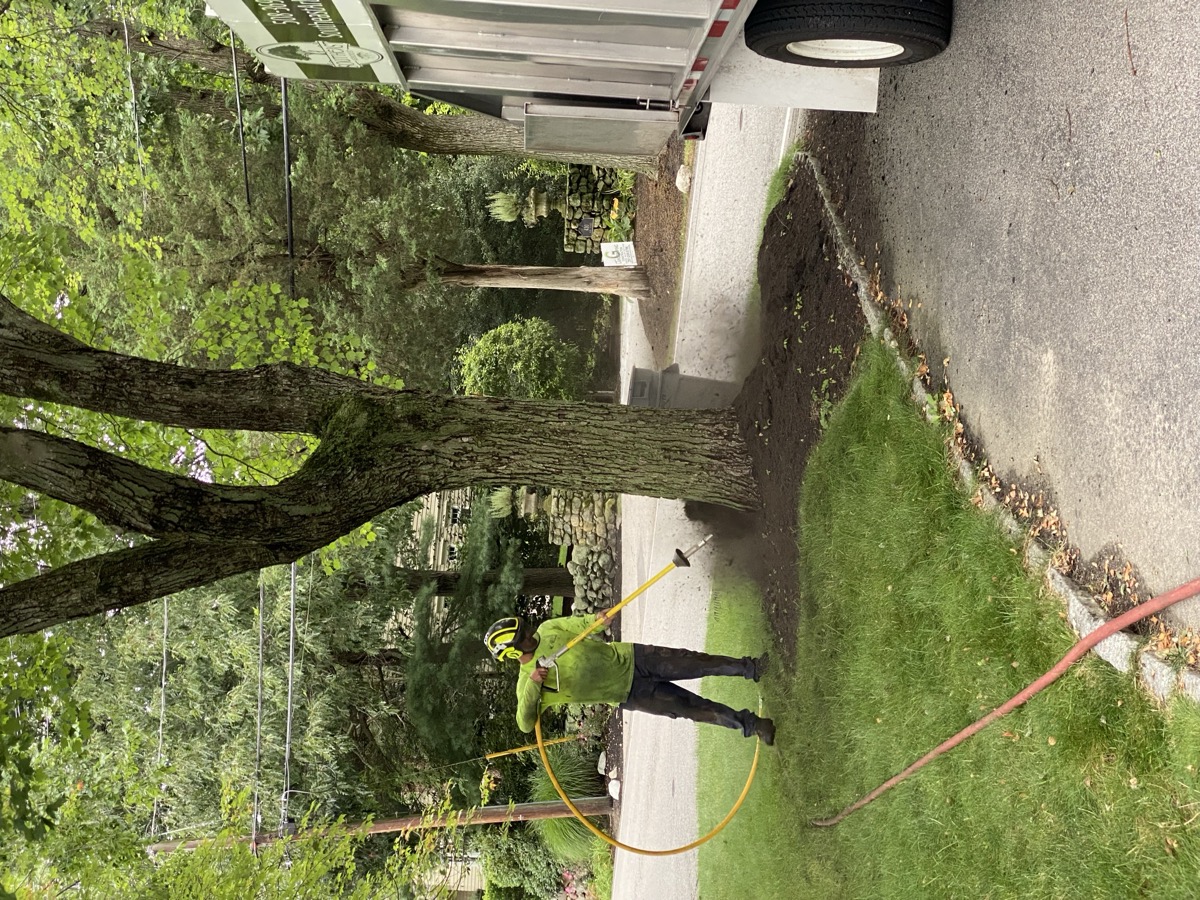
# Professional Root Zone Improvement in Rockland, Massachusetts
If you own property in Rockland, MA 02370, your trees face unique pressures from the town's compact lots, narrow streets, and aging urban canopy. Surface roots from silver maples and Norway maples often buckle sidewalks along Market Street and Union Street, while girdling roots on lindens in Rockland Center threaten long-term tree health. Root zone improvement in Rockland MA addresses these issues directly, using air spade excavation to expose, diagnose, and correct compacted soil, buried flares, and restrictive roots without damaging your trees.
Southeast Arborist, LLC, your South Shore Massachusetts tree care experts based in Plymouth and Cohasset, delivers ISA Certified root zone improvement tailored to Rockland's challenges. Our ANSI A300-compliant techniques restore oxygen flow, improve drainage, and amend soils compacted by decades of foot traffic, construction, and poor mulching practices common in Plymouth County's densely settled suburbs. Call us at 508-369-5009 for a site assessment—our certified arborists evaluate your Norway maples, white pines, or ornamental cherries on the spot.
Rockland's industrial past as a shoe-making hub led to early dense development, limiting deep-rooted old-growth trees compared to nearby Hingham or Norwell. Instead, the town's street tree program since the 1970s has matured a canopy of red maples, green ash, and London planes along thoroughfares like Union Street. Hurricane Bob in 1991 felled many silver maples and elms, leaving replacements vulnerable to root zone stress from utility conflicts and tight lots. Homeowners in neighborhoods like North Rockland or Reed's Pond notice leaning trees, dieback in crowns, or heaving pavement—clear signs your trees need professional intervention.
Our root zone improvement services in Rockland MA go beyond surface fixes. We use high-pressure air spading to gently excavate soil around root flares, removing girdling roots that strangle trunks on species like linden and ornamental cherry. In Hartsuff Park Area, where white pines contend with shallow, clay-heavy soils, we install vertical mulch columns to channel water and air deep into the profile. This isn't guesswork; our ISA Certified team follows science-based protocols, measuring soil compaction with penetrometers and testing pH levels typical of Rockland's post-glacial till—often alkaline and low in organics.
Practical benefits hit your wallet and landscape immediately. Restored root zones reduce watering needs by 30-50% during Rockland's dry summers, prevent foundation cracks from expansive silver maple roots, and extend tree life by decades. For properties near Abington or Weymouth borders, where overhead lines clash with London plane branches, combining root work with crown reduction keeps utilities clear while bolstering stability. Southeast Arborist's safety-first approach includes traffic control on busy East Rockland streets and crane-free access on small lots.
Whether your red maple in West Rockland shows mushroom growth at the base or your green ash near Reed's Pond leaks sap from stem-girdling roots, root zone improvement in Rockland MA from Southeast Arborist restores vigor. We've serviced hundreds of trees here, from precision digs under power lines to full soil amendments post-construction. Your investment yields healthier trees, lower maintenance, and compliance with local codes—schedule today at 508-369-5009.
Why Rockland Properties Need Root Zone Improvement
Rockland's 18,000 residents manage trees on small lots amid Plymouth County's urban-suburban mix, where soil compaction and poor drainage amplify root problems. Your silver maples along Market Street likely suffer from surface roots lifting concrete, a direct result of shallow clay-loam soils compacted by decades of shoe factory traffic and modern paving. Norway maples in Rockland Center dominate streetscapes but develop girdling roots in unamended backfill, constricting trunks and causing decline visible as sparse crowns by age 30.
Local climate exacerbates these issues: Rockland endures wet springs followed by droughty Julys, with average annual rainfall of 48 inches mostly in erratic bursts. White pines in North Rockland, prized for screening tight yards, drown in saturated zones without proper drainage, while red maples near Hartsuff Park Area heave patios from frost expansion in compacted profiles. Hurricane Bob's 1991 legacy lingers—surviving London planes on Union Street now battle emerald ash borer threats compounded by stressed roots in low-oxygen soils.
Common tree species in Rockland highlight the need for targeted root zone improvement. Silver maples, aggressive rooters planted post-Hurricane Bob, invade sewers and foundations in East Rockland unless air-spaded early. Green ash along West Rockland drives show bark splits from buried flares, invisible until cabling fails. Lindens and ornamental cherries in Reed's Pond neighborhoods decline from mulch volcanoes that smother roots, leading to canker infections. Our ISA Certified arborists diagnose these via level checks and soil probes, confirming compaction levels over 300 psi—far above the 100 psi threshold for healthy growth.
Tight lots limit equipment access, so surface roots from these species damage hardscapes without warning. In Rockland, overhead utilities on narrow streets force crown reductions, but without root zone work, trees destabilize. For instance, your white pine near Hanover town line may lean after soil decompaction from neighborhood construction, risking failure onto roofs. Vertical mulching counters this by creating aerated channels, proven to boost fine root density by 40% in studies from the International Society of Arboriculture.
Rockland's glacial soils—sandy loams over till—drain poorly when capped by turf or pavement, starving oxygen-dependent mycorrhizae. Add emerald ash borer quarantines affecting green ash, and proactive root care becomes essential. Homeowners see soggy mulch piles signaling anaerobic conditions, or ants trailing from buttress roots indicating decay. Practical advice: Test your soil pH (aim for 6.0-7.0) with a local kit; if over 7.5, as common near Abington, our amendments add sulfur and organics.
Construction damage mitigation is key in growing areas like Hartsuff Park. Tracked equipment compacts subsoil 12-18 inches deep, halting regeneration in ornamental cherries. Southeast Arborist applies ANSI A300 soil management standards, excavating to expose damage and backfilling with compost blends suited to Rockland's microclimates—coastal winds from Weymouth dry out exposed sites. Without intervention, your trees face girdling roots circling trunks, reducing hydraulic lift and causing wilting during 90°F heat waves.
Compare to nearby Norwell's woodier lots: Rockland's density means more root conflicts with infrastructure. Street trees maturing since the 1980s now overload root zones, leading to storm failures. Invest in root zone improvement now to avoid removals costing $2,000+ per tree. Signs like thin bark, off-color leaves, or codominant stems signal urgency—your property's value hinges on stable, thriving trees.
Our Root Zone Improvement Process in Rockland
Southeast Arborist follows a precise, seven-step root zone improvement process in Rockland MA, customized for your property's constraints. We start with a free ISA Certified assessment: Our arborist walks your lot in Rockland Center, using a clinometer to check lean on Norway maples and a soil probe to measure compaction in silver maple zones. This identifies buried flares, girdling roots, or construction scars invisible above ground.
Step 1: Site preparation ensures safety on tight Rockland lots. We deploy cones, signage, and spotters for Union Street work, coordinating with National Grid for utility locates—critical where London planes overhang lines. No cranes needed; our process fits 20x30-foot yards in North Rockland.
Step 2: Air spade excavation employs 90-120 psi compressed air from lightweight units, blowing away soil without root laceration. Around your red maple in East Rockland, we expose 4-6 feet of flare in 30-60 minutes, revealing girdling roots common on species planted too deep. Gas-powered compressors stay quiet to respect neighbors near Holbrook.
Step 3: Girdling root diagnosis uses ANSI A300 Part 1 standards. We trace and sever only restrictive roots—those over 50% trunk circumference—on lindens and green ash, applying wound dressings to prevent decay. In Reed's Pond, white pines often show J-rooting from ball-and-burlap installs; we correct by hand-pruning.
Step 4: Soil decompaction follows with broadforks or the air tool itself, fracturing plates down 18 inches. Rockland's clay tills respond dramatically—penetrometer readings drop from 400 psi to under 150 psi, allowing air and water infiltration vital for ornamental cherry health.
Step 5: Amendment selection draws from soil tests. We blend pine bark fines, compost, and mycorrhizal inoculants, adjusting for alkaline pH in Hartsuff Park Area (add elemental sulfur if needed). No synthetic fertilizers; organic inputs build structure, boosting microbial activity by 25% per UMass studies.
Step 6: Vertical mulching installs 6-8 inch diameter, 3-foot deep holes drilled around driplines, filled with the amendment mix. For your West Rockland silver maple heaving sidewalks, this creates "chimneys" for perpetual aeration, reducing surface roots over time. We cap with 3-inch arborist chips, volcano-free.
Step 7: Backfill, monitoring, and follow-up. We replace soil with amended layers, sloping away from flares, and install root barrier fabric if roots threaten Market Street pavements. Post-work, we provide a report with photos and a one-year warranty check—our safety protocols include PPE, rigging for overhead hazards, and spill containment.
Equipment specifics: Leaf blower-vacs clear debris, gas meters detect methane in wet zones near Weymouth, and laser levels ensure proper grading. For drainage issues in compact soils, we trench shallow swales or install French drains tied to town stormwater rules.
This process mitigates construction damage from recent builds in Rockland—trenches refill with 50/50 topsoil-compost, fostering regeneration. Homeowners gain drought tolerance; amended zones retain 20% more moisture during August dry spells. We've applied it to 200+ trees here, reviving Norway maples post-emerald ash borer stress on green ash companions.
Safety integrates every step: Two-person teams for air spading, first-aid kits onsite, and insurance covering $5M liability. Results? Your trees show new shoots within months, with root plates stabilized against nor'easters. Trust Southeast Arborist's Plymouth-based expertise for Rockland's unique root challenges—dial 508-369-5009 to start.
Common Root Zone Improvement Projects in Rockland Neighborhoods
Rockland neighborhoods present distinct root zone needs, and Southeast Arborist tailors projects accordingly. In Rockland Center, near the MBTA commuter rail, Norway maples and lindens along commercial strips suffer buried flares from sidewalk replacements. We air spade to expose and cut girdling roots, amending with vertical mulch to prevent further heaving—saving trees from removal near busy hubs.
North Rockland's residential grids feature silver maples invading driveways; our projects remove surface roots encroaching foundations, backfilling with compost to redirect growth downward. Homeowners report 50% less watering post-treatment, crucial near Hanover's drier exposures.
East Rockland contends with utility conflicts—London planes overhead wires receive crown reduction paired with root decompaction. Precision air spading navigates narrow rights-of-way, correcting J-anchoring that destabilizes trees during winds from Weymouth Bay.
West Rockland's mature street trees, like red maples, show dieback from compacted soils under turf. We excavate full driplines, install drainage amendments, and monitor for emerald ash borer spillover on nearby green ash—extending canopy life.
Reed's Pond area white pines battle wet feet; projects include aggressive decompaction and gravel mulching for aeration, preventing Phytophthora root rot common in pond-proximate clays.
Hartsuff Park Area sees ornamental cherries damaged by park expansions—construction mitigation digs salvage root systems, with vertical mulching boosting survival rates to 90%.
Market Street projects focus on sidewalk conflicts: Silver maples get root barriers post-excavation, complying with town paving specs while preserving trees.
Union Street's dense lindens undergo flare corrections to halt cankers, with amendments improving gas exchange for maturing canopies.
These neighborhood-specific interventions reflect Rockland's post-industrial layout—fewer parks mean more lot-bound trees needing our expertise.
Root Zone Improvement Costs in Rockland, MA
Root zone improvement costs in Rockland MA range from $500-$2,500 per tree, driven by project scope and site factors. Basic air spading for a single girdling root on your ornamental cherry in North Rockland starts at $500-$800, including excavation and backfill. Full-service jobs on silver maples heaving sidewalks in Rockland Center hit $1,500-$2,500, factoring vertical mulching (4-6 columns) and soil tests.
Key pricing factors: Tree size—DBH over 24 inches adds $300-$500 for extended digs, common with Norway maples on Union Street. Access challenges in tight East Rockland lots increase labor by 20%, but our compact equipment minimizes this. Soil volume matters; decompacting 20 cubic yards for a London plane near Hartsuff Park bumps costs $400.
Add-ons like drainage installs ($300-$600) suit wet Reed's Pond whites pines, while construction damage reports for insurance claims add $150. ISA Certification ensures value—our work meets ANSI A300, avoiding rework.
Compare value: Tree removal in West Rockland averages $1,800 for a 40-foot red maple, plus $1,000+ stump grinding and replacement planting. Root zone improvement extends life 20-30 years, saving $3,000+ long-term. Reduced watering cuts bills $100/year; stable roots prevent $5,000 foundation fixes from silver maple upheaval.
Market Street commercial clients budget $2,000/tree for street lindens, gaining code compliance and utility clearances. Discounts apply for multiples—three green ash in a row drop 15%. Plymouth County averages align; we're 10-15% below Boston firms due to local basing.
ROI shines: Appraised tree values rise 15% post-treatment per Council of Tree & Landscape Appraisers. Financing via tree care loans or town rebates for utility conflicts available. Get your quote at 508-369-5009—transparent, no surprises.
When to Schedule Root Zone Improvement in Rockland
Schedule root zone improvement in Rockland MA from late April to October, avoiding frozen or saturated soils. Spring (May-June) suits post-winter diagnostics—inspect your silver maples for heaving after thaws. Early detection prevents summer stress.
Fall (September-October) optimizes root regrowth before dormancy; amendments integrate as leaves drop. Avoid November freezes locking clay soils.
Urgency signs demand immediate action: Leaning trunks on Norway maples signal unstable roots; mushroom fruiting at bases indicates buttress decay in lindens. Wilting despite rain, off-season leaf drop on red maples, or sap oozing from green ash flares mean hypoxia—book within weeks.
Surface heaving on Market Street sidewalks or thin bark from girdling warrants spring slots. Post-storm leans after nor'easters from Hingham Bay prioritize safety.
Practical tip: Monitor during July droughts—if your white pine needles yellow, schedule ASAP. Southeast Arborist slots urgent Rockland jobs within 48 hours—call 508-369-5009.
Frequently Asked Questions About Root Zone Improvement in Rockland
**What is root zone improvement in Rockland MA?** It's targeted soil restoration using air spading to decompact, amend, and aerate around tree roots, fixing issues like buried flares on silver maples common in East Rockland.
**How long does root zone improvement take in Rockland?** Most jobs finish in 2-4 hours per tree; a full silver maple dig in tight North Rockland lots wraps same-day, weather permitting.
**Will root zone improvement damage my driveway or sidewalk?** No—our air spading disturbs minimally, and we protect hardscapes with plywood. Post-work, heaving Norway maples stabilize, often allowing flat repairs.
**Can you do root zone improvement near power lines in Rockland?** Yes, we coordinate with utilities for safe clearance on Union Street London planes, using low-profile tools.
**How often does a Rockland tree need root zone improvement?** Once every 5-10 years for street trees like lindens; monitor ornamental cherries in Reed's Pond annually for mulch issues.
**What if my tree has construction damage?** We mitigate via excavation and mycorrhizal amendments, boosting recovery 70% for white pines in Hartsuff Park builds.
**Is root zone improvement covered by insurance in Rockland?** Often yes for storm or construction damage—our reports detail ANSI A300 compliance for claims.
**How do I know if my tree needs it?** Look for thin crowns, wet mulch, or root exposure on red maples; free assessments confirm via probes.
Root Zone Improvement Throughout Rockland
Southeast Arborist provides root zone improvement across all Rockland neighborhoods—from Rockland Center's commercial strips to quiet Reed's Pond homes, Hartsuff Park expansions, and tight lots in North, East, West Rockland. We extend to nearby Hingham, Norwell, Hanover, Abington, Weymouth, and Holbrook, leveraging our Plymouth/Cohasset base for quick response.
Your trees get ISA Certified care meeting ANSI A300 standards, with safety protocols for every site. Restore your canopy today—call 508-369-5009 for Rockland MA root zone improvement.