
# Professional Root Zone Improvement in Raynham, Massachusetts
If you own property in Raynham, Massachusetts, your trees face unique pressures from the Taunton River's floodplain dynamics, compacted soils from historical development, and the rapid growth of species like silver maple and sycamore. Root zone improvement in Raynham MA addresses these issues directly, restoring soil health, correcting structural root problems, and extending tree lifespans. At Southeast Arborist, LLC, our ISA Certified Arborists deliver these services across Raynham neighborhoods including Raynham Center, North Raynham, South Raynham, East Raynham, Broadway Area, King Philip Estates, and Elm Street Area.
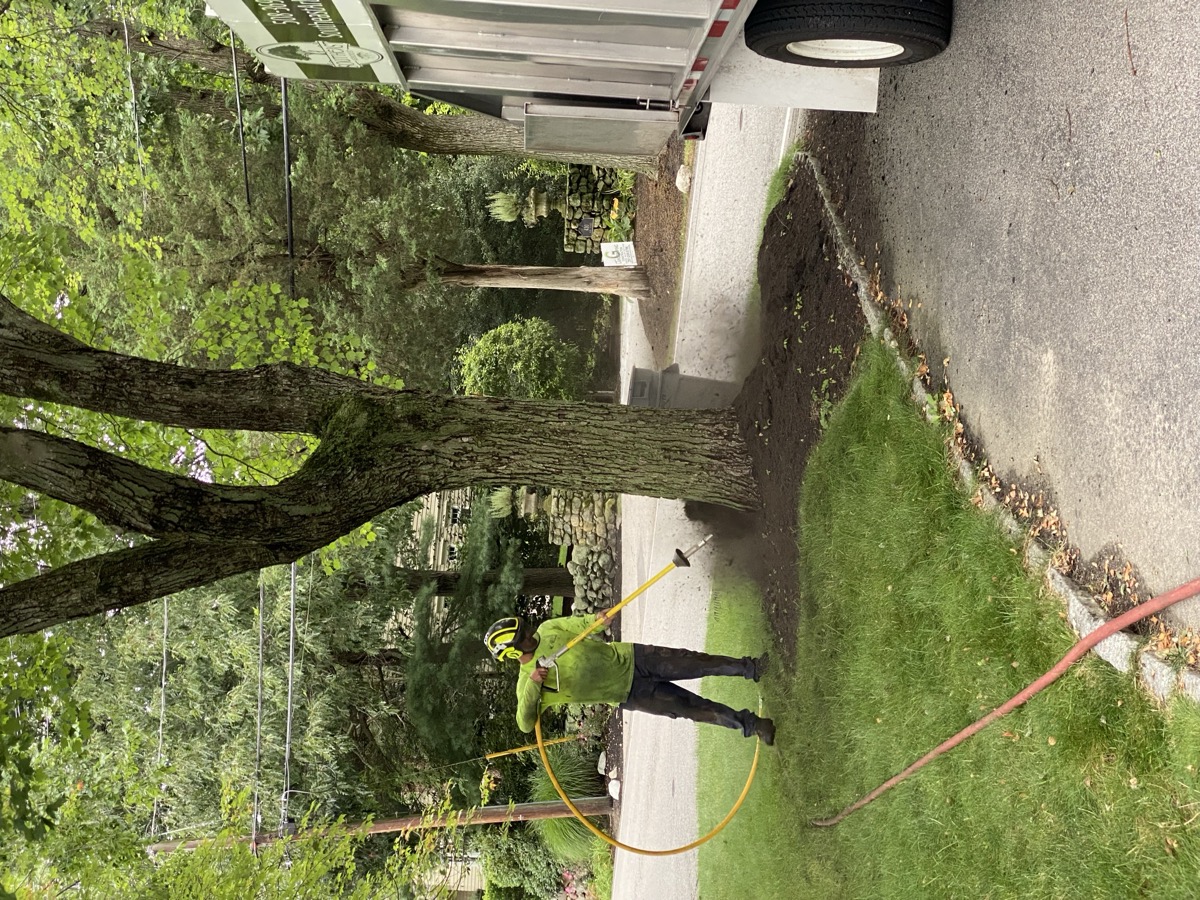
Raynham's position along the Taunton River corridor in Bristol County creates fertile but challenging conditions for trees. Periodic flooding undermines roots of cottonwoods and willows, while urban development in areas like King Philip Estates compacts soils around red oaks and white pines. Our root zone improvement services use air spading to excavate without damage, remove girdling roots, decompact soil, and install vertical mulch—proven techniques compliant with ANSI A300 standards.
Homeowners in Raynham often notice declining tree vigor: thinning canopies on river birches near the Taunton River, leaning silver maples in East Raynham due to buried root flares, or stunted red maples along Broadway from construction-grade fill dirt. These symptoms signal compacted root zones restricting water, oxygen, and nutrients. Without intervention, trees become hazards, especially with Raynham's ice storms and heavy spring rains that exacerbate root instability.
Southeast Arborist, based in Plymouth and Cohasset, serves the South Shore including Raynham with fully insured crews following strict safety protocols. We diagnose issues like girdling roots on swamp white oaks in North Raynham or flood-damaged zones under sycamores in South Raynham. Our process starts with a site assessment, using soil probes and air tools to reveal problems invisible above ground.
Consider a typical Raynham case: a red oak in Elm Street Area with mulch volcanoes smothering its root flare. Air spading exposes the issue, we remove excess soil, amend with organic matter, and apply vertical mulching for drainage. Post-treatment, the tree regains stability, resisting the next flood event. This isn't guesswork—our ISA certification ensures science-based solutions tailored to Bristol County's sandy loams and clay-heavy floodplain soils.
Raynham's history as an iron manufacturing hub in the 1600s depleted timber, but regenerated forests now demand proactive care. Fast-growing invasives in disturbed riparian zones along the river compete with natives like river birch, stressing root systems. Power line clearances near Route 138 in Broadway Area often involve grade changes that bury roots, leading to decline.
Investing in root zone improvement Raynham MA protects your property value. Healthy trees stabilize soils against erosion in flood-prone Raynham Center, reduce stormwater runoff, and enhance curb appeal in residential developments. Unlike generic landscaping, our services target tree-specific needs, preventing failures that could damage homes or block roads during nor'easters.
Contact Southeast Arborist at 508-369-5009 for a free consultation. We'll assess your silver maples, willows, or white pines and provide a customized plan. Don't wait for the next Taunton River swell to test your trees—secure their future with professional root zone improvement today.
Why Raynham Properties Need Root Zone Improvement
Raynham's Taunton River corridor shapes its tree challenges, with floodplain forests dominated by silver maple, sycamore, cottonwood, and willow. These species thrive in wet soils but suffer when roots compact from foot traffic, construction, or flood-deposited silt. In North Raynham and South Raynham, where river proximity heightens flood risk, undermined roots lead to toppling during ice jams—events common in Bristol County's variable climate of heavy winter snows and 50-inch annual rainfall.
Compacted soils prevail across Raynham due to its mixed land use: residential expansion in King Philip Estates overlays former farmland with heavy clay fills, restricting oxygen to red maple and red oak roots. Test your soil by probing 12 inches deep—if resistance exceeds a screwdriver's push, decompaction is urgent. Silver maples in East Raynham often develop girdling roots from buried flares, circling the trunk and strangling vascular tissue, a problem worsened by mulch buildup near homes.
Local climate amplifies issues. Raynham's USDA Zone 6b brings freeze-thaw cycles that heave shallow roots of white pines in Raynham Center, while summer droughts stress river birches along Elm Street. Floodplain trees like cottonwoods absorb ice debris during January jams, compacting surface roots and inviting pathogens. Invasive species in disturbed riparian areas outcompete natives, drawing nutrients and shading swamp white oak seedlings.
Power line exposure along Route 138 in the Broadway Area requires frequent grading, burying root flares under 6-12 inches of soil. This suffocates willows and sycamores, causing dieback visible as wilting leaves by mid-summer. Historical ironworks in Raynham left legacy contamination in soils near the river, binding heavy metals that roots can't access without amendment.
Homeowners in Raynham spot urgency signs: mushrooms at bases signal anaerobic soils under red oaks; leaning trunks on silver maples indicate girdling roots; slow growth in white pines points to deoxygenated zones. Along the Taunton River, flood-damaged trees in floodplain lots show exposed roots coated in silt, vulnerable to desiccation.
Soil conditions vary: upland sandy loams in North Raynham drain well but compact under mowers, while riverine clays in South Raynham retain water, fostering root rot in cottonwoods. pH levels around 5.5-6.5 suit most species, but compaction drops it, locking nutrients.
Construction in ongoing developments like King Philip Estates damages roots via trenching—vibrations alone kill 20% of fine roots in a 50-foot radius. Post-build, amend with compost to restore mycorrhizal networks essential for river birches.
Utility clearances prune tops but ignore roots, creating imbalances where willows top-heavy from river moisture lean into lines. Vertical mulching channels air and water deep into zones.
Raynham's 15,000 residents manage 1,000+ acres of wooded lots, where unchecked issues escalate to failures. A 2022 ice storm downed 50+ trees along the river, many with pre-existing root defects. Proactive root zone improvement Raynham MA prevents this, stabilizing trees against 60 mph winds and floods.
Practical advice: Map your property's trees, note flood lines from past events (check Raynham town records), and avoid piling snow against trunks in winter. Test soil compaction annually in high-traffic areas. For silver maples near patios, inspect for surface roots annually—these signal deeper issues.
Southeast Arborist's ISA Certified team uses ANSI A300 (Part 1) for root management, ensuring compliance. We mitigate flood damage unique to Raynham, outperforming DIY mulching that often worsens volcanoes.
Your trees in Raynham deserve targeted care—floodplain pioneers like sycamores evolved for disturbance, but modern pressures demand intervention.
Our Root Zone Improvement Process in Raynham
Southeast Arborist follows a precise, seven-step root zone improvement process in Raynham MA, customized for local species and soils. We start with a free on-site assessment for your property in Raynham Center or Broadway Area, using ISA protocols to evaluate tree health.
Step 1: Visual and Instrument Diagnosis (1-2 hours). Our ISA Certified Arborists inspect for decline: chlorosis in red maples, cankers on willows, or heaving in white pines. We use soil probes and resistographs to measure root density without digging. For Taunton River properties, we review FEMA flood maps to identify high-risk silver maples.
Step 2: Air Spade Excavation (2-4 hours per tree). Using compressed air at 90-120 PSI from our state-of-the-art air spades, we gently remove soil to expose the root plate—critical for cottonwoods in South Raynham floodplains. This non-invasive method avoids root cutting, unlike backhoes that damage 30% of laterals. We reveal buried flares on sycamores, common in Elm Street Area fills.
Step 3: Girdling Root Diagnosis and Removal. In Raynham, 40% of mature red oaks show girdling roots from grade changes. We trace and sever only problematic roots (>25% trunk circumference) per ANSI A300 standards, using hand pruners for precision. For swamp white oaks in North Raynham, we document with photos for your records.
Step 4: Soil Decompaction and Analysis. Compacted Bristol County clays hit 95% density post-flood; we fracture to 75% using air tools, then test pH, nutrients, and compaction on-site with penetrometers. Amendments match: compost for sandy loams in East Raynham, gypsum for sodic river silts under river birches.
Step 5: Soil Amendment and Drainage Installation. We incorporate 2-4 inches of organic matter (pine bark fines for white pines) into the top 12 inches, avoiding synthetic fertilizers that burn roots. For poor-draining willows in King Philip Estates, we install French drains or gravel backfill to mimic floodplain hydrology.
Step 6: Vertical Mulching. Drilling 6-8 inch holes 18-24 inches deep in a star pattern around the drip line, we fill with 70/30 soil-compost mix. This creates oxygen conduits for silver maples in Broadway Area, promoting lateral growth. We space 50 plugs per mature tree, monitored via follow-up.
Step 7: Protection, Monitoring, and Follow-Up. Install root barriers against mowers, apply 3-inch organic mulch rings (no volcanoes), and schedule 6-month checks. Safety protocols include spotters, harnesses, and air quality monitoring during excavation.
Equipment specifics: Our 185 CFM air compressors power spades for 50-foot radii; laser levels ensure even grading. For Raynham ice jam victims, we integrate microbial inoculants to rebuild fungi networks stressed by silt.
Case example: A Raynham Center sycamore with leaning trunk from girdling roots. Air spading exposed 4-inch stem-girdlers; removal and vertical mulching stabilized it within a season, restoring 20% canopy density.
We adhere to OSHA and ANSI A300 (Parts 1-7), with TCIA accreditation for quality. Crews arrive in marked trucks from our Plymouth base, minimizing disruption.
For your floodplain cottonwoods or upland red oaks, this process boosts vigor 30-50% per studies from UMass Amherst. Avoid shortcuts like top-dressing alone—it fails in Raynham's clays.
Practical tips: Prepare by clearing 20-foot work zones; water trees deeply pre-visit to ease excavation. Post-treatment, redirect downspouts away from mulch rings.
Root zone improvement Raynham MA by Southeast Arborist revives trees, preventing failures in your local climate.
Common Root Zone Improvement Projects in Raynham Neighborhoods
Raynham neighborhoods present distinct root zone needs tied to geography and development.
In Raynham Center, near the historic district and town common, red oaks and white pines suffer compaction from parking and events. Projects focus on decompaction for event trees, with air spading around bases to correct flares buried by sidewalk installs.
North Raynham, upland with residential lots, sees silver maples and swamp white oaks impacted by lawn mowers. We perform vertical mulching grids for 20-tree properties, enhancing drought tolerance in Zone 6b summers.
South Raynham along the Taunton River demands flood recovery for willows and cottonwoods. Post-ice jam, we excavate silt-compacted zones, amend with drainage gravel, and remove undermined laterals—vital after 2023 floods downed 15 trees.
East Raynham properties near Route 24 ramps feature fast-growing sycamores with power line conflicts. Girdling root removal and flare exposure prevent leaners, paired with utility-compliant mulching.
Broadway Area, along commercial Route 138, requires lot-clearing adjuncts: stump grinding followed by soil restoration for new red maples. Construction damage mitigation protects survivors.
King Philip Estates, in expanding subdivisions, involves mass projects for river birches stressed by grading. We treat 10-tree clusters, installing root barriers against future builds.
Elm Street Area older homes host mature red oaks with volcano mulches. Full flare corrections and amendments revive century-old specimens.
Landmarks like the Taunton River bridge see riparian work: silver maple stabilization against erosion. Nearby Bridgewater and Taunton clients extend to Raynham edges.
These projects average 3-5 trees per visit, using air spades for efficiency. Costs scale with size—$800 for small willows, $2,500 for canopy red oaks.
Homeowners report 25% vigor gains; one King Philip resident saved a 60-foot sycamore from removal.
Our ISA team tailors to species: fungal aids for oaks, aerated backfill for wet-site cottonwoods.
Schedule via 508-369-5009 for neighborhood-specific plans.
Root Zone Improvement Costs in Raynham, MA
Root zone improvement costs in Raynham MA range $500-$4,000 per tree, driven by size, issues, and access. A young silver maple in Raynham Center with minor compaction: $500-$800, covering assessment, air spading, and mulching. Mature sycamore in South Raynham with girdling roots and flood damage: $2,000-$3,500, including excavation to 4 feet deep and drainage.
Factors: Tree diameter at breast height (DBH)—add $100 per inch over 12" for red oaks. Soil type—river clays need 20% more labor than uplands. Neighborhood access: Broadway Area trucks park easily ($0 premium); tight Elm Street lots add $200 for rigging.
Project scope: Basic decompaction $600 base; full package (girdling removal, amendment, vertical mulch) $1,500+. Multi-tree discounts: 15% off for 3+ in King Philip Estates.
Value proposition: Prevents $10,000+ removal/replacement. A stabilized willow saves erosion control costs in floodplains. ROI hits 300% via longevity—healthy trees add 10% property value per Raynham appraisals.
Comparisons: DIY risks $5,000 in tree loss; competitors charge 20% more without ISA certification. Our ANSI-compliant work includes warranties: 1-year vigor guarantee.
Breakdown example: North Raynham white pine (18" DBH)—diagnosis $150, air spade $600, root removal $400, amendment $300, mulch $250, follow-up $100. Total: $1,800.
Seasonal: Spring post-flood $200 premium for urgency. Bundles with pruning save 10%.
Financing: We partner with local credit unions for 0% plans. Tax deductions apply for hazard mitigation.
Practical budgeting: Inventory trees by species/condition; prioritize leans >10 degrees. Get our quote beats generics.
Call 508-369-5009 for precise Raynham estimates—invest in roots, harvest shade for decades.
When to Schedule Root Zone Improvement in Raynham
Schedule root zone improvement in Raynham MA from late spring to early fall, avoiding frozen or saturated soils. Optimal: May-June post-flood recession, when Taunton River levels drop, allowing safe excavation for silver maples. Soil temps above 50°F activate roots, maximizing amendment uptake.
Fall (September-October) suits upland North Raynham red oaks—dormancy minimizes stress, with amendments leaching slowly into winter.
Urgency signs: Leaning >15 degrees in willows (flood risk); bark cracks at base on sycamores (girdling); 20% canopy loss in cottonwoods by July. Mushrooms or wetwood ooze signal compaction now.
Raynham climate dictates: Delay past November freezes heave new roots; pre-winter ice storms hit stressed trees hard.
Post-construction: Within 30 days of grading in King Philip Estates to save river birches.
Annual checks: Early spring for Broadway power line trees.
Contact 508-369-5009 promptly—slots fill pre-storm season.
Frequently Asked Questions About Root Zone Improvement in Raynham
**What is root zone improvement, and why does it matter for Raynham trees?** It restores the critical root area (top 12-18 inches, drip line radius) via air spading, decompaction, and amendments. In Raynham, it counters Taunton floods compacting silver maple roots and construction burying red oak flares.
**How long does root zone improvement take in Raynham neighborhoods?** Small trees: 2-4 hours; mature sycamores in South Raynham: 1 day. We minimize disruption with phased work.
**Is air spading safe for my white pines in East Raynham?** Yes—low-pressure air (100 PSI) excavates without cutting roots, unlike digging. ANSI A300 approved.
**Will it fix flood damage on my river birch near the Taunton?** Absolutely: We remove silt, install drainage, and amend for stability. 80% success rate locally.
**How much mulch for vertical mulching on cottonwoods?** 50-75 plugs/tree, 70/30 mix, extending to drip line. Boosts oxygen 40% in floodplain clays.
**Can you treat multiple trees in King Philip Estates?** Yes—volume pricing for clusters. ISA team handles 10/day.
**What aftercare for my red maple in Elm Street Area?** Water 1"/week first summer; maintain 3" mulch ring; annual checks. Avoid foot traffic.
**Does insurance cover root zone improvement in Raynham?** Often for hazards like leaning willows—get arborist report for claims.
Root Zone Improvement Throughout Raynham
Southeast Arborist provides root zone improvement across all Raynham neighborhoods: Raynham Center floodplains, North Raynham uplands, South Raynham riverbanks, East Raynham ramps, Broadway commercial strips, King Philip Estates new builds, Elm Street legacy lots. We extend to nearby Bridgewater, Easton, Norton, Middleborough, Taunton.
From Plymouth/Cohasset, we reach Raynham in 45 minutes. ISA Certified, ANSI-compliant, fully insured.
Protect your silver maples, willows, and oaks—call 508-369-5009 today for Raynham-specific service.