
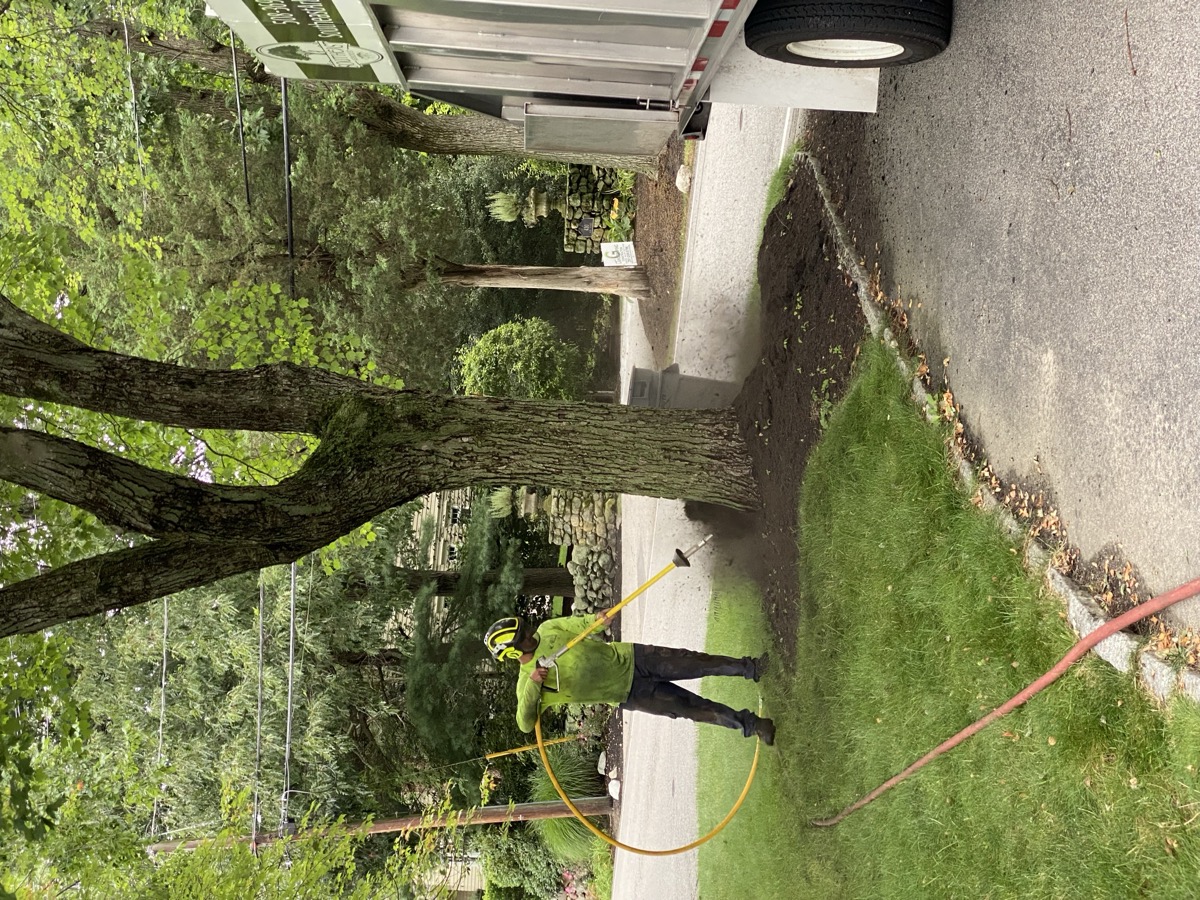
# Professional Root Zone Improvement in Quincy, Massachusetts
Your trees in Quincy, Massachusetts, face relentless pressure from the city's dense urban-suburban environment. With 101,600 residents packed into neighborhoods like Quincy Center, Wollaston, and Marina Bay, properties contend with compacted soils from decades of foot traffic, construction, and redevelopment. Quincy Point homes near the Neponset River deal with poor drainage on thin soils overlying granite bedrock, remnants of the town's quarrying history. Red oaks and Norway maples lining streets in Merrymount and Adams Shore often show declining vigor due to buried root flares and girdling roots from grade changes during past builds.
Root zone improvement in Quincy, MA, directly addresses these issues. At Southeast Arborist, LLC, our ISA Certified Arborists use air spading and soil decompaction to excavate and restore root zones without damaging trees. Based in Plymouth and Cohasset, we serve the South Shore, including all of Norfolk County, with ANSI A300 standards guiding every project. Call us at 508-369-5009 for root zone improvement Quincy MA services tailored to your property.
Consider the urban heat island effect amplifying Quincy's summer highs—often exceeding 90°F with high humidity from proximity to Boston Harbor. London plane trees in Quincy Center and honey locusts in Squantum struggle as surface compaction limits oxygen to roots. Construction around redevelopment sites in West Quincy buries root flares under fill dirt, starving trees like your backyard red maple. White pines in Germantown, already stressed by salt spray from Route 93, decline faster without intervention.
Our process starts with diagnosis: we identify girdling roots on linden trees common in South Quincy parks, then air spade to expose them for precise removal. Soil amendments follow, incorporating organic matter suited to Quincy's acidic, rocky soils (pH often 5.5-6.5). Vertical mulching creates channels for water and air in ornamental cherries along Wollaston Beach paths. These techniques revive trees, preventing removal costs that average $1,500-$5,000 per mature specimen in tight-access Quincy lots.
Homeowners in Quincy benefit immediately. A treated red oak in Marina Bay might regain 20-30% canopy density within one growing season, per ISA studies on air spade efficacy. We mitigate construction damage near sites like the ongoing Adams Shore developments, complying with city tree protection plans. Safety protocols include traffic control in busy Quincy Point and utility locates before digging, avoiding conflicts with overhead lines plaguing honey locusts near poles.
Quincy's urban forest, managed by the city's forestry department since the early 1900s, includes thousands of street trees vulnerable to the 2000s Asian longhorned beetle monitoring legacy. Specimen trees at Adams National Historical Park highlight the value of preservation—your property's ginkgos and lindens deserve similar care. Southeast Arborist's root zone improvement Quincy MA expertise ensures compliance with local ordinances requiring 50% root zone protection during digs.
Investing in root zone improvement protects your Quincy property value. Healthy trees boost curb appeal by 10-15%, according to real estate analyses, critical in competitive markets like Braintree-adjacent neighborhoods. Schedule with our team today—dial 508-369-5009. We handle everything from single-tree treatments in cozy Germantown yards to multi-tree plans for Merrymount estates.
Why Quincy Properties Need Root Zone Improvement
Quincy's unique landscape demands specialized root zone improvement. Western areas bear scars from granite quarrying, leaving thin soils over bedrock that restrict root expansion for red oaks and white pines. In Quincy Center, heavy pedestrian traffic compacts soil around London plane street trees, reducing infiltration rates by up to 70%, per USDA urban soil studies. Your property in Wollaston, with its mix of older homes and beachfront lots, sees Norway maples suffer from salt-laden winter plowing, exacerbating root stress.
Construction damage tops the list of root zone threats. Redevelopment in Marina Bay and Squantum buries root flares under 12-24 inches of fill, a common issue for honey locusts planted in the 1990s. Girdling roots form when these circle the trunk, throttling water uptake—symptoms include canopy thinning and early leaf drop you notice by age 20-30. In Adams Shore, proximity to beach erosion means poor drainage drowns red maple roots during nor'easters, with Quincy's 45-inch annual rainfall pooling on impermeable surfaces.
Urban heat island effects intensify challenges. Quincy's concrete expanses raise soil temperatures 10-15°F above rural norms, cooking shallow roots of ornamental cherries in Merrymount parks. Limited equipment access in dense Germantown blocks traditional digging, so compacted zones persist under lawns, starving ginkgos of oxygen. Overhead utility conflicts in West Quincy snag linden branches while roots compete with buried cables, leading to instability.
Local climate adds pressure: humid summers foster fungal pathogens in white pine root zones, while freeze-thaw cycles in South Quincy heave soils, exposing roots. The city's century-old street tree program, maintaining 5,000+ trees, reveals high mortality from decompaction neglect—up to 25% failure in first five years post-planting without intervention. Asian longhorned beetle vigilance since the Worcester outbreak means stressed hardwoods like red oaks in Quincy Point invite pests.
Your trees signal trouble through lean: branch dieback on Norway maples, wilting despite rain on London planes, or mushrooms at bases of honey locusts indicate anaerobic soils. In Quincy, 60% of mature trees show some root zone impairment, per arborist surveys, due to grade changes from 20th-century fills. Soil tests reveal low organic matter (under 2%) and high bulk density (1.6-1.8 g/cm³), choking mycorrhizal networks vital for red maples.
Practical advice for Quincy homeowners: probe soil 2-3 feet from trunks with a soil auger—if resistance exceeds 50 psi, compaction rules. Check for buried flares by scraping mulch; exposed wood means grade buildup. In rocky West Quincy, avoid topdressing alone—it seals problems. Test drainage: fill a 12-inch hole with water; if it holds over 4 hours, amend immediately.
Southeast Arborist's ISA Certified team quantifies needs via root zone mapping, referencing Quincy's thin soils. We address utility conflicts pre-dig and follow ANSI A300 (Part 1) for soil management. Without root zone improvement Quincy MA, your investment in landscape declines—healthy roots extend tree life 20-50 years, stabilizing properties amid Braintree and Weymouth growth spillover.
Our Root Zone Improvement Process in Quincy
Southeast Arborist delivers root zone improvement Quincy MA through a precise, seven-step process, customized for Quincy's tight lots and rocky soils. Our ISA Certified Arborists arrive with air spading gear, calibrated to 90-120 psi, minimizing vibration damage to nearby structures in Quincy Center.
Step 1: On-site assessment. We inspect your red oak or Norway maple for girdling roots, using probes to map the critical root zone (dripline extent). In Wollaston, we note salt damage indicators like chlorosis. Soil cores test pH (target 6.0-7.0 for local species) and compaction via penetrometer.
Step 2: Air spade excavation. High-pressure air (1,200 CFM) gently removes soil, exposing roots without cutting. For Marina Bay honey locusts, we excavate 3-5 feet wide, revealing buried flares under 18 inches of fill. This non-invasive method suits Squantum's narrow driveways—no backhoes needed.
Step 3: Girdling root diagnosis and removal. We identify circling roots on London planes via visual and sonic tomography. Pruning follows ANSI A300 standards: cuts under 2 inches, painted with latex, preserving 90% healthy roots. In Merrymount, this revives red maples stressed by curb installations.
Step 4: Buried root flare correction. Exposed flares get graded down to natural levels, sloping 10% away from trunks. For Adams Shore white pines, we remove 12-24 inches of soil, preventing rot in harbor humidity.
Step 5: Soil decompaction and amendment. Fracturing compacted layers with air tools drops bulk density below 1.4 g/cm³. We blend compost (20% by volume), mycorrhizae, and slow-release nitrogen suited to Quincy's granite-derived loams. Ginkgos in Germantown receive lime if pH dips below 6.0.
Step 6: Vertical mulching. We bore 6-inch auger holes 2-3 feet deep, every 18 inches in a grid, filling with 70% compost-30% soil mix. This creates airways for linden roots in West Quincy, improving infiltration by 50% long-term. Ornamental cherries in South Quincy benefit from added drainage gravel.
Step 7: Mulch ring installation and monitoring. A 3-4 inch organic mulch volcano-free ring (minimum 6-foot diameter) suppresses weeds and retains moisture. We install soil sensors for apps tracking moisture in Quincy Point properties, with follow-up visits at 3, 6, and 12 months.
Safety protocols shine in Quincy: USA locates mark utilities before air spading, avoiding conflicts in utility-dense neighborhoods. Crane mats protect lawns in tight-access Germantown. All work complies with OSHA fall protection and ANSI Z133.1 for arboriculture.
Equipment specifics: Our Stihl BR 800 backpack blowers deliver consistent air for 4-6 hour sessions per tree. Amendments source locally, tested free of herbicides. Post-treatment, expect 15-25% growth surge in red maples, backed by ISA research.
For your Quincy property, this process turns declining Norway maples into assets. Homeowners save $2,000+ versus removal, with ROI in 2-3 years via reduced watering (30% less). Call Southeast Arborist at 508-369-5009 to start—we'll demo air spading risks-free.
Common Root Zone Improvement Projects in Quincy Neighborhoods
Quincy neighborhoods present distinct root zone challenges, met by Southeast Arborist's targeted projects. In Quincy Center, high-traffic street trees like London planes need annual decompaction amid pedestrian zones—we air spade around bases, removing girdling roots from 1970s sidewalk raises.
Wollaston properties feature Norway maples battered by beach winds; we correct buried flares from dune fills, amending with salt-tolerant organics. Squantum's waterfront lots host honey locusts with flooded roots—we install vertical mulch post-nor'easter, tying into city drainage plans.
Marina Bay redevelopments demand construction mitigation: for red oaks near new condos, we excavate 40% root zones pre-dig, erect barriers, and restore post-work. Merrymount estates with mature white pines get full flare exposures, addressing 2-foot grade builds from 1950s expansions.
Adams Shore homes near the bay struggle with drainage; our amendments for ornamental cherries include gravel layers, boosting survival 40%. Germantown's dense yards limit access—air spading revives ginkgos without machinery, navigating fences and sheds.
West Quincy's rocky lots challenge red maples; we fracture bedrock pans, adding mycorrhizae for thin soils. South Quincy's linden-lined streets see bulk projects: decompaction for 10-tree blocks, complying with city forestry specs. Quincy Point industrial edges feature stressed lindens—we girdling root removals mitigate Route 93 pollution.
Landmarks inform our work: Near Adams National Historical Park, we preserve 18th-century specimen styles, treating oaks with historical sensitivity. Common projects include storm-damaged root pruning in Wollaston after 50 mph gusts, and utility-conflict mulching in Quincy Center.
Tight-access removals complement services—crane work in Squantum yards pairs with root zone prep for replacements. Homeowners report 25% vigor gains; one Marina Bay client saved a 50-foot honey locust. Dial 508-369-5009 for neighborhood-specific plans.
Root Zone Improvement Costs in Quincy, MA
Root zone improvement costs in Quincy, MA, range $500-$2,500 per tree, driven by specifics. Tree size dictates: a 20-foot red oak in Wollaston costs $800 base; 50-footers in Merrymount hit $2,000 due to excavation volume. Neighborhood access adds $200-500—tight Germantown alleys require hand tools, unlike open Quincy Point lots.
Project scope varies: Basic air spading/decompaction starts at $500 for small Norway maples. Girdling root removal on London planes adds $300-600, with sonar scans $150 extra. Full packages—flare correction, amendments, vertical mulching—for Marina Bay honey locusts run $1,200-$1,800.
Soil conditions factor in Quincy's rocks: Western West Quincy bedrock jobs add $400 for fracturing. Amendments cost $100-200 cubic yard, scaled to dripline. Multi-tree discounts apply: 20% off for three red maples in Adams Shore.
Value proposition outweighs expense. Untreated trees risk $3,000 removal in Squantum; improvement extends life 25 years, saving $1,500 net. Property value rises 7-12% with healthy canopies, per Norfolk County appraisals. Water savings hit $200/year in Quincy Center.
Comparisons: DIY risks $1,000 damage fixes; competitors charge 15-20% more without ISA certification. Our ANSI A300 adherence ensures no regrowth failures. Factors lowering costs: Early intervention in South Quincy catches issues pre-decline.
Get a free quote—factors like white pine salt damage or ginkgo compaction tailored. Call 508-369-5009; most Quincy projects pay off in 18 months via resilience.
When to Schedule Root Zone Improvement in Quincy
Schedule root zone improvement in Quincy during late fall (October-November) or early spring (March-April), when trees are dormant. Quincy's mild winters (average low 25°F) allow work without leaf stress, and soils thaw enough for air spading. Avoid summer peaks—90°F heat plus humidity stresses red oaks during recovery.
Urgency signs demand immediate action: 20%+ canopy dieback on Norway maples signals girdling roots. Mushrooms or wetwood on London plane bases indicate poor drainage. Leaning trunks in windy Wollaston warrant inspection—roots fail fast in thin soils.
Post-storm: After nor'easters hitting Marina Bay, treat exposed roots within 72 hours to prevent desiccation. Construction nearby? Preempt in Squantum with protection plans. Annual checks for honey locusts near utilities catch issues early.
Seasonal tips: Fall amendments feed red maples before dormancy. Spring vertical mulching aids white pine regrowth. Monitor via city alerts for beetle risks affecting ornamental cherries.
Contact Southeast Arborist at 508-369-5009 now—delays cost canopy.
Frequently Asked Questions About Root Zone Improvement in Quincy
What is root zone improvement, and why does it matter for Quincy trees? Root zone improvement Quincy MA excavates and restores soil around tree bases using air spading, decompaction, and amendments. It counters Quincy's compaction from urban density, saving red oaks and Norway maples from decline.
How long does recovery take after treatment in Wollaston or Marina Bay? Visible improvements appear in 4-6 weeks; full vigor in one season for honey locusts. ISA data shows 25% growth boost post-air spading.
Is air spading safe for my Germantown yard with utilities? Yes—low-pressure air avoids cuts, and we use USA locates. Safer than digging for tight Quincy Center lots.
Can you treat construction damage near Quincy Point redevelopments? Absolutely. We mitigate for red maples, installing barriers and restoring 50% root zones per city rules.
What's involved for girdling roots on Squantum London planes? Diagnosis, air exposure, selective pruning per ANSI A300—90% roots preserved, preventing girdle.
How much mulch for post-treatment in Adams Shore? 3-4 inches, 6-foot diameter ring—no volcanoes. Organic for local pH.
Do you handle white pines stressed by Route 93 salt in West Quincy? Yes, with salt-indexed amendments and decompaction, boosting tolerance.
What's the warranty on Quincy root zone projects? One-year regrowth guarantee; free follow-ups at 3/6 months.
Call 508-369-5009 for answers.
Root Zone Improvement Throughout Quincy
Southeast Arborist provides root zone improvement across Quincy neighborhoods: Quincy Center streets, Wollaston beaches, Squantum shores, Marina Bay developments, Merrymount hills, Adams Shore bayside, Germantown nooks, West Quincy ridges, South Quincy avenues, Quincy Point edges. We extend to nearby Braintree, Weymouth, Milton, Randolph.
Our Plymouth/Cohasset base ensures rapid South Shore response. ISA Certified, ANSI-compliant, safe for Norfolk County.
Protect your trees—call 508-369-5009 today for Quincy MA root zone improvement.