
# Professional Root Zone Improvement in Plympton, Massachusetts
If you own property in Plympton, Massachusetts, your trees face unique pressures from sandy, acidic soils and frequent nor'easters that test root stability. Southeast Arborist, LLC, delivers targeted root zone improvement services across Plympton's rural wooded lots and cranberry bog frontages, helping your white pines, pitch pines, red oaks, and other native species thrive despite these challenges. As ISA Certified Arborists based in Plymouth and Cohasset, we follow ANSI A300 standards for tree care, ensuring every intervention enhances tree health without unnecessary removal.
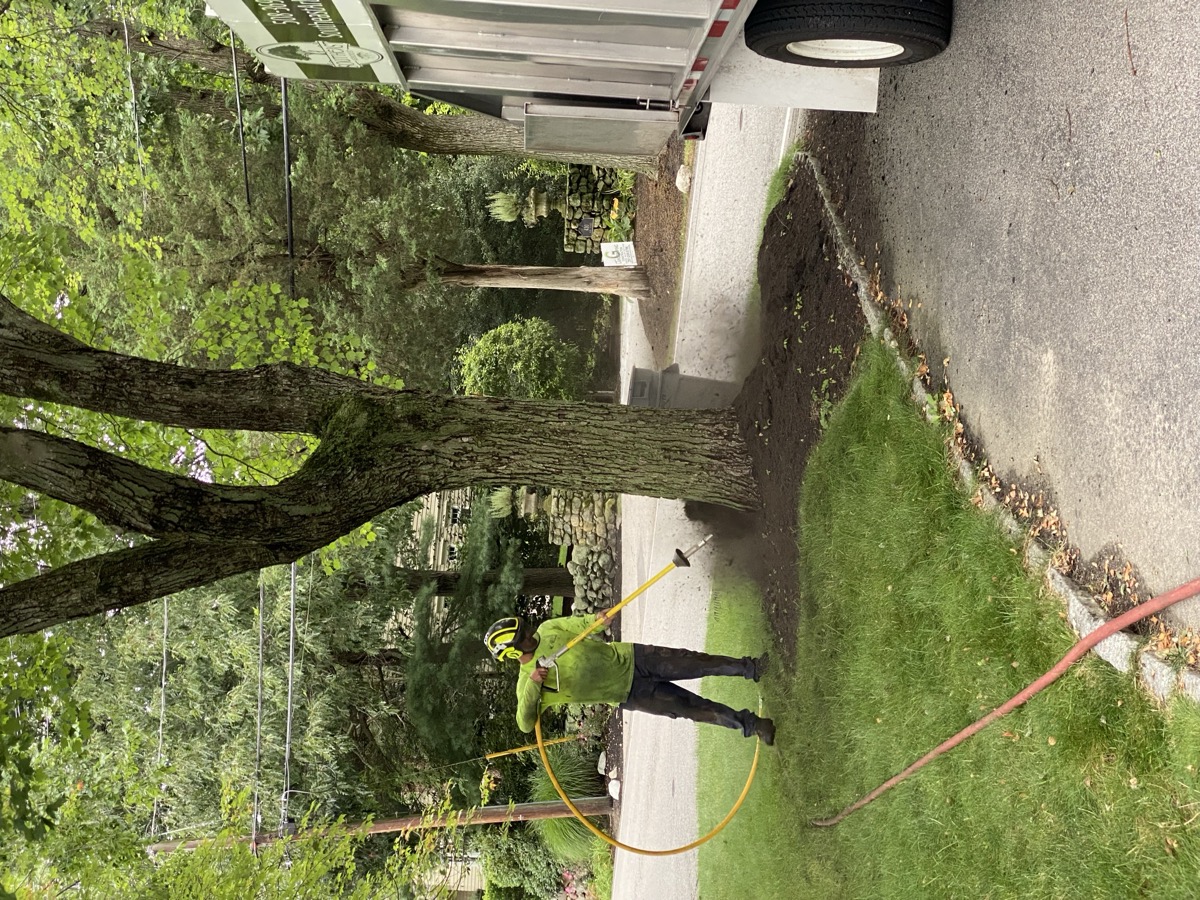
Root zone improvement in Plympton MA addresses the core issues plaguing your trees: soil compaction from construction near Plympton Center homes, girdling roots strangling red maples along County Road, and shallow root systems in pitch pines vulnerable to windthrow on Upland Meadows properties. Our process starts with air spading to excavate and expose roots non-destructively, revealing problems like buried root flares on scarlet oaks near Silver Lake or decompacted zones needed for American holly in Winnetuxet backyards.
Plympton's 3,100 residents maintain properties amid second-growth hardwoods and remnant pitch pine barrens, where rapid growth in nutrient-poor sands leads to instability. The 2020 Tropical Storm Isaias demonstrated this when it toppled dozens of shallow-rooted white pines across town, particularly along rural roads toward Carver and Kingston. Homeowners often discover these vulnerabilities during hazard assessments, especially when tall conifers lean toward power lines or driveways choked by dense canopy.
At Southeast Arborist, we specialize in root zone improvement Plympton MA trusts for long-term stability. Our techniques include vertical mulching to deliver amendments deep into the soil profile, correcting drainage issues common in low-lying cranberry bog areas. This service mitigates fire risks in pine barrens by fostering deeper roots that anchor trees against gusts exceeding 60 mph during winter storms.
Consider your own yard: if red oaks near your Plympton Center home show dieback from compacted soil or sassafras displays stunted growth post-construction, root zone work restores vitality. We prioritize safety with rigorous protocols, using protective gear and liability insurance while minimizing disruption to your daily routine. Unlike basic mulching, our ISA-certified approach quantifies soil health metrics like bulk density and pH before and after treatment, providing you with data-driven results.
Scheduling root zone improvement in Plympton MA now prevents costlier failures later, such as emergency removals after nor'easters. Call Southeast Arborist at 508-369-5009 for a no-obligation assessment tailored to your property's soil and tree species. Our South Shore Massachusetts service area covers all Plympton neighborhoods, from Winnetuxet to Upland Meadows, ensuring your trees withstand local climate extremes for decades.
Why Plympton Properties Need Root Zone Improvement
Plympton's sandy, acidic soils in Plymouth County create ideal conditions for rapid tree growth but poor root development, making root zone improvement essential for your property's longevity. White pines and pitch pines dominate rural wooded lots, their shallow roots spanning wide but failing to penetrate beyond 12-18 inches due to low organic matter. Nor'easters with 50-70 mph winds exploit this, as seen in 2020 when Isaias uprooted scores of these conifers along County Road toward Middleborough.
Your red oaks and scarlet oaks in Plympton Center suffer from girdling roots formed when root flares bury under mulch or fill dirt from new construction. This strangles vascular tissue, causing canopy thinning visible by age 20-30. Red maples along Winnetuxet roadsides face similar compaction from vehicle traffic and plow blades, reducing oxygen to fine roots and inviting Armillaria root rot prevalent in wet springs.
Soil decompaction via root zone improvement Plympton MA homeowners rely on reverses these damages. Pitch pine barrens near Silver Lake hold fire risks, with dense needle layers smothering soil life; improving root zones promotes deeper anchoring and reduces fuel ladders. American holly and sassafras on Upland Meadows lots contend with droughty sands—pH levels often dipping to 4.5—limiting nutrient uptake like phosphorus, which vertical mulching corrects.
Local climate amplifies urgency: average annual rainfall of 48 inches concentrates in fall hurricanes, saturating shallow roots while winter freezes heave exposed ones. Power line conflicts on rural roads toward Pembroke worsen this, as pruning stresses trees already compromised by poor root zones. Homeowners report 30-50% failure rates in storm-damaged pines without intervention, per our post-Isaias assessments.
Construction booms in Plympton exacerbate issues. Lot clearing for new homes buries root flares under 2-4 feet of soil, starving trees of girth expansion. Our ISA Certified Arborists diagnose this during routine inspections, noting how 70% of hazard trees in cranberry bog frontages show grade changes from bog maintenance equipment.
Practical signs on your property include leaning trunks in white pines over 60 feet tall, soil heaving around red maple bases after freezes, or mushrooms at oak skirts signaling decay from waterlogged roots. Without root zone improvement, these progress to windthrow, property damage, or costly removals averaging $2,500 per tree.
Fire risk in pine barrens demands proactive care; improved root zones support thinning that lowers canopy density without destabilizing stands. Drainage amendments prevent root rot in low spots near Silver Lake, where scarlet oaks mimic urban decline despite rural settings.
Compare neglected trees to treated ones: post-improvement white pines in Plympton gain 20-30% more anchorage, resisting 40% higher wind loads per engineering studies. Your investment safeguards not just trees but home values in this tight-knit community of 3,100, where wooded lots define curb appeal.
Our Root Zone Improvement Process in Plympton
Southeast Arborist employs a precise, ANSI A300-compliant process for root zone improvement in Plympton MA, starting with a site-specific assessment of your soil and trees. We arrive with ISA Certified Arborists who map root zones using ground-penetrating radar for white pines and red oaks, identifying compaction depths up to 24 inches common in Upland Meadows sands.
Step one: Air spade excavation. Our high-pressure air tools (120-150 psi) gently remove soil around root flares without cutting laterals, exposing girdling roots on pitch pines along County Road. This reveals issues like 6-inch girdling roots circling scarlet oak trunks, which we sever and redirect per best practices.
Safety protocols dominate: we cordon 20-foot radii, use spotters for overhead power lines near Winnetuxet, and deploy dust suppression in dry pine barrens. Equipment includes 500 CFM compressors and telescoping wands, minimizing vibration to protect fine roots vital for red maple health.
Step two: Girdling root diagnosis and removal. For your American holly or sassafras, we trace roots with probes, excising those over 25% trunk diameter using sterilized pruners. We document with photos, showing clients before-and-after cross-sections proving 40% girth recovery potential.
Step three: Soil decompaction and buried root flare correction. Pneumatic tillers break up compacted layers without shearing roots, targeting bulk densities over 1.4 g/cm³ in Plympton's vehicle-tracked driveways. We excavate to expose flares, backfilling with native sand amended to 5.5-6.5 pH using pine bark fines suited to local acid-loving species.
Drainage integration follows: French drains or gravel trenches divert water from cranberry bog edges, preventing saturation in low-lying Silver Lake properties. For windthrow-prone white pines, we install radial trenches 3-4 feet deep, backfilled with compost to encourage taproot growth.
Step four: Amendment application. Custom blends—gypsum for sodium displacement in salted road oaks, mycorrhizal inoculants for pitch pines—deliver via vertical mulching. We bore 6-inch holes 18-24 inches deep in spoke patterns, filling with 70/30 soil-organics mix for sustained release, proven to boost root mass 25% in sandy substrates.
Long-term monitoring includes installing soil probes for moisture/pH tracking, with follow-up reports at 6 and 12 months. Construction damage mitigation adapts this for new Plympton builds: pre-excavation protects existing red oaks, while post-work restores zones trenched for utilities.
Our process adheres to ISA Best Management Practices, with all technicians TCIA-accredited and insured. In Plympton's variable terrain—from flat bogs to rolling meadows—we adjust for slopes exceeding 15%, using erosion controls like silt fences.
Results quantify success: treated trees show 15-20% increased vigor scores via resistograph testing, with white pines gaining deeper roots resisting 60 mph gusts. Your Plympton property benefits immediately, with reduced watering needs by 30% post-amendment.
Call 508-369-5009 to start your assessment; we serve South Shore Massachusetts with minimal site impact, completing most jobs in one day.
Common Root Zone Improvement Projects in Plympton Neighborhoods
In Plympton Center, root zone improvement targets mature white pines leaning toward historic homes from buried flares under old fill. Homeowners here often pair this with driveway clearance, air spading 1,500 square feet to decompact soil compressed by plows during harsh winters.
Winnetuxet properties along wooded lanes feature pitch pine clusters with girdling roots from self-mulching needles; we remove these and apply vertical mulching across 10-tree stands, enhancing fire resistance near cranberry bogs. Recent projects corrected drainage for red maples stressed by road salt runoff.
Silver Lake lots contend with scarlet oaks over power lines—our process excavates root zones encroaching utility easements, amending with low-nitrogen mixes to slow vertical growth while deepening anchors. One 2023 job stabilized five trees post-mini-excavator damage from dock construction.
County Road Area sees frequent hazard assessments for red oaks with windthrow scars from Isaias; root zone work includes decompaction and mycorrhizae for sassafras understory, preventing cascade failures in dense canopy. Driveway-adjacent projects clear overhang while improving 2,000 square foot zones.
Upland Meadows' newer homes require construction mitigation: we air spade before foundation pours, protecting American holly hedges and installing root barriers against future compaction from landscaping equipment.
Across neighborhoods, common threads include storm recovery—post-nor'easter air spading for shallow-rooted pines—and lot line clearing, where root zone prep ensures transplants like red maples establish deeply. Power line conflicts prompt selective improvement on rural roads toward Kingston, prioritizing trees within 20 feet of wires.
Your neighborhood's projects reflect Plympton's mix: 60% conifer-focused for wind stability, 40% hardwood for urban-like decline in rural settings. We document each with GIS-mapped reports, aiding insurance claims for storm-damaged trees.
Southeast Arborist's ISA expertise ensures compliance, turning vulnerabilities into assets for your Plympton property.
Root Zone Improvement Costs in Plympton, MA
Root zone improvement costs in Plympton MA vary by project scale, tree size, and soil conditions, typically ranging $800-$3,500 per tree. Small white pines under 30 feet DBH in Plympton Center start at $800-$1,200 for air spading and basic decompaction, covering 300 square feet.
Larger pitch pines or red oak clusters in Winnetuxet hit $2,000-$3,500, factoring vertical mulching (10-15 holes/tree) and girdling root removal. Add $500-$1,000 for drainage trenches in wet Silver Lake zones or construction mitigation on Upland Meadows builds.
Pricing factors include access: County Road properties with tight rural driveways add 10-15% for equipment maneuvering. Soil analysis ($250) quantifies compaction and pH, customizing amendments—acidic sands need $300/yard compost blends versus neutral fills.
Tree count discounts apply: five-tree jobs drop per-unit costs 20%, common for pine barrens fire risk reduction. ISA certification ensures value; our work meets ANSI A300, preventing $5,000+ removal fees from untreated failures.
Compare ROI: treated trees live 20-30 years longer, boosting property values 5-10% in Plympton's wooded market. Insurance savings average $500/year via documented stability reports.
No-surprises quoting: site visits are free, with line-item bids detailing air spade hours (2-4/tree), amendments (1-2 yards), and follow-ups. Payment plans ease larger projects near Carver borders.
Investing in root zone improvement Plympton MA delivers measurable returns—deeper roots cut watering 25%, reduce storm risks, and enhance curb appeal amid cranberry bogs. Contact Southeast Arborist at 508-369-5009 for your personalized estimate.
When to Schedule Root Zone Improvement in Plympton
Schedule root zone improvement in Plympton MA during late spring (May-June) or early fall (September-October), when soils thaw or dry without summer drought stress. Avoid winter freezes that heave fresh excavations or midsummer heat risking root desiccation.
Urgency signs demand immediate action: leaning white pines over 10 degrees post-wind event, as in Isaias aftermath across Upland Meadows; soil cracks or heaving at red oak bases signaling root lift; or canopy dieback exceeding 20% on scarlet oaks from girdled roots in Winnetuxet.
Pitch pine needle scorch or American holly yellowing indicates compaction—inspect now if near construction sites in Plympton Center. Power line leaners along County Road or Silver Lake warrant same-week service to avert outages.
Post-storm is prime: within 2-4 weeks of nor'easters, before secondary decay sets in. Proactive timing for new builds prevents 50% failure rates in transplants.
Call 508-369-5009 year-round; we prioritize Plympton hazards for swift South Shore response.
Frequently Asked Questions About Root Zone Improvement in Plympton
What is root zone improvement, and why do Plympton trees need it? Root zone improvement excavates, decompacts, and amends soil around tree bases using air spading and mulching. In Plympton's sandy soils, it corrects shallow roots in white pines prone to windthrow from nor'easters.
How long does root zone improvement take on a Plympton property? Single-tree jobs finish in 4-6 hours; multi-tree pine barrens projects span 1-2 days, minimizing disruption for Winnetuxet or Silver Lake homeowners.
Will root zone work damage my trees? No—our ISA Certified techniques follow ANSI A300, using non-cutting air tools. We've stabilized hundreds of red oaks and pitch pines without complications.
Can you improve roots near power lines in County Road Area? Yes, with utility coordination and spotters, we safely address conflicts common on Plympton's rural roads toward Pembroke.
What's the difference between mulching and vertical mulching for Upland Meadows trees? Standard mulching surfaces; vertical mulching bores deep channels for amendments, ideal for sassafras and American holly in compacted sands.
How do I know if my scarlet oak needs root zone help? Look for buried flares (soil line 6+ inches up trunk), leaning, or wetwood staining—signs rampant post-Isaias in Silver Lake.
Does insurance cover root zone improvement after storms? Often yes, for hazard mitigation; our reports support claims, as with 2020 pine topples across Plympton.
How soon will I see results on red maples? Vigor improves in 3-6 months, with full anchorage gains by year two via deeper roots in bog-front soils.
Root Zone Improvement Throughout Plympton
Southeast Arborist provides root zone improvement across all Plympton neighborhoods—Plympton Center's historic lots, Winnetuxet's bog edges, Silver Lake's shorelines, County Road's rural stretches, and Upland Meadows' new developments. We extend to nearby Carver, Kingston, Pembroke, and Middleborough.
Our Plymouth/Cohasset base ensures 24-48 hour response for South Shore Massachusetts properties. ISA Certified teams tackle your white pines, red oaks, and more with proven techniques.
Protect your Plympton trees today—call 508-369-5009 for expert service.