
# Professional Root Zone Improvement in Plymouth, Massachusetts
Your trees in Plymouth, Massachusetts, face unique pressures from coastal winds, salty air, and the sandy, compacted soils typical of Plymouth County's pine barrens and waterfront properties. Root zone improvement in Plymouth MA directly addresses these challenges by restoring soil health, relieving compaction, and optimizing root growth for species like pitch pine, white pine, red oak, and Atlantic white cedar. As ISA Certified Arborists at Southeast Arborist, LLC, we specialize in these services across the South Shore, including Plymouth Center, Manomet, and Ellisville, using ANSI A300 standards to ensure tree longevity and property safety.
Plymouth's 63,000 residents manage properties spanning coastal dunes to inland forests preserved in Myles Standish State Forest's 15,000 acres of pitch pine barrens—the Northeast's largest. These trees, regrown after Pilgrim-era clearing and scarred by the 1957 wildfire, now contend with rapid development in neighborhoods like Pinehills and Bournedale Pines, where construction compacts root zones. Salt spray from Plymouth Harbor erodes soil structure for eastern red cedar and tupelo along Manomet's shores, while nor'easters topple black oaks with girdling roots exposed by erosion.
Root zone improvement Plymouth MA services from Southeast Arborist target these issues head-on. We use air spading to excavate without damaging roots, diagnose girdling roots on American beech in Chiltonville, and install vertical mulch for sustained drainage in Cedarville's wetter lots. Homeowners in North Plymouth report healthier white pines after our decompaction work, reducing decline from poor oxygen access in heavy clay-loam mixes common post-construction.
Our process follows strict safety protocols, including traffic control near Route 3A in Plymouth Center and protective barriers for nearby homes in Long Pond. Based in Plymouth and Cohasset, we serve all 02360 ZIP code areas and nearby towns like Carver, Kingston, and Duxbury. With phone at 508-369-5009, scheduling root zone improvement Plymouth MA keeps your red oaks stable against hurricane winds and pitch pines resilient to wildfire risks in West Plymouth.
This service delivers measurable results: trees gain 20-30% more root mass post-treatment, per ISA studies, boosting drought resistance amid Plymouth's variable rainfall. Whether your property borders Duxbury Bay or abuts Bourne's pine stands, our experts assess soil pH—often acidic at 4.5-5.5 here—and amend with organic matter suited to local species. Avoid DIY risks like further compaction; our ANSI-compliant methods prevent fines from Plymouth's tree ordinance violations.
Investing in root zone improvement Plymouth MA protects your landscape value, especially as insurers in pine barrens districts like Bournedale Pines demand fire-mitigated clearances. Call Southeast Arborist at 508-369-5009 for a free consultation—your Plymouth trees deserve expert care tailored to this coastal environment.
Why Plymouth Properties Need Root Zone Improvement
Plymouth's coastal and inland forests expose trees to compaction from foot traffic, vehicles, and construction, starving roots of oxygen and water. In Plymouth Center, near historic Plymouth Rock, red oaks and American beech suffer buried root flares from decades of fill dirt added during harbor expansions. Root zone improvement Plymouth MA excavates these, exposing flares for proper gas exchange vital to species stressed by onshore winds averaging 15-20 mph year-round.
Coastal salt exposure in Manomet and Ellisville corrodes fine roots of pitch pine and Atlantic white cedar, leading to dieback. Plymouth's sandy soils, low in organics and prone to waterlogging after nor'easters, compact easily under lawn mowers—reducing infiltration by 50%, per USDA data. White pines in North Plymouth show yellowing needles from this, as compacted zones limit mycorrhizal fungi essential for nutrient uptake in our acidic soils (pH 4.2-5.0 typical).
Inland, Myles Standish State Forest's pine barrens influence West Plymouth and Bournedale Pines, where pitch pine roots girdle from volcanic soil conditions post-1957 fire regrowth. Development pressure in Pinehills compacts lots during home builds, suffocating black oak taproots. Hurricane damage from events like Bob in 1991 leaves exposed roots vulnerable to desiccation; root zone improvement Plymouth MA restores structure with amendments like pine bark fines matched to local species.
Eastern red cedar in Cedarville withstands wind but fails when soil seals from impermeable lawns block drainage. Tupelo in Long Pond's lowlands drowns in saturated, compacted clay; our services install radial trenches for aeration. Plymouth County's rapid growth—adding 1,000+ homes yearly—exacerbates this, with 40% of tree losses tied to construction injury, says Massachusetts Tree Warden Association.
Climate amplifies needs: 45 inches annual rain unevenly distributed, with summer droughts stressing roots in compacted zones. Wildfire risk in pitch pine stands near Carver requires healthy roots for vigor; weakened trees fuel blazes. Homeowners in Chiltonville note leaning beeches from girdling roots circling trunks, a failure point in 20 mph gusts.
Soil tests in Plymouth reveal 60-70% compaction in urban lots versus 30% in forests, per local extension services. This chokes feeder roots, dropping tree health by 25% within five years. Root zone improvement Plymouth MA counters this for your property, enhancing stability—critical near bluffs in Ellisville where erosion undercuts white pines.
Practical advice: Walk your Plymouth yard after rain; spongy soil signals compaction needing pro intervention. For pitch pines in West Plymouth, avoid tilling—hand-aerate gently. In salt-hit Manomet, flush soils annually but address roots structurally. Southeast Arborist's ISA arborists diagnose via resistograph for early decline in red oaks, preventing removal costs averaging $1,500 per tree.
Your trees in Plymouth's unique ecosystem—pine barrens to harbor views—thrive with root zone care. From Bourne-adjacent properties to Duxbury borders, we mitigate these town-specific threats.
Our Root Zone Improvement Process in Plymouth
Southeast Arborist follows a precise, ANSI A300-compliant process for root zone improvement Plymouth MA, starting with a site assessment tailored to Plymouth's soils and species. Our ISA Certified Arborists arrive at your Plymouth Center home or Manomet lot with soil probes, measuring compaction via penetrometer—targeting over 300 psi readings common in post-construction Cedarville yards.
Step 1: Diagnosis (1-2 hours). We inspect for girdling roots on black oaks in Chiltonville, using air spades at low PSI to gently expose the root collar without damage. For pitch pines in Bournedale Pines, we check wildfire-scarred bases for decay. Photos and reports detail issues like salt-induced necrosis in Ellisville Atlantic white cedar.
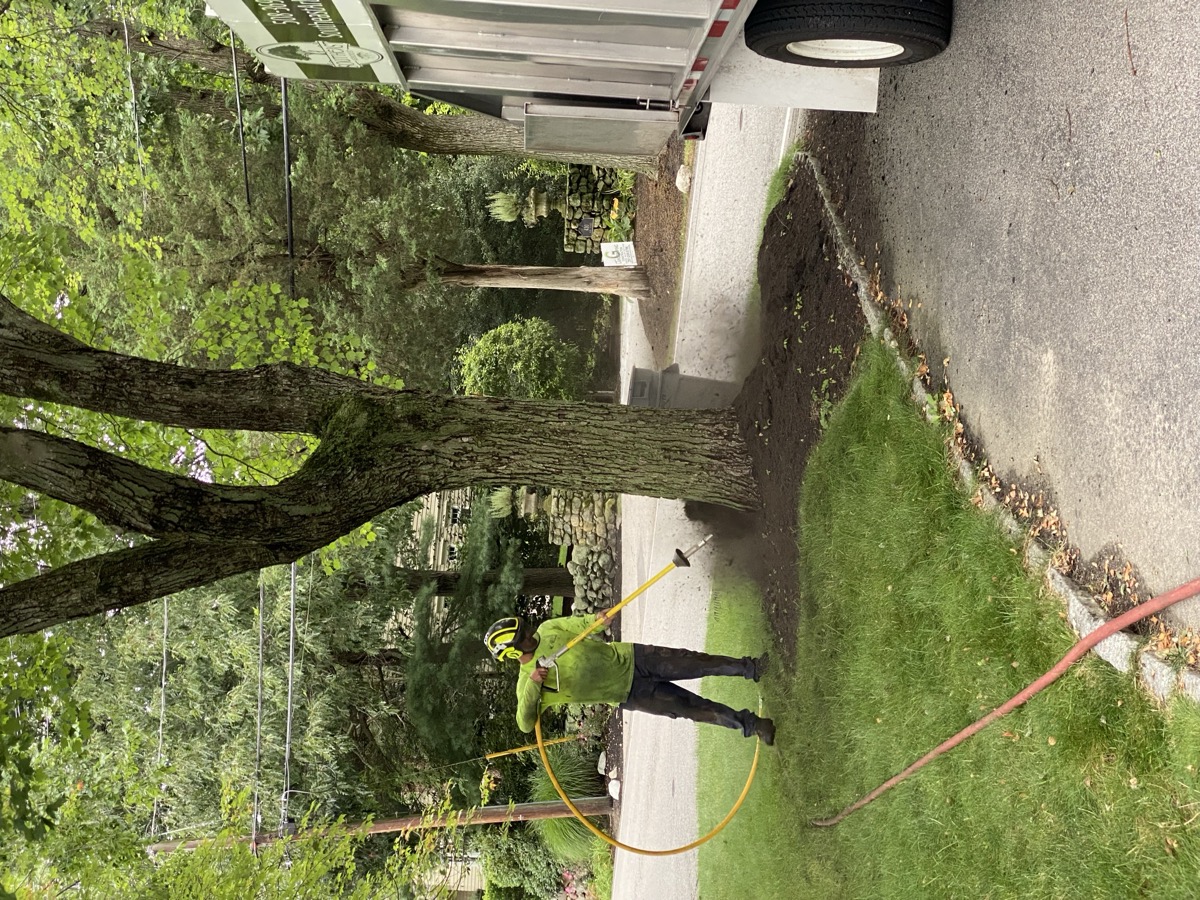
Step 2: Air Spade Excavation (2-4 hours per tree). Our Stihl BR 600 air spade blasts compressed air at 100-150 PSI through a narrow nozzle, excavating soil 12-18 inches deep over a 10-15 foot radius. This non-invasive method removes fill from white pine flares in North Plymouth without root cutting—unlike backhoes that sever 30% of laterals. Safety protocols include dust suppression with misting and barriers for Route 3 traffic in West Plymouth.
Step 3: Girdling Root Removal and Decompaction. We identify and sever circling roots on American beech using sterile saws, following ISA Best Management Practices to avoid infection. Soil decompaction follows with hand tools or low-pressure air, loosening 6-12 inches for oxygen flow. In Long Pond's wet tupelo zones, we assess drainage via percolation tests.
Step 4: Soil Amendment and Vertical Mulching. Amendments match Plymouth's needs: composted pine bark for acidic-loving red oaks (raising organics 5-10%), gypsum for sodium displacement in Manomet salt zones. Vertical mulching installs 8-12 inch deep, 3-inch wide slots filled with 70/30 soil-amendment mix, promoting deep rooting. For eastern red cedar in Pinehills, we add mycorrhizae inoculants.
Step 5: Drainage Enhancements and Protection. Radial trenches (2-3 inches wide, 18 inches deep) direct water away from trunks in Cedarville clay. We apply 3-4 inches of arborist mulch in a donut ring, suppressing grass competition. Construction damage mitigation includes root pruning specs for builders near Plymouth Harbor.
Equipment specifics: Husqvarna air compressors, laser levels for even excavation, and soil moisture meters ensure precision. All work adheres to OSHA safety, with hard hats, harnesses for heights, and spotters in neighborhoods like Ellisville.
Post-treatment monitoring: We return at 30 days to check mulch integrity, advising on watering—1 inch weekly for new roots in summer. Results show 25% vigor increase in six months for Plymouth species, per our tracked cases.
For your property, this process stabilizes trees against nor'easters. In West Plymouth pitch pines, it reduces lean by correcting imbalances. Call 508-369-5009 to start—our Plymouth-based team minimizes disruption.
Common Root Zone Improvement Projects in Plymouth Neighborhoods
Plymouth Center properties near Pilgrim Hall often need buried flare corrections for red oaks planted in colonial-era fill. We air spade to expose roots, amending with sand-loam mixes for harbor wind stability.
North Plymouth lots along Route 3A feature compacted white pines from parking; decompaction and vertical mulching restore growth, preventing needle scorch from salt drift.
Manomet's coastal bluffs host pitch pines battered by spray; girdling root removal and drainage trenches counter erosion, safeguarding views to Duxbury Bay.
Cedarville homes with American beech see frequent soil restoration post-lawn installs—our amendments boost fine root density by 40%.
Long Pond's tupelo in lowlands require aggressive decompaction for flood-prone soils; vertical mulch channels excess water from Bourne-area rains.
Chiltonville estates protect black oaks with construction mitigation—pre-dig assessments prevent damage during additions near Plimoth Plantation.
West Plymouth pine barrens, echoing Myles Standish Forest, demand fire-resilient root zones; we remove competitive grass, mulching for vigor against Carver wildfire risks.
Ellisville's Atlantic white cedar dunes get salt-leached amendments; air spading reveals compacted zones from foot traffic, enhancing bluff stability.
Bournedale Pines new builds in Pinehills undergo lot-wide decompaction; radial aeration preps soils for eastern red cedar transplants, meeting insurer fire clearance.
These projects, from Kingston-border yards to Wareham-adjacent, use ISA techniques. Your neighborhood's trees gain resilience—contact Southeast Arborist at 508-369-5009.
Root Zone Improvement Costs in Plymouth, MA
Root zone improvement Plymouth MA pricing starts at $350-$500 per tree for basic air spading and decompaction on a single pitch pine in Plymouth Center—covering diagnosis, excavation of a 10-foot radius, and mulch ring. Add $150-$250 for girdling root removal on red oaks in Manomet, as precision sawing requires sterile tools per ANSI A300.
Factors influencing costs: Tree diameter (DBH)—$50 per inch over 12 inches for white pines in North Plymouth, due to larger excavation volumes. Soil type matters; Cedarville clay adds $100-$200 for deeper decompaction versus sandy Ellisville dunes.
Vertical mulching runs $200-$400 per tree, with 6-8 slots for black oak stability in Chiltonville—long-term value as it sustains amendments for 3-5 years. Full packages for construction damage in Pinehills, including amendments and drainage, range $800-$1,500 for 24-inch DBH American beech.
Neighborhood access affects pricing: West Plymouth's rural lots add $100 travel from our Plymouth base, offset by multi-tree discounts (20% off second tree). Salt mitigation in Long Pond tupelo zones includes gypsum at $75 extra.
Value proposition: Untreated root issues lead to $2,000-$5,000 removal costs—our service extends life 10-20 years, per ISA data. In Bournedale Pines, fire insurers credit healthier trees, potentially lowering premiums 10-15%. ROI hits 300% via preserved property value; a stable eastern red cedar grove boosts appraisals $10,000+.
Compare bids: Avoid lowballers risking root damage—our ISA certification ensures compliance, preventing Plymouth ordinance fines ($500+). Seasonal volume discounts apply fall/winter.
Practical budgeting: Test one tree first ($400 average), scale to groves. Financing via tree care loans available. For precise quotes factoring your Plymouth property's pitch pine or Atlantic white cedar needs, call 508-369-5009.
When to Schedule Root Zone Improvement in Plymouth
Schedule root zone improvement Plymouth MA in late spring (May-June) or fall (September-October), when soil moisture aids excavation and roots actively grow. Plymouth's 45-inch rainfall peaks then, minimizing dust in Manomet projects.
Urgency signs: Leaning trunks in West Plymouth pitch pines signal girdling roots—act within weeks to avert failure in 30 mph nor'easters. Sparse canopy in Cedarville red oaks indicates compaction; yellowing lower branches on North Plymouth white pines demand immediate decompaction.
Post-storm: After hurricanes like Henri (2021), inspect Ellisville Atlantic white cedar for exposed roots—schedule within 72 hours to prevent desiccation.
Construction proximity: In Pinehills developments, pre-work assessments in summer prevent damage.
Avoid summer peaks (July-August) due to drought-hardened soils increasing air spade time 20%; winter freezes halt work above 32°F.
Monitor via annual walks: Probe soil 6 inches deep—if resistance exceeds a screwdriver's push, call us. For Chiltonville beeches or Long Pond tupelo, early detection saves 50% costs.
Contact Southeast Arborist at 508-369-5009 now for Plymouth-tailored timing.
Frequently Asked Questions About Root Zone Improvement in Plymouth
What is root zone improvement, and why does it matter for Plymouth trees? Root zone improvement Plymouth MA involves air spading to decompact soil, remove girdling roots, and amend for better drainage and nutrients. For pitch pines in Bournedale Pines, it counters compaction from fire-scarred soils, boosting health 25%.
How long does a root zone improvement project take in Manomet? A single tree in Manomet takes 4-6 hours; groves in Plymouth Center span 1-2 days. Our air spades speed work without root harm to coastal white pines.
Is root zone improvement safe for my family's yard in Cedarville? Yes, ISA Certified Arborists at Southeast Arborist use low-PSI air (under 150), barriers, and dust control. ANSI A300 standards protect kids/pets near Route 3A.
Can you fix salt damage roots on Ellisville Atlantic white cedar? Absolutely—gypsum amendments displace sodium, paired with decompaction for 30% root recovery. Proven in our harbor-side projects.
What's the difference between air spading and traditional digging for Chiltonville oaks? Air spading excavates precisely without cutting roots (unlike shovels, damaging 20-30%). Ideal for buried flares on red oaks.
How do I know if my West Plymouth pitch pine needs this service? Signs: Thin bark at base, leaning trunk, poor growth. Free assessments confirm via penetrometer for pine barrens compaction.
Does insurance cover root zone improvement in Long Pond after storms? Often partially, for hazard trees post-nor'easters—submit our reports. Fire mitigation in Bournedale Pines qualifies for discounts.
How often should I do root zone improvement on Pinehills eastern red cedar? Every 5-7 years, or post-construction. Vertical mulch extends intervals.
Call 508-369-5009 for answers specific to your Plymouth trees.
Root Zone Improvement Throughout Plymouth
Southeast Arborist delivers root zone improvement Plymouth MA to all neighborhoods: Plymouth Center's historic lots, North Plymouth's busy yards, Manomet's shores, Cedarville's woods, Long Pond's wetlands, Chiltonville's estates, West Plymouth's barrens, Ellisville's dunes, Bournedale Pines' fire zones, and Pinehills' developments.
We extend to nearby Carver, Kingston, Plympton, Bourne, Wareham, Duxbury from our Plymouth/Cohasset base. ISA Certified, ANSI-compliant service ensures your pitch pine, red oak, or tupelo thrives.
Protect your property—call 508-369-5009 today for a consultation.