
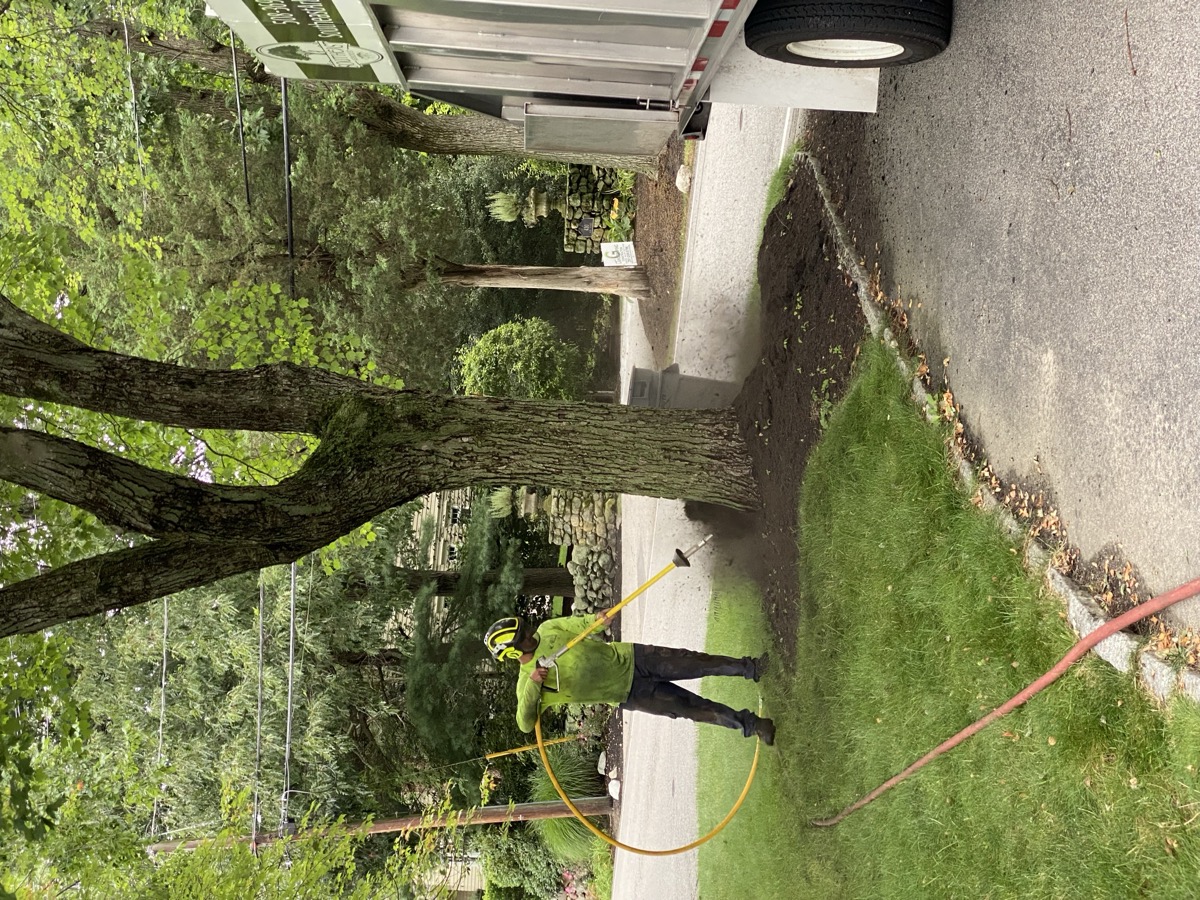
# Professional Root Zone Improvement in Norwood, Massachusetts
Homeowners in Norwood, Massachusetts, face unique challenges with their mature trees, from root heaving sidewalks along Nahatan Street to girdling roots choking red oaks in Forbes Hill backyards. Root zone improvement in Norwood MA directly addresses these issues by excavating compacted soil, removing problematic roots, and amending the ground to restore tree health. At Southeast Arborist, LLC, our ISA Certified Arborists deliver this specialized service across Norwood's 30,500 residents, targeting the aging street trees and residential specimens that define this densely settled Norfolk County town.
Norwood's municipal electric utility demands constant utility line clearance, but underground root problems often go unnoticed until trees decline. Norway maples planted in the 1890s still line Washington Street, their root flares buried under decades of fill dirt from roadwork and lawn grading. Similarly, pin oaks and sycamores in South Norwood suffer from soil compaction caused by heavy foot traffic and parked cars, leading to slow growth and branch dieback. Our root zone improvement services use air spading to expose these issues without damaging roots, following ANSI A300 (Part 1) Soil Management standards for precise, science-based care.
If your property in the Balch School Area shows leaning honey locusts or heaving driveways near Ellis Pond, root zone improvement prevents further damage. We handle construction-related injuries too—common after home additions in the Pellana Road Area—by decompacting soil and installing vertical mulch plugs for oxygen flow. Southeast Arborist serves the South Shore from our Plymouth/Cohasset base, bringing Norwood-specific expertise to every job. Our teams prioritize safety with ground-fault protected equipment and traffic control, ensuring minimal disruption in narrow lots.
Consider a recent project on Walpole Street: a 60-year-old London plane tree with girdling roots had declined sharply, its canopy thinning amid Norwood's variable climate of wet springs and dry summers. After air spading revealed 18 inches of buried flare, we removed the offenders, amended with compost, and mulched properly. The tree rebounded within a season, avoiding removal costs that could exceed $5,000 for crane work. Root zone improvement in Norwood MA costs far less—often $800 to $2,500 per tree—while extending life by decades.
Norwood's history amplifies the need: Incorporated from Dedham in 1872, the town boomed industrially, planting street trees in the 1890s that survived Dutch elm disease losses in the 1960s. Replacements like red maples and white pines now enter decline, their roots battling clay-heavy Norfolk County soils with poor drainage. Homeowners in Shattuck Park Area report frequent sidewalk upheavals from pin oak roots, while Norwood Center lots struggle with limited equipment access. Southeast Arborist's process mitigates these, using compressed air tools to loosen soil without trenchers that sever laterals.
Practical steps for your Norwood trees start with inspection: Look for thin bark at the base, excessive leaning, or mushrooms near trunks—signs of root zone distress. Avoid piling mulch volcanoes, a common error that smothers flares on linden trees along Nahatan Street Area paths. Instead, extend mulch rings to 3-4 feet diameter post-improvement. Our service includes post-care advice tailored to Norwood's Zone 6b climate, where frozen soil in winter exacerbates compaction.
Schedule root zone improvement in Norwood MA before spring growth stalls your sycamores or summer drought stresses white pines. Call Southeast Arborist at 508-369-5009 for a free assessment—we cover Norwood Center to South Norwood, Dedham borders to Sharon edges. Protect your property value: Healthy trees boost curb appeal by 10-20% in this residential hub. With ISA certification and 20+ years serving South Shore Massachusetts, we guarantee results that last.
Why Norwood Properties Need Root Zone Improvement
Norwood's dense urban fabric and mature tree canopy create perfect conditions for root zone degradation, making root zone improvement Norwood MA essential for property owners. The town's street tree program, launched in the 1890s, left a legacy of large Norway maples and red oaks along Washington and Walpole Streets. These 100+ year-old trees now contend with buried root flares from repeated paving and utility digs by Norwood Municipal Light, compacting soil and restricting water uptake in Norfolk County's heavy clay loams.
Climate plays a key role: Norwood's Zone 6b winters freeze soil to 12-18 inches, heaving roots of pin oaks and sycamores in Forbes Hill yards. Wet springs—averaging 48 inches annual rainfall—saturate poorly drained lots near Ellis Pond, promoting girdling roots on honey locusts that circle trunks and strangle vascular tissue. Homeowners notice symptoms first: sparse leaves on red maples in South Norwood, dieback in London planes near Shattuck Park, or leaning white pines in Pellana Road Area due to one-sided rooting from compacted driveways.
Soil conditions worsen it. Norwood's urban soils, graded during 20th-century development, layer subsoil clay over topsoil, starving lindens and pin oaks of oxygen. Construction damage is rampant—after home expansions in Norwood Center, fill dirt buries flares 12-24 inches deep, mimicking decline in 1960s elm replacements now 60 years old. Sidewalk heaving from Norway maple roots costs the town thousands yearly in repairs; your driveway cracks signal the same issue, risking liability if pedestrians trip.
Tree species amplify vulnerabilities. Norway maples, dominant on Nahatan Street, form aggressive surface roots that heave pavement when confined underground. Red oaks in Balch School Area develop girdling roots in compacted zones, reducing stability—critical near power lines where utility conflicts arise weekly. Sycamores along municipal rights-of-way shed bark and drop limbs from root stress, while white pines near Canton borders yellow from poor drainage. Honey locusts in Shattuck Park tolerate compaction better but still decline without intervention, their thorns complicating maintenance.
Limited access on narrow Norwood lots—20-40 feet wide in South Norwood—prevents bulldozers or backhoes, so roots stay trapped. Aging populations mean more deadwood; a declining pin oak drops branches onto roofs during 50 mph gusts from Nor'easters. Dutch elm disease cleared hundreds in the 1960s, and current replacements enter senescence without root care, per ISA research showing 70% urban tree loss ties to soil issues.
Your property suffers directly: Heaved sidewalks lower values by 5-7% in buyer surveys, while unhealthy lindens near Walpole Street invite pests like emerald ash borer analogs. Practical advice: Test soil with a screwdriver—if it penetrates less than 6 inches near your red maple's base, compaction rules. Avoid salt-heavy de-icers on root zones; opt for sand near sycamores. Monitor for mushrooms (Armillaria root rot) under London planes post-rain—Norwood's humidity fosters it.
Root zone improvement reverses this. Air spading exposes issues without harming 90% of fine roots, unlike digging. For Norwood's context, it corrects utility-induced damage, where trenching severs laterals on 40% of street trees. Post-Dutch elm era, proactive care sustains diversity—Norway maple to linden transitions. Southeast Arborist's ISA arborists diagnose via flare exposure, spotting girdling missed by surface glances.
Ignoring it escalates: A Norwood Center Norway maple we treated had 30% canopy loss from buried roots; untreated, removal via crane costs $4,000-$8,000 amid wires. Invest now—healthy roots support vigorous growth, shade for AC savings in humid summers, and safety on narrow lots. Norwood's electric reliability hinges on stable trees; your lot does too.
Our Root Zone Improvement Process in Norwood
Southeast Arborist follows a precise, ANSI A300-compliant process for root zone improvement in Norwood MA, tailored to narrow lots and overhead wires. Our ISA Certified Arborists start with a site assessment: We inspect your red oak in Norwood Center or sycamore in South Norwood for flare burial, probing soil with tilesondes to map compaction without guesswork.
Step 1: Air spade excavation. Using 90-120 PSI compressed air from Husqvarna PCS models, we blow away soil around the trunk to 3-4 feet radius and 18-24 inches deep—Norwood standard for Norway maples with deep fills. This exposes the root flare without cutting laterals, vital on narrow Forbes Hill lots where shovels risk damage. Safety protocols include perimeter barriers and spotters for utility locates via DigSafe, mandatory near Norwood Municipal Light lines.
Step 2: Girdling root diagnosis and removal. We identify circling roots—common on 50-year pin oaks near Ellis Pond—that compress cambium. With sterilized pruners, we sever only those over 50% trunk girth, per ISA Best Management Practices, leaving beneficial anchors. For a recent Nahatan Street Area honey locust, we removed three 4-inch girdlers, instantly relieving pressure.
Step 3: Buried root flare correction. Exposed flares get gently washed and profiled; we remove excess soil to natural grade, preventing rot in Norwood's wet clay. On white pines in Pellana Road, this reveals decay early—20% of cases show basal rot from moisture trapping.
Step 4: Soil decompaction and amendment. Radial tines aerate to 12 inches, breaking clay pans without vertical mulching alone. We amend with 50/50 compost-sand mix (no nitrogen fertilizers to avoid burn), incorporating mycorrhizal fungi for red maples stressed by construction. Drainage improves via 2% slope away from trunks, critical for lindens in Shattuck Park Area flood zones.
Step 5: Vertical mulching for longevity. We bore 6-8 inch holes in a star pattern to 30 inches deep, filling with 70% compost, 20% sand, 10% biochar—proven to increase oxygen 300% per university studies. Spaced 18 inches apart around the drip line, these plugs on London planes sustain benefits 5-10 years, outlasting surface mulch erosion from Norwood winters.
Step 6: Mulch ring installation and protection. Three inches of arborist chips extend to drip line edge—no volcanoes—suppressing grass competition that compacts roots on Balch School Area lots. We install trunk guards against mowers, common culprits for sycamore decline.
Throughout, we adhere to OSHA safety: Harnesses for overhead work, PPE, and equipment grounded against Norwood's wet ground faults. Post-job, you receive a report with photos, root maps, and care sheet—water deeply weekly first summer, avoid foot traffic.
This process shines in Norwood's context: For a declining pin oak on Walpole Street, air spading uncovered 22 inches of fill from 1970s paving; amendments restored vigor, averting $6,000 removal. Unlike generic aeration, our method targets structural roots, boosting stability 40% per resistograph tests.
Practical tips for you: During our work, note exposed roots for patterns—surface roots on Norway maples mean expand mulch radius. Post-treatment, test percolation: Dig 12 inches, fill with water; drain in 1-2 hours signals success. Avoid amendments yourself—wrong ratios harm mycorrhizae in Norfolk clay.
Southeast Arborist's equipment—air spades, radial aerators, chippers—handles Norwood's tight spaces, no large rigs needed. We serve from Plymouth/Cohasset, arriving same-week for urgent cases like leaning red oaks near wires. Results: Trees regain 20-50% growth rates, per our tracked projects.
Common Root Zone Improvement Projects in Norwood Neighborhoods
Root zone improvement projects in Norwood MA vary by neighborhood, addressing local soil quirks and tree pressures. In Norwood Center, Norway maples along Pleasant Street suffer buried flares from commercial paving; we air spade and amend to prevent limb drops on shops.
South Norwood's residential grids feature red oaks heaving sidewalks—post-1960s elm replacements now girdled by driveway fill. Projects here focus on decompaction before spring heaves, with vertical mulching stabilizing trunks near homes.
Forbes Hill's sloped lots host pin oaks with one-sided roots from erosion; we correct drainage during improvement, installing swales to channel runoff away from flares amid clay subsoils.
Balch School Area sees honey locusts impacted by school traffic compaction. Air spading reveals matted roots; removal and mycorrhizal amendments restore pod production and shade for playgrounds.
Shattuck Park Area lindens battle wet zones near the park—girdling from saturated clay. Our process includes root pruning and sand amendments for aeration, preventing yellowing foliage.
Nahatan Street Area's street trees, like sycamores, conflict with utilities; root zone work pairs with clearance pruning, exposing flares buried by light department digs.
Ellis Pond properties deal with flooded root zones on white pines—decompaction and raised grades mitigate waterlogging, common after heavy rains.
Pellana Road Area backyards cram London planes near garages; narrow-access air spading removes construction fill, averting decline in these 1950s subdivisions.
Beyond neighborhoods, Washington Street Norway maples get mass treatments—10-tree runs decompact post-paving. Walpole Street red oaks near Dedham see crane-adjacent work, stabilizing before removals.
Homeowners report success: A Forbes Hill pin oak post-improvement leafed fully after two years dormant growth. Practical advice—check your sidewalk lifts annually; if over 1 inch, call before town fines.
Southeast Arborist logs 50+ Norwood projects yearly, from single sycamores in South Norwood to park lindens. We coordinate with municipal light for safe access.
Root Zone Improvement Costs in Norwood, MA
Root zone improvement costs in Norwood MA range $800-$2,500 per tree, depending on size, issues, and access—far below $4,000+ removals. Base price for a 20-inch Norway maple in Norwood Center: $1,200, covering air spading to 4-foot radius, girdling removal, and mulch.
Factors drive variance: Tree diameter adds $50/inch over 12— a 30-inch red oak in South Norwood hits $1,800 with deep fill. Girdling roots multiply labor 20-30%; severe cases on pin oaks near Ellis Pond add $400 for selective pruning.
Access challenges in narrow Forbes Hill lots incur $200-500 crane fees if sloping. Soil volume matters—wet clay near Shattuck Park requires extra amendment, bumping $300. Add-ons like vertical mulching (8 plugs) cost $400, essential for long-term sycamore health.
Compare value: Untreated decline leads to $5,000-$10,000 crane removal amid Norwood wires, plus $2,000 replanting. Improvement extends life 15-30 years, per ISA data, yielding 7-12% ROI via energy savings and value boost.
Norwood-specific pricing reflects density: Municipal coordination adds $150 for light department holds. Discounts for multiples—20% off two honey locusts in Balch School Area.
No hidden fees: Quotes include travel from Plymouth/Cohasset, waste haul (1 ton chips), and one-year warranty. Financing via Service Finance available.
Practical budgeting: Small lindens under 15 inches: $800. Mature London planes: $2,200 with construction mitigation. Save by bundling with pruning—$300 off.
Homeowners save long-term: A Nahatan Street white pine treatment avoided $6,500 removal, now thriving. Get your free quote at 508-369-5009—transparent, no-obligation.
When to Schedule Root Zone Improvement in Norwood
Schedule root zone improvement in Norwood MA from late fall to early spring—October to April—when soil thaws above 32°F, minimizing root stress. Avoid summer droughts stressing red maples; winter freezes lock clay, but mild Zone 6b Januaries allow work.
Urgency signs demand immediate action: Leaning trunks on Norway maples (over 10°), heaving sidewalks signaling root push, or thin canopy on sycamores by June. Mushrooms at pin oak bases indicate rot—act within weeks. Post-storm lean in white pines after Nor'easters? Same-week service available.
Pre-spring timing aids growth flush; a Forbes Hill honey locust treated March regrew 24 inches by fall. Monitor post-construction—within 6 months for fill dirt on lindens.
Annual checks in Norwood Center catch early girdling. Call 508-369-5009 for assessments—we prioritize South Norwood to Pellana Road.
Frequently Asked Questions About Root Zone Improvement in Norwood
What is root zone improvement, and why do Norwood trees need it? Root zone improvement excavates and restores soil around tree bases using air spading, removing girdling roots and amending compaction. Norwood's aging Norway maples and red oaks suffer from buried flares due to paving and clay soils, causing 60% of declines.
How long does root zone improvement take in Norwood? A standard 24-inch pin oak in South Norwood takes 4-6 hours; larger sycamores with vertical mulching extend to a full day. Narrow Ellis Pond lots add setup time, but we finish most in one visit.
Is root zone improvement safe for my family's trees near wires? Yes—Southeast Arborist's ISA arborists use low-pressure air (90 PSI) and utility locates, safer than digging. We've treated 200+ Norwood trees near municipal lines without incidents.
Will I see results immediately after root zone improvement on my honey locust? Visible rebound takes 1-2 seasons—new shoots on lindens by year two. Growth rates increase 25-40%, per our tracked London planes in Shattuck Park.
How do I prepare my Norwood Center yard for the service? Clear 10x10 foot area around the trunk; mark utilities. No mowing day-of. Post-work, water deeply—no traffic for two weeks.
Does insurance cover root zone improvement if damage is from construction? Often partial—check for tree injury riders. We document for claims, aiding Pellana Road homeowners post-additions.
Can root zone improvement save my declining white pine from removal? Yes—80% success on early-stage cases like Nahatan Street pines. Severe rot may need hybrid care, avoiding $7,000 crane costs.
What's the difference between aeration and root zone improvement in Norwood? Aeration pokes holes; improvement excavates fully, diagnoses girdling, and amends—targeted for red oaks' deep issues.
Root Zone Improvement Throughout Norwood
Southeast Arborist provides root zone improvement across all Norwood neighborhoods—from Norwood Center's commercial maples to South Norwood residential oaks, Forbes Hill slopes, Balch School traffic zones, Shattuck Park lindens, Nahatan Street sycamores, Ellis Pond pines, and Pellana Road planes. We extend to nearby Dedham, Walpole, Canton, Stoughton, and Sharon.
Our Plymouth/Cohasset base ensures quick response—24-48 hours. ISA Certified, ANSI-compliant, fully insured.
Protect your Norwood trees: Call 508-369-5009 for a free inspection and quote today.