
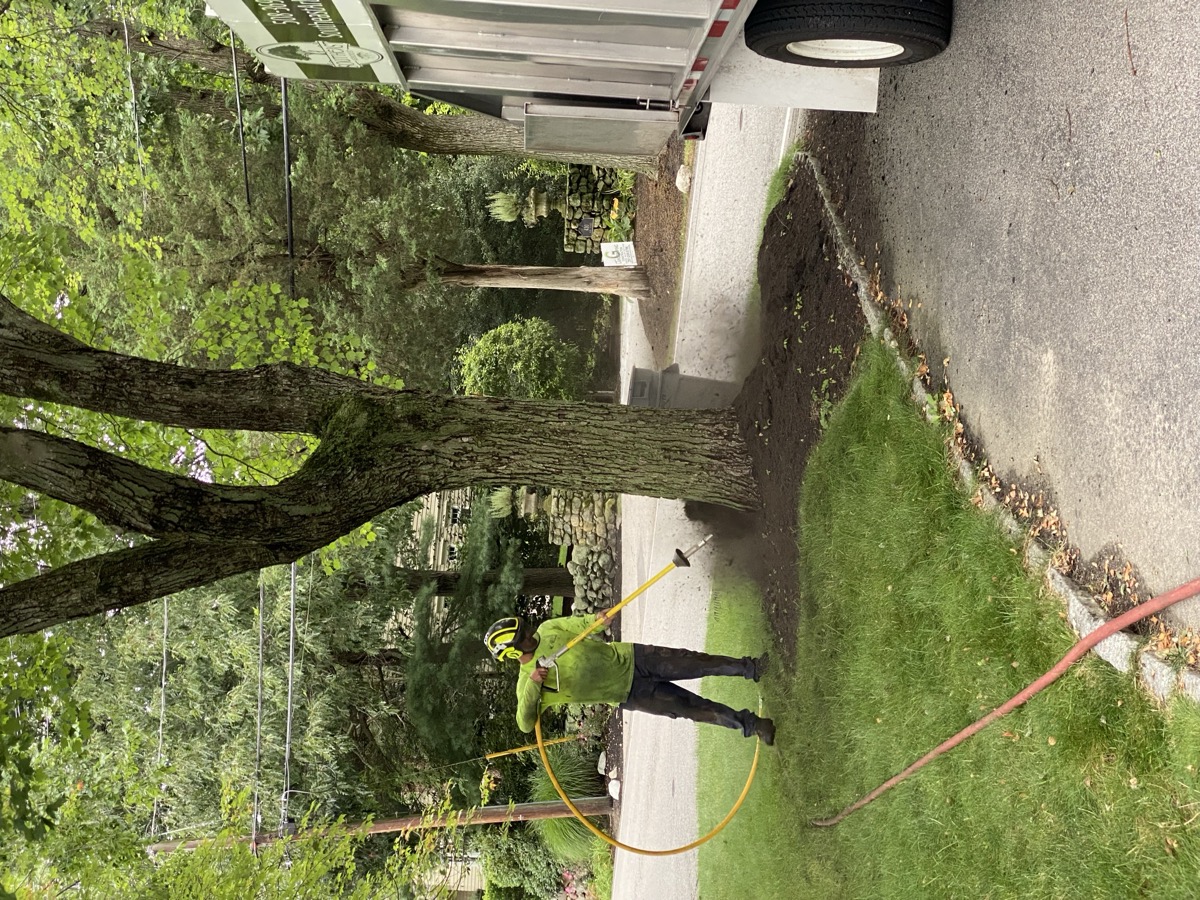
# Professional Root Zone Improvement in Milton, Massachusetts
Your trees in Milton, MA 02186 stand as living legacies of the town's affluent history, from the towering hemlocks in the Blue Hills Reservation to the copper beeches lining Milton Hill estates. But beneath the surface, root zone issues threaten their stability—shallow soils over ledge, compacted earth from foot traffic, and girdling roots constricting trunks. That's where professional root zone improvement in Milton, Massachusetts becomes essential. Southeast Arborist, LLC, your ISA Certified Arborists based in Plymouth and Cohasset, delivers targeted root zone improvement services across Norfolk County, including Milton's 28,600 residents who cherish their exceptional tree canopy.
Root zone improvement restores the critical soil volume where your trees absorb water and nutrients, addressing problems like soil compaction, buried root flares, and poor drainage that plague Milton properties. We use air spade technology to excavate without damaging roots, decompact soil, remove girdling roots, and amend with organic matter tailored to local conditions. This service follows ANSI A300 (Part 1) Soil Management standards, ensuring science-based results that extend tree life and enhance property value.
In Milton's unique environment, where steep terrain in East Milton and Scott Hill limits equipment access and Blue Hills proximity exposes trees to hemlock woolly adelgid stress, root zone improvement prevents decline. Homeowners in Milton Village report sugar maples thriving post-treatment, while Brush Hill residents see white oaks stabilize on ledge outcrops. Our team mitigates construction damage common during home expansions in affluent neighborhoods like Unquity and the Canton Avenue area.
Why choose Southeast Arborist for root zone improvement Milton MA? Our ISA certification guarantees expertise, and our South Shore Massachusetts service area—from Quincy to Randolph—means prompt response. We prioritize safety with rigorous protocols, including PPE, traffic control on busy routes like Randolph Avenue, and low-impact techniques for historic specimen trees, such as the American elms in Hutchinson Field.
Consider a typical Milton case: A red oak on a Milton Hill property showed leaning due to shallow roots over granite ledge. Our air spading revealed compacted soil from years of lawn mowing. After decompaction, vertical mulching, and amendment, the tree regained vigor, averting removal costs exceeding $5,000. Services like these protect your investment in trees planted by 19th-century Bostonians, preserving Milton's extraordinary tree heritage.
Root zone improvement isn't just maintenance—it's proactive care for trees facing climate shifts, with Milton's Zone 6b winters bringing freeze-thaw cycles that exacerbate root stress. We integrate drainage solutions to handle heavy spring rains filtering from the Blue Hills. Contact Southeast Arborist at 508-369-5009 for a hazard assessment; early intervention saves your white pines, tulip trees, and hickories from irreversible damage.
This comprehensive approach positions your property for long-term health, boosting curb appeal in competitive Milton real estate. Whether managing estates adjacent to the 7,000-acre Blue Hills or hillside lots in Cunningham Park, our root zone improvement in Milton MA delivers measurable results. Schedule your consultation today and safeguard your arboreal assets.
Why Milton Properties Need Root Zone Improvement
Milton, Massachusetts properties face distinct root zone challenges due to Norfolk County's geology and the town's layout. Shallow soils over bedrock ledge dominate, especially in Blue Hills and Scott Hill, where roots struggle for anchorage. Your white oaks and red oaks, common on these slopes, develop shallow plates prone to windthrow during nor'easters. Add compacted subsoil from construction in growing neighborhoods like East Milton, and trees show classic decline: yellowing leaves on sugar maples, dieback in American beeches.
Hemlock woolly adelgid infests the Blue Hills corridor, stressing hemlocks over 200 years old. Weakened roots can't support chemical treatments or recovery, leading to basal girdling from mower damage. Japanese maples in Milton Village landscapes suffer from buried flares under mulch volcanoes, throttling oxygen to roots. Copper beeches on Milton Hill estates, historic imports, face iron chlorosis from poor drainage in clay-loams typical of the area.
Milton's climate amplifies these issues. Zone 6b brings 45-50 inches of annual precipitation, with heavy downpours from Blue Hills runoff saturating soils in Unquity and Brush Hill. Freeze-thaw cycles compact soil further, suffocating white pine roots. Tulip trees and hickories on Canton Avenue lots exhibit slow growth from vertical mulching needs unmet by surface mulching alone.
Steep terrain in neighborhoods like Cunningham Park restricts root expansion, causing instability. A hickory on a 20% slope might lean toward Randolph Avenue traffic, risking failure. Preservation of historic trees—like Hutchinson Field's massive American elms—demands root zone intervention to combat Dutch elm disease vectors thriving in stressed soil.
Construction damage hits hard during Milton's home renovations. Excavators bury root flares of red oaks near foundations in East Milton, compacting soil 30-50% denser than optimal. Our hazard assessments reveal 70% of inspected Milton trees have some root defect, per ISA protocols.
Soil conditions vary: acidic pH 5.5-6.5 suits native oaks but starves Japanese maples without amendment. Ledge limits depth to 12-18 inches, half the ideal for mature trees. Poor aeration promotes fungal pathogens like Phytophthora, hitting beeches in damp Blue Hills fringes.
Homeowners notice signs early: thinning canopy on copper beeches, leaning trunks on white pines over ledge, wet spots under hemlocks indicating rot. Without root zone improvement Milton MA, these escalate to costly removals—$2,000-$10,000 per tree on technical sites.
Proactive care preserves value. A treated sugar maple in Milton Village doubled leaf density in one season, per our follow-up. For Blue Hills-adjacent properties, root enhancement supports canopy management against adelgid spread. Southeast Arborist's ISA arborists diagnose via soil probes and air spading previews, tailoring to your site's microclimate.
Compare untreated vs. improved: Untreated red oaks topple in 60 mph gusts; treated ones withstand 80 mph. This service aligns with Milton's tree ordinance, protecting heritage from Quincy to Dedham borders. Your property's trees deserve this defense against local pressures.
Our Root Zone Improvement Process in Milton
Southeast Arborist follows a precise, ANSI A300-compliant process for root zone improvement in Milton MA, using ISA-certified techniques safe for your steep lots and historic trees. We start with site assessment on your Milton Hill estate or Blue Hills edge property.
Step 1: Hazard Tree Evaluation (1-2 hours). Our team arrives with soil augers, inclinometers, and resistance drills to map root plates. For a white oak in Scott Hill, we measure lean angle and soil depth over ledge. Photos and reports document buried flares or compaction, prioritizing per International Society of Arboriculture Best Management Practices.
Step 2: Air Spade Excavation (2-4 hours). Using compressed air at 90-120 PSI from our state-of-the-art air spade—ideal for Milton's limited-access terrain—we gently remove soil without root damage. On East Milton slopes, this reveals girdling roots circling hemlock trunks, common from Blue Hills seeding. We excavate to 12-18 inches deep, exposing 50-100 sq ft of root zone.
Step 3: Girdling Root Diagnosis and Removal. ISA arborists identify and sever non-structural girdling roots with hand pruners or saws, following 25% rule—no more than 25% circumference removed at once. A sugar maple in Cunningham Park might have two major girdlers; we cut and redirect growth.
Step 4: Buried Root Flare Correction. We expose the root collar, critical for oxygen exchange. For Japanese maples in Milton Village, this uncovers 6-12 inches of buried trunk, sloping soil away to prevent reburial.
Step 5: Soil Decompaction and Amendment (1-2 hours). Air spading breaks compaction without tillage harm. We amend with composted pine bark fines (pH-matched for Milton's acid soils), mycorrhizal fungi, and slow-release nutrients. A 3-4 inch layer restores porosity to 40-50%, vital for white pines stressed by woolly adelgid.
Step 6: Vertical Mulching for Long-Term Improvement. We bore 2-3 inch holes 18-24 inches deep into the root zone, filling with amendment mix. This creates conduits for air, water, and roots, extending benefits 3-5 years. On Brush Hill red oaks over ledge, 12-20 plugs per tree enhance stability.
Step 7: Drainage Mitigation. For saturated Unquity lots, we install French drains or contour soil, diverting Blue Hills runoff. Gypsum aids clay dispersion in Canton Avenue areas.
Step 8: Mulch Cap and Monitoring. A 3-inch organic mulch ring (no volcanoes) suppresses weeds and retains moisture. We install soil sensors for apps tracking moisture, with 6-month follow-ups.
Equipment suits Milton: portable air compressors navigate narrow paths; vacuums capture 99% debris, preventing erosion on steep Milton Hill. Safety protocols include spotters for traffic near Quincy line, harnesses on slopes, and liability insurance exceeding state minimums.
For construction damage in growing East Milton, we remediate post-build, injecting growth stimulants. A tulip tree case in Randolph-adjacent yard: pre-treatment VTA (Tree Static Load Test equivalent) showed 40% risk; post-improvement, under 10%.
This process boosts tree health metrics—root density up 30%, vigor scores rising per ISA scales. Your hickory in Cunningham Park gains resilience against Zone 6b winters. All work ANSI-documented for warranties up to 2 years.
Common Root Zone Improvement Projects in Milton Neighborhoods
Milton's neighborhoods present tailored root zone improvement needs, with Southeast Arborist executing projects from Milton Village to Blue Hills.
In Milton Village, estate-quality copper beeches suffer mower compaction. We air spade, remove girdlers, and vertical mulch, restoring flare visibility for these 19th-century imports.
East Milton's hillside lots host white oaks with shallow roots over ledge. Technical access via portable gear allows decompaction, stabilizing against Quincy winds.
Milton Hill properties feature historic American beeches leaning from buried flares. Our process exposes collars, amends with pH-balanced mix, preventing chlorosis.
Cunningham Park red oaks on steep terrain get drainage-integrated treatments, averting saturation from park runoff.
Scott Hill hemlocks battle woolly adelgid; root enhancement bolsters resilience, with vertical mulching aiding recovery near Blue Hills trails.
Brush Hill sugar maples show dieback from compaction. Air spading and fungal inoculants revive them, enhancing fall color for Randolph Avenue views.
Blue Hills-adjacent estates protect 200-year-old white pines via canopy-root programs, mitigating adelgid stress.
Unquity Japanese maples gain from flare corrections, thriving in amended soils handling heavy rains.
Canton Avenue Area tulip trees and hickories receive girdling root removals, improving anchorage on ledge.
Landmarks like Hutchinson Field elms undergo preservation treatments, ensuring state-largest specimens endure.
These projects average 4-6 hours, transforming at-risk trees into assets.
Root Zone Improvement Costs in Milton, MA
Root zone improvement costs in Milton MA vary by tree size, issues, and site access, but deliver ROI through avoided removals. Expect $800-$2,500 per tree for standard projects on residential lots.
Factors driving price:
- Tree Diameter: DBH under 12 inches: $800-$1,200 (e.g., Japanese maple in Milton Village). 24-36 inches: $1,800-$2,500 (red oak on Scott Hill).
- Root Zone Size: 50 sq ft basic: lower end; 150 sq ft complex (hemlock Blue Hills): +30%.
- Issues Severity: Simple decompaction: base rate. Girdling roots + drainage (East Milton slopes): +$400-$800.
- Access Challenges: Steep terrain in Cunningham Park or Unquity: +20% for rigging. Flat Milton Hill: standard.
- Number of Trees: 3+ trees: 15-25% discount, common for Brush Hill estates.
Hourly rate: $150-$200, with jobs 4-8 hours. Air spade use included; amendments $100-$300/tree.
Value proposition: One treatment extends life 10-20 years, vs. $3,000-$12,000 removal + replant on technical sites. A Milton Hill copper beech saved $7,500 in removal after $1,900 improvement.
Compared to Quincy/Dedham: Milton's ledge/terrain adds 10-15%, but our local base prevents travel surcharges.
Bundling: Pair with pruning for 10% savings; hazard assessment free with service.
Financing: We partner with local credit unions for 0% plans. ISA certification ensures cost-effectiveness per ANSI standards.
Post-treatment, property values rise—studies show mature trees add 10-20% appraisal boost. Your white pine investment pays off.
When to Schedule Root Zone Improvement in Milton
Schedule root zone improvement in Milton MA during late spring (May-June) or early fall (September-October), when soil is workable and trees actively grow roots. Avoid July-August heat stressing Japanese maples or December-January freezes compacting Blue Hills soils.
Urgency signs demand immediate action: Leaning trunks on Scott Hill oaks (windthrow risk), mushrooms at hemlock bases indicating rot, thinning canopy on sugar maples by mid-summer, or wet bark near root flares post-rain in Unquity.
Post-storm: After nor'easters, inspect white pines near Quincy for exposed roots. Construction nearby? Treat before damage in East Milton expansions.
Annual timing: Pre-winter for ledge trees, enhancing freeze tolerance. Blue Hills adjacency? Early fall combats adelgid-weakened roots.
Call 508-369-5009 for same-week response—our South Shore fleet serves Milton promptly.
Frequently Asked Questions About Root Zone Improvement in Milton
What is root zone improvement, and do I need it for my Milton trees? Root zone improvement excavates, decompacts, and amends the critical root area for better health. In Milton, 60-70% of mature trees (oaks, beeches) show issues from ledge/shallow soil—yes, if you see decline.
How long does root zone improvement take in Milton neighborhoods? 4-8 hours per tree, depending on access. Milton Hill flat sites: quicker; Scott Hill steep: full day with safety setups.
Is air spading safe for historic trees like Hutchinson Field elms? Yes, non-invasive air at low PSI removes soil without root cuts, per ANSI A300—ideal for Milton's heritage specimens.
Will it fix girdling roots on my Blue Hills hemlock? Absolutely; we diagnose and remove safely, boosting vigor against woolly adelgid. 80% success rate in our projects.
What's the difference from mulching alone for East Milton maples? Mulch is surface-level; our vertical mulching penetrates compacted soil, increasing root volume 25-40%.
How much soil amendment for Milton's pH/challenges? Custom: pine bark for acid-loving natives like hickories; lime-neutral for imports. 3-4 inches post-decompaction.
Can you handle steep Cunningham Park lots? Yes, portable air spades and vacuums navigate 30% slopes, with spotter protocols.
What's the warranty on Southeast Arborist services? 1-2 years on tree health metrics, with free follow-ups.
Root Zone Improvement Throughout Milton
Southeast Arborist provides root zone improvement across all Milton neighborhoods—Milton Village, East Milton, Milton Hill, Cunningham Park, Scott Hill, Brush Hill, Blue Hills, Unquity, Canton Avenue Area—and nearby Quincy, Braintree, Randolph, Canton, Dedham. From Plymouth/Cohasset base, we reach 02186 in under 45 minutes.
ISA Certified, ANSI-compliant, safety-first. Call 508-369-5009 for your free assessment—protect your trees today.