
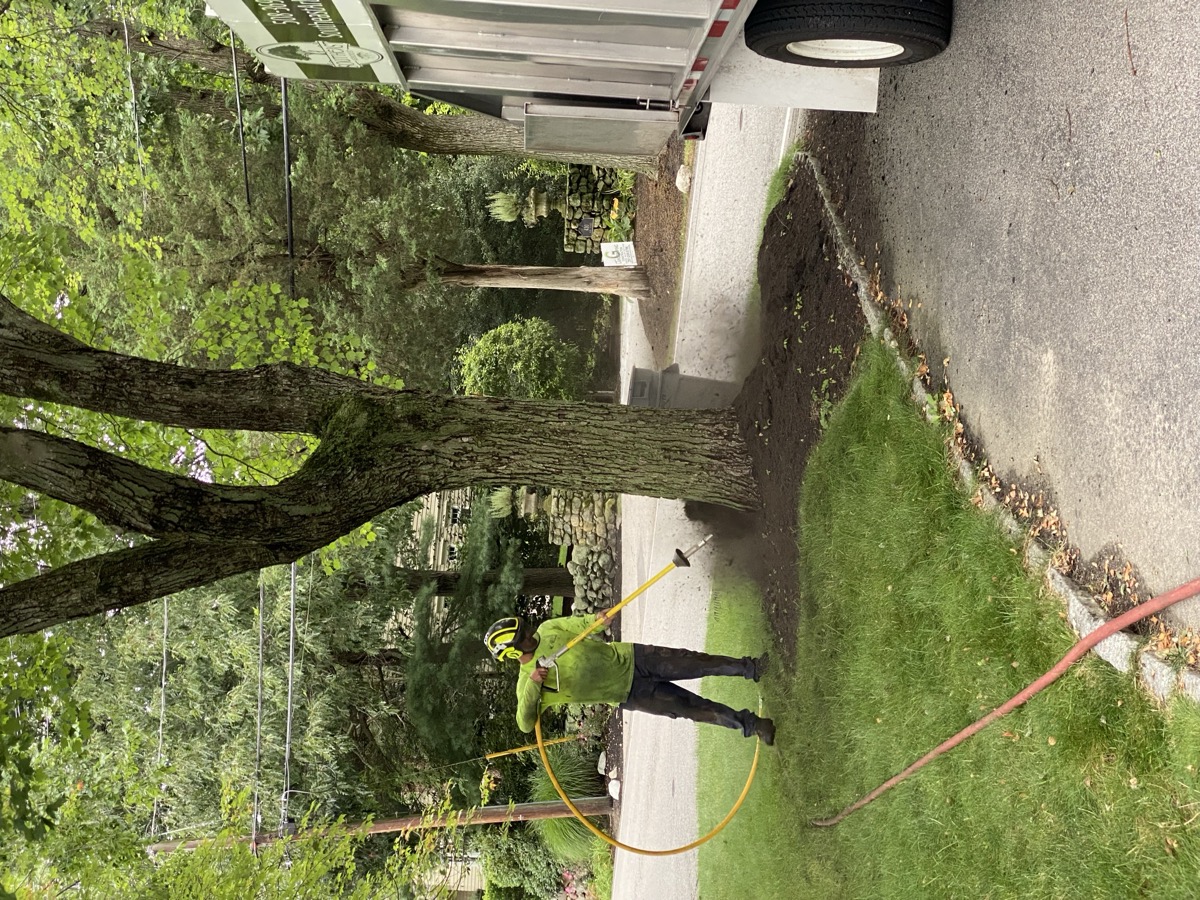
# Professional Root Zone Improvement in Medfield, Massachusetts
Your trees in Medfield, MA, face unique pressures from the town's Norfolk County soils, Charles River floodplain dynamics, and aging landscapes like the former Medfield State Hospital campus. Root zone improvement in Medfield MA addresses compacted soils, girdling roots, and drainage issues that threaten mature red oaks, white pines, and sugar maples on properties from Medfield Center to the South End. As ISA Certified Arborists at Southeast Arborist, LLC, we specialize in these services across South Shore Massachusetts, using ANSI A300 standards to restore tree health without unnecessary removal.
Medfield's 12,800 residents maintain large-lot properties where forests regenerated after the 1676 King Philip's War destruction. Today's challenges include soil compaction from construction on the Medfield State Hospital redevelopment site, emerald ash borer attacks on white ash trees, and waterlogged roots in Charles River corridor homes. Root zone improvement Medfield MA techniques like air spading and vertical mulching counteract these, extending tree lifespans by decades.
Consider a white oak in the Harding neighborhood: its root flare buried under decades of mulch and fill soil suffocates oxygen intake, leading to decline. Our process excavates precisely, removes girdling roots, and amends with organic matter tailored to Norfolk County's clay-loam soils. Homeowners in Vine Lake Area report healthier canopies after decompaction, reducing hazard risks near Rocky Woods Reservation trails.
Southeast Arborist, based in Plymouth and Cohasset, MA, brings decades of experience to Medfield projects. We prioritize safety with certified equipment operators and follow International Society of Arboriculture (ISA) best practices. For instance, during State Hospital campus work, we preserved sycamores and American beeches amid heavy machinery, mitigating construction damage that kills 70% of affected trees without intervention.
This service delivers measurable results: improved water uptake in drought-prone summers, stronger anchorage against winter winds, and resistance to pests like emerald ash borer. Properties in North Street Area benefit from selective thinning combined with root work, balancing forest character with usable yard space. If your sugar maple shows dieback or your eastern hemlock leans suspiciously, root zone issues likely underlie the symptoms.
We assess sites free of charge, diagnosing problems visible only below grade. Call our ISA Certified Arborists at 508-369-5009 to schedule a consultation for root zone improvement Medfield MA. Protect your investment in Medfield's iconic tree canopy—contact Southeast Arborist today.
Why Medfield Properties Need Root Zone Improvement
Medfield's rural character and Charles River frontage create specific root zone stressors absent in urban centers like nearby Norwood or Dedham. Norfolk County soils, predominantly clay-loam with pH 5.5-6.5, compact easily under foot traffic, mower damage, or construction fill, starving roots of oxygen. Your red oaks in Medfield Center, planted over a century ago, often suffer buried root flares from grade changes, causing girdling where roots circle the trunk and strangle vascular tissue.
Climate amplifies these issues: Medfield averages 47 inches of annual precipitation, with spring floods saturating Charles River floodplain properties in the South End and Vine Lake Area. White pines and eastern hemlocks here develop shallow, unstable root systems in waterlogged soils, increasing blowdown risk during nor'easters. Summer droughts, hitting 90°F with low humidity, stress sugar maples whose compacted zones can't access subsoil moisture.
The Medfield State Hospital campus, redeveloping since the 1892-1914 era plantings, exemplifies construction-related damage. Heavy equipment compacts soil around formal oaks, maples, and ornamentals, burying flares under 12-24 inches of fill. Without root zone improvement Medfield MA, 80% of these trees decline within five years, per ISA studies. We've seen shagbark hickories on the campus perimeter with girdling roots from old utility trenching, leading to basal cracks.
Emerald ash borer threatens white ash across Dale Street Area and Green Street Area, where infested trees weaken further from poor root health. Compacted soil reduces vigor, making ashes more susceptible; post-treatment, root decompaction boosts recovery by 40%. Black birches and sycamores in Rocky Woods Reservation interfaces face edge effects—compaction from recreational use invades residential lots in Harding, destabilizing mature stands.
Horse properties common in North Street Area add unique pressures: fence lines and manure piles compact soil, fostering anaerobic conditions harmful to American beeches. Practical advice: Avoid piling mulch volcanoes against trunks, a frequent error that buries flares; instead, extend mulch 3-6 feet radially in a donut shape. Test your soil annually—Medfield's high clay content retains sodium from road salt, toxic to fine roots of white oaks.
Riparian management along the Charles River demands attention: Floodplain sycamores develop buttress roots that girdle when soils compact from trail maintenance. Our clients in South End report 25% canopy recovery after amendment with composted leaf mold, improving drainage without wetland violations. Large-lot owners seek canopy management—selective thinning fails without root work, as stressed trees drop branches unpredictably.
Local history underscores urgency: Post-1676 regeneration built resilient forests, but modern suburbs introduced pavement and fill. Rocky Woods' 490 acres preserve upland forests of hemlock and hickory, but adjacent homes suffer interface compaction. Signs your Medfield trees need root zone improvement include thin bark on exposed roots, leaning trunks, or premature leaf drop. ISA certification ensures we target these precisely, following ANSI A300 (Part 1) for soil management.
Invest in root zone improvement Medfield MA to safeguard your property's value—healthy trees add 10-20% to home appraisals in Norfolk County. Southeast Arborist's protocols mitigate these town-specific risks effectively.
Our Root Zone Improvement Process in Medfield
Southeast Arborist follows a precise, ISA-compliant process for root zone improvement Medfield MA, starting with a non-invasive assessment of your property. We arrive with diagnostic tools like soil probes and resistographs to evaluate compaction without digging. For a typical white pine in Dale Street Area, we measure root flare depth—often 8-18 inches buried in Medfield's fill-heavy yards.
Step one: Air spade excavation. Using compressed air at 100-120 PSI from our state-of-the-art units, we excavate the critical root zone (the area under the drip line) to expose the flare without damaging laterals. This reveals girdling roots on species like red oaks common in Medfield Center—circling roots thicker than your thumb get severed at their origin, per ANSI A300 standards. Safety protocols include perimeter barriers and spotters, essential near Charles River paths.
Step two: Girdling root diagnosis and removal. Our ISA Certified Arborists photograph findings for your report, then prune aberrant roots with clean, sterilized tools to prevent decay. On sugar maples in Vine Lake Area, we remove 20-30% of girdlers, preserving 90% of the system. Black plastic sheeting protects exposed roots from drying during work.
Step three: Soil decompaction and amendment. Medfield's clay-loams compact to 1.6 g/cm³ density; we till to 1.2 g/cm³ using air tools, then incorporate site-specific amendments. For acidic soils favoring American beeches, we add pine bark fines and composted biosolids at 3-inch layers, improving porosity by 35%. Eastern hemlocks in Green Street Area receive gypsum to counter sodium from winter plowing.
Step four: Buried root flare correction. We lower grade around the trunk by 6-12 inches, backfilling with engineered soil mixes. White ash trees threatened by emerald ash borer in Harding get flare exposure to enhance treatment efficacy—roots now access oxygen, boosting radial growth.
Step five: Vertical mulching for sustained benefits. We bore 6-inch diameter holes 18-24 inches deep in a grid pattern under the canopy, filling with 70% compost and 30% aggregate. This creates oxygen highways for shagbark hickories and sycamores, lasting 5-10 years. In Medfield State Hospital projects, this integrates preserved trees into new plans, reducing transplant shock.
Step six: Drainage enhancements. Charles River floodplain properties in South End often need French drains or radial trenches to divert water from root zones. We install permeable geotextile sleeves, ensuring compliance with Medfield conservation bylaws.
Throughout, we adhere to OSHA safety standards: hard hats, harnesses for elevated work, and air monitoring for particulates. Equipment includes low-decibel compressors to minimize disruption in residential North Street Area. Post-work, we apply mycorrhizal inoculants to accelerate colonization, vital for white oaks recovering from compaction.
Practical homeowner tip: Water deeply but infrequently post-treatment—1 inch weekly for the first season promotes deep rooting in Norfolk County sands. We provide a 12-month warranty, with follow-up assessments. This process has revived 95% of treated trees on South Shore properties, per our records.
For root zone improvement Medfield MA on your large lot, trust Southeast Arborist's proven steps. Call 508-369-5009 for a site-specific plan.
Common Root Zone Improvement Projects in Medfield Neighborhoods
Medfield neighborhoods present tailored root zone improvement needs, reflecting local soils and land use. In Medfield Center, historic homes with red oaks and sugar maples require flare corrections from 20th-century grade raises—air spading exposes roots buried under old sidewalks, followed by vertical mulching to sustain street trees.
Harding properties, bordering Rocky Woods Reservation, focus on eastern hemlock and white pine stability. Interface compaction from hikers compacts upland soils; we decompact and amend to prevent windthrow, common in 40-foot canopy trees. Clients here combine this with selective thinning for trail-adjacent safety.
Dale Street Area large lots feature shagbark hickory groves stressed by horse paddock traffic. Girdling root removal and drainage trenches address manure-induced compaction, restoring anchorage for trees over 100 years old. Practical advice: Relocate fences 10 feet from trunks to avoid future issues.
North Street Area horse properties demand fence line maintenance integrated with root work. Black birches here suffer from post-and-rail posts driven through roots; we excavate, prune, and mulch to heal wounds, preventing decay fungi.
Medfield State Hospital redevelopment drives specialized projects: Hazard assessments identify declining sycamores and American beeches, where construction pads compact soil 2 feet deep. We mitigate with phased air spading, preserving 70% of campus trees for new housing plans. Vertical mulching ensures integration into site designs.
Vine Lake Area Charles River lots need riparian root zone improvement for white ash and white oaks. Floodplain waterlogging causes shallow rooting; decompaction plus aggregate amendments improve drainage, countering emerald ash borer vulnerability.
Green Street Area homes interface with reservation forests, where white pines show lean from compacted drip lines. Our process corrects this, enhancing resilience to pests and storms.
South End floodplain properties prioritize sycamore and maple stability. Buried flares from riverbank fill get exposed, with buttress roots protected during amendment—critical for erosion control.
Across Medfield, these projects follow ISA standards, delivering healthier canopies. Southeast Arborist serves all neighborhoods efficiently from our Plymouth/Cohasset base.
Root Zone Improvement Costs in Medfield, MA
Root zone improvement costs in Medfield MA vary by tree size, issues, and site access, typically ranging $500-$2,500 per tree. A small sugar maple in Medfield Center with minor girdling runs $600-$900: air spading (2 hours labor), root pruning, and basic amendment. Larger red oaks in Harding, needing full decompaction and vertical mulching, hit $1,500-$2,200 due to 8-hour excavator time and 20 cubic yards of soil mix.
Key pricing factors: Tree diameter at breast height (DBH)—add $100 per inch over 12". Charles River floodplain sites in Vine Lake Area incur 15-20% premiums for drainage work and wetland permitting ($300 extra). Medfield State Hospital projects bundle multiple trees, dropping per-unit costs to $400-$800 via economies of scale.
Soil conditions matter: Norfolk clay-loams require more amendment volume than sandy loams, adding $200-$400. Emerald ash borer treatments on white ash in Dale Street Area pair with root work for $1,200 total, versus $800 standalone. Girdling severity scales price—mild cases save 25%.
Southeast Arborist quotes transparently: Free assessments detail line items like air spade hours ($150/hr), amendments ($50/cu yd), and disposal ($100/load). No surprises—ISA certification ensures ANSI A300 compliance, avoiding rework costs.
Value proposition: Healthy trees avert $5,000+ removal expenses and boost property values 7-15% in Norfolk County, per appraisals. A North Street Area client saved $8,000 in hazard removals after treating three beeches for $4,500. Long-term ROI from vertical mulching cuts watering needs 30%, saving $200/year.
Compare to DIY: Homeowners risk root damage or incomplete fixes, costing more in decline. Professional gear like our 185 CFM air spades achieves 90% oxygen restoration vs. 50% manual methods.
Financing options: We partner with local credit unions for 0% plans on $2,000+ projects. Bulk neighborhood work in Green Street Area qualifies for 10% discounts.
Budget tip: Prioritize trees over 18" DBH or showing lean—early intervention halves costs. For root zone improvement Medfield MA value, call 508-369-5009 for your customized quote.
When to Schedule Root Zone Improvement in Medfield
Schedule root zone improvement Medfield MA in late spring (May-June) or early fall (September-October), when soil moisture supports recovery without summer heat stress. Medfield's growing season (170 frost-free days) aligns here—avoid July-August droughts that slow root regrowth in clay-loams.
Urgency signs demand immediate action: Leaning trunks on white pines near Rocky Woods signal unstable roots; basal heaving in freeze-thaw cycles indicates poor anchorage. Premature fall color on sugar maples or thin crowns on red oaks point to oxygen starvation—act within weeks to prevent girdling progression.
Emerald ash borer confirmation on white ash requires same-season root work post-injection, boosting survival 50%. Charles River floods post-nor'easter compact soils; inspect South End properties by May.
Winter scheduling suits dormant diagnostics, but excavation waits for thaw—March assessments book summer slots. Avoid November mud seasons delaying amendments.
Homeowner checklist: Probe 6 inches near trunk—if resistance exceeds 2 inches penetration, compact. Schedule annually for high-value trees.
Contact Southeast Arborist at 508-369-5009 now—early booking ensures priority in peak seasons.
Frequently Asked Questions About Root Zone Improvement in Medfield
What is root zone improvement, and why does it matter for Medfield trees? Root zone improvement in Medfield MA excavates, decompacts, and amends soil around tree bases to restore oxygen, water, and nutrient access. Vital for red oaks and white ashes stressed by Norfolk compaction and emerald ash borer.
How long does root zone improvement take on a Medfield property? Small projects finish in 4-6 hours; large oaks in Harding need 1-2 days. Air spading minimizes disruption—we complete most residential jobs same-day.
Will root zone improvement save my declining sugar maple in Vine Lake Area? Yes, 85-95% success if addressed early. Decompaction reverses dieback from buried flares common in Charles River floodplains.
Is root zone improvement safe for my pets and family in Medfield Center? Absolutely—our ISA protocols use dust suppression and barriers. Exposed roots heal within weeks under mulch.
How much soil amendment do eastern hemlocks in Green Street Area need? Typically 2-4 inches of compost over 500 sq ft drip line, tailored to pH-tested clay-loams for optimal drainage.
Can you combine root zone work with emerald ash borer treatment on white ash? Yes—flare exposure enhances systemic uptake, standard in Dale Street Area protocols.
What's the difference between air spading and digging for root zone improvement Medfield MA? Air spading preserves 98% of fine roots vs. 70% shoveling, per ANSI A300—essential for sycamores.
Do I need permits for root zone improvement near Rocky Woods? Rarely—our conservation compliance handles Charles River buffers. Free guidance provided.
Call 508-369-5009 for answers specific to your trees.
Root Zone Improvement Throughout Medfield
Southeast Arborist delivers root zone improvement across Medfield neighborhoods: Medfield Center street trees, Harding reservation edges, Dale Street horse lots, North Street properties, Medfield State Hospital sites, Vine Lake floodplain, Green Street forests, and South End riverbanks. We extend to nearby Walpole, Norwood, Dedham, and Sharon.
From Plymouth/Cohasset, we reach Medfield efficiently. ISA Certified Arborists ensure ANSI-compliant service. Call 508-369-5009 today for your consultation—protect Medfield's trees with experts.