
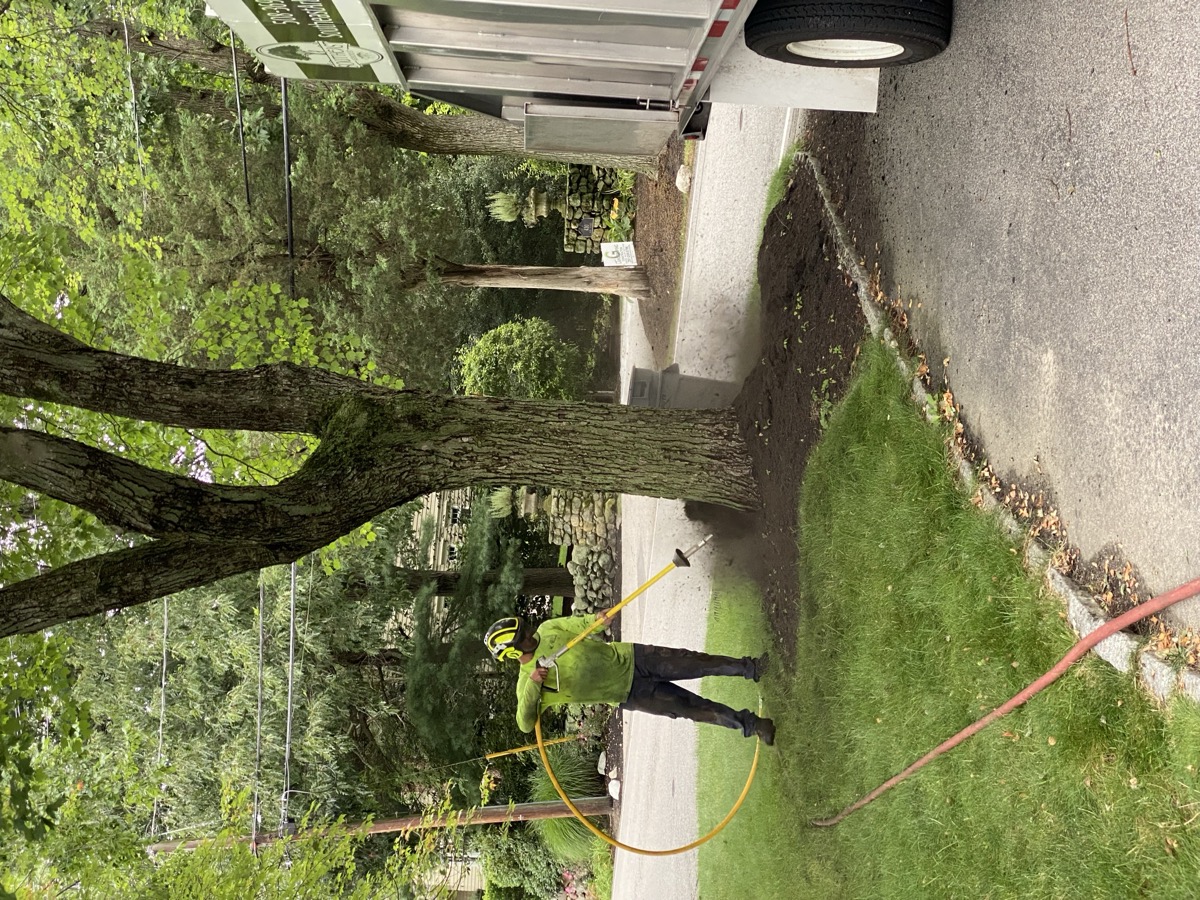
# Professional Root Zone Improvement in Holbrook, Massachusetts
Homeowners in Holbrook, Massachusetts, face unique challenges with their trees due to the town's dense residential lots and aging urban canopy. Many properties in Holbrook Center, North Holbrook, and South Holbrook feature overmature Norway maples, silver maples, and red oaks planted decades ago when the town expanded as a hub for shoe factory workers after separating from Randolph in 1872. These trees now struggle with compacted soils from foot traffic, construction, and poor drainage common in Norfolk County's clay-heavy soils. Root zone improvement in Holbrook MA addresses these issues directly, restoring soil health and tree vitality without invasive digging.
Southeast Arborist, LLC, your South Shore Massachusetts tree care experts based in Plymouth and Cohasset, specializes in root zone improvement Holbrook MA homeowners rely on. Our ISA Certified Arborists follow ANSI A300 standards for soil management and root pruning, using precision techniques like air spading to excavate and amend root zones. Whether your red maple in Brookville shows dieback from girdling roots or your white pine in the Union Street Area suffers from surface root conflicts, we diagnose and correct these problems on-site.
In Holbrook's ZIP code 02343, with its population of about 11,500, small lots amplify tree stress. Surface roots from arborvitae and spruce heave sidewalks along Plymouth Street, while green ash trees decline from deferred maintenance and emerald ash borer threats. Dutch elm disease, ice storms, and simple senescence have thinned the canopy over decades, leaving remnants along the Cochato River as a nod to pre-colonial forests. Root zone improvement Holbrook MA services from Southeast Arborist prevent further losses by decompacting soil, removing girdling roots, and installing vertical mulch plugs for long-term aeration.
Our process starts with a free consultation where we assess your property's soil pH—often acidic in Holbrook due to local granite-derived loams—and compaction levels from the region's wet springs and freeze-thaw cycles. We deploy high-pressure air spades to expose root flares buried under mulch volcanoes or fill dirt, a common issue in Holbrook's post-construction landscapes. For your Norway maple crowding a driveway in North Holbrook, we correct buried flares to promote upright growth and stability.
Safety remains paramount; our team uses ANSI Z133 safety protocols, including protective gear and traffic control for street-side trees near Route 37 or the Holbrook MBTA station. Post-treatment, your trees access oxygen, water, and nutrients more effectively, extending life spans amid Holbrook's variable climate—USDA Zone 6b with average lows of -5°F and 45 inches of annual rainfall.
Holbrook properties benefit from root zone improvement because it tackles deferred maintenance accumulation, a hallmark of the town's mid-20th-century plantings. Overgrown evergreen screens of arborvitae in South Holbrook outgrow their hedges, their roots competing in shallow soils. We thin these while improving root zones to support replacements like disease-resistant red maples.
Call Southeast Arborist at 508-369-5009 for root zone improvement Holbrook MA tailored to your lot. Our service area spans the South Shore, including nearby Abington, Randolph, and Braintree, ensuring prompt response. Invest in your trees today to avoid costly removals tomorrow—many Holbrook homeowners discover healthier canopies after one treatment.
Why Holbrook Properties Need Root Zone Improvement
Holbrook, MA's suburban character stems from its 1872 incorporation, drawing factory workers to its compact neighborhoods. Today, with 11,500 residents in Norfolk County, the town's dense development means trees on 0.25-acre lots face constant pressure. Norway maples dominate Holbrook Center streets, their aggressive roots lifting pavement after years of soil compaction from salted winter roads and summer lawn equipment.
Local soils, a mix of Merrimac sandy loams and urban fill, compact easily under foot traffic and poor grading. Holbrook's climate exacerbates this: wet springs flood root zones along the Cochato River, while summer droughts stress silver maples in North Holbrook. Freeze-thaw cycles heave roots of white pines and spruces, creating tripping hazards in backyards. Limited species diversity—mostly Norway maple, red maple, red oak, green ash, arborvitae, and spruce—means widespread vulnerability to pests like emerald ash borer and storms.
Overmature trees from early-to-mid 20th-century plantings now decline. In Brookville, red oaks show girdling roots circling trunks from buried flares, starving vascular tissue. Surface roots from silver maples invade lawns in the Union Street Area, competing with turf for water. Deferred maintenance leads to decline: arborvitae screens in South Holbrook brown from root rot in waterlogged clays, while green ash in Plymouth Street Area weakens against borers.
Construction damage compounds issues. Holbrook's residential infill near Weymouth and Braintree adds grade changes, smothering roots under new soil. Ice storms, like the 2014 event, toppled weakened spruces, exposing compacted subsoils. Dutch elm disease erased elms decades ago, shifting pressure to remaining species now at senescence.
Your Holbrook property likely shows signs: leaning white pines from unstable root balls, dieback on red maples from decompacted oxygen starvation, or mushrooms at Norway maple bases indicating anaerobic soils. Without root zone improvement Holbrook MA, these progress to failure—common in small lots where removal costs $1,500+ per tree.
Soil tests in Holbrook reveal pH 5.5-6.5, low in organics from leaf removal bans bypassed by raking. Clay subsoils retain water, suffocating roots during 50+ inch rains. Vertical mulching counters this by creating aerated channels.
For your trees, root zone improvement restores balance. Removing girdling roots on red oaks prevents girdle-induced decline, while decompaction aids arborvitae recovery post-thinning. In Holbrook's urban forest, this extends canopy life, cooling neighborhoods by 5-10°F and boosting property values.
Practical advice: Test your soil with a $20 kit from Holbrook Hardware—aim for 5% organic matter. Avoid tilling near trunks; hand-pull weeds instead. Mulch 3 inches deep in a donut shape around bases, keeping it 6 inches from flares. Monitor for heaving along Plymouth Street sidewalks, a spruce giveaway.
Southeast Arborist's ISA Certified Arborists identify these Holbrook-specific stressors during inspections. We reference town GIS maps for canopy data, prioritizing ANSI-compliant treatments. Your investment yields vigorous trees resilient to Zone 6b winters.
Nearby towns like Rockland and Randolph share these woes, but Holbrook's shoe-era legacy makes its canopy uniquely aged. Act now to preserve it.
Our Root Zone Improvement Process in Holbrook
Southeast Arborist delivers root zone improvement Holbrook MA through a meticulous, ANSI A300-compliant process tailored to Norfolk County conditions. Our ISA Certified Arborists arrive with air spades, soil probes, and diagnostic tools, starting with a site assessment on your Holbrook property.
Step 1: Diagnosis (30-60 minutes). We inspect your trees—say, a Norway maple in Holbrook Center—for symptoms like stem girdling roots, buried flares, or compaction. Using a soil probe, we measure penetration resistance; Holbrook clays often exceed 300 psi, signaling trouble. We photograph roots for client reports and test pH/moisture with meters suited to local loams.
Step 2: Air Spade Excavation (1-2 hours per tree). Our 1,600 PSI air spade blasts away soil without cutting roots, exposing the root plate to 12-18 inches depth. For your silver maple in North Holbrook, this reveals circling roots from mulch buildup. We use tarps to contain debris, protecting your lawn from Holbrook's clay dust.
Step 3: Girdling Root Removal and Flare Correction. ISA standards guide selective pruning: we sever roots >25% trunk diameter only if compressive. On red oaks in Brookville, we expose and level buried flares, raising grade if needed with permeable backfill. This prevents decay in moisture-trapping Holbrook soils.
Step 4: Soil Decompaction and Amendment. We fracture compacted layers with air tools, then incorporate amendments: composted leaf mold (20% by volume) for organics, gypsum for clay dispersion, and mycorrhizal inoculants for root fungi. For white pines prone to needle cast, we add pine bark fines to mimic acidic forest floors along Cochato River.
Step 5: Vertical Mulching. We bore 6-8 inch diameter holes 18-24 inches deep in a grid pattern (spaced 12 inches), filling with 70% compost/30% sand mix. This creates wicking channels for your arborvitae in South Holbrook, improving drainage amid 45-inch rains. We cap with 3-inch wood chip mulch.
Step 6: Drainage Enhancements. In low spots near Union Street, we install French drains or gravel trenches to divert runoff from spruce root zones, preventing rot.
Step 7: Post-Treatment Monitoring. We provide a report with before/after photos and a 6-month follow-up. Safety protocols include hard hats, spotters for overhead lines near Route 123, and equipment calibrated to ANSI Z133.
Equipment specifics: Stihl BR 800 backpack blowers for cleanup, Felco pruners for roots, and John Deere Gator carts for hauling in tight Holbrook lots. For construction-damaged green ash in Plymouth Street Area, we mitigate compaction from equipment scars.
Your trees respond quickly: new feeder roots emerge in weeks, uptake improves 30-50%. In Holbrook's climate, fall treatments prep for winter dormancy; spring avoids wet soils.
Homeowner tips: Water deeply post-treatment (1 inch/week), avoid fertilizers first year—rely on amendments. Check mulch annually; refresh vertical plugs every 3 years.
Our process minimizes disruption—jobs wrap in 4-6 hours for 3-5 trees. Backed by insurance and warranties, it's the gold standard for root zone improvement Holbrook MA.
Common Root Zone Improvement Projects in Holbrook Neighborhoods
Holbrook's neighborhoods showcase distinct root zone needs, with Southeast Arborist tackling projects across all.
In Holbrook Center, near the town hall and library, Norway maples on small front yards suffer buried flares from 1950s fill. We air spade to expose roots, remove girdlers, and vertical mulch—restoring 20-year-old trees shading historic homes.
North Holbrook properties along Route 37 feature silver maples with surface roots buckling driveways. Our teams decompact and amend, then coordinate with Holbrook DPW for sidewalk adjustments, preventing hazards near the Commuter Rail.
South Holbrook backyards host overgrown arborvitae screens, roots rotted in poor drainage. We thin evergreens, improve root zones, and replant compact cultivars like 'Emerald Green', enhancing privacy without invasion.
Brookville lots near Randolph line challenge red oaks with girdling from lawnmower damage. Excavation reveals compressed cambium; post-correction, trees upright and vigorous, supporting local wildlife corridors.
Union Street Area sees white pines leaning from compacted soils post-ice storm scars. We stabilize root balls, amend with sandy loam, and prune for wind resistance in exposed sites.
Plymouth Street Area green ash and spruces battle emerald ash borer and heaving. Root zone improvement bolsters survivors, with vertical mulching aiding nutrient flow amid construction nearby.
Landmarks like the Cochato River trail benefit too—native red maples there get decompaction to mimic old-growth conditions. Across Holbrook, we prep for replacements after removals, grinding stumps and amending for new plantings.
These projects highlight root zone improvement Holbrook MA's role in canopy renewal.
Root Zone Improvement Costs in Holbrook, MA
Root zone improvement costs in Holbrook MA vary by tree size, issues, and site access, but deliver strong ROI. Expect $500-$1,200 per mature tree like a 24-inch DBH Norway maple in Holbrook Center—covering diagnosis to mulching.
Factors driving pricing:
- Tree diameter: Small red maples (<12 DBH) start at $400; large silver oaks hit $1,500 due to excavation volume.
- Root complexity: Girdling removal adds $200; construction damage mitigation $300+.
- Number of trees: Discounts for 3+ (10-20% off), common in dense North Holbrook hedges.
- Site challenges: Plymouth Street sloped lots add $150 for shoring; urban access near Braintree incurs $100 traffic control.
- Amendments: Vertical mulching (5-10 plugs) $250 extra; drainage $400.
Holbrook averages $800/tree, below removal ($2,000+) or cabling ($1,500). Value: Extends life 10-20 years, avoids $5,000 emergency work. Healthier trees raise property values 3-5% per appraisal data.
Our transparent quotes itemize: 40% labor, 30% materials, 20% equipment, 10% travel from Plymouth. ISA certification ensures no upcharges for standards compliance.
Compare: DIY risks root damage; competitors skip vertical mulching. We warranty 1-year regrowth.
Budget tips: Bundle with pruning (save 15%); off-season scheduling cuts 10%. Financing via local banks for South Shore homeowners.
Investing in root zone improvement Holbrook MA pays dividends—call 508-369-5009 for your quote.
When to Schedule Root Zone Improvement in Holbrook
Schedule root zone improvement Holbrook MA in late spring (May-June) or fall (September-October) to align with Holbrook's climate. Avoid summer heat stress or winter freezes; wet April soils clog air spades.
Urgency signs: Dieback >20% on red maples, leaning white pines >10 degrees, mushrooms under arborvitae, or heaving roots lifting sidewalks in South Holbrook. Act within weeks to halt decline.
Post-storm (ice/wind common November-March), inspect immediately—compaction worsens instability. Pre-construction, baseline treatments protect roots.
Annual calendar: May for active growth; September before leaf drop. Our Plymouth base ensures 48-hour response.
Monitor your trees monthly: Thin bark sloughing on Norway maples signals root strife. Early intervention saves costs.
Contact Southeast Arborist at 508-369-5009 now—slots fill fast in peak seasons.
Frequently Asked Questions About Root Zone Improvement in Holbrook
What is root zone improvement in Holbrook MA? Root zone improvement Holbrook MA involves air excavating, decompacting, and amending soils around tree bases to enhance oxygen, water, and nutrient access. Ideal for compacted clays stressing Norway maples in Brookville.
How long does recovery take after treatment? Your Holbrook trees show new growth in 4-6 weeks; full benefits in one season. Red oaks regain vigor by next spring.
Is air spading safe for my lawn and roots? Yes, our ISA Certified process disturbs <5% roots, with tarps protecting turf. Holbrook lawns recover in days.
Can it save declining silver maples in North Holbrook? Often yes—if girdling roots are the cause. We assess viability; 70% success rate on mid-stage decline.
What's the difference from mulching alone? Mulching suppresses weeds; root zone improvement excavates problems first, adding vertical channels for lasting drainage in wet Holbrook soils.
Will insurance cover it? Typically no, as preventive— but cheaper than removal claims. Ask about arborist reports for disputes.
How often repeat for spruces in Union Street? Every 3-5 years refresh vertical mulch; monitor annually.
Does it help emerald ash borer-stressed green ash? It boosts vigor for insecticide efficacy, extending life pre-removal.
Root Zone Improvement Throughout Holbrook
Southeast Arborist provides root zone improvement across Holbrook neighborhoods: Holbrook Center, North Holbrook, South Holbrook, Brookville, Union Street Area, and Plymouth Street Area. We extend to nearby Rockland, Abington, Braintree, Randolph, and Weymouth.
From Cochato River natives to street-side Norway maples, our ISA Certified team restores your trees. Call 508-369-5009 for a consultation—Plymouth/Cohasset based for fast South Shore service.