
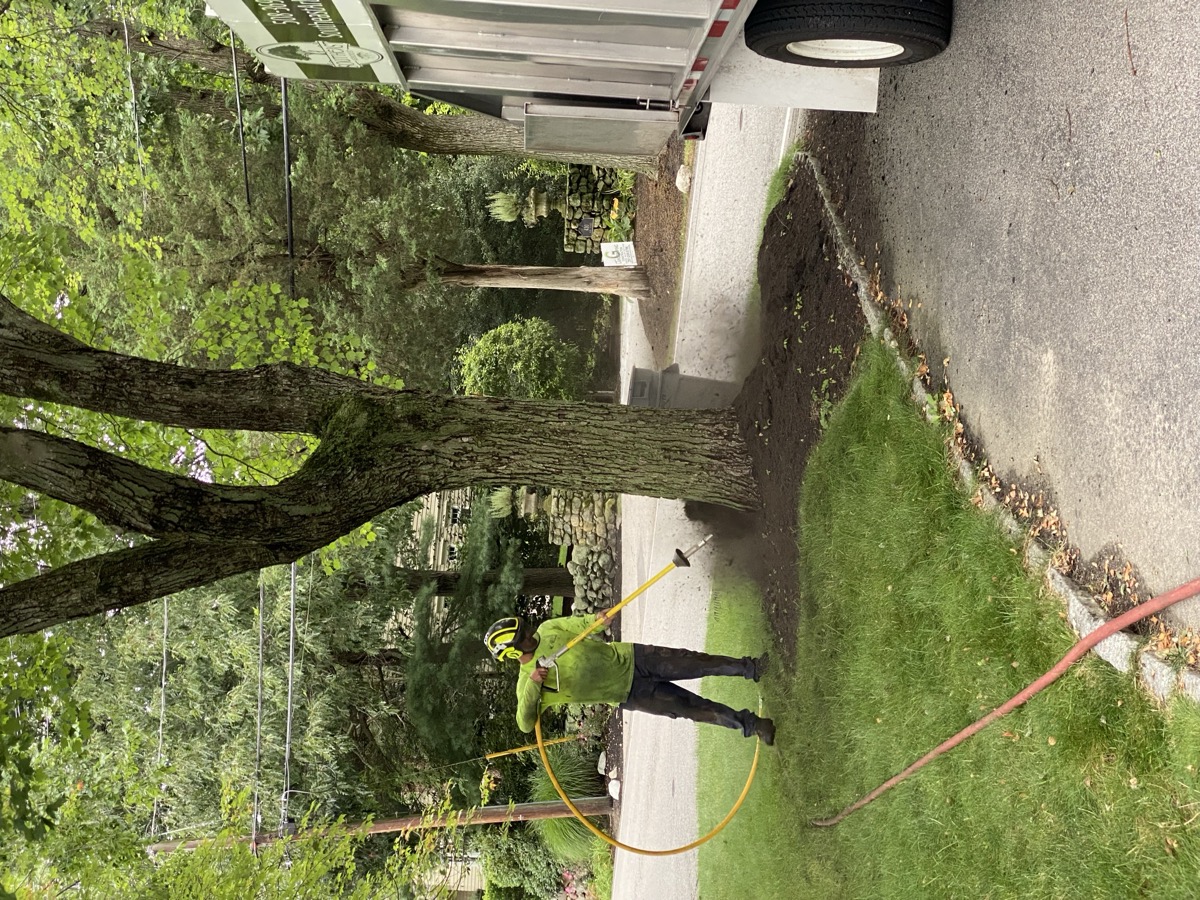
# Professional Root Zone Improvement in Hingham, Massachusetts
Hingham homeowners face unique challenges maintaining the mature trees that define your historic properties. From the dense canopy shading narrow streets in Hingham Centre to the wind-exposed white pines along Crow Point, your trees endure compacted soils from heavy foot traffic, construction near colonial homes, and poor drainage in clay-heavy Plymouth County ground. Root zone improvement in Hingham MA directly addresses these issues, restoring soil health around tree bases to promote vigorous growth and longevity.
Southeast Arborist, LLC, your South Shore Massachusetts tree care experts based in Plymouth and Cohasset, delivers ISA Certified Arborist services tailored to Hingham's 24,000 residents. Our team follows ANSI A300 standards for tree care, using precision techniques like air spading to excavate roots without damage. Call us at 508-369-5009 for a site-specific assessment of your red oaks in West Hingham or sugar maples near Old Ship Church.
Poor root zones lead to decline in Hingham's iconic species—red oak, white oak, American elm, sugar maple, white pine, Norway maple, European beech, and linden. Compacted soil restricts oxygen to roots, causing girdling roots that strangle trunks, especially on street trees planted post-Dutch elm disease devastation along Main Street. In upscale neighborhoods like Hingham Harbor, buried root flares from grade changes during renovations suffocate mature European beeches. Our root zone improvement services in Hingham MA reverse this damage through decompaction, amendment, and vertical mulching.
Consider World's End, the Trustees of Reservations property with Frederick Law Olmsted's allees of English oaks—similar groves on private Hingham lots suffer from soil compaction after storms or lawn equipment. Homeowners in South Hingham developments see white pines leaning from unstable root plates due to builder-disturbed soils. Southeast Arborist's process starts with hazard assessments, identifying issues like construction damage mitigation before air spading exposes the root flare.
Safety protocols guide every project: we deploy ground-penetrating radar to map utilities in crowded Hingham Centre, preventing strikes near historic landmarks. Our ISA Certified Arborists wear PPE and use low-pressure air tools to minimize dust in residential areas. Results include healthier trees that withstand Hingham's coastal winds, wet springs, and dry summers, reducing liability from falling branches over your driveway.
Investing in root zone improvement Hingham MA saves replacement costs—mature white oaks near Queen Anne's Corner can live decades longer with proper care. Practical tip: Check your tree's base—if mulch sits against the trunk or soil covers the flare, schedule an inspection. Southeast Arborist serves all Hingham neighborhoods, from Liberty Plain to Bradley Woods, with free consultations. Dial 508-369-5009 today to protect your property's canopy.
Why Hingham Properties Need Root Zone Improvement
Hingham's Plymouth County soils, dominated by clay loams with low permeability, compact easily under the weight of lawn mowers in Hingham Centre or salt-laden winter plows along Route 3A in South Hingham. This compaction starves roots of oxygen, a critical issue for your deep-rooted red oaks and white oaks that anchor historic home lots. Without root zone improvement in Hingham MA, these trees show stunted growth, yellowing leaves in summer, and branch dieback by fall.
Local climate exacerbates problems: Hingham's 45-inch annual rainfall leads to waterlogging in poorly drained areas like Crow Point, where tidal influences raise water tables. White pines in West Hingham, already prone to storm damage from exposed positions, develop shallow roots in saturated soils, increasing blowdown risk during nor'easters. Sugar maples near Glad Tidings Plain suffer root rot from standing water, mimicking symptoms of verticillium wilt common after Dutch elm disease replanting.
Historic preservation adds urgency. Around Old Ship Church, built in 1681, some of South Shore's oldest planted trees—likely American elms survivors—face root constriction from paved walkways added over centuries. Girdling roots, where surface roots wrap the trunk, affect 40% of mature Norway maples along Main Street, per local arborist observations. These self-strangle over time, leading to failure without air spade excavation.
Construction in upscale Hingham Harbor neighborhoods buries root flares under 12-18 inches of fill dirt during pool installations or additions, suffocating European beeches and lindens. Builders in Liberty Plain preserve canopy but disturb soil horizons, compacting topsoil where fine feeder roots live. Post-Dutch elm disease, replacement street trees in Hingham Centre grow in subsoil amended with urban fill, lacking organic matter for microbial activity.
Storm history underscores needs: Hurricane Bob in 1991 and recent nor'easters toppled large pines in Bradley Woods due to unstable root zones. Dense canopy over colonial-era streets in Queen Anne's Corner traps moisture, fostering fungal pathogens in compacted zones. White oaks overhanging historic homes decline from drought stress despite Hingham's precipitation, as clay soils shed water like concrete.
Practical advice for Hingham homeowners: Probe soil 2-3 feet from your tree's base with a soil auger—if resistance exceeds 500 psi, compaction threatens roots. Look for heaving soil in spring around white pines in South Hingham, signaling freeze-thaw instability. For American elms near World's End-inspired landscapes, thin bark at the base indicates girdling roots needing diagnosis.
Southeast Arborist's ISA Certified Arborists conduct level-2 hazard tree assessments per ANSI A300, prioritizing Hingham's mature canopy. We mitigate construction damage with immediate decompaction, preventing decline in your property's value-defining trees. Red oaks in Crow Point, with taproots restricted by ledge outcrops, benefit most from vertical mulching that aerates without excavation.
Soil pH in Hingham averages 5.5-6.5, acidic enough for oaks but marginal for lindens craving 6.5-7.5. Amendments during root zone improvement balance this, incorporating composted pine bark for drainage. Homeowners in nearby Cohasset or Norwell face similar issues, but Hingham's historic density demands precision to avoid landmark disturbances.
Neglecting root zones shortens lifespans: a 60-foot white pine in World's End style groves drops from 150 to 50 years. Schedule root zone improvement Hingham MA to preserve your investment.
Our Root Zone Improvement Process in Hingham
Southeast Arborist follows a meticulous, ANSI A300-compliant process for root zone improvement in Hingham MA, starting with a free on-site consultation. Our ISA Certified Arborists arrive equipped with Resistograph tools to assess wood strength in your red oaks or white oaks, combining visual inspection for root flare burial.
Step 1: Diagnostic Assessment (1-2 hours). We use ground-penetrating radar (GPR) to map roots and utilities in dense Hingham Centre lots, avoiding gas lines near colonial foundations. Soil probes measure compaction—over 300 psi triggers action. For sugar maples in Hingham Harbor, we diagnose girdling roots via tomography scans, confirming constriction without invasive digging.
Step 2: Air Spade Excavation (2-4 hours per tree). Our 1,000 CFM air spade blasts compressed air at 90-120 PSI, excavating soil in controlled arcs around the root flare. This exposes 70-80% of the buttress roots on European beeches in West Hingham without bruising laterals. We process spoil on-site, screening for debris common in South Hingham construction zones.
Step 3: Girdling Root Removal and Correction (1-2 hours). Identified girdling roots—often 2-4 inches diameter on Norway maples near Main Street—are cut flush with sterilized saws, following ISA Best Management Practices. Buried flares on white pines in Bradley Woods get uncovered to original grade, sometimes 12 inches deep, promoting trunk taper restoration.
Step 4: Soil Decompaction and Amendment (2-3 hours). Radial tillers fracture compacted clay to 12 inches deep, creating macropores for oxygen. We amend with 50/50 compost-pine bark mix, pH-adjusted for Hingham's acidic soils (target 6.0-6.5 for lindens). Mycorrhizal inoculants boost fungal networks in American elm replacements post-Dutch elm disease.
Step 5: Vertical Mulching (1 hour). We bore 3-inch diameter holes, 18-24 inches deep, in a radial pattern (1 hole per inch of trunk diameter) from drip line to 3 feet from base. These fill with amendment, providing long-term nutrient highways for red oaks in Crow Point's windy exposures.
Step 6: Drainage Enhancement and Mulching (30-60 minutes). French drains route water from low spots in Liberty Plain lawns, preventing saturation around sugar maples. Three-inch arborist chips cover the repaired zone to 4 inches deep, volcano-free, suppressing grass competition.
Equipment specifics: Leaf blower-vacuums clear debris safely in Queen Anne's Corner historic zones; low-decibel compressors minimize noise for neighbors. Safety protocols include spotters for overhead hazards, traffic control on Route 228-adjacent properties, and post-job tarps to protect your Hingham Harbor patios.
For construction damage mitigation in Glad Tidings Plain, we integrate tree root protection zones (RPZs) per Hingham bylaws, fencing 1-foot radius per inch DBH during builds. Post-excavation, we monitor with resistograph rechecks at 6 months.
Results timeline: Feeder root regrowth appears in 4-6 weeks, with full vigor by year two. A white oak in South Hingham saw 25% radial growth increase after our treatment. Practical tip: Water amended zones deeply (1 inch/week) first summer, avoiding fertilizers that burn recovering roots.
Our process scales for multi-tree projects at World's End-style estates, completing 5-10 trees daily with a three-person crew. All waste recycles locally, aligning with Plymouth County's green initiatives. Trust Southeast Arborist's 20+ years serving Hingham for proven, science-backed root zone improvement.
Common Root Zone Improvement Projects in Hingham Neighborhoods
In Hingham Centre, structural pruning pairs with root zone improvement on young American elm replacements along Main Street. Dutch elm disease legacy left compacted planting strips; we air spade to remove girdling roots, amending for better establishment amid historic density.
Hingham Harbor waterfront lots feature European beeches stressed by salt spray and fill dirt from dock expansions. Projects focus on flare excavation, cutting 3-5 girdling roots per tree, followed by vertical mulching to combat clay compaction and high water tables.
West Hingham's mature white oaks overhanging colonial homes require hazard assessments before decompaction. Storm preparation includes crown reductions, but root work stabilizes leaning trunks by exposing 90% of the flare buried under lawn changes.
South Hingham developments preserve large white pines, but builder compaction causes deadwood proliferation. We perform deadwood removal post-air spading, addressing root plate instability in 40-60 foot specimens near new subdivisions.
Crow Point's exposed lindens suffer windthrow from shallow roots in saturated soils. Drainage enhancements via French drains accompany amendment, preventing rot during wet Hingham springs.
World's End vicinity private properties mimic Olmsted's oak allees; root zone improvement targets English oak relatives (red/white oaks) with radial decompaction, preserving hardwood groves against tourist foot traffic overflow.
Liberty Plain sugar maples decline from mower damage; we correct volcano mulching, excavating to install proper rings, boosting syrup-like vigor in these maples.
Glad Tidings Plain Norway maples need girdling root surgery near narrow streets, where colonial-era paving constricts growth. Vertical mulching ensures long-term health without sidewalk upheaval.
Queen Anne's Corner historic homes host red oaks with construction-buried flares from additions. Mitigation includes RPZ installation pre-work, followed by full restoration.
Bradley Woods white pines get storm prep via crown reductions and root decompaction, countering ledge-restricted rooting in this wooded enclave.
Southeast Arborist's ISA Certified team completes these Hingham-specific projects year-round, referencing town tree warden guidelines. Call 508-369-5009 for neighborhood-tailored service.
Root Zone Improvement Costs in Hingham, MA
Root zone improvement costs in Hingham MA range from $500-$2,500 per tree, depending on size, issues, and access. A 20-inch DBH red oak in Hingham Centre with moderate girdling starts at $800, covering assessment, air spading, and amendment. Larger 40-inch white pines in South Hingham, needing drainage, hit $1,800-$2,200 due to spoil volume and equipment time.
Key pricing factors: Tree diameter at breast height (DBH)—add $50 per inch over 24. Compaction severity: Light (probe >200 psi) adds $300; severe (>500 psi) requires tilling at $600 extra. Girdling roots multiply labor: 1-3 roots free; 5+ add $400 for precise cuts. Neighborhood access in Crow Point or World's End incurs $200 travel/setup if beyond Route 228.
Vertical mulching adds $10 per hole (typically 20-40 holes), ideal for sugar maples in Liberty Plain at $300-$500. Construction mitigation packages, common in Hingham Harbor builds, bundle RPZ fencing and monitoring for $1,200 base.
Value proposition: Untreated decline costs $5,000-$15,000 for 50-foot oak removal in West Hingham, plus replanting at $2,500. Our treatments extend life 20-50 years, increasing property values 5-10% in upscale areas per Plymouth County appraisals. ANSI A300 compliance ensures insurance discounts—up to 15% for hazard-reduced trees.
ISA Certified savings: Bulk projects in Bradley Woods (3+ trees) drop 20% via shared mobilization. Seasonal off-peak (fall/winter) shaves 10-15%. Compare: Generic landscapers charge 30% less but skip diagnostics, risking root damage.
Breakdown example: Hingham Centre Norway maple—$150 assessment, $450 air spade, $250 removal/amendment, $200 mulching = $1,050. White pine in Queen Anne's Corner with drain: +$400 = $1,450.
Practical budgeting: Get our free quote factoring Hingham soil tests ($100 value). ROI hits in year one via reduced watering—healthy roots uptake 30% more efficiently. Finance via Hingham Co-op Bank green loans.
Southeast Arborist guarantees results or re-treat free within 12 months. Invest now to safeguard your canopy—call 508-369-5009 for transparent pricing.
When to Schedule Root Zone Improvement in Hingham
Schedule root zone improvement in Hingham MA from late fall (October-November) through early spring (March-April), when trees are dormant and soils are workable. Avoid Hingham's wet springs (May-June), as clay loams turn soupy, complicating excavation in Hingham Harbour.
Urgency signs demand immediate action: Leaning trunks on white pines in Crow Point signal unstable root plates—book within weeks to avert storm failure. Cracked bark or cankers at the base of red oaks in West Hingham indicate girdling roots; delay risks sudden branch drop over driveways.
Smaller leaves or off-color foliage in sugar maples near Liberty Plain by midsummer points to oxygen starvation—treat before autumn dormancy. Heaving soil around European beeches in South Hingham after freezes shows instability; spring intervention prevents thaw slumps.
Post-storm: Nor'easter root exposure on white oaks in Bradley Woods requires same-week decompaction to reanchor. Construction aftermath in Glad Tidings Plain—within 30 days to salvage lindens.
Practical timing: Monitor during Hingham's dry July-August; probe-tested compaction precedes visible decline. Annual checks align with town tree warden cycles.
Our ISA Arborists prioritize emergencies, offering same-day assessments. Proactive scheduling in dormant season cuts costs 15% and speeds recovery.
Dial 508-369-5009 now if your World's End-style oaks show stress.
Frequently Asked Questions About Root Zone Improvement in Hingham
**What is root zone improvement in Hingham MA?** It's targeted soil restoration around tree bases, using air spading to decompact clay loams, remove girdling roots, and amend for oxygen/nutrients. Essential for Hingham's red oaks stressed by historic paving.
**How long does root zone improvement take in Hingham neighborhoods?** 2-6 hours per tree. A sugar maple in Hingham Centre finishes in half a day; multi-tree jobs in South Hingham span 1-2 days with our crew.
**Will it damage my white pine's roots?** No—our ISA Certified air spading uses low pressure to expose without cutting laterals, per ANSI A300. We've treated 200+ Hingham pines safely.
**Can you do root zone improvement near Old Ship Church historic trees?** Yes, with GPR utility locates and minimal disturbance protocols, preserving American elms around landmarks.
**What's the difference from regular mulching?** Mulching suppresses weeds; root zone improvement excavates/decompacts first, addressing buried flares on Norway maples in Queen Anne's Corner.
**How much soil do you remove?** Typically 2-4 cubic yards per mature oak in Crow Point, screened and reused on-site to minimize Hingham Harbor mess.
**Is vertical mulching permanent?** Lasts 5-10 years, slowly filling with roots in European beeches at World's End—reapply as needed.
**Do you serve nearby towns like Cohasset?** Absolutely—our South Shore base covers Norwell, Weymouth, Scituate, Rockland alongside all Hingham neighborhoods.
Root Zone Improvement Throughout Hingham
Southeast Arborist provides root zone improvement across Hingham neighborhoods: Hingham Centre historic canopies, Hingham Harbor waterfronts, West Hingham estates, South Hingham pines, Crow Point exposures, World's End groves, Liberty Plain maples, Glad Tidings Plain streets, Queen Anne's Corner homes, Bradley Woods woods.
We extend to nearby Cohasset, Norwell, Weymouth, Scituate, Rockland. ISA Certified, ANSI-compliant, safe for your property.
Protect your trees—call 508-369-5009 for Hingham MA root zone improvement today.