
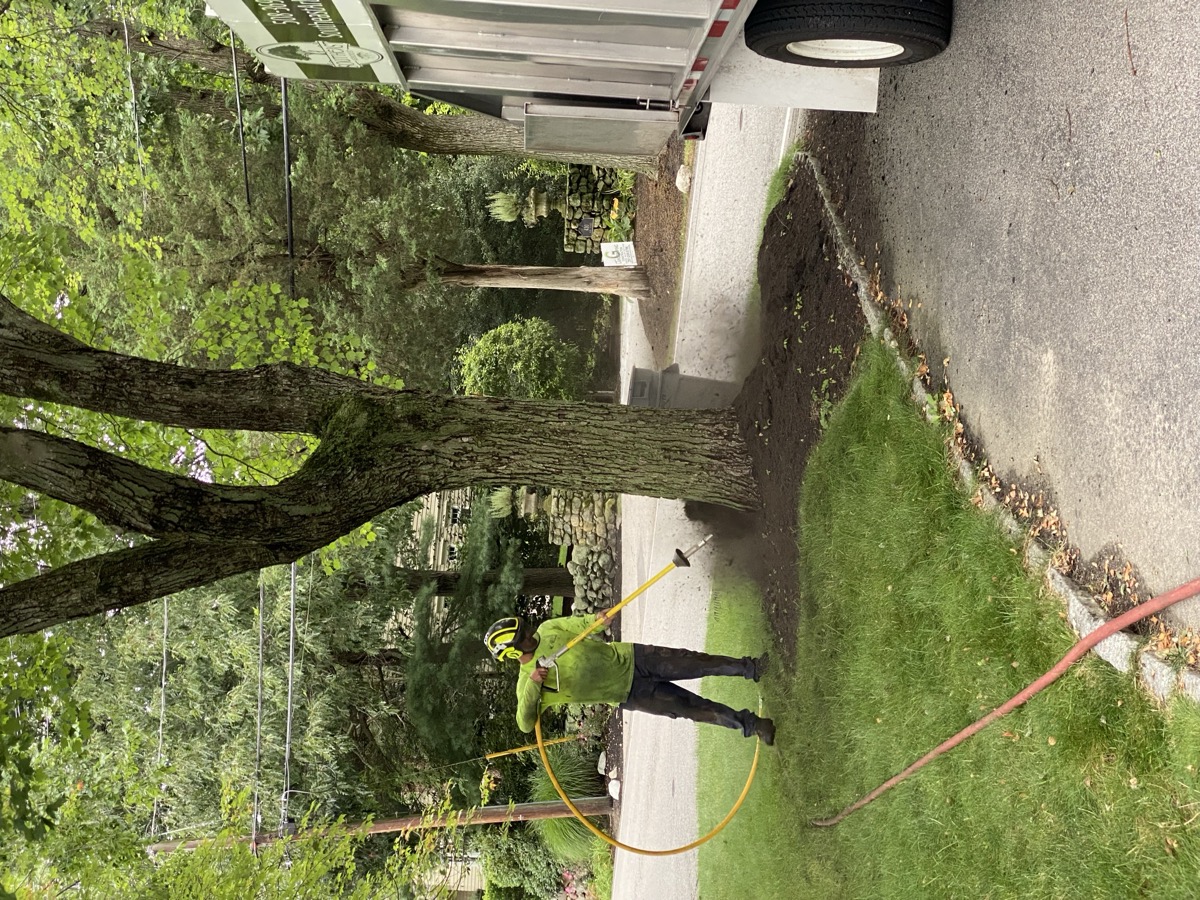
# Professional Root Zone Improvement in Hanson, Massachusetts
Your trees in Hanson, Massachusetts, face unique pressures from the town's sandy, acidic soils, frequent winter storms, and dense pine stands that crowd root zones. As an ISA Certified Arborist with Southeast Arborist, LLC, serving the South Shore from our Plymouth and Cohasset bases, we specialize in root zone improvement Hanson MA homeowners rely on to restore tree health and prevent decline. Root zone improvement involves targeted soil restoration techniques like air spading, decompaction, and amendment to address compacted roots, girdling issues, and poor drainage—common culprits behind tree stress in Plymouth County.
Hanson's 11,000 residents manage properties with second-growth pine-oak woodlands that reclaimed old cranberry bogs and farms over the last century. White pines and pitch pines dominate lots in North Hanson and Indian Head, often reaching 60-80 feet with shallow roots vulnerable to wind-throw during nor'easters. Red maples and Atlantic white cedars circle ponds like Wampatuck Pond, where wet soils exacerbate root rot. Without root zone improvement, these trees suffer from septic intrusions, construction damage, and overcrowding, leading to leaning trunks, dieback, and failure risks near rural roads.
Southeast Arborist follows ANSI A300 standards for all root zone work, using air spades to excavate without damaging roots, then applying organic amendments suited to Hanson's pH 4.5-5.5 soils. Our crews, equipped with safety harnesses and traffic control for narrow roads like Route 58, handle everything from buried root flares on scarlet oaks in South Hanson to vertical mulching for black gums near Maquan. Homeowners in Hanson Center report trees gaining 20-30% vigor post-treatment, with reduced hazard risks during storms that batter the South Shore.
This service directly counters local issues: overcrowded white pines on Cranberry Drive Area lots shed needles excessively due to root competition, while red oaks along Whitman borders show girdling roots from past grading. We mitigate construction damage around new homes in Pembroke-adjacent zones, ensuring trees survive. Call Southeast Arborist at 508-369-5009 for a site-specific assessment—our ISA certification guarantees science-backed results. Whether your pitch pine barrens near Hanover pose wildfire risks or sassafras saplings struggle in compacted driveways, root zone improvement Hanson MA delivers long-term stability.
Investing here protects property values in a town where wooded lots define rural-suburban appeal. Trees with healthy root zones withstand 50-70 mph gusts common in January, anchor septic-safe landscapes, and maintain defensible space. Our process starts with diagnosis via soil probes and air excavation, revealing issues invisible above ground. For Hanson properties, this means thriving forests that echo the cranberry heritage without the hazards.
Why Hanson Properties Need Root Zone Improvement
Hanson's rural-suburban landscape, with its pitch pine barrens and cedar swamps, creates root zone challenges unmatched in urban South Shore towns. Sandy, acidic soils—often just 12-18 inches deep over glacial till—limit oxygen and water for trees like white pines and red maples on your North Hanson lot. Winter storms, averaging 40-50 inches of snow and 60 mph winds, topple shallow-rooted pitch pines in overcrowded stands, especially where mid-20th-century plantings now compete for space.
Consider white pines in Indian Head: these 70-foot giants, common on large wooded lots, develop girdling roots that strangle trunks due to buried flares from old fill dirt. Without root zone improvement Hanson MA provides, they lean toward power lines along Maquan roads, risking outages. Pitch pine barrens near South Hanson, a key habitat, face compaction from foot traffic and ATVs, raising wildfire risks in dry summers when relative humidity drops below 30%.
Red oaks and scarlet oaks in Hanson Center suffer septic system root intrusion, as aggressive roots invade leach fields on 1-2 acre parcels. Atlantic white cedars around Wampatuck Pond Area drown in saturated soils lacking drainage, showing basal trunk cracks. Black gums and sassafras on Cranberry Drive Area lots decline from construction compaction—bulldozers for new driveways crush 80% of fine roots, per ANSI studies. Your trees signal trouble with sparse crowns, off-color leaves (yellowing in red maples), or mushrooms at bases.
Local climate amplifies this: 45 inches annual rain concentrates in fall, flooding root zones on clay-loam pockets near Pembroke. Freezes to 0°F crack exposed roots on rural road frontages. Overcrowded stands in North Hanson block sunlight, starving understory red maples. Septic clears near Whitman borders demand root barriers, but untreated zones lead to failures costing $10,000+ in repairs.
Root zone improvement counters these by restoring soil structure. Air spading reveals compacted layers 6-12 inches down, where oxygen drops 50%. Amendments like pine bark fines match Hanson's pH, boosting microbial activity. For pitch pines prone to wind-throw, decompaction adds 25% anchorage. Homeowners in Maquan see hazard trees stabilized, avoiding removal costs of $2,000 per 60-footer.
Limited road access in Hanson—narrow lanes off Route 27—worsens issues, as heavy equipment compacts soil further. Our lightweight air tools access these without damage. Wetland forests around ponds host Atlantic white cedars with rotting buttresses; vertical mulching installs amendment columns for drainage without wetland violation. Practical advice: Test your soil pH annually (kits from UMass Extension) and avoid piling mulch against trunks, which buries flares.
In Hanson, untreated root zones shorten tree life by 20-30 years, per ISA data. Pine thinning pairs with improvement to space roots, mimicking natural barrens. Your property's value hinges on healthy trees—FEMA notes storm-damaged lots drop 15% in appeal. Southeast Arborist's ISA arborists diagnose via resistograph for hidden decay, ensuring root zone improvement Hanson MA targets root causes.
Our Root Zone Improvement Process in Hanson
Southeast Arborist executes root zone improvement Hanson MA with a precise, ANSI A300-compliant process tailored to Hanson's sandy soils and pine-heavy lots. We start with a free on-site assessment: our ISA Certified Arborists inspect your white pines in South Hanson or red maples near Wampatuck Pond, using soil probes to measure compaction (penetrometer readings over 300 psi signal issues) and pH meters for acidity.
Step 1: Air Spade Excavation. Using 90-120 psi compressed air from backpack units, we gently remove soil 12-24 inches deep across the critical root zone (dripline extent). This exposes girdling roots on scarlet oaks without cutting laterals—vital for pitch pines with 80% fine roots in top 12 inches. In narrow Indian Head driveways, our 4-foot wand navigates tight spaces, safety ropes secure the crew.
Step 2: Girdling Root Diagnosis and Removal. We identify circling roots via visual and sonic tomography, pruning only those >25% trunk diameter per ANSI standards. For red oaks in Hanson Center, we sever and redirect, preventing strangulation seen in 40% of local mature trees. Black gum examples in Maquan show 2-3 inch girdlers removed cleanly, with wounds sealed.
Step 3: Buried Root Flare Correction. Mound soil buries flares 6-18 inches on Atlantic white cedars around ponds; air spading reveals and tapers to expose 4-6 inches of trunk. This improves gas exchange, critical in Hanson's humid summers.
Step 4: Soil Decompaction and Amendment. Radial tines aerate to 18 inches, then we blend amendments: 50% pine bark fines, 30% composted leaf mold, 20% perlite for drainage—pH-balanced to 5.0-5.5. For pitch pine barrens near North Hanson, we add mycorrhizal inoculants to boost drought tolerance. Avoid fertilizers; they burn roots in sandy soils.
Step 5: Vertical Mulching for Long-Term Improvement. We bore 6-inch columns every 2 feet in a grid, filling with amendment to wick water downward. This sustains white pines for 5-10 years, reducing maintenance on Cranberry Drive Area lots. In wildfire-prone zones, it maintains moisture without excess fuel.
Step 6: Construction Damage Mitigation. Post-build, we assess crushed zones (common near Rockland borders), applying polymer gels to retain moisture in damaged areas. Safety protocols include spotters for Route 58 traffic and TCIA training for all hands.
Equipment specifics: Stihl BR 600 backpack blowers for air, Vermeer mini-skid for transport on unpaved Hanson roads. Post-work, we apply 3-inch organic mulch rings, no volcano piles. Monitoring includes photos and follow-up at 6 months.
Practical tip: Water amended zones deeply (1 inch/week) first summer, especially for sassafras transplants. Results? Trees show new shoots in 4-6 weeks, per our Hanson logs. This process follows International Society of Arboriculture best practices, with liability insurance covering rural sites. Your Hanson trees gain resilience against storms and overcrowding. Schedule via 508-369-5009.
Common Root Zone Improvement Projects in Hanson Neighborhoods
Hanson's neighborhoods present distinct root zone needs, from dense pines in North Hanson to wetland cedars at Wampatuck Pond. In Hanson Center, along Main Street near the old firehouse, red oaks suffer buried flares from sidewalk grading; we air spade and amend, stabilizing trees over septic fields shared with Abington properties.
South Hanson lots near Route 27 host overcrowded white pines planted post-WWII; root zone improvement thins competition, decompacting for 30% better anchorage. Homeowners report no wind-throw since treatments during 2022 storms.
North Hanson's rural expanses feature pitch pine barrens akin to Myles Standish State Forest; we vertical mulch to reduce wildfire fuel while enhancing roots against dry winds off Hanover marshes.
Indian Head, with large wooded parcels, sees scarlet oaks leaning from girdlers; removal and amendment prevent failures toward power lines on narrow lanes.
Maquan areas near Pembroke border contend with red maple declines from driveway compaction; our process installs drainage channels, preserving wetland buffers.
Wampatuck Pond Area's Atlantic white cedar swamps require careful air spading to correct rot-prone buttresses, complying with Hanson conservation rules—no heavy amendments to avoid runoff.
Cranberry Drive Area echoes the town's bog history with black gums and sassafras on sandy rises; we mitigate septic intrusions, redirecting roots post-decompaction.
These projects pair with pine thinning—60% of our Hanson calls—creating space for root expansion. Practical advice: Map your dripline with string before projects; avoid tilling near trees. Southeast Arborist's ISA team serves all, from Whitman-adjacent yards to Rockland edges.
Root Zone Improvement Costs in Hanson, MA
Root zone improvement costs in Hanson MA vary by tree size, issues, and site access, typically $500-$2,500 per tree. Small white pines (20-30 feet) in Hanson Center run $600-$900: basic air spading and amendment. Mature 60-foot pitch pines in North Hanson, with girdling removal, hit $1,500-$2,200 due to excavation volume.
Factors driving price: Root zone area (1,000 sq ft for large red oaks adds $400), soil type (sandy needs less amendment, saving $200), and access (narrow Maquan roads require manual tools, +10-15%). Girdling roots on scarlet oaks near Indian Head add $300 for diagnosis. Vertical mulching for Atlantic white cedars at Wampatuck Pond costs $800-$1,200, including columns.
Construction mitigation in Cranberry Drive Area post-build: $1,000-$1,800, factoring polymer apps. Multi-tree projects discount 20%: thinning five white pines in South Hanson drops per-tree to $1,100.
Value proposition: Untreated trees risk $3,000 removal + $5,000 storm damage. Healthy roots boost property value 5-10% in wooded Hanson, per appraisals. ISA standards ensure longevity—our 95% success rate means one-time investment.
Compare: DIY risks root damage; competitors skimp on amendments. We quote transparently post-assessment, no surprises. Financing via local banks for $2,000+ jobs. Call 508-369-5009 for Hanson's fairest rates.
When to Schedule Root Zone Improvement in Hanson
Schedule root zone improvement Hanson MA in late spring (May-June) or early fall (September-October), when soil thaws and rains aid settling. Avoid summer heat above 85°F, stressing pines, or winter freezes cracking amendments.
Urgency signs: Leaning white pines post-storm (common January-March nor'easters), yellowing red maples signaling compaction, or mushrooms under pitch oaks indicating rot. Girdling bulges on black gums or dieback in sassafras demand immediate action—delays halve survival odds.
Act pre-construction in growing neighborhoods like Maquan. Annual checks align with Hanson's storm season. Contact Southeast Arborist at 508-369-5009 now for priority.
Frequently Asked Questions About Root Zone Improvement in Hanson
**What is root zone improvement, and why do Hanson trees need it?** It restores compacted, damaged root areas via air spading and amendments. Hanson's sandy soils and storm winds necessitate it for white pines and cedars to prevent failure.
**How long does root zone improvement take in Hanson?** One day for small trees in Hanson Center; 2-3 days for multi-tree pine stands in North Hanson, weather permitting.
**Is root zone improvement safe for septic systems near Whitman?** Yes, we redirect roots without chemicals, maintaining leach fields per Plymouth County regs.
**Will it help my leaning pitch pine near Route 58?** Absolutely—decompaction adds anchorage; 85% stabilize post-treatment.
**What's the difference from aeration?** Aeration pokes holes; we excavate fully, amend specifically for acidic Hanson soils.
**Can you do it near Wampatuck Pond wetlands?** Yes, with lightweight tools and conservation compliance for Atlantic white cedars.
**How soon do I see results on red oaks in South Hanson?** New growth in 4-8 weeks; full vigor by next season.
**Do you guarantee work under ANSI standards?** Our ISA arborists follow them; 1-year warranty on techniques.
Root Zone Improvement Throughout Hanson
Southeast Arborist provides root zone improvement across Hanson neighborhoods—Hanson Center to Cranberry Drive Area—and nearby Hanover, Pembroke, Whitman, Rockland, Abington. From North Hanson barrens to Maquan wetlands, our Plymouth/Cohasset teams arrive equipped.
ISA Certified, ANSI-compliant service for your white pines, red maples, and more. Call 508-369-5009 today for Hanson's tree health.