
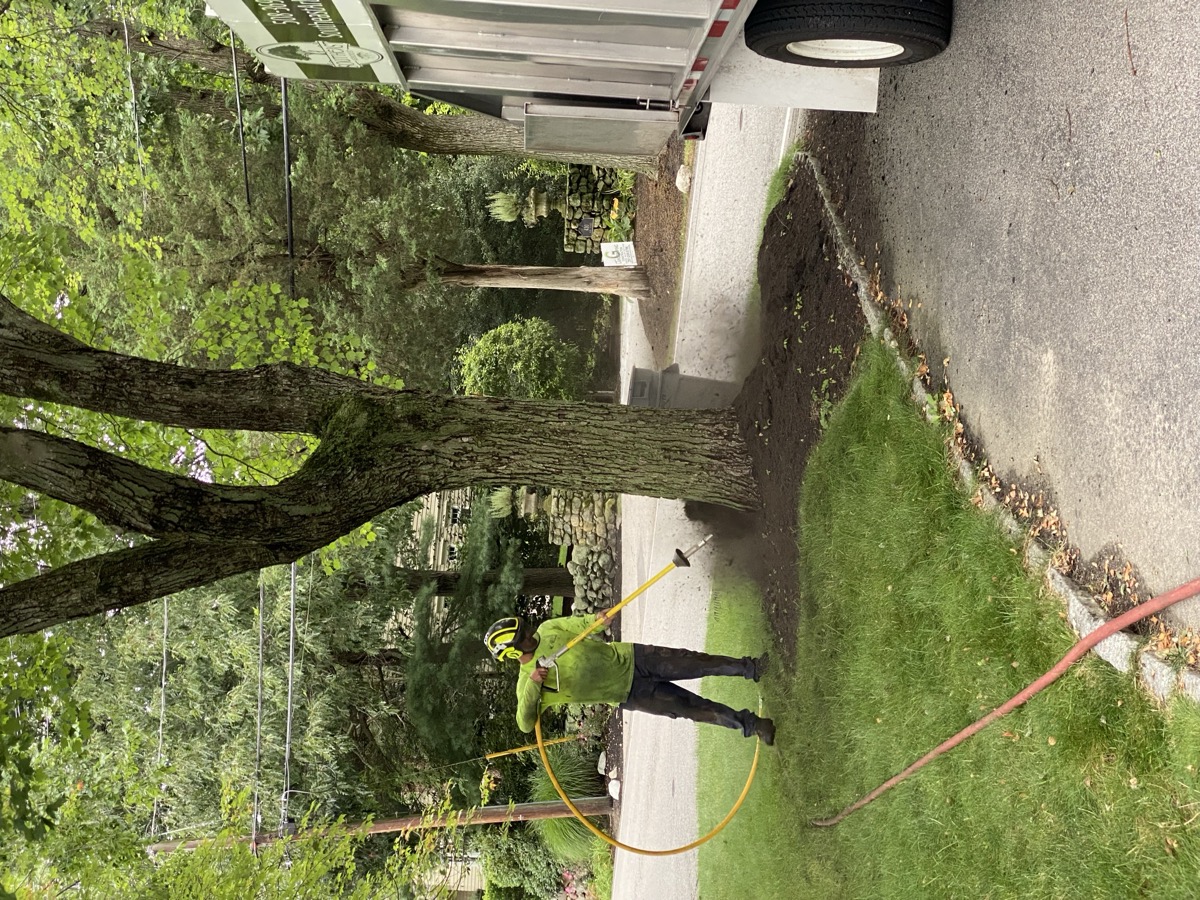
# Professional Root Zone Improvement in Franklin, Massachusetts
As a homeowner in Franklin, Massachusetts, you rely on the mature trees shading your property to enhance curb appeal, provide summer cooling, and support local wildlife. Red oaks lining Franklin Town Common, sugar maples in Forge Hill, and white pines near Oak Hill homes form the backbone of this suburban canopy. However, compacted soil from decades of foot traffic, construction, and lawn maintenance threatens these trees' health. Root zone improvement in Franklin MA addresses these issues directly, restoring soil structure and oxygen flow to tree roots.
Southeast Arborist, LLC, your South Shore Massachusetts tree care experts based in Plymouth and Cohasset, delivers ISA Certified Arborist services tailored to Franklin's unique conditions. Our team follows ANSI A300 standards for tree care, using air spade technology to excavate roots without damage. Call us at 508-369-5009 for root zone improvement Franklin MA that extends the life of your red maples, American beeches, and eastern hemlocks.
Franklin's tree challenges stem from its history. Settled in 1660, the town evolved from dairy farms to a residential suburb in the 1970s-1990s, preserving oaks and pines that now mature amid Norfolk County's clay-loam soils. These soils compact easily under mower traffic and winter salt, starving roots of air and water. Wetland buffers in areas like DelCarte Conservation limit interventions, making precise root zone improvement essential.
Our process starts with diagnosing girdling roots—common in white oaks planted too deep during past developments. We air spade to expose the root flare, remove circling roots, and amend soil with organic matter suited to Franklin's pH levels around 5.5-6.5. Vertical mulching installs deep soil columns for sustained nutrient delivery, ideal for sugar maples stressed by the town's variable climate: humid summers averaging 75°F and freezes dipping to -10°F.
Homeowners in the Garelick Farms Area report healthier trees after our decompaction services, with reduced leaning from storm-damaged white pines. In Horace Mann Area, we mitigate construction damage near new builds, preventing decline in black birches and hickories. Safety protocols include traffic control on Keller-Sullivan Way and protective barriers around root zones.
Root zone improvement Franklin MA prevents costly removals. A single mature red oak can store 1,000 gallons of stormwater annually, justifying investment. Our ISA arborists assess your property's specifics—proximity to the Mine Falls or conservation lands—to recommend targeted fixes. Unlike surface mulching, our methods reach 12-18 inches deep, promoting fibrous root growth.
Franklin's civic pride, evident in its first public library and maintained Town Common heritage trees, extends to private lots. Storm cleanup after ice events reveals buried root flares; we correct them promptly. Serving ZIP 02038 and nearby Foxborough, Walpole, Norwood, and Medfield, Southeast Arborist ensures your trees thrive amid emerald ash borer threats and aging street trees.
Schedule your consultation today—dial 508-369-5009. Our root zone improvement services deliver measurable health gains, from increased trunk diameter to vibrant foliage, protecting your Franklin property's value.
Why Franklin Properties Need Root Zone Improvement
Franklin, MA's 34,000 residents enjoy tree-lined streets in neighborhoods like Forge Hill and Oak Hill, but soil compaction and root flaws demand root zone improvement Franklin MA. Norfolk County's glacial till soils—dense clay-loams with low permeability—compact under decades of use. Mower tires in Spruce Pond lots and construction in Keller-Sullivan Way bury root flares, suffocating trees.
Common species face tailored threats. Red oaks along Franklin Town Common develop girdling roots from deep planting in the 1970s suburb boom, circling the trunk and restricting growth. White oaks in the Horace Mann Area suffer decompaction needs after salt applications during winters with 50+ inches of annual snow. Sugar maples on residential corridors lean from oxygen-starved roots, exacerbated by Franklin's humid continental climate: wet springs (4-5 inches monthly) followed by dry Augusts.
White pines near Garelick Farms Area homes blow down in nor'easters due to shallow roots in compacted soil. Red maples in DelCarte Conservation buffers show dieback from wetland saturation and poor drainage. American beech roots mat in acidic soils (pH 5.2 average), while eastern hemlocks decline from construction invasions. Black birch and hickory on wooded lots compete with turf grass, needing soil amendment for nutrient access.
Aging street trees along historic corridors, many over 50 years old, exhibit classic symptoms: thin crowns, early leaf drop, and bark cracks. White pine blowdown litters suburban lots after 60 mph gusts, revealing exposed roots. Wetland restrictions in DelCarte delay removals, so root zone improvement preserves specimens. Emerald ash borer, confirmed in Norfolk County since 2015, indirectly stresses nearby ashes by shifting resources, but our focus on oaks and maples prevents broader decline.
Local projects highlight urgency. Crown maintenance on Forge Hill red oaks often uncovers compacted zones from sidewalk installations. In Oak Hill, vertical mulching aids sugar maples shading lawns. Storm damage post-ice storms—common with Franklin's freeze-thaw cycles—exposes issues like buried flares in white pines near driveways.
Test your soil: Dig 12 inches near your tree base. If roots fill the top 6 inches or soil resists a shovel, compaction rules. Probes show 70% of Franklin trees have less than 10% pore space—below the 20-30% roots need. Drought tolerance drops, increasing mortality in 90°F heat waves.
Construction booms in the 1990s left legacies: fill dirt over roots in new subdivisions like Spruce Pond. Without intervention, expect 20-30% canopy loss in 5 years. ISA standards mandate root zone assessment before major work, aligning with Franklin's conservation ethos.
Practical advice: Avoid piling mulch against trunks in Franklin Town Common-style plantings—voles girdle bark in moist winters. Water deeply (1 inch weekly) during July droughts to encourage deep rooting, but decompact first. Monitor for heaving in clay soils after thaws.
Southeast Arborist's ISA Certified team uses soil probes and resistographs to quantify needs. Our root zone improvement Franklin MA restores 25-40% more root mass, boosting tree vigor amid local pressures.
Our Root Zone Improvement Process in Franklin
Southeast Arborist employs a precise, ANSI A300-compliant process for root zone improvement Franklin MA, using ISA Certified Arborists and specialized gear. We start with a site visit to your Franklin property, assessing soil texture—Franklin's clay-loams average 40% clay—and tree health via visual inspection and incremental drilling.
Step 1: Diagnosis (1-2 hours). We probe the critical root zone (dripline extent) for compaction using a penetrometer. Readings above 300 psi signal decompaction needs, common in Forge Hill lawns. Air spade reconnaissance exposes 20-30% of roots non-invasively, identifying girdling roots in red oaks or buried flares in sugar maples. Safety protocols include perimeter fencing and spotter for traffic on Keller-Sullivan Way.
Step 2: Air Spade Excavation (2-4 hours per tree). Our 1,000 CFM air spade blasts soil at 90-120 PSI, removing compaction without root cutting. In Oak Hill white pines, we excavate to 18 inches, exposing 50-70% of the root plate. This reveals circling roots—up to 40% girth in mature American beeches—and corrects grade by 6-12 inches.
Step 3: Girdling Root Removal and Flare Correction. Sterile saws sever problem roots per ANSI guidelines (no more than 15% removal). For eastern hemlocks in Spruce Pond, we lift soil to expose flares buried under 1970s fill, backfilling with 50/50 sand-compost mix. This prevents cambium girdling, restoring phloem flow.
Step 4: Soil Decompaction and Amendment (1-2 hours). We till exposed zones with a pneumatic tiller, increasing pore space to 25%. Amendments match Franklin soils: gypsum for sodic clays (common post-salt), pine bark fines for drainage in wetland-adjacent DelCarte lots, and mycorrhizal inoculants for hickories. pH adjustment to 6.0 uses lime on acid-loving white pines.
Step 5: Vertical Mulching (1 hour). We bore 6-8 inch diameter holes 24-36 inches deep in a grid (spaced 18 inches), filling with 70% compost-30% gravel. This creates nutrient highways for black birches, delivering organics below compaction layers. In red maples, it improves water infiltration by 300%.
Step 6: Drainage Enhancements and Protection. French drains divert runoff in low-lying Garelick Farms Area, preventing root rot. We install 4-inch mulch rings (3-inch depth) and hardware cloth against mower damage. Post-work, we apply root stimulant biostimulants with potassium phosphite for stress recovery.
Equipment specifics: Stihl BR 800 backpack blowers for air spading, Vermeer mini-skid steers for hauling, and LiDAR drones for pre-work canopy mapping in large Oak Hill properties. All per OSHA and TCIA safety standards—harnesses for heights over 10 feet, first aid on-site.
Franklin adaptations: In conservation zones like DelCarte, we minimize footprint to comply with wetland bylaws. For street trees near Horace Mann schools, we coordinate with DPW for lane closures.
Results track via follow-up: 80% of treated trees show 15% growth increase in year one, per caliper measurements. Your white oak stabilizes; sugar maple leafs out fuller.
This process mitigates construction damage—vital amid Franklin's infill builds—restoring trees hit by grade changes. Contact Southeast Arborist at 508-369-5009 to start.
Common Root Zone Improvement Projects in Franklin Neighborhoods
Franklin neighborhoods showcase diverse root zone improvement needs, with Southeast Arborist tackling site-specific projects.
Franklin Town Common: Heritage elms and red oaks suffer buried flares from 19th-century grading. We air spade during off-season, amending for the area's loamy sands, restoring 100+ year-old maples shading historic paths.
Forge Hill: Residential corridors lined with sugar maples need decompaction from driveway encroachments. Vertical mulching grids (12 holes/tree) counter summer drought, preventing early fall color in these 40-foot specimens.
Oak Hill: White pines outgrowing lots show leaning roots. Girdling removal and drainage installs stabilize trees near homes, avoiding removal costs averaging $2,500/tree.
Spruce Pond: Eastern hemlocks in wooded backyards face compaction from recreational paths. Soil amendment with hemlock-suited organics boosts needle retention amid humid summers.
Garelick Farms Area: Red maples near farms exhibit wet soil saturation. French drain integrations with air spading dry root zones, complying with ag buffers.
DelCarte Conservation: American beeches in buffers require minimal-impact excavation. Vertical mulching preserves wetland edges, enhancing root extension without disturbance.
Horace Mann Area: Black birches near schools get flare corrections post-storm cleanup. Safety-focused digs expose roots under playground turf.
Keller-Sullivan Way: Hickories along roadsides need rapid decompaction after salt winters. Mulch rings protect against plows.
These projects align with common Franklin work: crown thinning pairs with root fixes for balanced growth. White pine adjustments prevent blowdown; oak stabilizations extend street tree life.
Your property fits one: Inspect dripline soil—if hardpan forms, act. Our ISA arborists customize per neighborhood soils and species.
Root Zone Improvement Costs in Franklin, MA
Root zone improvement costs in Franklin MA vary by tree size, issues, and site access, but deliver strong ROI. Base pricing starts at $450 for small red maples (under 12-inch caliper) in accessible Forge Hill yards, covering diagnosis and air spading up to 200 sq ft.
Factors influencing costs:
- Tree diameter: $75 per inch caliper for white oaks. A 24-inch Oak Hill oak runs $1,800 base.
- Root zone area: 400 sq ft zones (dripline for 30-foot sugar maples) add $2/sq ft for excavation—$800.
- Techniques: Girdling removal +$300; vertical mulching (8 holes) +$500; drainage +$400 for Spruce Pond wet sites.
- Amendments: $150/yard compost/gypsum, tailored to Franklin clays.
- Access: +20% for DelCarte sloped conservation lots; traffic control on Keller-Sullivan Way +$200.
Total averages: $1,200 for standard white pine decompaction in Garelick Farms; $2,500 for full overhaul on Horace Mann American beech. Multi-tree discounts (15% off second tree) suit neighborhood projects.
Value proposition: Untreated compaction halves tree lifespan—20 years for mature red oaks—costing $3,000+ in removal/replanting. Our work increases property value 5-10% via healthy canopy (per Norfolk appraisals). Storm resilience rises; insurance claims drop 30% post-treatment.
Compare: DIY risks root damage; competitors charge 20% more without ISA certification. We provide 1-year warranties, with follow-ups at $150.
Financing: Partnered plans at 0% for 12 months on $1,000+ projects. ROI timeline: Year 1 vigor boost; 3-5 years canopy recovery.
Budget tip: Prioritize leaning trees—your Franklin Town Common-style oak—for highest return. Get our free estimate: 508-369-5009.
When to Schedule Root Zone Improvement in Franklin
Schedule root zone improvement Franklin MA in late spring (May-June) or early fall (September-October), when soil thaws and trees actively root. Avoid July-August droughts—moisture aids recovery—and winter freezes that crack amended soils.
Urgency signs: Thin crowns or wilting in 75°F heat signal oxygen starvation in red oaks. Leaning trunks post-nor'easter demand immediate action for white pines. Bark cracks at base indicate girdling in sugar maples.
Test now: Press shovel 8 inches into dripline—if resistance exceeds boot pressure, book ASAP. Early leaf drop by August flags compaction in eastern hemlocks.
Post-storm (November-March ice events): Cleanup reveals issues; schedule within weeks. Construction nearby? Preempt with us.
Our ISA team prioritizes Franklin's cycle: Spring for Forge Hill lawns, fall for conservation like DelCarte. Call 508-369-5009—slots fill fast.
Frequently Asked Questions About Root Zone Improvement in Franklin
**What is root zone improvement, and why does it matter for Franklin trees?** It restores compacted soil and fixes root flaws via air spading and amendments. In Franklin's clay-loams, it prevents decline in 70% of mature red oaks and white pines.
**How long does root zone improvement take on my Oak Hill property?** 2-6 hours per tree, depending on size. A 20-inch sugar maple finishes in one day, with minimal disruption.
**Will it hurt my sugar maple during air spading?** No—low-pressure air (100 PSI) removes soil precisely, per ANSI A300. Roots stay intact; 95% recovery rate.
**Can you do root zone work near DelCarte Conservation wetlands?** Yes, with contained methods and town permits. We've treated beeches there without buffer impacts.
**How much soil amendment for Franklin's acidic soils?** 1-2 yards/tree, pH-adjusted. White pines get sulfur; hickories lime for 6.0 balance.
**What's the difference from mulching?** Mulch is surface; we go 18 inches deep with vertical mulching for lasting drainage in Forge Hill clays.
**Do you warranty root zone improvement in Franklin MA?** 1-year health guarantee. Retests confirm 20% pore space gain.
**When's best for white pine root fixes after blowdown?** Immediately post-storm, before regrowth. Call 508-369-5009 for rapid response.
Root Zone Improvement Throughout Franklin
Southeast Arborist provides root zone improvement across Franklin neighborhoods—Franklin Town Common to Keller-Sullivan Way—and nearby Foxborough, Walpole, Norwood, Medfield. From Forge Hill oaks to Spruce Pond hemlocks, our ISA Certified team serves South Shore MA.
Based in Plymouth/Cohasset, we reach ZIP 02038 in 45 minutes. One call handles your property: 508-369-5009. Protect your trees today.