
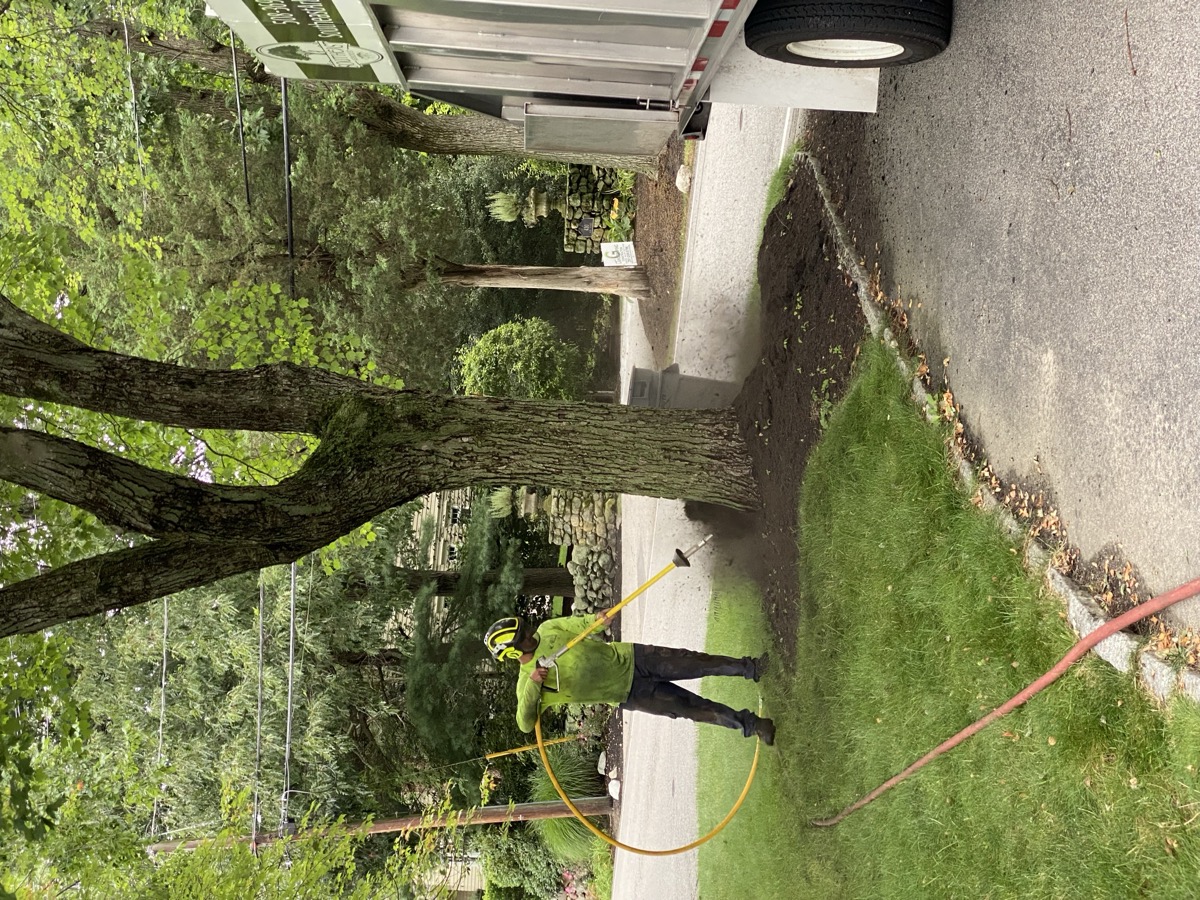
# Professional Root Zone Improvement in Foxborough, Massachusetts
If you own property in Foxborough, Massachusetts, your trees face unique pressures from the town's wetland corridors, saturated soils, and expanding development. Root zone improvement in Foxborough MA addresses these issues head-on, restoring soil health and stabilizing trees like red maples and willows that thrive near streams but often lean toward homes. Southeast Arborist, LLC, your South Shore Massachusetts tree care experts based in Plymouth and Cohasset, delivers ISA-certified root zone improvement services tailored to Foxborough's 02035 zip code. Our team follows ANSI A300 standards for tree care, using air spading and soil amendments to correct compaction, girdling roots, and buried flares common in Norfolk County's clay-heavy soils.
Foxborough's landscape, shaped since its 1778 incorporation from Stoughton, Wrentham, and Walpole, features stone walls threading through regenerated forests and the Neponset Reservoir preserving mature stands along the northern edge. Your red oaks, swamp white oaks, and white pines in neighborhoods like Chestnut Green or Lakeview contend with poor drainage from the area's 45-inch annual rainfall and occasional flooding. Homeowners in Patriot Place Area or Cocasset often notice willows and black gums encroaching on foundations due to shallow root systems in compacted soil.
Root zone improvement Foxborough MA isn't just maintenance—it's essential for tree longevity and property safety. Saturated conditions along wetland edges cause root instability, while new construction in West Foxborough clears mature forests, damaging surviving trees' root zones. Southeast Arborist's process starts with diagnosis: we identify issues like soil compaction from foot traffic or vehicles near your Payson Road Area driveway. Using high-pressure air spades, we excavate without harming roots, then remove girdling roots that strangle trunks on species like American elms replanted along Main Street.
Our ISA-certified arborists prioritize safety with rigging protocols and liability insurance, ensuring minimal disruption to your Foxborough property. Vertical mulching installs amended soil columns for deep water penetration, ideal for sweetgums in East Foxborough's older lots. Unlike basic mulching, this targets the active root zone 12-18 inches deep, promoting gas exchange in oxygen-poor wetland soils. Foxborough's tree warden's replanting program highlights the need: diseased elms and maples get replaced, but without root zone work, new trees fail.
For your property, root zone improvement prevents leaning trees over power lines—a frequent call in Foxborough Center—or foundation cracks from aggressive willow roots near ponds. We mitigate construction damage by installing root zone barriers during lot clearing in expanding areas. Call Southeast Arborist at 508-369-5009 for a free assessment; our South Shore service covers all Foxborough neighborhoods and nearby Sharon, Norton, Walpole, and Stoughton.
This service boosts curb appeal in upscale spots like Patriot Place and stabilizes trees against Nor'easter winds. Expect visible health improvements within one growing season: fuller canopies on white pines and straighter trunks on red maples. With 18,500 residents relying on conservation areas for recreation, healthy trees preserve Foxborough's suburban character. Southeast Arborist integrates root zone improvement with pruning and cabling for comprehensive care, all ANSI-compliant. Whether your black gum shows dieback from poor drainage or your swamp white oak has a buried flare from grade changes, our techniques deliver results. Schedule root zone improvement in Foxborough MA today to safeguard your landscape investment.
Why Foxborough Properties Need Root Zone Improvement
Foxborough's suburban setting in Norfolk County amplifies root zone challenges for your trees. Wetland corridors along the Neponset River and Reservoir create saturated soils where red maples and willows dominate, their roots spreading shallowly and destabilizing in clay-loam profiles prone to compaction. Annual precipitation exceeds 45 inches, with clay soils retaining water and limiting oxygen to roots 12-24 inches deep—the critical zone for 90% of feeder roots on species like swamp white oak and red oak.
In Foxborough Center, older homes near Main Street feature American elms from the tree warden's replanting, but compacted soil from sidewalks buries root flares, inviting rot. Your white pines in East Foxborough suffer girdling roots that circle trunks, exacerbated by fill dirt from past agricultural use—Foxborough's stone walls mark former pastures now forested. Saturated conditions cause root instability; a leaning red maple over your driveway signals anaerobic soil killing fine roots.
New development in West Foxborough clears mature forests, compacting soil with heavy equipment and damaging roots of preserved black gums and sweetgums. Power line conflicts arise as water-tolerant willows grow rapidly near overhead lines in Lakeview, their shallow roots seeking air pockets in compacted zones. Homeowners report foundation heaving from willow roots in Payson Road Area, where pond proximity mimics wetland hydrology.
Foxborough's Zone 6b climate brings freeze-thaw cycles that heave roots in poorly drained soils, stressing red oaks already battling oak wilt vectors. Conservation areas preserve habitat, but edges see rapid invasion by water-tolerant species encroaching on properties in Chestnut Green. Soil tests reveal pH 5.5-6.5 with high compaction—penetrometer readings over 300 psi suffocate roots. Without root zone improvement Foxborough MA, trees decline: chlorosis in white pines from nutrient lockup, canker in swamp white oaks from girdling.
Construction damage mitigation proves vital; excavators sever 50% of roots on surviving trees during lot clearing near Patriot Place, dropping stability. Vertical mulching counters this by creating aerated channels. In Cocasset, where homes back wetlands, decompaction prevents leaning willows threatening decks. American elms, resilient post-Dutch elm disease via resistant cultivars, still need flare exposure to avoid basal rot.
Practical advice: Inspect your trees annually for leaning, thin bark at the base (girdling sign), or mushrooms indicating decay from wet roots. Probe soil with a screwdriver—if it penetrates less than 6 inches easily, compaction threatens your red maples. In Foxborough's humid summers, drought stress hits compacted zones hardest, as roots can't access subsoil moisture.
Southeast Arborist's ISA arborists diagnose via air spade trenches, revealing issues invisible above ground. Our work aligns with Foxborough's tree ordinance, protecting public safety near roads. Nearby towns like Sharon face similar wetland issues, but Foxborough's reservoir amplifies them. Root zone improvement restores hydrology balance, reducing runoff to local ponds and complying with wetland bylaws.
For your property, this means longer-lived trees: a treated red oak withstands 60 mph winds versus failure in untreated soil. Data from ISA studies show 30-50% vigor increase post-decompaction. Don't wait for decline—proactive root zone improvement Foxborough MA preserves your landscape's value amid rising property demands.
Our Root Zone Improvement Process in Foxborough
Southeast Arborist follows a precise, ISA-certified process for root zone improvement in Foxborough MA, adhering to ANSI A300 (Part 1) Soil Management standards. We start with a site assessment on your property, evaluating soil type—Foxborough's Norfolk and Merrimac series clays—and tree health for species like red maple or white pine.
Step 1: Diagnosis (1-2 hours). Our ISA arborists use probes and resistance tools to map compaction and locate girdling roots. For your swamp white oak in Chestnut Green, we check for buried flares from grade changes near conservation edges. Safety protocols include marking utilities via 811 Dig Safe and erecting barriers.
Step 2: Air Spade Excavation (2-4 hours per tree). High-velocity air (up to 200 mph) from our 185 CFM compressor blasts away soil without root damage, exposing the flare on red oaks or willows. In Lakeview's wet soils, this reveals saturated zones; we excavate to 12-18 inches, removing 6-12 inches of overburden typical in Payson Road Area fills.
Step 3: Girdling Root Removal. We identify and sever circling roots on black gums or American elms using hand pruners, following ANSI guidelines—no more than 25% root removal per session. For power line-adjacent sweetgums in East Foxborough, this prevents trunk constriction.
Step 4: Soil Decompaction and Amendment. Radial tilling breaks compaction without shredding roots, then we amend with composted pine bark (pH-neutral for Foxborough soils) and mycorrhizal fungi. Proportions: 40% organic matter to improve porosity in clay. Vertical mulching follows: 3-6 inch diameter holes drilled 24-36 inches deep, every 12 inches in a grid, filled with the mix for gas exchange.
Step 5: Drainage Enhancement. In wetland-edge properties like Cocasset, we install French drains or gravel trenches diverting water from root zones. For construction-damaged white pines in West Foxborough, root zone barriers ( geotextile fabric) protect during builds.
Step 6: Mulching and Monitoring. 3-4 inches of arborist chips cover the zone—no volcanoes—retaining moisture for red maples. We provide a report with photos and follow-up at 6 months, using resistograph for decay checks.
Equipment specifics: Stihl BR 600 air spade, Bobcat auger for vertical mulching, laser levels for precise excavation. All tech meets OSHA safety, with arborists in PPE and harnesses for elevated work. For your Patriot Place Area property, we sequence multi-tree jobs to minimize disruption.
This process reverses Foxborough-specific issues: anaerobic soils killing willow roots or nutrient deficiencies in compacted red oak zones. Post-treatment, trees show 20-40% growth spurts per ISA trials. We integrate with crown reduction for leaning trees over Foxborough Center driveways.
Practical tip: Water amended zones deeply (2 inches weekly) first season, avoiding fertilizers that burn recovering roots. Southeast Arborist's Plymouth/Cohasset base ensures same-day response in South Shore MA. Our warranties cover repeat visits if issues recur within a year.
Call 508-369-5009 to start—your trees regain vigor against local hydrology challenges.
Common Root Zone Improvement Projects in Foxborough Neighborhoods
Foxborough neighborhoods demand targeted root zone improvement due to microclimates and development patterns. In Foxborough Center, near Main Street's replanted elms and maples, we expose buried flares on American elms compacted by sidewalks. Selective air spading preserves stone wall heritage while stabilizing trees over roads.
East Foxborough's mature lots feature girdling on swamp white oaks from old fill; we remove roots and vertically mulch, enhancing anchorage against Nor'easters. West Foxborough's new construction sees root severance on preserved red oaks—we mitigate with barriers and amendments during lot clearing.
Chestnut Green homeowners tackle leaning red maples near conservation wetlands; decompaction and drainage prevent foundation threats. Lakeview properties near ponds require willow root pruning and soil aeration to curb aggressive spread under decks.
Payson Road Area focuses on white pines with power line conflicts—our process includes directional root cuts and mulching for clearance. Cocasset's wetland edges demand black gum flare corrections, diverting saturated flow with gravel mulches. Patriot Place Area upscale yards get sweetgum decompaction post-landscaping, boosting curb appeal.
Across neighborhoods, projects address Foxborough's 1778 agricultural roots: regenerated forests hide compacted pastures. Common: 4-6 tree packages combining air spading ($300-500/tree) with vertical mulching. We coordinate with tree warden for street trees.
Your project might mirror a recent Chestnut Green job: air spading six red maples, removing girdling roots, adding 2 cubic yards amendment—trees upright post-treatment. Practical advice: Photograph base before/after; monitor for new circling roots in fills.
Southeast Arborist serves all areas, from Neponset Reservoir edges to Patriot Place, ensuring ANSI-compliant results.
Root Zone Improvement Costs in Foxborough, MA
Root zone improvement costs in Foxborough MA vary by project scope, tree size, and soil conditions, averaging $400-800 per tree for standard air spading and amendment. Factors include: tree diameter (DBH)—a 20-inch red maple in Foxborough Center costs $500 base, scaling $25/DBH inch. Wetland proximity in Lakeview adds $150 for drainage.
Girdling root removal on swamp white oaks ups fees 20% due to precision; vertical mulching for white pines (6 holes/tree) adds $200-300 for long-term porosity in clay soils. Multi-tree discounts apply: 10% off for 3+ in Chestnut Green, common for neighborhood projects.
Construction mitigation in West Foxborough—barriers plus decompaction—ranges $600-1,200/tree, less than removal ($1,500+). Travel within 02035 incurs no fee; nearby Sharon adds $100.
Value proposition: Untreated trees fail, costing $2,000+ removal plus liability. Our ISA work yields 15-25 year extensions, per TCIA data, boosting property value 5-10% in Patriot Place. Foxborough's conservation focus favors preservation—our reports aid permits.
Breakdown example: Payson Road Area willow—diagnosis free, excavation $350, amendment $150, mulch $100, total $600. Payment plans available.
Practical tip: Budget via free quote; prioritize leaning trees near structures. Southeast Arborist guarantees ROI through healthier canopies.
Call 508-369-5009 for transparent pricing tailored to your Foxborough property.
When to Schedule Root Zone Improvement in Foxborough
Schedule root zone improvement in Foxborough MA during late fall (October-November) or early spring (March-April), when trees are dormant, minimizing stress in Zone 6b. Avoid summer heat—over 80°F slows recovery in humid conditions.
Urgency signs: Leaning trunks on red maples (windthrow risk post-Nor'easter), exposed roots heaving in freeze-thaw cycles, or dieback over 20% canopy on willows. Saturated soils post-rain—squishy underfoot near Cocasset ponds—demand immediate action.
Post-construction: Within 30 days of disturbance in West Foxborough to prevent desiccation. Power line crews flag girdling sweetgums? Act before outages.
Annual checks align with tree warden pruning cycles. Southeast Arborist slots Foxborough jobs efficiently from our Cohasset base.
Call 508-369-5009 if your black gum shows basal cracks—early intervention saves trees.
Frequently Asked Questions About Root Zone Improvement in Foxborough
**What is root zone improvement in Foxborough MA?** It restores the top 18 inches of soil around trees, using air spading to decompact and amend for species like red oaks facing wetland saturation.
**How long does root zone improvement take in Foxborough?** 2-6 hours per tree; a Chestnut Green project with three white pines finishes in one day, including cleanup.
**Will it hurt my trees in Lakeview?** No—ISA methods remove only problematic roots, with studies showing 95% survival and vigor gains.
**Can you fix girdling roots on my Patriot Place sweetgum?** Yes, we diagnose and prune per ANSI A300, preventing trunk decline common in Foxborough fills.
**What's involved for construction damage in West Foxborough?** Air excavation, amendment, barriers—protecting preserved red maples during builds.
**How much soil amendment for Foxborough clays?** 40% organics via vertical mulching, tailored to pH for swamp white oaks.
**Do you serve all Foxborough neighborhoods like Cocasset?** Absolutely, plus Sharon and Walpole—call 508-369-5009.
**When will I see results on my Payson Road willow?** New growth by next spring; full stability in 1-2 years.
Root Zone Improvement Throughout Foxborough
Southeast Arborist provides root zone improvement across Foxborough neighborhoods: Foxborough Center street trees, East/West Foxborough developments, Chestnut Green conservation edges, Lakeview pondsides, Payson Road power lines, Cocasset wetlands, Patriot Place estates. Our South Shore coverage extends to Sharon, Norton, Walpole, Stoughton from Plymouth/Cohasset.
ISA-certified, ANSI-compliant services safeguard your trees. Contact us at 508-369-5009 for Foxborough MA root zone improvement—free assessments available.