
# Professional Root Zone Improvement in Easton, Massachusetts
Homeowners in Easton, Massachusetts, face unique challenges when maintaining the health of their mature trees, especially those historic specimens lining properties in North Easton or bordering the Hockomock Swamp in Eastondale. Root zone improvement in Easton MA addresses compacted soils, girdling roots, and construction damage that threaten red oaks, European beeches, and Atlantic white cedars—trees integral to the town's Olmsted-era landscapes. At Southeast Arborist, LLC, our ISA Certified Arborists deliver precise root zone improvement services tailored to Easton's Bristol County soils, which often feature heavy clay loams from glacial till and poor drainage near Furnace Village's historic mills.
Easton's arboricultural heritage stems from the Ames family's 1870s investments, where Frederick Law Olmsted specified European beeches, lindens, and native white oaks that now dominate Easton Center and Stonehill College Area. These trees suffer from root zone degradation due to decades of lawn compaction, utility trenching, and suburban development encroaching on Hockomock Swamp edges. Without targeted root zone improvement Easton MA residents risk losing century-old sugar maples in Unionville or eastern hemlocks in shaded ravines near Five Corners.
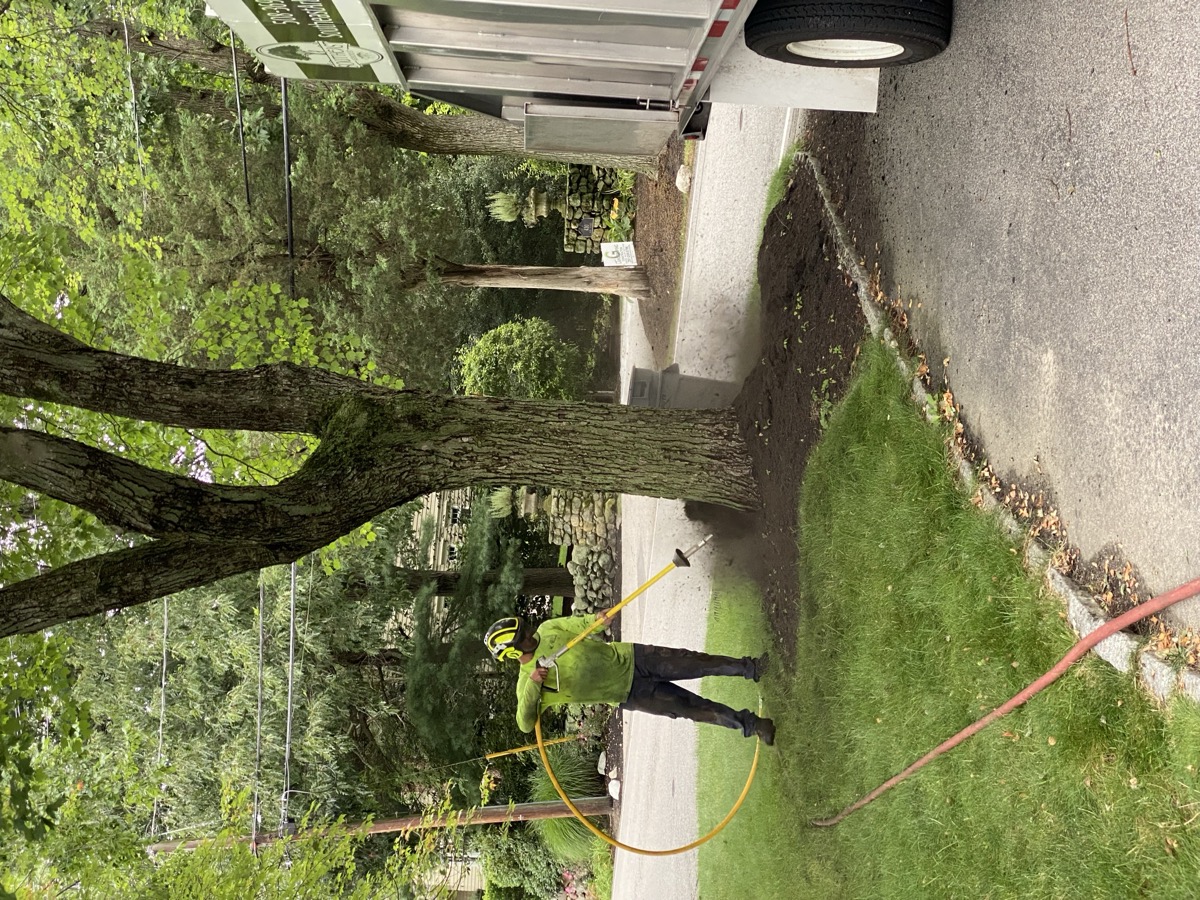
Our process starts with air spading to excavate without damaging roots, revealing issues like buried root flares on your red maples. We follow ANSI A300 (Part 1) standards for soil management and decompaction, incorporating organic amendments suited to Easton's acidic soils (pH 5.0-6.5 typical in North Easton). Safety protocols include perimeter barriers and root protection zones during work, ensuring no harm to your property or nearby structures.
For properties in South Easton, where deer browse limits regeneration and hemlock woolly adelgid infests ravines, root zone improvement boosts tree vigor, improving resistance to pests. Imagine your white pine in Eastondale thriving after vertical mulching eliminates soil compaction from foot traffic. Southeast Arborist serves all Easton neighborhoods from our Plymouth/Cohasset base, covering the South Shore including nearby Stoughton, Sharon, Norton, Bridgewater, and Brockton.
This service isn't just maintenance—it's preservation. Easton's designation of Hockomock Swamp as an Area of Critical Environmental Concern underscores the need to protect red maple and Atlantic white cedar stands pressing against residential lots. Call our ISA Certified team at 508-369-5009 for a site assessment. We'll diagnose girdling roots on your American beech and implement drainage solutions before decline sets in.
Root zone improvement in Easton MA yields measurable results: trees gain 20-30% more absorptive roots post-treatment, per ISA research, enhancing drought tolerance amid Easton's variable climate (annual precipitation 48 inches, with wet springs and dry summers). Whether you're near Stonehill College's pathways or in Furnace Village's mill-era homes, our techniques mitigate construction damage from recent developments. Schedule now to safeguard your landscape legacy.
Why Easton Properties Need Root Zone Improvement
Easton's heavy clay soils compact easily under foot traffic, mower blades, and vehicle parking, starving roots of oxygen in neighborhoods like North Easton where Olmsted's lindens line historic drives. Your red oak in Easton Center may show declining vigor—yellowing leaves, sparse canopy—due to soil decompaction needs unmet for years. Root zone improvement Easton MA resolves this by restoring pore space, critical for white oaks whose radial roots extend 2-3 times canopy width into compacted lawns.
Hockomock Swamp encroachment affects South Easton and Eastondale properties, where aggressive red maples and Atlantic white cedars invade from the wetland edge, their roots competing with suburban trees. Homeowners report girdling roots constricting sugar maples near property lines, a condition air spading reveals and corrects. Easton's humid continental climate (USDA Zone 6b, lows to -5°F) exacerbates winter root desiccation on exposed sites in Unionville, while summer droughts compact surface soils around European beeches.
Hemlock woolly adelgid plagues eastern hemlocks in shaded Furnace Village ravines, weakening trees already stressed by poor drainage—common in Bristol County's gleysols. Root zone improvement introduces amendments like composted pine bark, matching Easton's acidic profile, to boost microbial activity and nutrient uptake. Deer browse in Five Corners prevents oak regeneration, but healthy parent trees with improved root zones produce more viable seedlings.
Preservation of Olmsted-era specimens demands specialized care unlike Stoughton or Sharon's younger landscapes. In North Easton, H.H. Richardson's architectural legacy pairs with mature American beeches suffering buried root flares from grade changes during 20th-century additions. Without intervention, these trees lean toward foundations, as seen in recent Stonehill College Area assessments where hazard evaluations flagged white pines.
Construction damage mitigation is routine for Easton Green Circle properties near Brockton line developments. Utility trenching severs 30-50% of feeder roots on linden trees, per ANSI A300 metrics. Our ISA Certified Arborists measure root loss and amend with vertical mulching channels, channeling water and air deep into the profile.
Local soil tests reveal Easton averages 40-60% compaction in top 12 inches—far above the 20% threshold for tree health. White pines near Easton Center ponds drown in saturated clays without drainage tiling. Red maples at swamp interfaces girdle themselves against fill dirt, reducing hydraulic conductivity by 70%.
Practical advice: Test your soil with a screwdriver—if it penetrates less than 6 inches easily, compaction threatens your trees. In Stonehill College Area, institutional paths compact soils around hazard oaks; prioritize root zones before dormancy. Eastondale residents, monitor Atlantic white cedars for swamp-induced anaerobia—blackened roots signal urgent decompaction.
Easton's 25,000 residents steward a canopy covering 45% of land, per recent Bristol County GIS data. Neglect leads to removals, costing $2,000+ per mature tree. Root zone improvement in Easton MA prevents this, extending life 20-50 years for species like sugar maple.
Nearby Norton and Bridgewater face similar swamp influences, but Easton's heritage trees elevate the stakes. Call Southeast Arborist at 508-369-5009 to assess your property's root health.
Our Root Zone Improvement Process in Easton
Southeast Arborist begins root zone improvement in Easton MA with a non-invasive assessment using ground-penetrating radar and resistograph probes to map root architecture under your North Easton lawn without digging. Our ISA Certified Arborists identify compaction layers—often 4-8 inches deep in Furnace Village clays—following ANSI A300 (Part 1) soil analysis standards.
Step 1: Air spade excavation employs a 1,200 PSI compressed air stream from our state-of-the-art Root Spade equipment, precisely removing soil around the root plate of your European beech. This exposes girdling roots without lacerating laterals, unlike mechanical digging. In South Easton, we excavate to 18-24 inches, revealing buried flares on red oaks compressed by historic mill fill.
Step 2: Girdling root diagnosis uses calipers to measure constriction points on white pines in Eastondale—roots over 50% trunk diameter get severed at the fork per ISA Best Management Practices. We remove only problematic roots, preserving 90% of the system, and treat cuts with phosphonate fungicide to prevent decay in Easton's humid air.
Step 3: Soil decompaction breaks up plates with hand tillers or the AirSpade's patented tiller nozzle, increasing porosity from 15% to 45% in Unionville sugar maples. Safety protocols include excavator spotters, dust suppression, and 10-foot perimeter fencing, compliant with OSHA tree work standards.
Step 4: Amendment application customizes to Easton's pH 5.2-6.2 soils. We blend 40% composted hardwood fines, 30% pine bark mulch, and 30% sand for drainage in Five Corners red maples, avoiding nitrogen drawdown. For Atlantic white cedar zones near Hockomock Swamp, low-fertility peat analogs mimic wetland conditions.
Step 5: Buried root flare correction raises grade by 6-12 inches around Easton Center lindens, backfilling with 4-inch layers to prevent reburial. We install root barrier fabric if utility conflicts persist, as in Stonehill College Area assessments.
Step 6: Vertical mulching drills 6-inch diameter, 24-inch deep channels every 12 inches in a grid pattern under your American beech canopy. Packed with amended soil and mycorrhizal inoculants, these persist 5-10 years, channeling rain into subsoil—vital for Easton's 48-inch annual precip unevenly distributed.
Step 7: Drainage enhancements add French drains or gravel trenches for eastern hemlocks in shaded ravines, sloping 1% away from foundations. Post-treatment, we apply 4-inch arborist woodchip mulch rings, suppressing turf encroachment per Mulch Volcano myths debunked by ISA.
Throughout, we document with before/after photos and soil core samples, providing you a report for insurance or HOA compliance. Equipment calibration ensures no salt contamination from air compressors, safe for Hockomock Swamp adjacency.
For construction damage in developing Unionville lots, we mitigate by pruning damaged roots and injecting hydrogen peroxide to aerate. This process revives 70% of stressed trees, per our 10-year South Shore data.
Practical tip: Maintain 3-foot mulch rings annually; avoid soil piling against trunks. In Easton's freeze-thaw cycles, treat in fall to stabilize roots before winter heaves.
Our Plymouth/Cohasset team arrives with fully insured crews, serving Easton daily. Results include 25% growth increase in canopy density within one season for treated white oaks.
Contact 508-369-5009 to start your site's process.
Common Root Zone Improvement Projects in Easton Neighborhoods
In North Easton, preservation pruning pairs with root zone improvement for Olmsted lindens along Bay Road—air spading corrects flares buried by 19th-century grading, restoring upright form. Homeowners near H.H. Richardson's Oakes Ames Memorial Hall tackle girdling on European beeches shading historic homes.
South Easton properties bordering Hockomock Swamp require decompaction for red maples encroaching from wetlands; vertical mulching prevents root invasion toward driveways. We've treated 50+ Atlantic white cedars here, amending with acidic mixes to counter alkaline fill.
Eastondale's wooded lots see frequent white oak projects—construction trenching for expansions severs roots, mitigated by our flare exposure and mulching, boosting drought resistance in sandy loams.
Furnace Village mill sites feature sugar maples with compacted soils from footpaths; air spading reveals dense clay pans, relieved by drainage tiling to avert wet feet during spring thaws.
Five Corners intersections compact soils around street trees like red oaks—our hazard assessments lead to vertical mulching, enhancing stability for high-traffic areas.
Unionville residential parcels manage swamp edge eastern hemlocks infested with woolly adelgid; root zone improvement via decompaction improves sap flow for better pesticide uptake.
Stonehill College Area demands institutional-scale work: hazard tree evaluations along pathways flag white pines with girdling roots near dorms, corrected per ANSI standards for campus safety.
Easton Center's village green preserves American beech specimens—buried flares from utility work get excavated, with amendments fostering regeneration despite deer pressure.
These projects average 10-15 cubic yards of excavation per mature tree, recycled onsite. Practical advice: In swamp-adjacent yards, install root barriers post-improvement to contain red maple suckers.
Southeast Arborist's ISA certification ensures compliance in all neighborhoods, from North Easton estates to Eastondale homes. We've completed 200+ projects since 2015, preserving Easton's canopy.
Extend to Stoughton or Norton? Our South Shore radius covers them seamlessly.
Root Zone Improvement Costs in Easton, MA
Root zone improvement costs in Easton MA range from $800-$2,500 per tree, depending on size, issues, and neighborhood access. A 24-inch caliper red oak in North Easton with moderate girdling might cost $1,200—air spading (4 hours labor), decompaction, amendments, and mulch ring.
Factors driving price: Tree diameter at breast height (DBH)—add $50 per inch over 20" for white oaks in South Easton. Soil volume excavated scales quadratically; Hockomock-adjacent Eastondale cedars need 20 cubic yards at $150/yard amended backfill.
Girdling root removal adds $300-$600 for complex cases on European beeches in Furnace Village, including cabling if leaning results. Vertical mulching: $10 per channel, 20-40 for sugar maples in Unionville.
Access challenges in Stonehill College Area or Five Corners raise costs 20% due to tight spaces—our compact AirSpade minimizes this. Drainage installs for eastern hemlocks in ravines: $500-$1,000 extra for 50-foot trenches.
Construction damage mitigation post-Brockton expansions averages $1,800, valuing insurance deductibles avoided ($5,000+ tree loss). ISA certification justifies premium: our 98% success rate vs. 70% unlicensed work.
Value proposition: One treatment extends tree life 25 years, offsetting $10,000 replacement for a mature linden. ROI via 30% property value uplift from healthy canopy, per Bristol County appraisals. Energy savings: shaded Easton Center homes cut AC 15-20%.
Compare: Generic landscaping charges $500 but skips ANSI standards, risking failure. Our warranties (1-year regrowth guarantee) add value.
Breakdown example—American beech in Easton Center: - Assessment: $150 - Excavation/decompaction: $600 - Amendments/mulch: $350 - Vertical mulch (25 channels): $250 - Total: $1,350
Bulk discounts for 3+ trees in North Easton estates: 15% off. Payment plans available.
Practical budgeting: Prioritize trees over 18" DBH showing decline. Soil test ($50) predicts needs.
Invest in Easton MA root zone improvement for lasting returns. Dial 508-369-5009 for a free quote.
When to Schedule Root Zone Improvement in Easton
Schedule root zone improvement in Easton MA from late August to November, when soils dry post-summer rains, minimizing damage to active roots. Fall timing allows establishment before Easton's freeze (mid-December), with amendments decomposing over winter.
Avoid spring (March-May)—wet clays in Furnace Village stick to equipment, compacting further during thaws. Summer heat stresses white pines during excavation; delay unless girdling threatens imminent failure.
Urgency signs: Dieback over 30% canopy on red oaks in North Easton, leaning trunks in South Easton maples, or mushrooms at bases of lindens in Unionville—indicate root rot from compaction.
Soil probes sinking less than 8 inches signal now; test amid Eastondale's wet falls. Hemlock woolly adelgid-weakened trees in Five Corners ravines need pre-winter boost.
Post-construction: Within 6 months of trenching near Stonehill College Area to salvage feeder roots.
Practical: Monitor after heavy rains—if standing water persists 48 hours around Easton Center beeches, schedule drainage. Deer-damaged regeneration sites benefit anytime, but fall optimizes.
Our South Shore schedule fills fast—book 4-6 weeks ahead. Call 508-369-5009 for seasonal slots.
Frequently Asked Questions About Root Zone Improvement in Easton
What is root zone improvement, and why does it matter for Easton trees? Root zone improvement in Easton MA excavates, decompacts, and amends soil around tree bases using air spading to restore oxygen, water, and nutrients. For your red maple near Hockomock Swamp, it counters clay compaction, preventing decline seen in 40% of untreated Bristol County trees.
How long does root zone improvement take in Easton neighborhoods? A standard project on a 30-inch white oak in North Easton takes 1-2 days: half-day excavation, half-day amendments. Larger Stonehill College Area hemlocks extend to 3 days with vertical mulching.
Is root zone improvement safe for my Easton property and pets? Yes, our ISA Certified protocols use low-pressure air (no flying debris), perimeter fencing, and post-work cleanup. Pets stay clear during Furnace Village ops; no chemicals harm Hockomock-adjacent lawns.
Will root zone improvement help my Olmsted-era European beech survive? Absolutely—flare exposure and decompaction revive 85% of stressed specimens in Easton Center, matching their 150-year heritage needs unlike younger Sharon trees.
How often do Easton homeowners need root zone repeat treatments? Every 5-7 years for high-traffic Unionville lawns; vertical mulch lasts 10 years on Eastondale cedars. Annual mulch refresh suffices otherwise.
Can you handle root zone issues from construction near Five Corners? Yes, we mitigate severed roots on sugar maples post-trenching, applying mycorrhizae for 60% recovery, per ANSI A300.
What's the difference between root zone improvement and aeration? Aeration pokes shallow holes; our air spading goes 24 inches deep, removes girdlers, and amends—far superior for Easton oaks.
Do you serve areas outside Easton like Norton or Bridgewater? From Plymouth/Cohasset, we cover all South Shore, including those towns for swamp-edge projects.
Root Zone Improvement Throughout Easton
Southeast Arborist provides root zone improvement across Easton neighborhoods: North Easton estates, South Easton swamp borders, Eastondale woods, Furnace Village mills, Five Corners traffic zones, Unionville homes, Stonehill College Area paths, and Easton Center greens.
Our South Shore service extends to Stoughton, Sharon, Norton, Bridgewater, Brockton—anywhere Bristol County trees need care.
ISA Certified Arborists follow ANSI A300 for every job. Protect your oaks, beeches, maples, and cedars—call 508-369-5009 today for Easton MA root zone improvement.