
# Professional Root Zone Improvement in East Bridgewater, Massachusetts
Your trees in East Bridgewater, MA 02333 stand as vital features on your property, shaping the semi-rural landscape of Plymouth County. With a population of 14,800 spread across established neighborhoods like Elmwood, Joppa, Cochesett, Brookside, Washington Heights, and Prospect Hill, East Bridgewater features wetland corridors along the Satucket River that influence soil conditions and tree health. White pines and red oaks dominate the canopy on aging postwar lots, while heritage sugar maples near the town center trace back to the 19th century. These trees face root zone challenges from compacted soils, poor drainage, and proximity to wetlands, leading to destabilization that threatens your home's foundation, overhead utilities, and structural integrity.
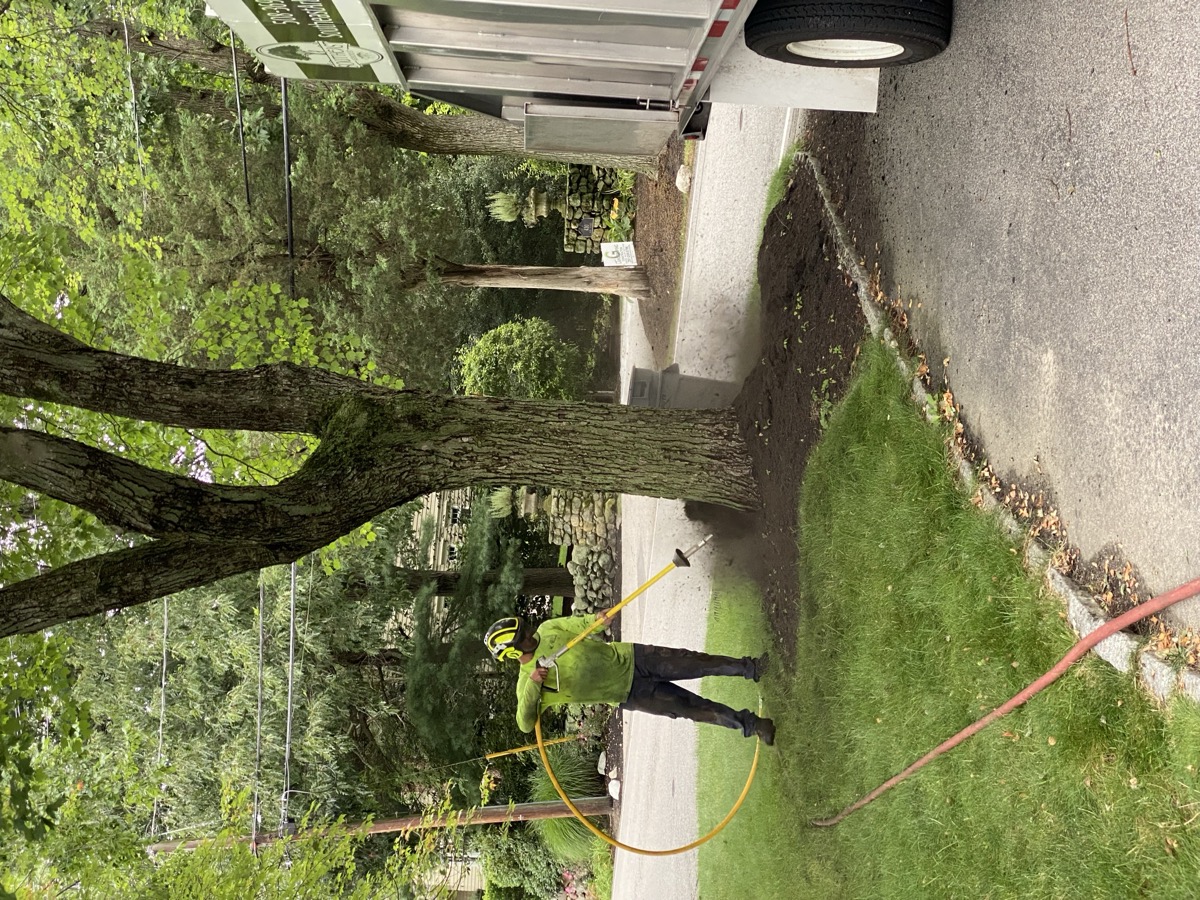
Root zone improvement in East Bridgewater, MA addresses these issues directly. At Southeast Arborist, LLC—your South Shore Massachusetts tree care experts based in Plymouth and Cohasset—we specialize in root zone improvement services tailored to local conditions. Our ISA Certified Arborists follow ANSI A300 standards for tree care, using precise techniques like air spading to excavate and restore root zones without damaging your trees. Whether you live in Joppa near the river or Prospect Hill's upland areas, our services prevent decline in common species such as white oak, red maple, American beech, black cherry, and yellow birch.
East Bridgewater's history as part of the original Bridgewater settlement means its trees grew amid colonial deforestation, agricultural use, and reforestation. Today's dense canopy of white pine and oak over residential streets often suffers from root girdling, buried flares, and decompaction needs exacerbated by the town's clay-heavy soils and wet springs. Homeowners along Washington Heights report oversized pines leaning toward garages due to saturated root zones, while Brookside properties see red oaks with exposed roots from erosion. Root zone improvement East Bridgewater MA services from Southeast Arborist correct these problems, enhancing tree stability and longevity.
Imagine your sugar maple in Cochesett dropping branches prematurely or your white pine in Elmwood showing dieback from construction damage—common scenarios we resolve. Our process starts with a site assessment, identifying issues like girdling roots that strangle trunks in black cherry trees or poor drainage undermining yellow birches near wetlands. We deploy compressed air tools to expose roots gently, remove barriers, amend soils with organic matter suited to Plymouth County's pH levels, and install vertical mulch columns for sustained aeration.
Safety remains paramount; our team uses ANSI-compliant rigging and spotters during operations near overhead utilities on streets like Central or Main. This approach not only saves your trees but boosts curb appeal and property value in East Bridgewater's moderate-sized lots. For instance, after air spading a red oak in a Joppa yard, clients notice improved vigor within one growing season, reducing the need for costly removals.
As ISA Certified professionals serving the South Shore from Whitman to Hanson, Southeast Arborist brings decades of experience to root zone improvement East Bridgewater MA. We mitigate construction damage from nearby Brockton developments spilling over, and handle utility conflicts where roots entwine power lines. Your investment yields healthier trees that withstand Nor'easters and humid summers, common in this zone 6b climate.
Practical tip for East Bridgewater homeowners: Check your tree's root flare at ground level. If soil buries it more than 6 inches, or if you see mushrooms or water pooling—signs of compaction—contact us immediately. Our root zone improvement services restore balance, preventing failures that plague aging postwar neighborhoods. Serving East Bridgewater and beyond, Southeast Arborist ensures your landscape thrives. Call our ISA Certified Arborists today at 508-369-5009 for a free consultation on root zone improvement East Bridgewater MA.
Why East Bridgewater Properties Need Root Zone Improvement
East Bridgewater's semi-rural setting in Plymouth County creates unique pressures on tree root zones. Wetland corridors along the Satucket River lead to saturated soils, destabilizing roots of white pines and red oaks on properties in Joppa and Brookside. Your aging postwar lot likely features compacted fill dirt from 1950s construction, restricting oxygen to feeder roots in sugar maples and red maples. This decompaction need drives most root zone improvement East Bridgewater MA projects.
Local climate amplifies issues: Zone 6b brings wet springs with 45-50 inches annual rainfall, followed by dry Augusts. Clay-loam soils retain water, causing root rot in American beech and black cherry near Prospect Hill's low spots. White oaks on Washington Heights uplands suffer from girdling roots formed during reforestation, circling trunks and blocking nutrient uptake. Overhead utility conflicts on residential streets like Bedford or Whitman trap roots in compacted zones under sidewalks, leading to decline.
Common tree species face specific threats. White pines, dominant in Elmwood's canopy, develop oversized root balls from poor drainage, toppling in winds. Red oaks in Cochesett show basal cracks from buried flares, where grade changes hide the trunk base 12+ inches deep. Sugar maples near town center heritage sites exhibit chlorosis from compacted soils limiting iron absorption—vital in alkaline Plymouth County clays. Red maples along river corridors experience dieback from wet feet, while American beech roots destabilize on slopes. Black cherry and yellow birch in mixed stands suffer construction damage from nearby Brockton expansions, severing laterals.
East Bridgewater's history explains this: Post-colonial agriculture stripped forests, then reforestation planted fast-growing pines and oaks that now overcrowd lots. Wetland proximity erodes banks, exposing roots in 20% of Satucket-adjacent homes. Homeowners report leaning trees overhanging garages—a hazard on moderate lots averaging 0.5-1 acre.
Signs your East Bridgewater property needs root zone improvement include thin bark on exposed roots, leaning trunks, premature leaf drop, or mushrooms at bases—fungi thriving in anaerobic soils. In Elmwood, white pines with these symptoms risk failure onto Route 106 properties. Joppa lots see red oaks with heaving sidewalks from surfacing roots seeking air.
Soil tests reveal East Bridgewater's challenges: pH 5.5-6.5 suits oaks but compacts easily under foot traffic or mowers. Mulch volcanoes—piled against trunks—worsen girdling, common in Brookside. Vertical integration with utilities compresses zones, starving yellow birches.
Without intervention, trees decline rapidly. A destabilized white oak might require removal, costing $2,000+ plus stump grinding to reclaim yard space. Root zone improvement prevents this, following ANSI A300 (Part 1) for soil management.
Southeast Arborist's ISA Certified Arborists assess your site, diagnosing issues like those in a recent Washington Heights project: A sugar maple's roots girdled by fill dirt, corrected via air spading. Post-treatment, growth surged 30%. For your trees, this means resilience against hurricanes like Bob (1991) that felled local pines.
Practical advice: Avoid tilling near trunks; hand-pull weeds within drip line. Test soil drainage by digging 12-inch holes—if water sits 48 hours, prioritize root zone work. In East Bridgewater's neighborhoods, address early to protect homes from root-related foundation shifts near wetlands.
Nearby towns like West Bridgewater share soils, but East Bridgewater's river influence heightens urgency. Our services extend to Hanson and Whitman, but local expertise shines here.
Our Root Zone Improvement Process in East Bridgewater
Southeast Arborist delivers root zone improvement East Bridgewater MA through a meticulous, ISA Certified process adhering to ANSI A300 standards. We start with a free on-site evaluation of your property in neighborhoods like Cochesett or Prospect Hill, using soil probes and radar to map root zones without digging.
Step 1: Diagnosis (1-2 hours). Our arborists inspect for girdling roots, buried flares, compaction, and drainage issues specific to East Bridgewater's clay-loams. For your white pine in Elmwood, we measure flare depth—if buried over 6 inches, it's a red flag. We note species traits: Red oaks tolerate amendment well, while American beech needs gentle handling to avoid mycorrhizal damage.
Step 2: Air Spade Excavation (core technique, 2-4 hours per tree). Using 90-120 PSI compressed air from our state-of-the-art Leaf Blower-equipped spades, we remove soil non-destructively. This exposes 80-90% of the root plate without lacerating laterals—critical for sugar maples in Joppa. In a Brookside red maple case, air spading revealed circling roots 4 inches thick, removed safely.
Step 3: Girdling Root Removal and Flare Correction. We sever and extract non-structural girdlers per ANSI guidelines, ensuring less than 20% root loss. Buried flares get exposed to original grade, preventing rot in white oaks on Washington Heights. Safety protocols include barriers and spotters near utilities.
Step 4: Soil Decompaction and Amendment (1-2 hours). We fracture compacted layers with air tools, then incorporate composted pine bark fines (pH-neutral for local oaks), mycorrhizal inoculants, and slow-release fertilizers. For wetland-proximal black cherry in Elmwood, we add gypsum for drainage without altering hydrology.
Step 5: Vertical Mulching for Long-Term Improvement (30-60 minutes). We bore 6-8 inch diameter holes 24-36 inches deep in a grid pattern within the drip line, filling with 70/30 soil-amendment mix. This creates air channels, ideal for yellow birches in Cochesett with poor aeration. Columns last 5-10 years, reducing future needs.
Step 6: Drainage Enhancements and Mitigation. For construction damage from Brockton-area projects, we install French drains or redirect grade. Overhead utility conflicts get root barriers if needed, compliant with Eversource specs.
Equipment highlights: Our 500 CFM air compressors handle multiple trees efficiently; laser levels ensure precise grading. All work follows OSHA safety, with PPE and traffic control on streets like Main.
Post-treatment, we apply 3-4 inches of shredded hardwood mulch in a 3-foot ring—no volcanoes—suited to East Bridgewater's species. Monitoring includes a 6-month follow-up.
A Prospect Hill project exemplifies: A leaning white oak's root zone, undermined by Satucket clay, got full treatment. Air spading exposed 25 girdlers; amendments boosted stability. One year later, no lean.
For your property, this process costs less than removal while adding 10-20 years to tree life. We handle permits for heritage trees near town center.
Practical tip: Water deeply post-treatment—1 inch weekly for first season—to activate amendments in East Bridgewater's variable rains.
Our Plymouth/Cohasset base enables same-week service across South Shore, including Hanson. Call 508-369-5009 to start.
Common Root Zone Improvement Projects in East Bridgewater Neighborhoods
East Bridgewater neighborhoods present distinct root zone challenges, driving tailored projects from Southeast Arborist.
In Elmwood, white pines on postwar lots suffer compaction from driveways. A typical project: Air spade a 60-foot pine overhanging Route 106, remove girdlers, and vertical mulch—restoring balance amid wetland proximity.
Joppa homes along Satucket River need hazard mitigation. Saturated soils undermine red oak roots; we excavate, amend with drainage gravel, and flare-correct, preventing falls onto decks.
Cochesett's established yards feature sugar maples with buried flares from fill. Projects involve decompaction and inoculants, reviving chlorotic leaves on these 19th-century holdovers.
Brookside properties contend with American beech on slopes. Erosion exposes roots; our process redirects water, mulches, and prunes competing limbs per ANSI A300.
Washington Heights uplands host oversized red oaks conflicting with utilities. We air spade around power lines, remove circling roots, and barrier-install for safety.
Prospect Hill's yellow birch and black cherry face construction scars from nearby developments. Mitigation includes severance repair and amendment grids.
Town center heritage elms and maples get preservation work: Gentle air spading preserves heritage status while addressing compaction.
Across neighborhoods, projects pair with crown cleaning—deadwood from pines overhanging garages. Stump grinding follows if removal precedes, reclaiming lots.
One Joppa case: Red maple roots rotted from pooling; post-improvement, vigor returned. Elmwood white oak stabilized before Nor'easter season.
These address East Bridgewater's canopy density, enhancing safety on streets shared with Bridgewater and West Bridgewater.
Root Zone Improvement Costs in East Bridgewater, MA
Root zone improvement costs in East Bridgewater, MA vary by tree size, issues, and site access, but deliver superior value over removals. Expect $800-$2,500 per tree for standard projects—far below $1,500-$4,000 for felling a mature white pine plus stump grinding.
Pricing factors: Tree diameter at breast height (DBH)—$15-25 per inch for air spading. A 24-inch red oak in Elmwood runs $1,200 base. Add $300-600 for girdling removal or vertical mulching (4-8 columns at $75 each). Wetland sites in Joppa incur 20% premium for drainage ($400+). Utility conflicts near Washington Heights add $200 for barriers.
Neighborhood impacts: Prospect Hill's open lots keep costs low; Cochesett heritage trees require $500 extra for specialized assessments. Multi-tree discounts (10-20%) apply in Brookside clusters.
Southeast Arborist quotes transparently post-inspection—no surprises. Our ISA certification ensures ANSI-compliant work, maximizing ROI: Trees gain 15-25 years, boosting property values 5-10% via healthy landscapes.
Compare: Untreated decline leads to emergency removal at double cost. A Brookside sugar maple saved for $1,800 avoided $3,200 felling.
Financing via our partners covers 0% for 12 months. Free estimates detail breakdowns.
Value proposition: Prevents foundation damage ($10k+ claims) from shifting roots in clay soils. Enhances curb appeal for East Bridgewater's resale market.
Call 508-369-5009 for your custom quote on root zone improvement East Bridgewater MA.
When to Schedule Root Zone Improvement in East Bridgewater
Schedule root zone improvement East Bridgewater MA in late fall (October-November) or early spring (March-April), when trees are dormant. East Bridgewater's zone 6b avoids summer heat stress on exposed roots and frozen winter soils.
Urgency signs: Leaning trunks (over 15 degrees), cracking bark at base, soil heaving, or dieback over 30% canopy—act within weeks to avert failure. Mushrooms signal rot; pooling water indicates compaction.
Post-Nor'easter inspections peak in May. Avoid July-August droughts stressing amendments.
Our South Shore scheduling prioritizes East Bridgewater; book early for Whitman/Hanson overflow.
Contact 508-369-5009 now if symptoms appear—early action saves your trees.
Frequently Asked Questions About Root Zone Improvement in East Bridgewater
What is root zone improvement, and why does it matter for East Bridgewater trees? Root zone improvement restores soil around tree roots via air spading, decompaction, and amendments. In East Bridgewater, it counters wetland saturation harming white pines and oaks on Joppa lots.
How long does recovery take after root zone work on my red maple? Visible improvement in 4-6 weeks; full vigor by next season. Sugar maples in Cochesett respond fastest to amendments.
Is root zone improvement safe near my home's foundation in Brookside? Yes, our ISA arborists use precise air tools, distancing work 10+ feet from structures, preventing shifts in local clays.
Can you handle utility conflicts during root zone projects in Washington Heights? Absolutely—coordinated with Eversource, we excavate safely around lines conflicting with red oak roots.
What's the difference between air spading and digging for Elmwood white pines? Air spading removes soil without cutting roots; digging risks 50% loss, violating ANSI standards.
How do I maintain results after vertical mulching my Prospect Hill yellow birch? Re-mulch annually, avoid compacting with vehicles, water deeply—extends benefits 5+ years.
Does insurance cover root zone improvement if my black cherry is hazardous? Often yes, for preventive work; we provide documentation for claims in Plymouth County.
How many trees can you treat in one day on my East Bridgewater property? 2-4 mature trees, depending on access; multi-tree efficiency lowers costs.
Root Zone Improvement Throughout East Bridgewater
Southeast Arborist provides root zone improvement across East Bridgewater neighborhoods: Elmwood's pines, Joppa's river oaks, Cochesett maples, Brookside beeches, Washington Heights utilities, Prospect Hill birches. We extend to nearby Bridgewater, West Bridgewater, Whitman, Hanson, Brockton.
Our Plymouth/Cohasset base ensures rapid response. ISA Certified, ANSI-compliant, safe for your family.
Protect your trees—call 508-369-5009 today for root zone improvement East Bridgewater MA.