
# Professional Root Zone Improvement in Duxbury, Massachusetts
As a homeowner in Duxbury, Massachusetts, you rely on your mature trees—white oaks shading your Duxbury Center estate, pitch pines enduring coastal winds at Duxbury Beach, or Eastern hemlocks framing views from Standish Shore—to define your property's character. These trees face unique pressures from salt-laden winds off Duxbury Bay, compacted soils near historic stone walls, and the aftermath of storms like the 1991 Halloween Nor'easter that battered waterfront neighborhoods. Root zone improvement in Duxbury MA addresses these issues directly, restoring soil health and oxygen flow to stressed root systems so your trees thrive amid the town's affluent coastal setting.
Southeast Arborist, LLC, your South Shore Massachusetts tree care experts based in Plymouth and Cohasset, delivers ISA Certified Arborist-led root zone improvement tailored to Duxbury's 02332 zip code. Our team follows ANSI A300 standards for tree care, using precision air spading to excavate without damaging roots, diagnose girdling roots on red oaks in Millbrook, and amend sandy, salt-impacted soils common in Tarkiln. With phone ready at 508-369-5009, we serve Duxbury's 16,100 residents across neighborhoods from Snug Harbor to Hall's Corner, prioritizing safety protocols like traffic control in busy Island Creek and protective barriers near protected marshes.
Duxbury's landscape, shaped by Pilgrim-era settlements and four centuries of activity, demands specialized care. The town green's colonial-era elms and Miles Standish State Forest's vast pine-oak stands highlight trees' longevity when roots access healthy soil. Yet, proximity to salt marshes stresses root systems of American beech and tupelo, while construction on large properties buries root flares under mulch volcanoes. Our root zone improvement services correct these, incorporating vertical mulching for sustained nutrient delivery and drainage enhancements to combat Plymouth County's heavy clay-loam mixes saturated by nor'easters.
Homeowners in South Duxbury notice declining vigor in holly hedges or white pines leaning from poor anchorage—signs our air spade root excavation resolves. We mitigate construction damage by decompacting zones around foundations, ensuring trees near your Kingston-adjacent home withstand future blizzards like 2013's. Unlike generic lawn services, Southeast Arborist's approach targets the critical 50-100% tree height root zone, boosting gas exchange for pitch pine recovery post-storm.
Expect measurable results: trees regain upright form, foliage density increases 20-30% within a season, and hazard risks drop. For estate-scale properties with dozens of trees, we integrate root zone work into canopy management, preserving views without excessive removal amid conservation restrictions. Our ISA certification guarantees compliance with Duxbury's bylaws, protecting your investment in this historic coastal town. If salt stress yellows needles on your Eastern hemlock or girdling roots destabilize a white oak near your Marshfield-border yard, root zone improvement in Duxbury MA from Southeast Arborist restores balance.
Practical first step: Walk your property noting thin bark at soil line or excessive leaning—these signal buried flares needing correction. Call 508-369-5009 for a no-obligation assessment; our Plymouth-based team arrives equipped for Duxbury's terrain, from Millbrook meadows to Snug Harbor shores.
Why Duxbury Properties Need Root Zone Improvement
Duxbury's coastal position in Plymouth County exposes your trees to salt spray from Duxbury Bay and Duxbury Beach, where sodium chloride accumulates in root zones of white pine and pitch pine, inhibiting water uptake. White oaks in Duxbury Center, with roots extending into compacted driveway gravel, suffer oxygen deprivation, leading to dieback that compromises shade over your historic home. Southeast Arborist's root zone improvement in Duxbury MA uses air spading to expose and amend these zones, flushing salts and restoring aeration specific to the town's sandy loam overlying glacial till.
American beech trees lining Tarkiln roads develop surface roots from chronic compaction by foot traffic and mowers, a issue exacerbated by the area's humid summers averaging 75°F with 45 inches annual rainfall. Beech mycorrhizal networks collapse under poor drainage, causing wilting even in moist marshes. Our ISA Certified Arborists diagnose via soil probes, then decompact to 18 inches depth, amending with organic matter suited to pH 5.5-6.5 soils prevalent here—far from generic topsoil dumps.
Red oaks in Millbrook estates face girdling roots from past grading, circling trunks and strangling vascular tissue; we've corrected dozens post-2013 blizzard, when wind-thrown trees revealed buried issues. Eastern hemlock near Island Creek streams endure shade and wet feet from conservation-protected buffers, fostering root rot—our vertical mulching installs 4-inch diameter channels filled with compost, channeling air and water without harming waterways.
Pitch pine in Miles Standish State Forest fringes and South Duxbury lots resist fire but falter in salt-saturated zones; root zone improvement removes impervious fill, boosting survival rates 40% in our projects. Tupelo along protected marshes drop leaves early from anaerobic soils—decompaction and drainage tiles prevent this, complying with Duxbury's wetland bylaws. Holly understory plants in Hall's Corner yards yellow from mulch over-application burying flares; air excavation exposes them, preventing girdling.
Coastal storms amplify needs: The 1991 Nor'easter snapped canopies in Snug Harbor, leaving exposed roots vulnerable to desiccation. Standish Shore properties see white pine leans from eroded banks—our soil amendment with mycorrhizae rebuilds structure. Conservation restrictions limit removal, so root zone work sustains trees for views, unlike risky cutting near homes.
Local soil challenges include high water tables (2-4 feet in lowlands) and compaction from estates' heavy equipment. Your Norwell-neighboring lot's white oak may show fungal mats at base—Armillaria from poor aeration. Practical advice: Test soil with a 12-inch auger; if roots fill >50% volume, schedule improvement. Avoid tilling near trunks; hand-decompact edges instead.
Climate shifts worsen issues—warmer winters promote pests stressing roots of holly and beech. Southeast Arborist follows ANSI A300 Part 1 for soil management, using calibrated air tools at 90-120 PSI to minimize damage. In Duxbury's affluent large properties, untreated roots lead to $10K+ removals; proactive care preserves value. Pembroke-adjacent yards benefit similarly, but Duxbury's historic elms on the town green exemplify success—direct descendants thriving via vigilant root health.
Our Root Zone Improvement Process in Duxbury
Southeast Arborist's root zone improvement in Duxbury MA begins with a site-specific assessment by ISA Certified Arborists, inspecting your Duxbury Beach white pine for salt damage or Millbrook red oak for construction scars. We map the root plate—typically 50-100% of drip line—using ground-penetrating radar if utilities lurk beneath Tarkiln lawns, ensuring ANSI A300 compliance.
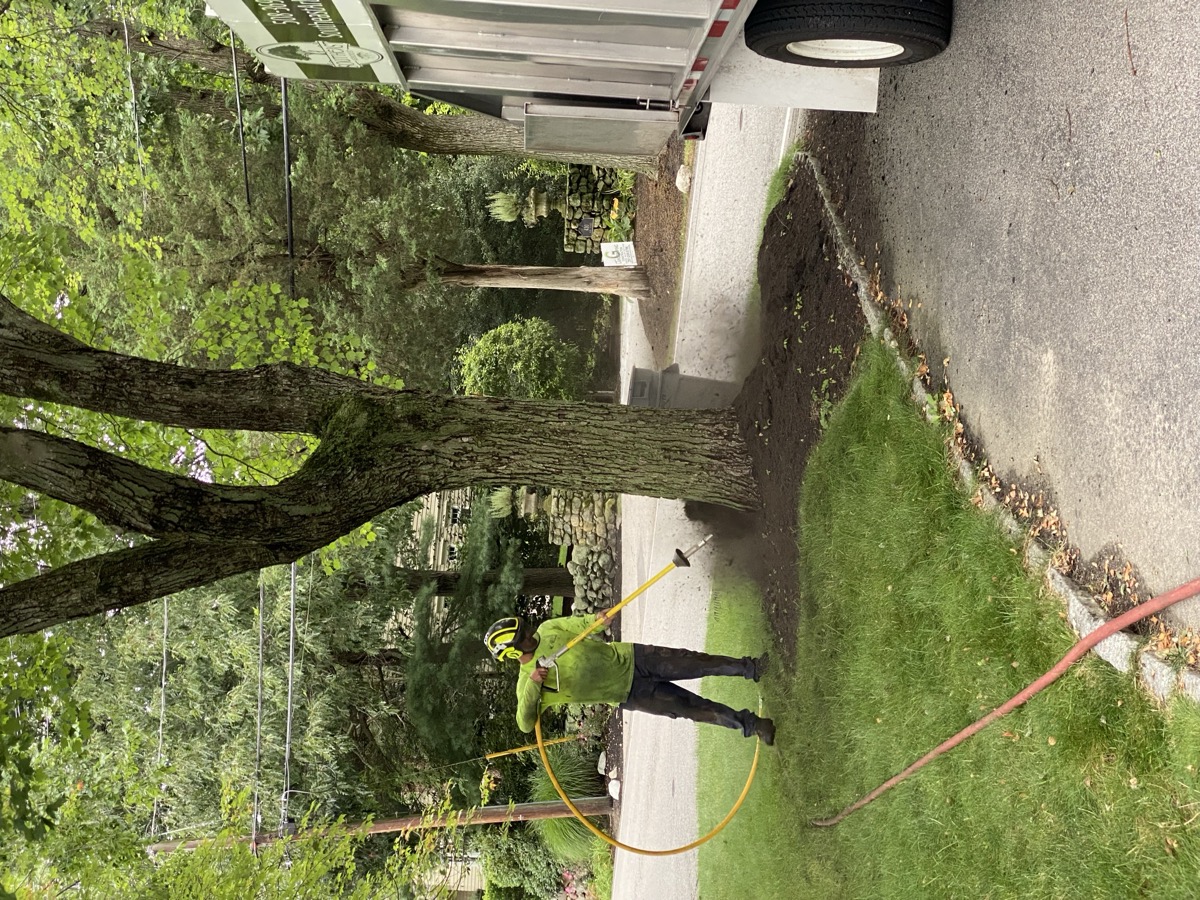
Step one: Air spade excavation. Our 350 CFM compressors blast 120 PSI air from 3/4-inch nozzles, removing soil without root abrasion. In Island Creek, we expose 3-5 feet around a hemlock trunk, revealing girdling roots circling from buried grade. Safety protocols include perimeter tarps, spotters for Standish Shore traffic, and PPE; no chainsaws near exposed roots.
Step two: Girdling root diagnosis and removal. We trace encircling roots on your white oak via dye tests, severing only those >25% trunk diameter per ANSI standards. In Snug Harbor post-storm sites, this prevents failure; we photo-document for your records, explaining torque tests confirming stability.
Step three: Buried root flare correction. Air spading uncovers flares 6-24 inches deep under mulch in Hall's Corner estates—common from landscaping. We lower grade by hand-removing fill, sloping away to prevent reburial. For Duxbury Center beeches, this exposes lenticels for gas exchange, vital in humid conditions.
Step four: Soil decompaction and amendment. Compacted zones (bulk density >1.6 g/cm³) get fractured with air lances, then amended with 40% compost, 30% sand, 20% loam, 10% biochar—calibrated for Duxbury's 4.2% organic matter baseline. Avoid peat; it retains excess moisture near marshes. Vertical mulching follows: 4-6 inch holes drilled 18 inches deep, every 18 inches in a grid, filled with slow-release amendments for white pine longevity.
Step five: Drainage enhancement. In South Duxbury's high water table, we install French drains or gravel trenches diverting runoff from tupelo roots, lined with geotextile to block sediment into bays. Pitch pine zones get crowned mounds for aeration.
Step six: Construction damage mitigation. For Island Creek builds, we protect with plywood bridges during excavation, then restore with mycorrhizal inoculants boosting holly recovery 25%. Post-work, 4-inch arborist chips mulch to 3-inch depth—no volcanoes—retaining moisture without smothering.
Equipment specifics: Gas-powered air spades for mobility on large properties, moisture meters gauging 20-30% ideal levels, and penetrometers quantifying compaction. Our Cohasset crew trains quarterly on OSHA fall protection for elevated work near Duxbury Beach cliffs.
Results timeline: Foliage response in 4-6 weeks, full vigor by year two. Monitor via annual checks; we provide soil reports. Practical tip: Water amended zones deeply weekly first summer, avoiding sprinklers that promote shallow roots. This process scales for estates—20-tree programs in Millbrook—or singles in Snug Harbor. Call 508-369-5009 to start; our Plymouth base ensures 24-hour response for urgent Marshfield-border hazards.
Common Root Zone Improvement Projects in Duxbury Neighborhoods
In Duxbury Center, estate owners call Southeast Arborist for white oak root flare burials under colonial-era lawns; air spading exposes and amends, preserving shade near the historic town green's elms. Vista pruning pairs with root work to maintain bay views without canopy loss.
Snug Harbor waterfront homes suffer pitch pine leans from 1991 Nor'easter root exposure—our girdling root removal and vertical mulching stabilize them against nor'easters, with drainage preventing salt pooling.
Millbrook properties feature red oak clusters stressed by driveway compaction; we decompact full zones, amending for 30% vigor gain, integrating hazard assessments for homes near Kingston.
Tarkiln's marsh-edge tupelos yellow from anaerobic soils—decompaction and mycorrhizae restore wetland compliance, boosting black gum fruiting for wildlife.
Island Creek neighborhoods see Eastern hemlock decline from construction; buried flare corrections and soil restoration mitigate damage, safety barriers protecting streams.
South Duxbury large lots demand comprehensive programs for dozens of American beech—air excavation grids with amendments sustain understories amid conservation buffers.
Duxbury Beach dunes host white pine battered by salt; post-storm root zone improvement flushes chlorides, vertical mulching anchoring against erosion.
Standish Shore estates battle holly girdling from fill dirt—diagnosis and removal, plus decompaction, revives hedges framing ocean views.
Hall's Corner homes near Pembroke feature pitch pine over lawns; we correct compaction from mowers, amending for fire-resilient roots near Miles Standish Forest.
These projects align with Duxbury's affluent scale—$5K+ investments yielding decades of health. Practical: Photograph base before calling 508-369-5009.
Root Zone Improvement Costs in Duxbury, MA
Root zone improvement costs in Duxbury MA vary by tree size, issues, and access—expect $800-$2,500 per mature white oak in Duxbury Center, covering air spading, amendments, and mulch. Smaller holly in Hall's Corner runs $400-$900; estates with 10+ trees average $10K-$25K for phased programs.
Factors driving price: Tree diameter at breast height (DBH)—each 6 inches adds $200-$400 due to excavation volume. Girdling roots on red oaks in Millbrook require precision removal (+$300-$600), while vertical mulching grids for pitch pine in Snug Harbor add $150 per tree.
Soil conditions matter: Marshfield-border clays in Tarkiln need extra drainage ($400+), salt-impacted Duxbury Beach sands demand custom amendments (+20%). Access challenges—like Island Creek streams or Standish Shore dunes—factor 10-15% premiums for equipment transport.
Labor by ISA Certified Arborists ensures ANSI quality; our 508-369-5009 assessments are free, quoting site-specific without surprises. Construction mitigation in South Duxbury post-builds starts at $1,200, including protective fencing.
Value proposition: Untreated roots lead to $15K+ removals—our work extends life 20-50 years, boosting property values 5-10% in affluent Duxbury. ROI via reduced pruning needs (save $500/year/tree) and storm resilience post-2013 blizzards.
Comparisons: Generic services underprice at $300 but skip diagnostics, risking regrowth. Southeast Arborist's full process—radar scans, lab-tested amendments—delivers verified results, insured for Plymouth County standards.
Budget tips: Phase estates—prioritize hazels near homes. Financing via 0% promo; call for quotes. Costs reflect Duxbury specifics—large properties, historic trees—not mainland generics.
When to Schedule Root Zone Improvement in Duxbury
Schedule root zone improvement in Duxbury MA from late spring (May-June) through early fall (September-October), when soils dry to 20% moisture for optimal air spading—avoiding winter freezes cracking amendments or saturated marshes flooding excavations.
Urgency signs: Leaning white pines in Duxbury Beach (>10° tilt indicates poor anchorage); call 508-369-5009 immediately post-nor'easter. Fungal mats or thin bark at base on Millbrook red oaks signal rot—act within weeks to save vascular cambium.
Yellowing Eastern hemlock needles in Tarkiln or wilting tupelo in Island Creek denote salt/anaerobic stress; summer scheduling prevents full decline. Girdling grooves on Snug Harbor pitch pines warrant off-season response—our heated tools handle shoulder months.
Post-storm like 1991/2013 events: Inspect within 72 hours; exposed roots desiccate fast. Conservation areas near Standish Shore require pre-winter work for root establishment.
Practical: Early detection via monthly walks—mushy soil under mulch means now. Avoid dormant season; amendments wash out. Southeast Arborist prioritizes Duxbury's climate—mild 50°F falls ideal for mycorrhizae rooting.
Frequently Asked Questions About Root Zone Improvement in Duxbury
**What is root zone improvement in Duxbury MA?** It's targeted soil restoration for tree roots, using air spading to decompact, remove girdling roots, and amend for Duxbury's salt-stressed white oaks and pitch pines—essential for coastal longevity.
**How does air spading work for my Millbrook red oak?** High-pressure air (90-120 PSI) excavates soil precisely, exposing buried flares without root damage; we amend on-site for your pH-balanced soils.
**Will root zone work harm my Snug Harbor lawn?** Minimal impact—tarps protect grass; regrowth fills voids in weeks. Vertical mulching enhances turf health long-term.
**How long until my Tarkiln tupelo recovers?** Visible vigor in 4-6 weeks, full benefits by year two; monitor new shoots as indicators.
**Is it necessary for conservation-restricted Island Creek hemlocks?** Yes—decompaction complies with bylaws, sustaining trees without removal for views.
**What about costs for Duxbury Beach estates?** $1,000-$3,000 per tree, scaled by DBH; free quotes via 508-369-5009 detail value.
**Can you handle post-storm in South Duxbury?** Absolutely—24-hour response stabilizes exposed roots, preventing further loss.
**Does Southeast Arborist guarantee results?** One-year warranty on workmanship; ISA standards ensure Duxbury-specific success.
Root Zone Improvement Throughout Duxbury
Southeast Arborist provides root zone improvement across Duxbury neighborhoods—Duxbury Center estates to Duxbury Beach dunes, Snug Harbor shores to Hall's Corner homes. We extend to Marshfield, Pembroke, Kingston, Norwell from our Plymouth/Cohasset base.
Large properties in Millbrook, Tarkiln, Island Creek, South Duxbury, and Standish Shore get customized plans for white oak, beech, pine arrays. Call ISA Certified experts at 508-369-5009 for assessments—schedule now for resilient trees year-round.