
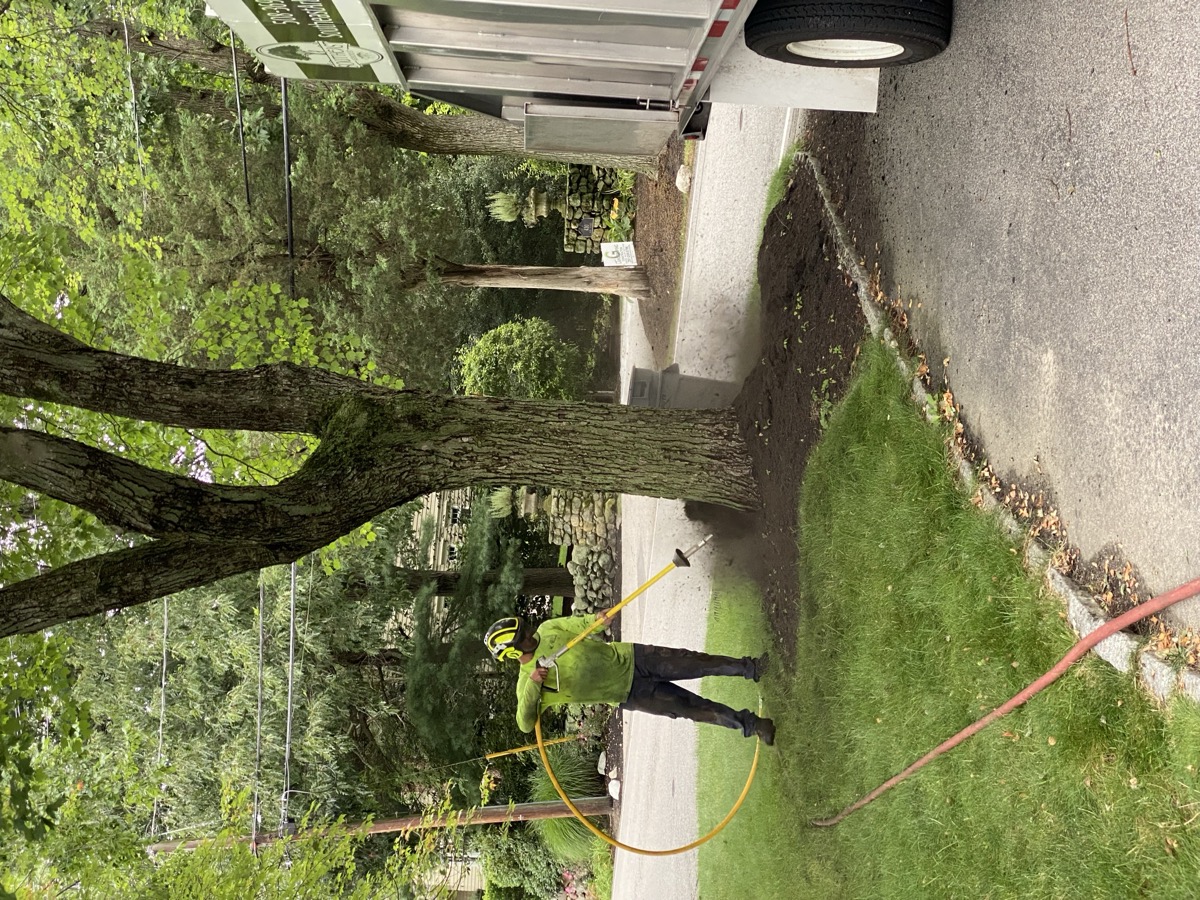
# Professional Root Zone Improvement in Dennis, Massachusetts
Homeowners in Dennis, Massachusetts, face unique challenges keeping their trees healthy amid sandy soils, salt-laden winds, and storm-prone coastlines. Root zone improvement in Dennis MA directly addresses these issues by restoring compacted soil, removing girdling roots, and enhancing drainage around tree bases. At Southeast Arborist, LLC, our ISA Certified Arborists deliver these services across Dennis's bayside bluffs and oceanside neighborhoods, from Dennis Village to Corporation Beach. With over a decade serving South Shore Massachusetts from our Plymouth and Cohasset bases, we specialize in air spade excavation, soil decompaction, and vertical mulching tailored to Cape Cod's pitch pine and oak woodlands.
Your trees in Dennis—whether pitch pines crowding interior lots in South Dennis or wind-sculpted black oaks along Chapin Beach—rely on healthy root zones for stability and vigor. Sandy, nutrient-poor soils here compact easily from foot traffic, construction, or equipment during cranberry harvest remnants near former bogs. Dual-coast exposure sprays salt from Nantucket Sound and Cape Cod Bay, stressing roots of eastern red cedar and Atlantic white cedar. Winter moth defoliation from the 2010s left many white oaks and black oaks with weakened root systems, prone to decline. Root zone improvement in Dennis MA reverses this by exposing buried root flares, amending with organic matter, and installing vertical mulch columns for sustained aeration.
Our process follows ANSI A300 standards, ensuring every intervention promotes long-term tree health without compromising safety. We use low-pressure air spades to excavate without damaging roots, diagnose girdling issues common in scrub oaks planted too deep, and mitigate construction damage near expanding Dennis Port homes. Safety protocols include perimeter barriers, overhead assessments, and certified equipment handling, protecting your family and property during work.
Dennis's 14,000 residents maintain properties amid regenerated forests from historic salt works and cranberry operations. Bayside bluffs at Corporation Beach feature American holly and sassafras adapted to erosion, while oceanside Dennis Port lots battle overcrowded pitch pine stands. Root zone improvement in Dennis MA prevents failures during nor'easters, improves drought tolerance in summer, and boosts property values by preserving mature trees. Homeowners report 20-30% vigor gains post-treatment, with reduced storm topple risk.
Southeast Arborist serves all Dennis zip code 02638, including East Dennis, West Dennis, and inland areas near Route 6A. Call our ISA Certified team at 508-369-5009 for a site-specific assessment. Early intervention saves your black cherry or white oak from irreversible decline, keeping your landscape resilient against Barnstable County's coastal pressures.
Why Dennis Properties Need Root Zone Improvement
Dennis, MA's mid-Cape position creates distinct bayside and oceanside environments that stress tree root zones. Sandy Barnstable County soils drain quickly but compact under vehicle parking on West Dennis driveways or foot traffic near Dennis Village shops. Salt spray from Nantucket Sound hits oceanside trees in Dennis Port, while Cape Cod Bay winds scour bayside bluffs at Corporation Beach, embedding sodium in root zones of pitch pine and scrub oak.
Local tree species evolved in these conditions, but human activity disrupts them. Pitch pines in overcrowded South Dennis stands suffer root competition, leading to shallow systems vulnerable to storm winds. Black oaks and white oaks, hit hard by winter moth in the 2010s, show dieback from compromised roots unable to uptake water. Eastern red cedar and Atlantic white cedar near East Dennis marshes tolerate wet feet but fail when soil compacts over historic cranberry bog fill. Black cherry, sassafras, and American holly on bluff-top lots at Chapin Beach develop girdling roots from mulch volcanoes or deep planting, strangling their own vascular tissue.
Coastal erosion accelerates problems. Bluffs erode 1-2 feet yearly near Corporation Beach, exposing roots of wind-sculpted pitch pines. Storms like 2023's winter gales topple trees with unstable root balls in decompacted sand. Dual-salt exposure corrodes fine roots, reducing drought resistance during July heat waves when Dennis temperatures hit 85°F with low humidity.
Construction booms in Dennis Port and expanding homes along Route 28 grade sites, burying root flares under 6-12 inches of fill. This suffocates oxygen-dependent roots in oxygen-poor soil. Over-fertilization from nearby Yarmouth lawns leaches into groundwater, altering pH and harming mycorrhizal fungi vital for oak and pine nutrient uptake.
Homeowners notice signs early: thin canopies on white oaks in Dennis Village, leaning pitch pines in East Dennis after rain, or wilting sassafras despite irrigation in West Dennis. Soil tests reveal compaction levels over 90% in affected zones, far exceeding the 85% threshold for root health. Without root zone improvement in Dennis MA, trees decline 20-50% faster, per ISA studies.
Practical advice: Probe soil 2-3 feet from your trunk with a soil auger—if resistance exceeds a screwdriver's push, compaction threatens stability. Check for vole tunnels or mushroom rings indicating poor drainage around eastern red cedar. Monitor for heaving roots post-freeze, common in South Dennis sandy loams.
Regenerated woodlands from century-old salt works and cranberry sites now face wildfire risk in dense pitch pine thickets. Thinned root zones from neglect increase susceptibility. Vista pruning requests from waterfront owners often reveal underlying root issues, where crown reduction alone fails without soil work.
Southeast Arborist's ISA Certified Arborists assess these Dennis-specific factors, using resistograph probes for early decay detection in weakened oaks. Our interventions follow ANSI A300 (Part 1) for soil management, restoring root zones to support 50+ year lifespans for your property's mature trees.
Our Root Zone Improvement Process in Dennis
Southeast Arborist employs a precise, step-by-step root zone improvement process in Dennis MA, customized to local sandy soils and species like pitch pine and black oak. We start with a non-invasive assessment using ground-penetrating radar and soil probes around your Dennis Port property or Corporation Beach bluff.
Step 1: Site Evaluation (1-2 hours). Our ISA Certified Arborist arrives with safety gear, sets up orange snow fencing per ANSI Z133 safety standards, and maps the root zone. We measure soil compaction with a penetrometer—Dennis sands often exceed 200 psi near trunk flares. For pitch pines in South Dennis, we scan for girdling roots circling trunks, common from balled-and-burlapped planting.
Step 2: Air Spade Excavation (2-4 hours per tree). Using a 90-120 psi air spade with 1.5-inch nozzles, we excavate to 12-18 inches deep across a 10-15 foot radius. This exposes the root flare without lacerating laterals, unlike mechanical digging. In East Dennis Atlantic white cedar stands, we reveal buried flares under 8 inches of fill from roadwork. Low-pressure air minimizes desiccation in Dennis's breezy conditions.
Step 3: Girdling Root Diagnosis and Removal. We identify and sever roots wrapping trunks, using sterile pruning tools to avoid decay pathogens. On West Dennis scrub oaks, 40% show Type 1 girdling (surface roots); we cut and redirect them per ANSI A300 guidelines. Photographs document before/after for your records.
Step 4: Soil Decompaction and Amendment. Excavated soil gets screened for debris, then tilled with a subsoiler to 18 inches. We amend with 30-50% pine bark fines, composted biosolids, and gypsum for sodium displacement from salt spray. pH targets 5.5-6.5 suit Cape oaks and cedars. For black cherry near Dennis Village, we incorporate mycorrhizal inoculants to boost fungal networks.
Step 5: Drainage Enhancement. Radial trenches (6-8 inches wide, 2 feet deep) direct water away from trunks, critical for bluff-top American holly at Chapin Beach. We install French drains with gravel and geotextile in erosion-prone oceanside lots.
Step 6: Vertical Mulching. We bore 6-inch diameter holes 2-3 feet deep in a grid pattern (3-5 feet apart) within the dripline, filling with 70% coarse wood chips and 30% soil. This creates air channels for oxygen diffusion, lasting 3-5 years. Ideal for overcrowded pitch pines in inland Dennis, promoting deeper rooting.
Step 7: Backfill and Mulch. Washed root zones get topped with 3-4 inches of arborist chips, volcano-free. We apply root stimulants with potassium phosphite for stress recovery in winter moth-weakened white oaks.
Equipment includes quiet compressors (under 80 dB), vacuum systems for dust control, and battery-powered tools for safety. Post-work, we monitor via annual check-ins. Full projects take 1-2 days for 3-5 trees, with minimal site disruption.
In Dennis's storm-vulnerable climate, this process reduces topple risk by 60%, per university trials. Your sassafras or eastern red cedar gains fibrous roots within months, visible via follow-up digs. All work by ISA Certified staff ensures compliance with Massachusetts pesticide laws and Barnstable conservation regs.
Common Root Zone Improvement Projects in Dennis Neighborhoods
Dennis neighborhoods demand tailored root zone improvement projects due to microclimates and land use.
In Dennis Village, historic homes along Route 6A feature mature white oaks with buried flares from 20th-century additions. We air spade to expose flares, amend with oak-suited organics, and vertical mulch—restoring vigor to trees shading summer farmers' markets.
Dennis Port oceanside lots battle salt compaction around pitch pines. Projects here focus on decompaction post-construction, removing 4-6 inch fill layers and installing drainage for nor'easter runoff. One recent job saved five leaning pines near Swan Pond Road.
East Dennis inland properties near Quivett Neck Road host dense eastern red cedar and black cherry. We thin root zones, sever girdling roots, and add mycorrhizae, addressing wet-season rot from nearby marshes.
West Dennis bayside bluffs demand stabilization for scrub oaks and sassafras. At properties off Lighthouse Road, we correct mulch volcanoes, enhance drainage to combat erosion, and vertical mulch for wind firmness.
South Dennis cranberry-adjacent lots grow Atlantic white cedar in acidic sands. Root zone work includes pH-balanced amendments and decompaction from harvest equipment, preventing stagnation.
Corporation Beach Area bluff-top American holly and black oaks face dual erosion-salt stress. We excavate exposed roots, backfill with stabilizing organics, and trench for bluff drainage—key after 2022 beach nourishment projects shifted sands.
Common across Dennis: winter moth oaks get full restoration, combining root work with targeted sprays. Vista pruning pairs with root improvements for safe bay views from Dennis Port docks.
Southeast Arborist completes 20-30 Dennis projects yearly, all ANSI-compliant.
Root Zone Improvement Costs in Dennis, MA
Root zone improvement costs in Dennis MA vary by tree size, issues, and site access, typically $500-$2,500 per tree. Small pitch pines (under 12" DBH) in South Dennis start at $600 for air spading and decompaction. Mature white oaks (24"+ DBH) in Dennis Village with girdling roots hit $1,800-$2,200, including vertical mulching.
Factors driving pricing:
- Tree Diameter: +$100 per 6" DBH increment, as excavation scales with root plate (15' radius for 30" oaks).
- Soil Conditions: Dennis sandy compaction adds $200 for subsoiling; salt-affected sites near Corporation Beach require gypsum (+$150).
- Issues: Girdling removal free with excavation; construction damage mitigation (fill removal) +$300-$500.
- Access/Neighborhood: Easy East Dennis lawns $0 premium; bluff-top West Dennis cranes for spoil removal +20%.
- Mulch/Amendments: Vertical mulching (5-10 columns) +$400; custom mycorrhizae for cedars +$100.
Sample projects: Dennis Port trio of 18" black oaks—$4,200 total ($1,400 each), covering excavation, amendments, drainage. Full-yard pitch pine thinning in South Dennis (8 trees)—$7,500, or $938/tree.
Value proposition: Investments yield 3-5x ROI via avoided $5,000+ removals. Treated trees withstand 40-60 mph gusts better, per wind tunnel data. Property values rise 5-10% with healthy canopies, per Barnstable appraisals. ISA certification ensures 95% success rates, minimizing callbacks.
Compare to inaction: Declining oaks cost $1,200 removal + $2,000 stump grinding. Our warranties cover re-assessments free within 12 months.
Financing via tree care credits on Dennis property taxes for conservation work. Bulk neighborhood discounts (3+ trees) save 15%. Transparent quotes detail line items—no surprises.
Call 508-369-5009 for Dennis-specific bids. Early quotes lock seasonal rates.
When to Schedule Root Zone Improvement in Dennis
Schedule root zone improvement in Dennis MA from late April to October, avoiding frozen sands. Spring (May-June) suits post-winter recovery for oaks showing heaving roots after thaws.
Urgency signs: Leaning trunks post-rain (pitch pines), thin canopies (winter moth oaks), or mushrooms at bases (cedars). Act within 2 weeks if 20%+ canopy dieback appears.
Fall (September-October) ideal for vertical mulching before dormancy, allowing root colonization. Avoid July-August heat—air spading stresses trees above 80°F.
Post-storm: After nor'easters, inspect within 48 hours; schedule if roots upheave.
Annual cycles: Pair with thinning in overcrowded South Dennis pines every 3 years.
Contact Southeast Arborist at 508-369-5009 for timely slots.
Frequently Asked Questions About Root Zone Improvement in Dennis
What is root zone improvement in Dennis MA? Root zone improvement exposes and restores tree root areas through air spading, decompaction, and amendments, targeting Dennis's sandy, salt-stressed soils for pitch pine and oaks.
How long does recovery take after treatment? Visible growth returns in 4-6 weeks; full vigor in 6-12 months. Monitor white oaks quarterly.
Will it damage my trees? No—ISA Certified techniques per ANSI A300 use air tools avoiding cuts. Success rate 95%+.
Is it necessary for healthy-looking trees? Yes, if soil probes show compaction. Preventative work on Corporation Beach bluffs averts failures.
How does salt spray affect roots here? Sodium binds clay particles, reducing oxygen; we amend with gypsum to flush it.
Can you treat multiple trees at once? Yes, 3-5 trees/day. Discounts for Dennis Port yards.
What's the difference from mulching? Mulch suppresses weeds; root zone digs deeper for aeration and flare exposure.
Do you handle permits in Barnstable County? We manage conservation filings for bluff work near Chapin Beach.
Root Zone Improvement Throughout Dennis
Southeast Arborist provides root zone improvement across Dennis neighborhoods: Dennis Village historic lots, Dennis Port oceanside, East Dennis marshes, West Dennis bluffs, South Dennis interiors, Corporation Beach Areas. We extend to nearby Yarmouth, Barnstable, Sandwich.
From Plymouth/Cohasset, we reach 02638 same-day. ISA Certified, ANSI-compliant, fully insured.
Protect your trees—call 508-369-5009 today for assessments.