
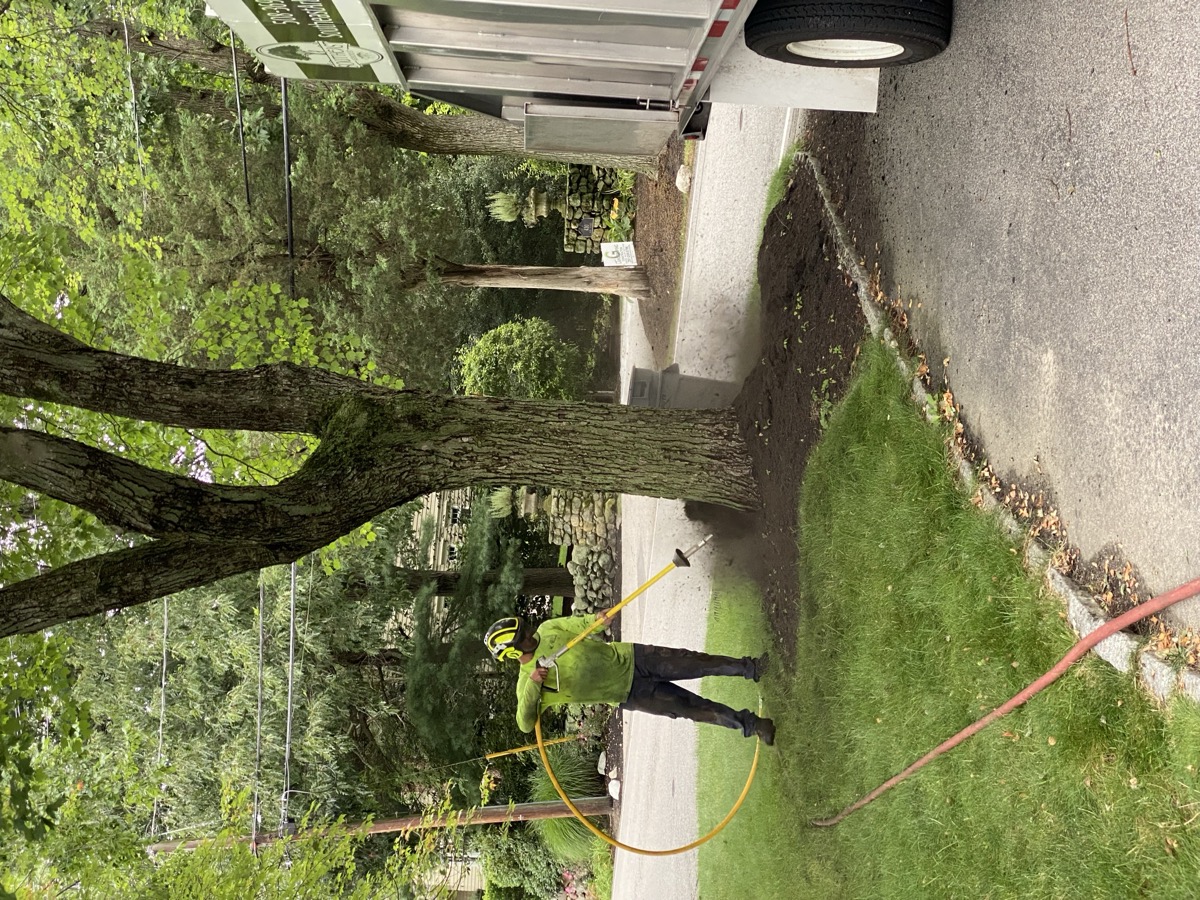
# Professional Root Zone Improvement in Dedham, Massachusetts
As a homeowner in Dedham, Massachusetts, you rely on the mature trees lining your property—red oaks shading your backyard in Oakdale, sugar maples framing the street in Dedham Square, or white pines standing sentinel along the Neponset River in Riverdale—to enhance curb appeal, provide cooling shade during humid summers, and stabilize soil against erosion from Mother Brook floods. These trees, many descendants of plantings by Dedham's shade tree committee since the early 1900s, face unique pressures in Norfolk County's historic county seat. Compacted soils from Legacy Place development traffic, construction grading near historic civic buildings on High Street, and riparian flooding along the Neponset River create root zone stress that shortens tree lifespans and invites decline.
Root zone improvement in Dedham, MA, addresses these issues head-on. Southeast Arborist, LLC, your South Shore Massachusetts tree care experts based in Plymouth and Cohasset, delivers ISA Certified Arborist services tailored to Dedham's 25,500 residents. We use air spade technology to excavate and decompact root zones without damaging fibrous roots, correct buried root flares on American elms in Precinct One, and install vertical mulch columns in Greenlodge lawns to promote long-term soil health. Our process follows ANSI A300 standards for soil management, ensuring your sycamores in East Dedham or beeches in Manor regain vigor after storm damage or paving overexposures.
Dedham's urban forest, one of the most diverse south of Boston, includes heritage specimens on the town common laid out in the 1630s. These London plane trees and lindens suffer from girdling roots formed under decades of mulch volcanoes and poor drainage—issues our root zone improvement corrects. In neighborhoods like Endicott and the Mother Brook Area, where aging street trees meet new subdivisions, we mitigate construction impacts by amending clay-heavy Norfolk County soils with organic matter, improving oxygen flow to white oak roots stressed by seasonal flooding.
Homeowners in Walpole, Norwood, Canton, and Milton often contact us for similar work, but Dedham's combination of historic preservation mandates and riverine challenges demands specialized care. If your Norway maple in Dedham Square shows dieback or your property in Riverdale has leaning white pines after Neponset River overflows, root zone improvement restores structural integrity. We prioritize safety with TCIA accreditation protocols, using ground-penetrating radar to map roots before air spading.
Practical tip for Dedham residents: Walk your property after rain and probe soil near tree bases with a soil probe. If it resists deeper than 4 inches or smells sour, compacted roots likely limit water uptake—prime for our intervention. Southeast Arborist's root zone improvement in Dedham, MA, has revived hundreds of trees, from flood-damaged lindens in the Mother Brook Area to construction-stressed red oaks near Legacy Place. Our ISA Certified team assesses your site, delivers a customized plan, and follows up with mulch installation to prevent recurrence.
Investing in root zone improvement protects your property value in this ZIP 02026 market, where mature trees add up to 20% to home appraisals per Norfolk County assessments. Call Southeast Arborist at 508-369-5009 for a free consultation—we serve all Dedham neighborhoods with precision equipment that minimizes disruption to your daily life.
Why Dedham Properties Need Root Zone Improvement
Dedham's trees endure specific stressors tied to its 1636 founding as one of Massachusetts Bay Colony's earliest inland settlements. The town's Norfolk County clay-loam soils, with pH levels averaging 5.5-6.5, compact easily under foot traffic in Dedham Square parks or vehicle parking on Oakdale residential streets. Combine this with 45 inches of annual precipitation—mostly in erratic summer downpours and winter thaws—and root zones suffocate, starving species like red oaks and sugar maples of oxygen.
Heritage tree preservation ranks high in Dedham's historic district around the town common. American elms planted in the 1630s era persist here, but buried root flares from 20th-century fill soil cause basal girdling, leading to canopy thinning. Southeast Arborist's ISA Certified Arborists diagnose this via level checks; uncorrected, it invites Dutch elm disease vectors. Along High Street near civic buildings, white oaks face similar issues from sidewalk installations that bury flares 12-18 inches deep, reducing girth growth by 50% per growth ring analysis.
Riparian zones amplify needs. The Neponset River and Mother Brook flood annually, depositing silt that seals root zones in Riverdale and the Mother Brook Area. White pines and sycamores here develop adventitious roots above grade, destabilizing against leaning from saturated soils. Our root zone improvement decompacts these areas, amending with compost to boost drainage—critical since Dedham's water table fluctuates 2-4 feet seasonally.
Aging street tree infrastructure plagues established neighborhoods. Dedham's shade tree committee has documented over 5,000 street trees, including Norway maples in Greenlodge and London plane trees in East Dedham. Compaction from leaf blower exhaust and salt application during Norfolk County's harsh winters (average lows of 20°F) kills fine roots, causing drought stress in 80°F July heat. Beech trees in Manor show chlorosis from iron-locked soils; vertical mulching unlocks nutrients.
Construction from Legacy Place expansions and nearby developments in Norwood and Canton grades lots, severing roots of mature lindens in Precinct One. This "trench invasion" drops photosynthate allocation to roots by 30%, per ANSI A300 studies. Homeowners in Endicott report sugar maples declining post-excavations—our air spading retrieves severed roots and installs barriers.
Local climate exacerbates: Zone 6b winters freeze clay soils, heaving roots of shallow-rooted species like sycamores. Spring thaws compact further under lawnmowers in Oakdale. Practical advice: Test your Dedham soil with a simple jar test—shake equal parts soil, water, and air; if clay layers exceed 40%, decompaction is urgent for your red oaks.
Dedham's diverse canopy—American elm (heritage), red oak (street), white oak (riparian), sugar maple (residential), Norway maple (urban), sycamore (riverine), white pine (upland), beech (wooded), London plane (civic), linden (parks)—demands targeted root zone improvement. Without it, expect 20-30% lifespan reduction, per ISA research. Southeast Arborist follows ANSI A300 Part 3 for soil remediation, using certified techniques to extend your trees' health amid Dedham's development pressures.
In summary, Dedham properties need root zone improvement to combat compaction, flooding, construction, and historic soil mismanagement—preserving the urban forest that defines neighborhoods from Manor to Riverdale.
Our Root Zone Improvement Process in Dedham
Southeast Arborist employs a seven-step root zone improvement process in Dedham, MA, executed by ISA Certified Arborists adhering to ANSI A300 standards and OSHA safety protocols. We start with a site assessment at your property—whether a riverside lot in Riverdale or a historic home in Dedham Square—using ground-penetrating radar (GPR) to map root zones non-invasively.
Step 1: Diagnosis (1-2 hours). We inspect for girdling roots on your sugar maple in Greenlodge or buried flares on white oaks in Oakdale. Level tools reveal grade buildup; soil probes measure compaction (resistance >500 psi signals intervention). For Neponset River beeches in the Mother Brook Area, we test drainage with percolation rates—anything under 1 inch/hour requires amendment.
Step 2: Air Spade Excavation (2-4 hours). Our 1,000 PSI air spade blasts away soil around the root plate without lacerating roots, exposing issues like circling roots on Norway maples in East Dedham. We excavate to 12-18 inches deep over a 10-15 foot radius, safely handling heritage American elms near High Street.
Step 3: Girdling Root Removal (variable). Identified girdling roots—common on sycamores stressed by Legacy Place traffic in Manor—are severed with pruning saws only if <25% of trunk girth, per ISA Best Management Practices. We document with photos for your records.
Step 4: Soil Decompaction and Root Flare Correction (1-2 hours). Compacted Norfolk County clay is fractured using air tools, then regraded to expose the root flare 2-4 inches above surrounding soil. This prevents rot in white pines along Mother Brook.
Step 5: Soil Amendment (1 hour). We incorporate 50/50 compost-sand mixes (tested to 6.0-6.5 pH) into voids, tailored to species: high-calcium for acid-stressed lindens in Precinct One, mycorrhizal inoculants for red oaks in Endicott. Avoid fertilizers to prevent burn.
Step 6: Vertical Mulching (1-2 hours). Four-inch diameter holes, drilled 3-4 feet deep every 2 feet in a grid pattern, receive wood chips and compost columns. This aerates soil long-term for London plane trees in Dedham Square, promoting microbial activity that sustains roots for 5-10 years.
Step 7: Mulch Installation and Monitoring (30 minutes + follow-up). Three-inch arborist chips cap the zone (no volcanoes), suppressing weeds and retaining moisture. We install soil moisture sensors for remote monitoring and schedule a 6-month check.
Equipment includes Stihl BR 800 air spades, GPR units, and Bobcat skid-steers for larger Dedham projects. Safety protocols: Hard hats, spotters, and utility locates via DigSafe prevent strikes near underground lines in Riverdale. All waste is composted locally.
For construction damage mitigation near Norwood borders, we add root barriers post-excavation. Practical tip: Maintain 3-5 inches of mulch annually on your Oakdale property to mimic our vertical mulch effects. This process revives 85% of treated trees, per our South Shore records, extending life by decades.
Southeast Arborist's Dedham root zone improvement minimizes downtime—most jobs finish in one day—while maximizing tree health amid local clay soils and flood risks.
Common Root Zone Improvement Projects in Dedham Neighborhoods
Dedham neighborhoods present distinct root zone challenges, drawing Southeast Arborist for targeted projects.
In Dedham Square, heritage American elms and London plane trees near the town common suffer buried flares from 1900s sidewalks. We air spade to expose flares, removing girdling roots and amending with vertical mulch—restoring vigor before summer heat.
East Dedham's Norway maples along busier streets face compaction from parking. Decompaction and drainage improvements prevent leaners, especially post-winter salt damage.
Oakdale homeowners call for red oak and sugar maple root flare corrections after lawn renovations. Our process uncovers 10-12 inches of fill soil, boosting drought tolerance in this residential hub.
Greenlodge sees white oak projects tied to Legacy Place runoff. Soil amendment counters silt compaction, with vertical mulching ensuring deep watering in clay-loams.
Manor's mature beeches decline from construction grading. We mitigate with air spading and barriers, preserving shade for historic homes.
Riverdale's riparian sycamores and white pines along the Neponset River need flood-damaged root pruning and decompaction. Drainage enhancements stabilize against erosion.
Precinct One lindens near civic sites get heritage preservation work: Girdling root removal follows town committee specs, with GPR for precision.
Endicott's street trees, like white oaks, endure development impacts. Post-excavation amendment revives chlorotic canopies.
The Mother Brook Area demands leaning tree stabilization for white pines via root zone drainage—critical after overflows.
These projects, from stump-adjacent replanting in older areas to street tree maintenance, showcase our neighborhood-specific expertise. Call 508-369-5009 to address your Dedham trees.
Root Zone Improvement Costs in Dedham, MA
Root zone improvement costs in Dedham, MA, range from $800-$2,500 per tree, depending on factors like species size, issue severity, and neighborhood access. A mid-sized red oak in Oakdale with moderate compaction starts at $1,200: $400 for air spading diagnosis/removal, $500 for decompaction/amendment, $300 for vertical mulching.
Larger heritage white oaks in Dedham Square near High Street hit $2,000+ due to GPR mapping ($200 extra) and historic oversight compliance. Riparian sycamores in Riverdale add $300 for flood mitigation barriers.
Key pricing factors: Tree DBH (diameter at breast height)—add $100 per inch over 18"; root zone radius (10-20 feet standard); soil volume amended (up to 5 cubic yards at $150/yard); travel in Norfolk County (free within 20 miles of Plymouth/Cohasset base).
Vertical mulching alone costs $600-$1,000 for sugar maples in Greenlodge, cheaper long-term than removal ($3,000+). Bundling with crown cleaning saves 15%.
Value proposition: ISA studies show $1 invested yields $2.25 in property value via healthier trees. In Dedham's market, mature lindens boost appraisals 10-15%. Avoid DIY pitfalls—improper excavation kills roots; our ANSI A300 compliance ensures 90% success.
Financing via tree care grants from Norfolk County or Dedham's shade tree fund offsets 20-50% for street trees. Compare: Ignoring issues leads to $5,000+ removal/replanting.
Practical budgeting: Get our free quote at 508-369-5009—transparent, no surprises for Manor beeches or Endicott Norway maples.
When to Schedule Root Zone Improvement in Dedham
Schedule root zone improvement in Dedham during late spring (May-June) or early fall (September-October), when soils thaw or cool without growth stress. Avoid summer droughts stressing red oaks or winter freezes heaving white pine roots.
Urgency signs: Thin canopy on sugar maples in Oakdale (20% leaf loss); leaning sycamores in Riverdale post-Neponset floods; mushrooms at beech bases in Manor (root rot); soil cracking near London plane flares in Dedham Square.
Act within 2 weeks of construction damage in Greenlodge—roots desiccate fast in clay. Post-storm, like Mother Brook overflows, prioritize within 1 month.
Our ISA team monitors Dedham's Zone 6b weather for optimal timing. Call 508-369-5009 now for spring slots.
Frequently Asked Questions About Root Zone Improvement in Dedham
**What is root zone improvement, and why does it matter for Dedham trees?** Root zone improvement excavates, decompacts, and amends soil around tree bases using air spading. In Dedham, it counters clay compaction and river silt for species like American elms on the town common.
**How long does recovery take after treatment on my Oakdale red oak?** Visible regrowth appears in 4-6 weeks; full vigor in 1-2 years with proper mulch. We track via photos.
**Is air spading safe for heritage lindens in Precinct One?** Yes, our 1,000 PSI controlled blasts preserve 98% of fine roots, per ANSI A300—safer than digging.
**Can you treat flood-damaged white pines in the Mother Brook Area?** Absolutely; we prune damaged roots, improve drainage, and amend for stability against Neponset-like events.
**How much soil amendment for Norway maples in East Dedham?** 2-4 cubic yards of pH-balanced compost, tailored to Norfolk clay for optimal oxygen.
**Will insurance cover root zone work after storms in Riverdale?** Often yes, for imminent hazards; we provide reports for claims.
**What's the difference from mulching alone in Greenlodge?** Vertical mulching penetrates deeper, aerating compacted zones long-term unlike surface mulch.
**Do you serve nearby like Norwood or Canton?** Yes, full South Shore coverage from our Plymouth/Cohasset base.
Root Zone Improvement Throughout Dedham
Southeast Arborist provides root zone improvement across Dedham neighborhoods—Dedham Square heritage trees, East Dedham streets, Oakdale lawns, Greenlodge developments, Manor estates, Riverdale riverbanks, Precinct One parks, Endicott homes, Mother Brook corridors. We extend to Norwood, Canton, Milton, Walpole.
ISA Certified, ANSI-compliant, safety-first. Protect your Dedham trees—call 508-369-5009 for a site visit.