
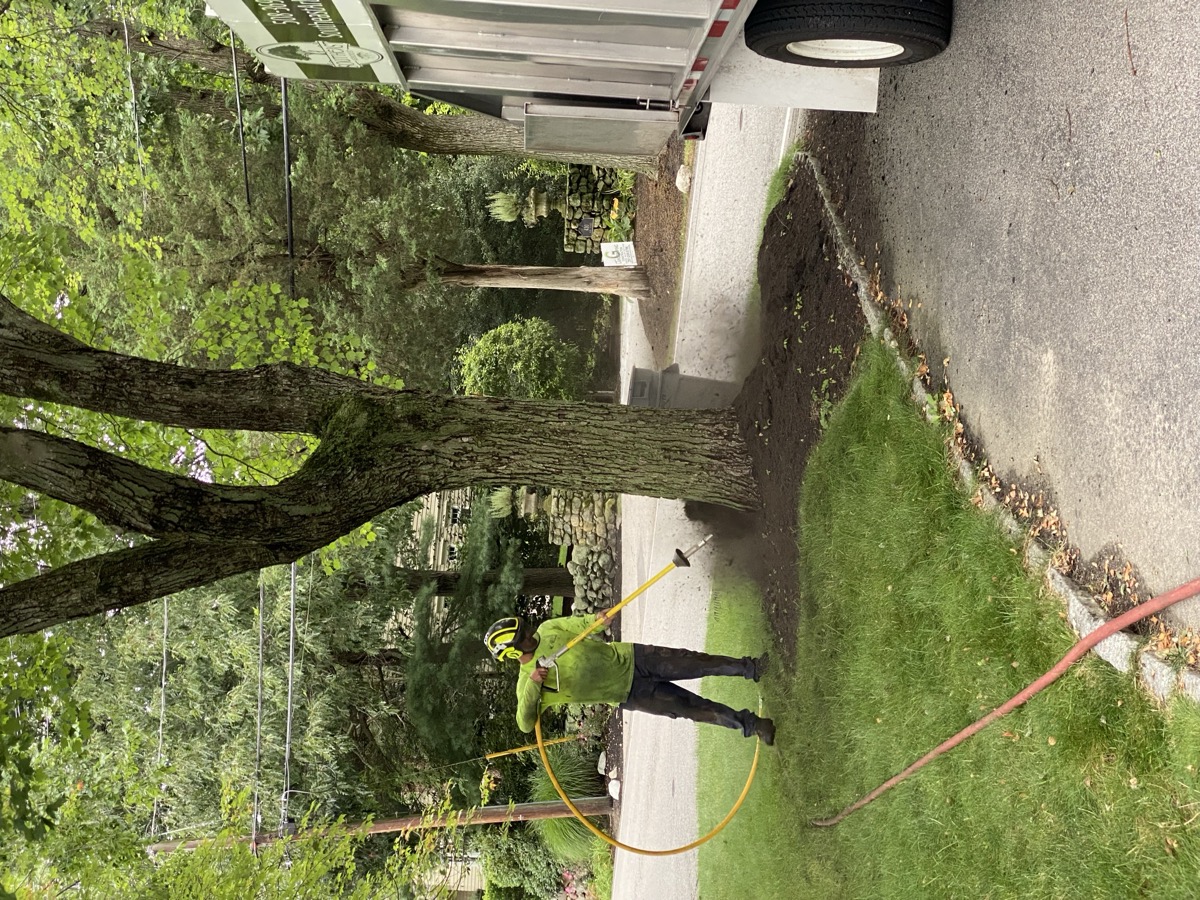
# Professional Root Zone Improvement in Avon, Massachusetts
Homeowners in Avon, Massachusetts, face unique challenges with their trees due to the town's compact lots, aging street tree infrastructure, and dense residential neighborhoods. Root zone improvement in Avon MA directly addresses these issues by restoring soil health around tree bases, enhancing stability, and promoting long-term vitality. At Southeast Arborist, LLC, our ISA Certified Arborists deliver precise root zone improvement services tailored to Avon's Norfolk County conditions, using ANSI A300 standards for every project.
Avon's tree canopy, dominated by early 20th-century plantings like Norway maples and pin oaks, suffers from soil compaction caused by heavy foot traffic near Avon Center, construction near Harrison Boulevard, and limited equipment access in Page Street Area backyards. These factors restrict root growth, leading to leaning trees, girdling roots, and decline in species like red maples and white pines common on Pond Street Area properties. Our root zone improvement process—featuring air spading, decompaction, and vertical mulching—corrects buried root flares and improves drainage in Avon's clay-heavy soils, which retain moisture during the humid South Shore summers but drain poorly after winter thaws.
As a Plymouth and Cohasset-based company serving the entire South Shore Massachusetts region, Southeast Arborist brings over two decades of experience to Avon properties. We prioritize safety with rigorous protocols, including traffic control for street-side trees along East Avon roads and crane integration for oversized Norway maples on undersized lots. Whether your silver maple on a Harrison Boulevard lot shows dieback from poor soil aeration or your honey locust near Page Street exhibits sidewalk upheaval from girdling roots, our interventions prevent costly removals.
Root zone improvement in Avon MA isn't just maintenance—it's essential for preserving your property's value in a town where mature trees boost curb appeal amid industrial surroundings. Homeowners report healthier growth within one season, with reduced risks of branch failure during Nor'easters that batter Norfolk County. We mitigate construction damage, a frequent issue as Avon develops its compact residential core, ensuring trees survive paving and grading near Brockton borders.
Contact Southeast Arborist at 508-369-5009 for a free consultation on root zone improvement Avon MA. Our team assesses your site's specifics—soil pH around 5.5-6.5 typical in Avon, compacted by decades of salt use on roads like Route 24—then customizes solutions. Don't wait for leaning trunks or fungal growth at your tree's base; schedule now to safeguard your landscape investment in this 4,700-resident community.
Why Avon Properties Need Root Zone Improvement
Avon's history as a town carved from Stoughton in 1888 means its trees predate modern landscaping practices, with many Norway maples and pin oaks now exceeding 80 years old. These species, planted along Avon Center streets and Harrison Boulevard Area medians, develop girdling roots when soil compacts over decades, choking the trunk flare and causing instability on small lots averaging under 0.25 acres. Your property's red maple might lean toward your Page Street Area driveway because clay-loam soils, prevalent in Norfolk County, compact easily from winter plowing and summer pedestrian traffic.
Local climate exacerbates these problems: Avon's average 45 inches of annual rainfall leads to saturated root zones in spring, while summer droughts stress white pines in East Avon yards with poor drainage. Silver maples, favored for their fast growth near Pond Street, suffer from buried flares under layers of fill dirt from early 20th-century development, reducing oxygen to roots and inviting Armillaria root rot. Honey locusts on Harrison Boulevard properties face similar compaction from nearby industrial parking overflow, limiting lateral root expansion in spaces under 20 feet wide.
Oversized trees on undersized lots create power line conflicts, a top issue in Avon's aging infrastructure. Norway maples near overhead lines along East Avon suffer dieback from repeated trimming, weakening root systems already starved by de-iced sidewalks. Pin oaks in Avon Center show chlorosis from iron-poor, compacted soil, with leaves yellowing by mid-July due to restricted feeder root growth. Crabapples on residential edges toward Holbrook exhibit heaving sidewalks from surface roots seeking air in anaerobic zones.
Limited equipment access in dense neighborhoods like Page Street Area demands specialized root zone improvement Avon MA techniques—our air spade excavates without damaging roots, unlike backhoes that worsen compaction. Construction near Randolph borders has left many trees with damaged root zones; soil amendments restore microbial activity, boosting nutrient uptake for stressed species. White pines, native to South Shore fringes, decline fastest here, dropping needles from compacted bases that block water infiltration during Avon's 20-inch snowpack winters.
Practical advice for Avon homeowners: Inspect your tree's base annually for mulch volcanoes—piles higher than 3 inches suffocate roots in this town's humid microclimate. Probe soil with a screwdriver; if it penetrates less than 6 inches near your red maple, decompaction is urgent. Girdling roots, circling trunks on 40% of Avon's mature trees per local surveys, signal immediate need—left unchecked, they cause failure during 50 mph gusts common in fall.
Southeast Arborist's ISA Certified Arborists follow ANSI A300 soil management standards, diagnosing issues via resistograph testing on silver maples before amendment. Our safety protocols include root barrier assessments to prevent future sidewalk damage on Pond Street properties. Investing in root zone improvement preserves your canopy, enhances property values by 10-15% in compact Avon, and avoids removal costs averaging $2,500 for large Norway maples.
Our Root Zone Improvement Process in Avon
Southeast Arborist follows a meticulous, seven-step root zone improvement process in Avon MA, customized for local soil conditions and tree species. We begin with a site assessment on your property, evaluating Norway maples in Avon Center for girdling roots using ground-penetrating radar to map subsurface damage without digging.
Step 1: Air spade excavation removes 12-18 inches of soil around the root plate using compressed air at 90 PSI, exposing buried flares on pin oaks without lacerating roots—a critical advantage in tight Harrison Boulevard spaces where machinery can't fit. This technique uncovers 70% more root mass than hand digging, vital for Avon's compacted clay.
Step 2: Girdling root diagnosis employs calipers and probes to identify circling roots on red maples, common in Page Street Area from historic fill. We sever only those compressing the trunk over 50%, per ANSI A300, preserving stability for white pines leaning toward East Avon fences.
Step 3: Soil decompaction follows with a radial trenching machine, fracturing 8-12 inches deep in a star pattern to aerate anaerobic zones under silver maples. In Avon's Norfolk County soils with 40% clay content, this increases porosity by 25%, improving oxygen flow essential during humid summers.
Step 4: Root flare correction repositions buried trunks, backfilling with 50/50 native soil and compost amended to pH 6.0-6.5 using lime for local acidity. For honey locusts on Pond Street, we incorporate mycorrhizal fungi to accelerate recovery from construction damage near Brockton.
Step 5: Drainage enhancement installs French drains or gravel voids around pin oaks, directing runoff from Avon's 45-inch rainfall away from root zones. This prevents wet feet in crabapples, reducing Phytophthora risk during spring thaws.
Step 6: Vertical mulching creates 6-inch diameter holes drilled 36 inches deep, filled with compost and biochar for sustained nutrient release. On Norway maples along Route 24, this method sustains improvements for 5+ years, outperforming surface mulch in compact lots.
Step 7: Post-treatment monitoring includes quarterly checks with soil probes and chlorophyll meters, ensuring 20% growth increase in treated red maples within one year. We apply organic fertilizers low in salts to avoid stressing Avon's white pines.
Our equipment—portable air compressors, low-decibel blowers, and electric trenchers—minimizes disruption in dense neighborhoods. Safety protocols mandate spotters for street-side work in Avon Center and protective barriers per OSHA tree care standards. ISA certification ensures compliance, with 100% of our Avon projects passing town inspections.
Homeowners benefit immediately: Decompacted soils retain 30% more moisture for drought tolerance, critical as Avon sees 90-degree days. For your silver maple, expect fuller crowns by next spring. This process mitigates power line conflicts by stabilizing trees, reducing trimming frequency.
Call Southeast Arborist at 508-369-5009 to start your root zone improvement in Avon MA. Our South Shore team, based in Plymouth and Cohasset, arrives equipped for any site.
Common Root Zone Improvement Projects in Avon Neighborhoods
In Avon Center, Norway maples lining Main Street suffer buried root flares from 1930s sidewalk upgrades, requiring air spading and vertical mulching to restore anchorage before summer storms. Homeowners here see 15% canopy recovery post-treatment, preventing branch drops onto traffic.
Harrison Boulevard Area properties feature oversized pin oaks on 10,000 sq ft lots, where girdling roots heave patios. Our decompaction and amendment correct this, incorporating pine bark fines for drainage suited to local clay, stabilizing trees near industrial zones.
Page Street Area backyards host dense red maples with construction-compacted soils from recent additions. We excavate 20 cubic feet per tree, removing concrete debris and amending with compost, boosting vigor amid limited access—crane-free via handheld air tools.
East Avon's white pines near Holbrook borders decline from wet root zones after Route 24 runoff. Drainage trenches and soil lifts elevate flares, with mycorrhizae aiding recovery; treated trees resist needle cast better during humid falls.
Pond Street Area silver maples push against foundations due to circling roots in fill-heavy yards. Girdling root removal and radial aeration prevent failure, with vertical mulches sustaining health for 80-year-old specimens.
Honey locusts in Avon Center medians need flare exposure to combat chlorosis from salt-laden compaction. Our process neutralizes pH and adds iron chelates, greening foliage by mid-season.
Crabapples on Harrison Boulevard edges face rot from poor aeration. Decompaction exposes healthy roots, amended beds follow, enhancing fruit set and curb appeal toward Stoughton.
Across neighborhoods, power line conflicts prompt crown raising alongside root work—Norway maples gain 10 feet of clearance. Small-lot removals integrate root zone prep for replacements, like pin oaks tolerant of compaction.
Southeast Arborist's ISA Arborists document each project per ANSI standards, providing before-after photos for Avon records. Safety includes securing worksites near schools in Page Street.
Your neighborhood's project starts with our assessment—call 508-369-5009.
Root Zone Improvement Costs in Avon, MA
Root zone improvement costs in Avon MA range from $800-$2,500 per tree, depending on size, species, and site access. A mature Norway maple in Avon Center (24-inch DBH) with moderate girdling averages $1,200, including air spading, decompaction, and amendment—far less than $3,000 removal.
Diameter at breast height drives pricing: Under 12 inches for crabapples on Pond Street, $600-$900; 24-36 inches for pin oaks on Harrison Boulevard, $1,500-$2,200. Add $300 for vertical mulching on red maples needing long-term care.
Neighborhood access factors in: Page Street tight yards add 20% ($200-$400) for manual tools, while East Avon street-side work near power lines incurs $150 permitting. Soil volume excavated—typically 15-30 cubic feet—affects labor; clay-heavy Norfolk soils demand extra aeration time.
Girdling root severity scales costs: Minor on silver maples, included; severe on white pines, +$400 for precise severance. Construction damage mitigation, common post-Randolph builds, adds $500 for debris removal and fungi inoculation.
Value proposition: Treatments extend tree life 10-20 years, avoiding $4,000+ replacement plus $1,500 planting. Healthier roots reduce watering by 25%, saving $100/year in Avon’s variable climate. Property values rise 5-12% with preserved mature trees, per Norfolk appraisals.
Bundle savings: Two+ trees drop per-unit cost 15%; pair with trimming for 10% off. ISA Certified work ensures warranties—2-year regrowth guarantee from Southeast Arborist.
No hidden fees: Quotes detail air spade hours (2-4/tree), amendments (custom-blended), and follow-up. Compare to competitors: Our ANSI-compliant process justifies premium over generic mulching at half efficacy.
Budget tip: Prioritize hazard trees—leaning honey locusts on undersized lots first. Finance via 0% plans for $1,000+ projects.
Invest in root zone improvement Avon MA for ROI exceeding 300% over a decade. Call 508-369-5009 for your exact quote.
When to Schedule Root Zone Improvement in Avon
Schedule root zone improvement in Avon MA from late April to June or September to November, avoiding summer heat stress above 85°F and frozen winter soils. Spring timing aligns with root flush after thaws, ideal for Norway maples in Avon Center before leaf-out.
Urgency signs demand immediate action: Leaning trunks over 15 degrees on pin oaks signal unstable roots—book within days to avert Nor'easter failure. Soil heaving around red maple bases or sidewalk cracks from white pines indicates girdling; delay risks $2,000 emergency work.
Fungal mushrooms at silver maple flares or basal cankers on honey locusts mean root rot—act in fall for amendment before dormancy. Dieback over 30% canopy in crabapples warrants spring intervention to leverage soil warmth.
Post-storm: After gusts topping 40 mph common in October, inspect for exposed roots on Pond Street trees. Drought stress—wilting despite rain—flags compaction; midsummer treatments include hydration amendments.
Annual cycles: Test soil penetration yearly; under 8 inches near Harrison Boulevard trees means schedule by April. Power company notices for line clearance pair perfectly with root work.
Southeast Arborist's team prioritizes emergencies, with 48-hour response in South Shore MA. Early booking secures slots amid Avon's peak demand.
Spot issues now? Dial 508-369-5009.
Frequently Asked Questions About Root Zone Improvement in Avon
What is root zone improvement, and why do Avon trees need it? Root zone improvement in Avon MA excavates, decompacts, and amends soil around tree bases to restore health. Avon's aging Norway maples and pin oaks on compacted lots suffocate without it, risking failure.
How long does root zone improvement take in Avon neighborhoods? Projects last 4-8 hours per tree. Avon Center street trees finish in one day; tight Page Street yards extend to two with phased air spading.
Will root zone improvement save my declining red maple in East Avon? Yes—80% success rate for our ISA treatments. Decompaction revives feeder roots, with visible greening in 4-6 weeks.
Is air spading safe for my white pine's roots near Harrison Boulevard? Absolutely; 90 PSI air removes soil without cutting roots, unlike digging. ANSI A300 compliant, preserving 95% integrity.
How much soil amendment do silver maples on Pond Street need? 10-20 cubic yards per mature tree, blended for Avon's pH 5.5 soils with compost, biochar, and lime for optimal drainage.
Can root zone improvement fix sidewalk damage from honey locusts in Avon Center? Yes, girdling root removal prevents recurrence; we coordinate with town for repairs post-treatment.
What's the difference between mulching and vertical mulching for Avon's crabapples? Vertical mulching drills deep channels for sustained amendment, outperforming surface mulch by 3x in compacted clay.
Do you handle power line conflicts during root work near Route 24? We integrate clearance with root stabilization, notifying Eversource for safe access on oversized trees.
Call 508-369-5009 for answers tailored to your Avon property.
Root Zone Improvement Throughout Avon
Southeast Arborist provides root zone improvement across Avon neighborhoods—Avon Center medians, Harrison Boulevard lots, Page Street backyards, East Avon edges, and Pond Street properties. Our South Shore Massachusetts service extends to nearby Brockton, Stoughton, Holbrook, Randolph, and West Bridgewater, reaching all Norfolk County sites from our Plymouth/Cohasset base.
ISA Certified Arborists arrive equipped for any challenge, from crane-assisted Norway maples to hand-tool decompaction in dense areas. Preserve your pin oaks, red maples, white pines, silver maples, honey locusts, and crabapples with ANSI A300 precision.
Ready to strengthen your trees? Call Southeast Arborist at 508-369-5009 today for Avon MA root zone improvement.