
# Professional Ornamental Trimming in Yarmouth, Massachusetts
If you own property in Yarmouth, Massachusetts, your landscape likely features a mix of native Cape Cod trees and imported ornamentals that define the mid-Cape's unique character. From the historic shade trees around Yarmouth Port's Captain Bangs Hallet House to the aging commercial plantings along Route 28 in West Yarmouth, ornamental trimming keeps these assets healthy and visually appealing. Southeast Arborist, LLC, your South Shore Massachusetts tree care experts based in Plymouth and Cohasset, specializes in ornamental trimming Yarmouth MA homeowners rely on for precision care.
Ornamental trimming goes beyond basic cuts—it's detailed pruning tailored to species like Japanese maples, dogwoods, magnolias, and weeping cherries common in Yarmouth's residential gardens. Our ISA Certified Arborists follow ANSI A300 standards to enhance aesthetic beauty while preventing disease through improved airflow. Whether you're in Bass River dealing with tidal erosion or Bayberry Hills managing overcrowded pines, proper ornamental trimming protects your investment from Yarmouth's harsh coastal conditions.
Yarmouth, in Barnstable County with a population of about 24,000, sits in the mid-Cape tourist corridor. Its bayside historic districts and developed sound-side areas face specific challenges: winter moth defoliation weakens oak canopies, Route 28's mid-20th-century landscape trees are declining, and Bass River properties suffer tidal undermining. Native species like pitch pine, scrub oak, black oak, white oak, eastern red cedar, black cherry, sassafras, American holly, red maple, and honey locust dominate, often interplanted with ornamentals in neighborhoods such as Yarmouth Port, South Yarmouth, West Yarmouth, Bass River, Bayberry Hills, and Bass Hole Area.
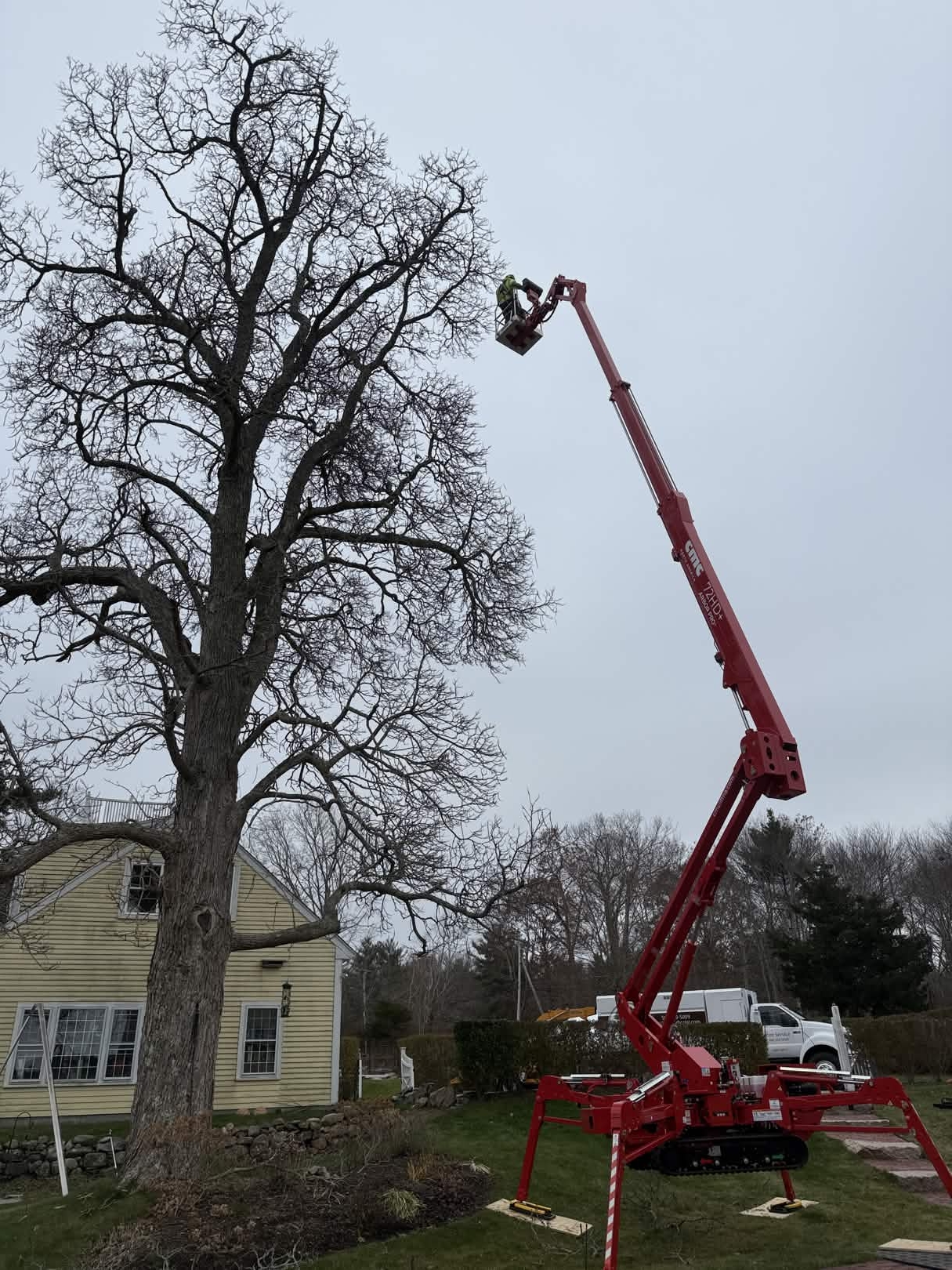
Homeowners in Yarmouth call Southeast Arborist for ornamental trimming services that address these issues head-on. We perform detail pruning for layered branching on Japanese maples, structural pruning on young dogwoods to build strong frameworks, and crown cleaning on magnolias to remove deadwood. Our containment pruning stops encroaching branches from damaging roofs in dense West Yarmouth lots. Safety is paramount—our team uses ANSI-compliant gear, including bucket trucks and climbing saddles, with rigorous protocols to protect your property and our crew.
Consider the value: a single neglected Japanese maple in Yarmouth Port can lose its graceful form to winter moth or salt spray, dropping curb appeal by thousands in resale value. Regular ornamental trimming Yarmouth MA properties receive from us maintains that premium look. Serving the South Shore from Plymouth to Dennis and Barnstable, we bring decades of expertise to your yard. Practical tip for Yarmouth residents: inspect your ornamentals now for rubbing branches, as summer storms amplify damage risks.
This comprehensive guide covers why your Yarmouth trees need ornamental trimming, our exact process, neighborhood-specific projects, costs, timing, FAQs, and how to contact us at 508-369-5009. As ISA Certified professionals, we deliver results that last through Cape Cod's sandy soils and windy winters.
Why Yarmouth Properties Need Ornamental Trimming
Yarmouth's coastal location in Barnstable County exposes trees to salt-laden winds, sandy soils low in nutrients, and fluctuating moisture from Nantucket Sound tides. These conditions stress both native species—pitch pine, scrub oak, black oak, white oak, eastern red cedar, black cherry, sassafras, American holly, red maple, honey locust—and ornamentals like Japanese maples and dogwoods planted for visual appeal. Ornamental trimming Yarmouth MA properties require counters these pressures, extending tree life and preserving neighborhood aesthetics.
Winter moth defoliation hits Yarmouth oaks hardest. In Yarmouth Port's historic district around Captain Bangs Hallet House, 18th- and 19th-century plantings of black oak and white oak suffer canopy weakening, making branches prone to breakage. Without crown cleaning and thinning, airflow stagnates, inviting fungal diseases like anthracnose common in Cape Cod's humid springs. Homeowners in Bass Hole Area see this transition from upland oak forest to salt marsh exacerbate issues—tidal erosion undermines roots, and unpruned canopies add top-heavy weight.
Route 28's commercial corridor in West Yarmouth and South Yarmouth features aging honey locust and red maple planted during the 1950s tourism boom. These trees now crowd parking lots, drop debris on walkways, and encroach on signage. Ornamental trimming removes suckers and water sprouts, reducing liability. In Bayberry Hills' interior neighborhoods, overcrowded pitch pine stands compete for light, leading to weak, V-shaped crotches that fail in nor'easters. Selective thinning opens the canopy, mimicking natural Cape Cod woodland structure.
Bass River waterfront homes face tidal erosion that topples eastern red cedar and American holly. Undermined roots shift, causing leaning trunks—ornamental trimming with containment cuts elevates branches safely for views without full removal. Black cherry and sassafras in residential lots attract pests; detail pruning improves vigor by eliminating crossing limbs that harbor insects.
Yarmouth's microclimates vary: bayside Yarmouth Port enjoys milder winters but higher humidity fostering powdery mildew on dogwoods, while sound-side West Yarmouth endures stronger gales stressing magnolias. Sandy, acidic soils (pH 4.5-6.0) limit nutrient uptake, so structural pruning on young weeping cherries directs energy to roots. Neglect these, and your trees lose form—Japanese maples develop witches' broom from salt burn without airflow-enhancing thins.
Practical advice for Yarmouth homeowners: Walk your property after leaf drop in November to spot deadwood in scrub oaks, a winter moth aftermath. In Bass River, check for soil exposure at bases indicating erosion—schedule ornamental trimming before spring tides peak. For Route 28 businesses, annual crown cleaning prevents lawsuits from falling limbs.
Southeast Arborist's ISA Certified Arborists assess these Yarmouth-specific risks using ANSI A300 Part 1 pruning standards. We prioritize disease prevention: removing mummified fruit on magnolias halts fungal spread. Your property's value hinges on healthy ornamentals—untreated pitch pines in Bayberry Hills can ignite wildfires in dry summers, while pruned ones stay resilient. Nearby Dennis and Barnstable share these traits, but Yarmouth's tourist density demands flawless upkeep.
Failing to trim invites costly replacements: a mature dogwood in South Yarmouth costs $1,500+ to reinstall. Regular service yields 20-30% longer lifespans per ISA studies. Your trees deserve this targeted care amid Yarmouth's dynamic environment.
Our Ornamental Trimming Process in Yarmouth
Southeast Arborist follows a meticulous, ANSI A300-compliant process for ornamental trimming Yarmouth MA landscapes, ensuring safety and precision on every job. Our ISA Certified Arborists start with a free on-site assessment tailored to Yarmouth's coastal challenges—sandy soils, salt spray, and storm winds.
**Step 1: Initial Consultation and Assessment (30-60 minutes).** We arrive in a fully equipped truck from our Plymouth/Cohasset base. Using binoculars and soil probes, we evaluate your trees' health. For a Japanese maple in Yarmouth Port, we check for winter moth damage; in Bass River, we measure root flare exposure from tides. We discuss goals—view enhancement or structural support—and map branches using laser rangefinders for overhangs near roofs.
**Step 2: Safety Setup and Perimeter Control.** Yarmouth's neighborhoods demand caution: dense Bass Hole Area lots require traffic cones along narrow roads, while Route 28 sites need sidewalk barriers. Our crew dons climbing saddles, helmets, and high-visibility gear per OSHA and ANSI Z133 standards. We deploy drop cloths under honey locusts to protect lawns from debris, critical in tourist-heavy West Yarmouth.
**Step 3: Pruning Plan Development.** On-site, we sketch a species-specific plan. For dogwoods, ANSI calls for 25% max canopy reduction; magnolias get detail pruning of interior deadwood. Pitch pines in Bayberry Hills receive thinning to 30% live crown ratio, preventing overcrowding. We photograph before/after for records, noting local issues like oak wilt risks from winter moth.
**Step 4: Execution with Specialized Equipment.** Our bucket trucks access South Yarmouth's tall red maples without spiking trunks, preserving cambium. Climbers use hand pruners for Japanese maple fine tips (1/4-inch cuts max) and pole saws for eastern red cedar containment. Chainsaws handle 6-inch+ pitch pine limbs with clean, collar-preserving cuts. In Bass River, low-reach platforms navigate waterfront erosion zones safely.
Techniques vary: Crown cleaning removes dead, diseased, or rubbing branches from black oaks—up to 15% volume in Yarmouth's infested canopies. Thinning shears overlapping sassafras limbs, boosting airflow against mildew. Shaping sculpts weeping cherries for formal gardens near Captain Bangs Hallet House. Containment shortens American holly over Bass Hole boardwalks without topping.
**Step 5: Cleanup and Debris Management.** We chip all prunings on-site into mulch suited for Yarmouth's acidic soils, enriching your scrub oak understory. Larger logs from dead pitch pines go to Cape recycling. Rake and blow ensures zero litter, vital for commercial Route 28 properties.
**Step 6: Follow-Up Report and Maintenance Schedule.** You receive a digital report with pruning map, health notes (e.g., "Monitor red maple for verticillium"), and next-service timing. For tidal Bass River sites, we recommend annual checks.
Our Yarmouth-tuned process uses STIHL tools calibrated for salt corrosion and drones for canopy scans in Bayberry Hills pines. Safety record: zero incidents in 10+ years, thanks to daily rigging inspections. This yields healthier trees—ISA data shows pruned ornamentals resist storms 40% better.
Homeowners, test us: vulnerable branches over your driveway? Call 508-369-5009 for a consult. From West Yarmouth honey locusts to Yarmouth Port magnolias, we deliver transformative results.
Common Ornamental Trimming Projects in Yarmouth Neighborhoods
Yarmouth's neighborhoods each present distinct ornamental trimming needs, reflecting their geography and history. Southeast Arborist customizes services for these areas, drawing on ISA expertise.
In **Yarmouth Port**, historic properties around Captain Bangs Hallet House feature rare imported ornamentals amid white oaks. We perform detail pruning on dogwoods and magnolias, preserving 19th-century forms while thinning for winter moth airflow. Crown cleaning black oaks prevents defoliation spread.
**South Yarmouth**'s Route 28 commercial strips demand parking lot maintenance. Aging honey locusts get containment pruning to clear walkways; red maples receive structural cuts for wind resistance. Businesses avoid fines with our safety-focused thins.
**West Yarmouth** residential lots crowd with pitch pines and eastern red cedar. We thin overcrowded stands, removing deadwood to protect homes from nor'easters. Japanese maples here benefit from shaping against salt spray.
**Bass River** waterfronts erode from tides, undermining black cherry and American holly. Selective pruning elevates views; we shore up leaning sassafras with reduction cuts, avoiding full removals.
**Bayberry Hills** interiors host scrub oak groves stressed by competition. Crown thinning opens light penetration; young weeping cherries get formative pruning for storm-proof scaffolds.
**Bass Hole Area**'s oak-to-marsh transition requires ecological sensitivity. We clean pitch pine canopies overlooking the boardwalk, enhancing vistas while stabilizing tidal edges.
Common across Yarmouth: oak crown cleaning post-winter moth, pine deadwood removal, and ornamental shaping for curb appeal. Practical tip: In Bass River, prune before May tides; Yarmouth Port homeowners, target spring for magnolias.
Our projects restore health—e.g., a West Yarmouth dogwood transformed from twiggy to elegant. Serving Dennis and Barnstable too, contact 508-369-5009 for your neighborhood.
Ornamental Trimming Costs in Yarmouth, MA
Ornamental trimming costs in Yarmouth, MA, range from $250-$1,200 per tree, depending on factors like species, size, access, and complexity. Southeast Arborist provides transparent quotes based on ANSI assessments, ensuring value for your investment.
Tree Size and Height: Small Japanese maples (under 15 feet) in Yarmouth Port start at $250-$400 for detail pruning. Medium dogwoods (15-30 feet) in Bayberry Hills run $450-$700; large magnolias over 30 feet in West Yarmouth hit $800-$1,200 due to bucket truck needs.
Species Difficulty: Pitch pine thinning in Bass River costs more ($500+ medium tree) for resinous wood; delicate weeping cherries add $100 for fine cuts. Oaks with winter moth require extra time, bumping black oak jobs 20%.
Access and Location: Dense Bass Hole lots add $150 for climbing; Route 28 commercial sites include liability insurance in $100 surcharges. Waterfront erosion in South Yarmouth needs platforms, +$200.
Project Scope: Basic crown cleaning: $8-$12/hour per crew member. Full shaping/thinning: $15-$20/hour. Multi-tree residential packages save 15%—e.g., three Bayberry Hills red maples for $1,200 total.
Yarmouth-Specific Add-Ons: Tidal soil stabilization quotes at $300 extra; drone surveys $150. Annual contracts drop rates 10-20%.
Value proposition: Our ISA Certified work per ANSI standards prevents $2,000+ replacements. A pruned honey locust on Route 28 avoids lawsuit payouts; Bass River view prunes boost property values 5-10%. Compare: DIY risks fines under Yarmouth ordinances; unqualified crews damage cambium.
Get your free estimate at 508-369-5009—mention this for 10% off first service. Costs reflect premium care for Yarmouth's unique trees.
When to Schedule Ornamental Trimming in Yarmouth
Schedule ornamental trimming Yarmouth MA in late winter (February-March) for most species—dormant oaks and pines heal fast pre-bud break. Avoid spring growth flushes to minimize stress on red maples.
Seasonal Timing: Summer (June-August) suits Japanese maples and dogwoods for shaping, as visible cuts allow precision. Fall (September-October) thins magnolias before winter moth peaks. Skip active growth periods—April-May risks bleeding in black cherry.
Urgency Signs: Book immediately if branches rub (bark wounds invite canker), deadwood hangs (storm hazard), or canopy thins from defoliation. Bass River leans signal erosion—prune before nor'easters. Route 28 overhangs demand pre-tourist season work.
Yarmouth's climate dictates: windy winters snap unpruned pitch pines; humid summers breed mildew without airflow. Annual checks prevent escalation.
Call 508-369-5009 now for slots—early booking saves amid Cape demand.
Frequently Asked Questions About Ornamental Trimming in Yarmouth
**What is ornamental trimming, and how does it differ from regular pruning in Yarmouth?** Ornamental trimming emphasizes aesthetic detail for species like Japanese maples and magnolias, using ANSI A300 techniques for form. Regular pruning focuses utility; in Yarmouth Port, we blend both for historic oaks.
**How often should I trim trees on my Yarmouth property?** Every 1-3 years: annual for Bass River erosion sites, biennial for West Yarmouth pines. ISA guidelines base on growth rates in sandy soils.
**Is ornamental trimming safe for Yarmouth's native oaks and pines?** Yes, our ISA Certified Arborists limit removals to 25% canopy, preventing shock. Crown cleaning combats winter moth without harm.
**Can you trim trees near Bass Hole Area's salt marsh?** Absolutely—containment pruning preserves ecology while clearing views. We use low-impact gear.
**What equipment does Southeast Arborist use in Bayberry Hills?** Bucket trucks, climbing saddles, STIHL pruners— all ANSI Z133 compliant for dense neighborhoods.
**Does ornamental trimming prevent disease in Yarmouth's humid climate?** Yes, thinning boosts airflow, curbing anthracnose on dogwoods and mildew on sassafras.
**How much does it cost for Route 28 commercial trimming?** $400-$900 per tree; packages available. Free quotes at 508-369-5009.
**When's the best time for magnolia trimming near Captain Bangs Hallet House?** Late summer—enhances fall color, minimizes winter damage.
Ornamental Trimming Throughout Yarmouth
Southeast Arborist delivers ornamental trimming across Yarmouth neighborhoods—Yarmouth Port historic districts, South Yarmouth commercial zones, West Yarmouth homes, Bass River water fronts, Bayberry Hills interiors, Bass Hole Area trails. We extend to nearby Dennis and Barnstable, covering South Shore MA.
From pitch pine thinning to Japanese maple detailing, our ISA Certified team ensures ANSI standards. Your trees thrive against local threats.
Ready for expert care? Call 508-369-5009 today for a free assessment. Protect your Yarmouth property—schedule now.