
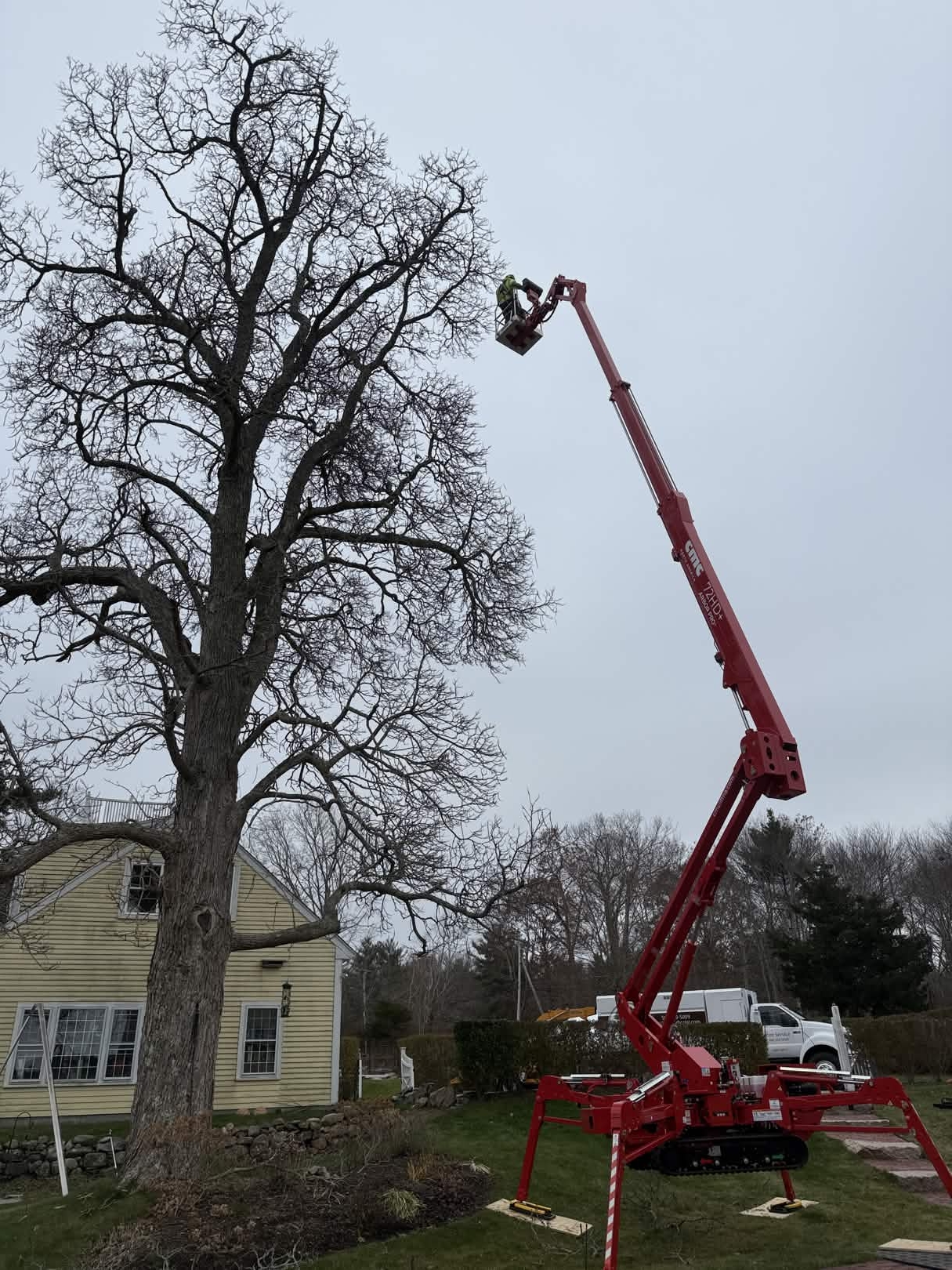
# Professional Ornamental Trimming in Rochester, Massachusetts
If you own property in Rochester, Massachusetts, your landscape likely features a mix of native trees shaped by the town's cranberry bogs, pine barrens, and wetland forests. Ornamental trimming in Rochester MA elevates these spaces, transforming pitch pines, red oaks, and red maples into structured focal points while addressing local challenges like spongy moth damage and sandy soil drought stress. At Southeast Arborist, LLC, our ISA Certified Arborists deliver precision ornamental trimming services tailored to Rochester's unique ecology, ensuring your trees thrive amid the rural woodlands of Plymouth County.
Rochester's 5,800 residents maintain homes across neighborhoods like Rochester Center, North Rochester, and the Snipatuit Pond Area, where ornamental trees such as Japanese maples, dogwoods, magnolias, and weeping cherries add curated beauty to otherwise wild forest edges. These species, often planted near cranberry highways or septic systems, require detail pruning to prevent disease, improve airflow, and enhance aesthetics. Our team, based in nearby Plymouth and Cohasset, specializes in ornamental trimming Rochester MA homeowners rely on, following ANSI A300 standards for every cut.
Picture your red maple in the Mattapoisett Road Area overhanging a driveway—without proper containment pruning, branches encroach on structures, risking damage during winter storms common to the South Shore. Or consider a magnolia in Dexter Lane Area struggling with poor branch angles due to the area's acidic glacial soils. Southeast Arborist's ornamental trimming addresses these issues head-on, using structural pruning for young trees and crown cleaning to remove deadwood from scarlet oaks affected by spongy moth outbreaks.
We prioritize safety with rigorous protocols, including traffic control on rural roads like Cranberry Highway and protected root zone management near wetlands regulated by state laws. Homeowners in Rochester face wildfire risks from pitch pine barrens and hydrology concerns near bogs, so our trimming reduces fuel loads while preserving natural beauty. Whether you're in North Rochester's dense woodlands or the open spaces of Rochester Center, ornamental trimming Rochester MA from Southeast Arborist boosts curb appeal, property value, and tree health.
This service goes beyond basic cuts—it's about sculpting your landscape to complement Rochester's transitional forest character, blending coastal pine ecology with inland hardwoods like tupelo and sassafras. Our ISA certification ensures compliance with best practices, from disease prevention in American holly to shaping black cherry trees near power lines. Call Southeast Arborist at 508-369-5009 today to schedule ornamental trimming that protects your investment in this cranberry country gem.
Why Rochester Properties Need Ornamental Trimming
Rochester, MA's rural landscape demands ornamental trimming to counter specific environmental pressures on your trees. The town's sandy, acidic glacial soils dry out quickly, stressing red maples and white pines, while periodic droughts exacerbate branch dieback. In pitch pine barrens around North Rochester, wildfire risk builds from dense undergrowth, making crown thinning essential to create defensible space around your home.
Spongy moth infestations hit Rochester's oak canopy hard—scarlet oaks and red oaks in the Snipatuit Pond Area lose leaves and weaken, inviting secondary fungal issues. Ornamental trimming Rochester MA removes infested or dead branches, restoring airflow and reducing pest habitat. Atlantic white cedar swamps near wetlands face strict regulations; improper pruning risks fines, but our ISA Certified approach navigates buffer zones to safely shape these trees without disrupting hydrology.
Cranberry industry infrastructure shapes Rochester's forests—bogs along Mattapoisett Road require tree clearance to maintain irrigation ditches and prevent root competition. Your dogwood or Japanese maple planted as an ornamental accent near these areas needs containment pruning to avoid encroaching on bog edges. Tupelo and sassafras in wetter Dexter Lane Area spots suffer from poor structure if not pruned young, leading to splits during South Shore nor'easters.
Local climate amplifies these needs: humid summers foster black spot on magnolias, while icy winters crack American holly branches under snow load. Without crown cleaning, deadwood accumulates, creating hazards over septic systems or driveways in Rochester Center. Black cherry trees along rural roads attract borers in drought-stressed sandy soils, demanding structural pruning to build codominant leaders resistant to failure.
Homeowners overlook how Rochester's position at the Plymouth pine barrens' edge creates a hybrid forest—upland pitch pines mix with hardwood lowlands. Ornamental trimming adapts to this: thinning white pines reduces wind sail in Cranberry Highway Area gusts, while elevating lower limbs on red oaks prevents mower damage and rodent pathways. Practical advice: inspect your trees annually for codominant stems, a common flaw in fast-growing red maples here; early intervention via detail pruning prevents costly removals.
Wetland regulations limit equipment near Snipatuit Pond, so hand-pruning ornamental species like weeping cherries preserves their graceful form without soil compaction. Proximity to cranberry bogs means your trimming must account for pesticide drift—our protocols time work to avoid peak spray seasons. Storm damage after February gales, frequent in Plymouth County, often reveals underlying weaknesses; ornamental trimming preempts this by shaping crowns for balance.
In Rochester's 5,800-person community, forest cover preservation clashes with residential needs—thinning around homes maintains views without clear-cutting. For your property, ornamental trimming Rochester MA delivers longevity: a properly pruned magnolia withstands spongy moth cycles better, sustaining fall color that defines South Shore aesthetics. Ignore these needs, and your investment declines—diseased branches spread to healthy canopy, dropping value by thousands.
Southeast Arborist's expertise in ANSI A300 standards ensures every project enhances Rochester's woodland character. From black cherry shaping in North Rochester to holly cleaning near bogs, we mitigate wildfire, pests, and storms unique to this terrain.
Our Ornamental Trimming Process in Rochester
Southeast Arborist follows a meticulous, step-by-step ornamental trimming process in Rochester, MA, customized to your property's trees and local conditions. We start with a free on-site consultation—our ISA Certified Arborists assess your Japanese maples, dogwoods, or magnolias for structure, health, and risks like spongy moth damage or drought stress on sandy soils.
Step 1: Tree evaluation. We map your canopy, noting pitch pine wildfire fuel in North Rochester or red oak defoliation near Snipatuit Pond. Using ANSI A300 Part 1 standards, we identify priorities: deadwood removal for crown cleaning, interior thinning for airflow in humid Rochester summers, or containment cuts for branches over septic systems in Dexter Lane Area.
Step 2: Customized plan development. For a weeping cherry in Rochester Center, we recommend detail pruning to accentuate weeping form, preserving buds for spring blooms. Structural pruning targets young red maples with V-crotches, common in acidic soils. We discuss your goals— aesthetic shaping or disease prevention—while factoring wetland buffers near Atlantic white cedar.
Step 3: Safety setup. Rochester's rural roads like Cranberry Highway demand traffic control with cones and signage. We deploy personal protective equipment, secure drop zones away from bogs, and use low-impact anchoring for tall white pines. Ground crew clears debris to protect cranberry hydrology.
Step 4: Pruning execution. Climbing arborists use hand pruners for precision on dogwoods, loppers for magnolia interiors, and saws for containment on encroaching scarlet oaks. Techniques include drop-crotch pruning to reduce sail in wind-prone Mattapoisett Road Area, subordinating competitive leaders in black cherry, and selective thinning to mimic natural gaps in tupelo swamps.
Our equipment suits Rochester's terrain: lightweight pole saws navigate dense pine barrens without soil disturbance; battery-powered tools minimize noise near wetlands. For sassafras in Snipatuit Pond Area, we apply directional felling to avoid pond contamination. Every cut follows the 1/3 rule—no more than one-third canopy removal—to prevent stress on sandy soils.
Step 5: Disease prevention integration. Improved airflow from thinning curbs fungal issues in American holly; we apply organic treatments post-pruning if spongy moth webs appear on nearby oaks. Cleanup adheres to local ordinances—chipping branches on-site for bog mulch, hauling away invasives.
Step 6: Post-trim inspection and report. We photograph before/after, provide a digital ANSI-compliant report detailing cuts, and advise on follow-up like fertilizing red maples drought-stressed by glacial sands. In wildfire-risk zones, we document fuel reduction for insurance.
Practical tip for Rochester homeowners: Water deeply after trimming to aid recovery in dry pine barrens, using soaker hoses to target root zones without wetting foliage. Our process scales—from single magnolia in a Cranberry Highway yard to multi-tree jobs in North Rochester woodlands.
Safety protocols shine in Rochester's challenges: rope access for hazard branches over power lines, no-touch zones near bogs. As South Shore experts from Plymouth/Cohasset, we complete jobs efficiently, often same-day for smaller ornamental trees.
This process ensures your ornamental trimming Rochester MA yields healthy, beautiful results, compliant with Plymouth County regs and built for longevity.
Common Ornamental Trimming Projects in Rochester Neighborhoods
Rochester neighborhoods present distinct ornamental trimming needs, tied to their tree species and land features. In Rochester Center, homeowners tackle Japanese maples and dogwoods shading historic homes—detail pruning refines layered branches, enhancing red fall color against pitch pine backdrops.
North Rochester's dense woodlands call for containment pruning on weeping cherries encroaching driveways amid white pines. Crown thinning reduces wildfire risk, opening views while preserving privacy from rural roads.
The Mattapoisett Road Area, near cranberry bogs, features magnolias needing structural pruning to avoid bog irrigation interference. We elevate limbs over ditches, following buffer regulations for Atlantic white cedar nearby.
Snipatuit Pond Area properties blend tupelo swamps with red oaks—ornamental trimming focuses on crown cleaning post-spongy moth, removing deadwood to boost pond-view aesthetics without wetland impact.
Dexter Lane Area's sandy uplands host sassafras and American holly; thinning interiors prevents drought stress, shaping holly for holiday appeal and sassafras for unique leaf forms.
Cranberry Highway Area sees red maples and black cherry along roads—containment keeps branches from power lines, with hazard reduction for storm-prone winters.
Common projects include woodland-edge shaping: pairing native scarlet oaks with exotics like dogwoods via selective pruning. Homeowners request magnolia elevating for underplantings, or Japanese maple sculpting to frame septic views.
In Rochester Center, a typical job prunes a multi-stemmed red maple to single leader, preventing splits. North Rochester might thin pitch pine overgrowth around a magnolia accent. Mattapoisett Road calls for bog-adjacent dogwood airflow improvements against black spot.
Snipatuit Pond sees tupelo containment from pond edges, Dexter Lane holly deadwooding for bird habitat, and Cranberry Highway black cherry subordinating for road safety.
Our ISA arborists handle these with neighborhood-specific tweaks—hand tools near ponds, chippers for highway access. Practical advice: In Snipatuit, prune in dormant season to spot spongy moth eggs early.
These projects boost Rochester's rural charm, from Center's manicured lots to Highway's linear corridors.
Ornamental Trimming Costs in Rochester, MA
Ornamental trimming costs in Rochester MA vary by tree size, species, and site access, typically $300-$1,200 per tree for ISA Certified work. A small Japanese maple in Rochester Center (under 20 feet) starts at $350, including detail pruning and cleanup; larger dogwoods in North Rochester reach $600 for crown shaping amid pines.
Key factors: Tree height and canopy spread—20-30 foot magnolias in Mattapoisett Road Area add $200 for climbing due to bog access limits. Species complexity: Weeping cherries demand precision ($150 premium), while red oaks post-spongy moth need extra deadwood removal ($100+).
Location impacts: Snipatuit Pond wetland permits bump fees 20% for hand-only methods; Cranberry Highway traffic control adds $150. Dexter Lane sandy slopes require rigging ($250 for stability).
Hourly rates: $150-$250 per arborist, with 2-4 hour jobs common. Multi-tree discounts apply—three Rochester Center maples drop 15%. Travel from Plymouth/Cohasset is free within South Shore.
Value proposition: Proper trimming per ANSI A300 prevents $2,000+ hazard removals; a $500 investment on scarlet oak extends life 10-15 years, hiking property value 5% in rural Rochester.
Compare: DIY risks fines near wetlands; unlicensed crews skip standards, leading to regrowth or decline. Our certification ensures compliance, insurance covers accidents.
Breakdown example: North Rochester black cherry (25 feet)—consult free, eval $0, prune 3 hours @ $200/hr = $600, cleanup/chip $100, report $0. Total $700.
Practical budgeting: Factor seasonal demand—winter off-peak saves 10%. Bundle with thinning for pine barrens wildfire mitigation.
Investing in Southeast Arborist yields ROI through healthier trees, lower long-term costs, and enhanced aesthetics in Rochester's cranberry woodlands.
When to Schedule Ornamental Trimming in Rochester
Schedule ornamental trimming in Rochester MA during dormancy—late fall (November) to early spring (March)—before bud swell. This timing minimizes stress on sandy soils, aids recovery from spongy moth damage, and avoids sap flow in maples.
Summer pruning suits containment for encroaching branches over bogs in Mattapoisett Road, but limit to 25% removal to prevent sunscald. Avoid humid July-August for dogwoods, as wounds invite fungi.
Urgency signs: Deadwood exceeding 20% canopy (spongy moth aftermath in red oaks), rubbing branches on scarlet oaks, or codominant stems cracking in winter winds—call immediately to avert failure.
Post-storm: After nor'easters, trim hanging limbs within 48 hours to prevent decay. Drought indicators like wilting sassafras leaves signal need for thinning to reduce water demand.
Wetland projects near Snipatuit Pond require dry windows—schedule post-frost. Wildfire season (April-June) prioritizes pine thinning.
Tip: Annual checks in Rochester Center catch issues early; biennial for stable Cranberry Highway trees.
Contact Southeast Arborist at 508-369-5009 now for timely slots.
Frequently Asked Questions About Ornamental Trimming in Rochester
What is ornamental trimming in Rochester MA? Ornamental trimming refines aesthetic trees like Japanese maples and magnolias through detail pruning, crown shaping, and structural work, tailored to Rochester's pine barrens and wetlands.
How often should I trim trees in Rochester neighborhoods? Biennially for mature dogwoods in Dexter Lane; annually for young red maples in North Rochester. Adjust for spongy moth cycles affecting oaks.
Does ornamental trimming help with spongy moth damage? Yes—crown cleaning removes egg masses and deadwood from scarlet oaks, improving airflow to deter reinfestation in Snipatuit Pond Area.
Are there regulations for trimming near cranberry bogs? Plymouth County and state wetland laws mandate 25-50 foot buffers; our ISA arborists secure permits for Mattapoisett Road projects.
What equipment do you use for Rochester's terrain? Hand pruners, pole saws, and low-ground-pressure chippers for sandy soils and swamps; no heavy machinery near Atlantic white cedar.
How does climate affect pruning timing here? Dormant season avoids summer humidity fostering holly diseases and spring sap in black cherry; post-drought for tupelo stress relief.
Is ornamental trimming safe for young trees? Structural pruning builds strong scaffolds in weeping cherries, preventing V-crotches common in Rochester's acidic soils.
What results can I expect post-trimming? Enhanced form, 20-30% better airflow for disease prevention, and reduced wildfire fuel in pitch pines—visible in weeks.
Ornamental Trimming Throughout Rochester
Southeast Arborist provides ornamental trimming across Rochester neighborhoods: Rochester Center's manicured accents, North Rochester woodlands, Mattapoisett Road bogs, Snipatuit Pond wetlands, Dexter Lane uplands, and Cranberry Highway corridors.
We extend to nearby Wareham, Middleborough, Acushnet, and Carver, covering South Shore Massachusetts from our Plymouth/Cohasset base.
Your trees deserve expert care—call ISA Certified Southeast Arborist, LLC at 508-369-5009 for a consultation.