
# Professional Ornamental Trimming in Fall River, Massachusetts
If you own a home in Fall River, Massachusetts, particularly in neighborhoods like The Highlands or the Watuppa Ponds Area, your property likely features ornamental trees such as Japanese maples, dogwoods, magnolias, and weeping cherries that enhance curb appeal and provide seasonal interest. These trees demand precise ornamental trimming to maintain their delicate shapes, prevent disease, and ensure safety amid the city's unique hillside terrain and exposure to Mount Hope Bay winds. Southeast Arborist, LLC, your local ISA Certified Arborists based in Plymouth and Cohasset, delivers expert ornamental trimming services across Fall River, MA, adhering strictly to ANSI A300 pruning standards for optimal tree health and aesthetics.
Fall River's 94,000 residents navigate a landscape shaped by its 19th-century textile boom, where dense hillside development planted substantial shade trees like red oaks and Norway maples alongside ornamental specimens in residential yards. Today, ornamental trimming in Fall River MA addresses challenges from aging urban canopies, emerald ash borer infestations on green ash trees, and strict Watuppa watershed regulations that protect mature forests around the ponds. Your Japanese maple in Maplewood or dogwood in the South End requires detail pruning to showcase its fiery fall colors without succumbing to fungal issues common in Bristol County's humid coastal climate.
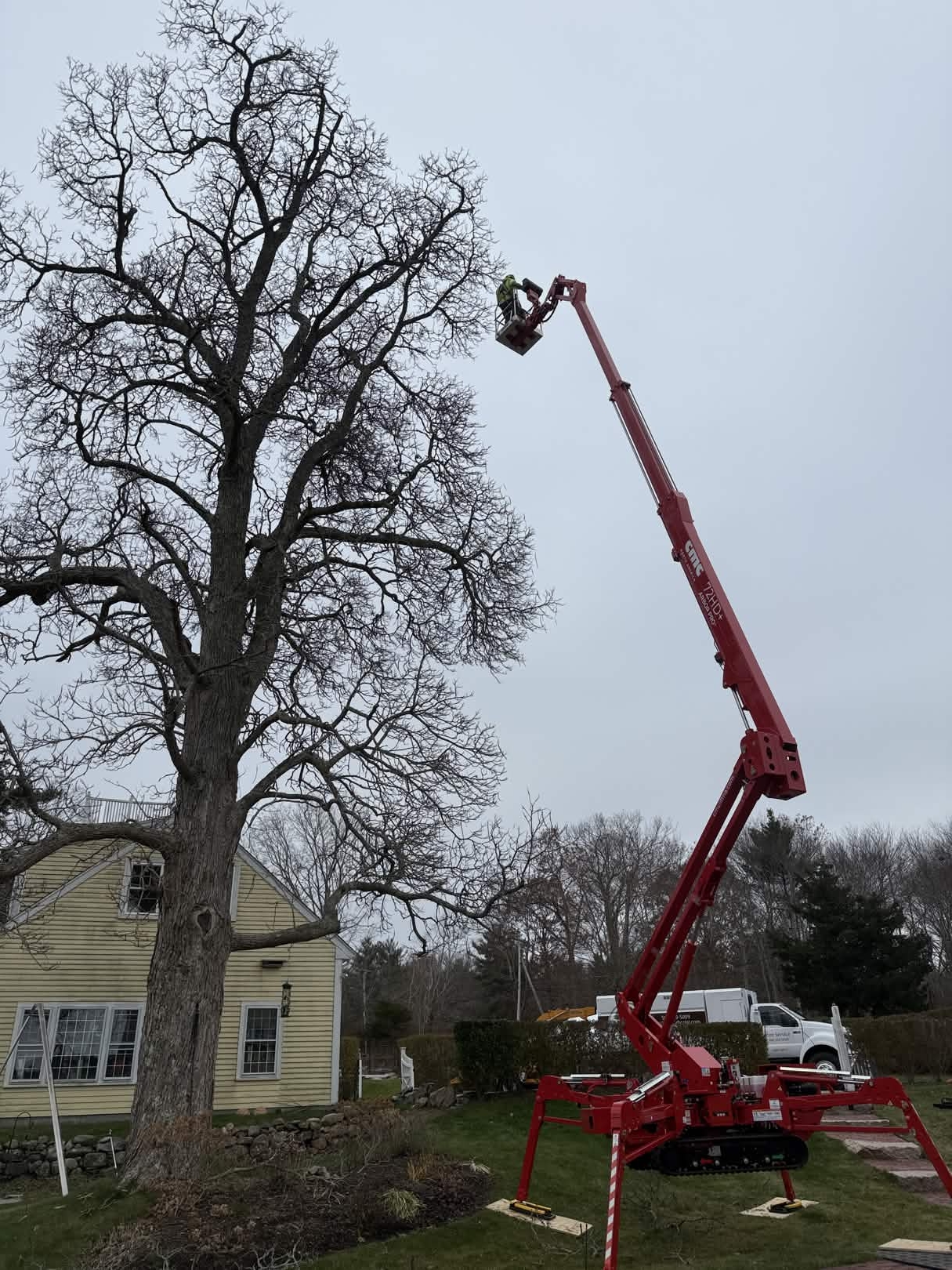
At Southeast Arborist, our ornamental trimming goes beyond basic cuts. We perform structural pruning on young trees to build strong scaffolds, crown cleaning to remove deadwood, thinning for better light penetration, and containment pruning to manage branches encroaching on your roof or power lines. For Fall River homeowners, this means preserving the elegant form of your magnolia amid steep terrain that limits heavy equipment access, all while our safety protocols— including bucket trucks, climbing gear, and traffic control—minimize risks on narrow streets in Flint Village or Globe Village.
Why choose ornamental trimming services in Fall River from ISA Certified experts? Poorly pruned trees lead to weak branches snapping in nor'easters funneling up Mount Hope Bay, as seen after the 1938 hurricane's devastation. Our techniques improve airflow to combat diseases like anthracnose on dogwoods, extend tree lifespan, and boost property values in competitive neighborhoods like Steep Brook. Serving the South Shore from our Plymouth/Cohasset base, we arrive promptly with Massachusetts-licensed crews equipped for your site's specifics, whether it's rocky soils in The North End or flood-prone areas near the Taunton River.
Investing in professional ornamental trimming Fall River MA protects your landscape investment. Homeowners in Dartmouth or Swansea often refer neighbors after seeing our results: weeping cherries with graceful arches, silver maples safely thinned against wind shear, and London planes shaped for urban lots. Call Southeast Arborist at 508-369-5009 today to schedule a free consultation. Our detailed assessment identifies your trees' needs, from disease prevention to aesthetic enhancement, ensuring your Fall River property stands out year-round. consider how targeted pruning now averts costly removals later—let's discuss your trees.
Why Fall River Properties Need Ornamental Trimming
Fall River's hillside topography above Mount Hope Bay exposes your ornamental trees to relentless winds, making ornamental trimming in Fall River MA essential for structural integrity. In The Highlands, where century-old Norway maples and red oaks line steep streets, unchecked growth leads to branch failure during gusts exceeding 50 mph common in winter nor'easters. Your Japanese maple, with its finely textured foliage, suffers dieback from poor airflow in Bristol County's clay-loam soils that retain moisture, fostering verticillium wilt.
Common tree species like silver maples and red maples in Maplewood and the South End develop included bark unions without early structural pruning, inviting splits under ice loads from the region's 45-inch annual rainfall. Emerald ash borer has decimated green ash trees since 2012 in Fall River, but nearby ornamentals like dogwoods and magnolias face secondary threats from weakened neighbors dropping debris. Steep terrain in Flint Village restricts root expansion, stressing honey locusts and London planes that require containment pruning to avoid sidewalk upheavals.
The Watuppa Ponds Area's watershed protections, in place since the 1870s, mandate selective trimming to preserve hydrology while enhancing aesthetics on your wooded lot. White pines and American beeches here battle needle cast and beech bark disease, respectively, exacerbated by dense canopies blocking sunlight on north-facing slopes. Urban street trees in Globe Village, planted post-1938 hurricane recovery, now age out with codominant stems that ornamental trimming corrects through subordinate pruning.
Fall River's microclimate—mild winters averaging 30°F and humid summers—promotes powdery mildew on weeping cherries and magnolias without crown thinning. Soil pH around 5.5-6.5 in the North End suits acid-loving ornamentals but compacts under foot traffic, necessitating mulching post-trimming to retain moisture. Aging infrastructure means power lines from National Grid cross many yards in Steep Brook, where containment pruning prevents outages during storms.
Practical advice for Fall River homeowners: Inspect your trees annually for codominant leaders, a hallmark in fast-growing silver maples, and rub off buds on competing shoots. Avoid topping, which stimulates weak epicormic growth vulnerable to Mount Hope Bay's salt-laden winds. In Watuppa Ponds properties, comply with city watershed rules by documenting trims for permits—our ISA arborists handle this seamlessly.
Ornamental trimming addresses these issues head-on. For your red oak in The Highlands, we remove v-crotches to avert failures costing thousands in cleanup. Dogwoods in the South End gain airflow to resist spot anthracnose, thriving in partial shade from nearby white oaks. This service elevates your property's resilience against Fall River's specific perils: hilltop exposure, steep access challenges, and protected forests demanding precision.
Nearby towns like Somerset and Swansea share similar granite bedrock and bay influences, but Fall River's dense neighborhoods amplify needs. White pines shedding needles clog gutters in Dartmouth referrals, while Taunton's flatter lots lack our hillside expertise. Professional ornamental trimming Fall River MA from Southeast Arborist prevents these pitfalls, saving you from emergency calls after the next gale.
Our Ornamental Trimming Process in Fall River
Southeast Arborist follows a meticulous, ANSI A300-compliant process for ornamental trimming in Fall River MA, tailored to your property's steep slopes and wind exposure. Step one: Site assessment. Our ISA Certified Arborists arrive at your Flint Village home, evaluating tree health, species-specific needs—like Japanese maples' natural layering—and hazards such as proximity to 1930s-era power poles common in Globe Village.
We use resistograph tools to detect internal decay in magnolias without unnecessary cuts, and soil probes to assess compaction on North End clay soils. Photos and diagrams document baseline conditions for your records, ensuring transparency.
Step two: Customized pruning plan. For structural pruning on young weeping cherries in Maplewood, we identify and remove competing leaders, retaining 60-70% live canopy to promote taper. Crown cleaning eliminates dead, diseased, or rubbing branches—critical for dogwoods battling dogwood anthracnose amid Fall River's 80% summer humidity. Thinning reduces wind resistance on silver maples above Mount Hope Bay, spacing branches to 12-18 inches apart.
Containment pruning targets encroaching limbs over your Steep Brook driveway, using directional notching to guide regrowth away from structures. We prioritize natural forms: layered for Japanese maples, rounded for honey locusts.
Step three: Safety setup. Fall River's narrow streets and hills demand our protocols—barricades per MUTCD standards, spotters for low-hanging London planes near Berkley Bridge traffic, and personal protective equipment including chainsaw chaps and helmets. On Watuppa Ponds lots, we deploy lightweight climbing spurs to spare roots in protected soils.
Equipment adapts to terrain: 65-foot bucket trucks navigate The Highlands' grades up to 15%, while rope-and-saddle climbers handle inaccessible South End backyards. Hand tools like Felco pruners ensure clean cuts under 2 inches, preventing tear-out on thin-barked beeches.
Step four: Precision execution. Cuts follow the three-point method: collar preservation on red oaks, heading back water sprouts on Norway maples. For disease prevention, we improve airflow by 20-30% in magnolia crowns, spacing laterals evenly. Debris management includes chippers feeding mulch for your beds, reducing waste hauling on steep drives.
Post-trim, we apply wound dressings only if needed for oozing maples, and recommend organic fertilizers suited to Bristol County's pH. Cleanup leaves your yard pristine—no stubs inviting insects.
Our process yields results: A South End client’s dogwood now displays unmarred bracts after thinning, while a Highlands Norway maple withstands 60 mph gusts post-structural work. We track outcomes with follow-up visits, adjusting for emerald ash borer spread from nearby New Bedford.
This methodical approach distinguishes Southeast Arborist. Homeowners gain longevity—ornamentals living 20+ years longer—and compliance with Fall River's tree ordinances. Call 508-369-5009 to start your assessment; we'll adapt to your Watuppa site's regulations or Flint Village's tight lots.
Common Ornamental Trimming Projects in Fall River Neighborhoods
In The Highlands, Fall River's premier residential enclave, ornamental trimming focuses on century-old Norway maples and red oaks shading Victorian homes. Homeowners request detail pruning for understory Japanese maples, sculpting their filigree branches to highlight crimson fall foliage against hillside views of Mount Hope Bay.
Maplewood properties feature silver maples with aggressive roots; we perform containment pruning to protect sidewalks, alongside crown thinning for white pines battling salt spray. South End yards, near the battleship USS Massachusetts landmark, see frequent weeping cherry shaping to arch over patios without dropping limbs on decks during humid summers.
Flint Village's post-industrial lots demand lot clearing with selective ornamental preservation—thinning green ash survivors amid emerald ash borer damage while enhancing honey locusts for privacy. Globe Village street trees like London planes require utility clearances, reducing end weight by 25% to avert failures over busy Route 79.
Steep Brook's terraced homes challenge access, so our climbers detail dogwoods and magnolias, removing epicormic shoots from white oaks to restore elegance. North End neighborhoods near the Taunton River greenway need storm hardening: structural pruning on red maples prone to ice storm splits.
Watuppa Ponds Area projects emphasize compliance—crown cleaning American beeches to boost airflow in watershed forests, preventing beech scale buildup in shaded understories. Selective removal pairs with magnolia shaping for new builds on wooded parcels.
Practical tips: In The Highlands, prune Japanese maples in late winter before bud swell to avoid bleeding. South End dogwood owners, thin interior branches post-bloom to curb anthracnose. Watuppa properties, maintain 10-foot buffers from ponds per regulations.
These projects showcase Southeast Arborist's neighborhood expertise. A Flint Village client saved their honey locust from removal via targeted thinning; Globe Village magnolias now flower profusely after cleaning. Extend to Swansea or Somerset—same precision.
Ornamental trimming Fall River MA transforms these sites. Your neighborhood's trees gain beauty and safety, elevating home values amid dense development.
Ornamental Trimming Costs in Fall River, MA
Ornamental trimming costs in Fall River MA vary by tree size, condition, and access, typically ranging $300-$1,200 per mature specimen like a 40-foot Japanese maple in The Highlands. Small dogwoods in Maplewood start at $200 for detail pruning, while large silver maples in Steep Brook demanding bucket truck access hit $800+ due to hillside rigging.
Key factors: Height and spread—Norwegian maples over 50 feet add $200 for climbing. Species matter; thin-barked magnolias require hand tools, increasing labor by 20%. Emerald ash borer-stressed green ash in Flint Village needs hazard assessment, adding $150 diagnostics.
Terrain inflates prices: Watuppa Ponds' steep slopes limit equipment, so rope access for weeping cherries costs 30% more than flat New Bedford lots. Urban density in Globe Village requires traffic control, $100/hour minimum.
Our value proposition: ISA Certified pruning per ANSI A300 prevents $2,000+ removals. A South End client invested $450 in dogwood thinning, avoiding $3,500 storm damage. Long-term savings include reduced pest control—airflow cuts fungicide needs by half.
Compare: DIY risks fines under Fall River ordinances; unlicensed crews skip standards, leading to regrowth. Southeast Arborist quotes transparently post-assessment, including mulch from chips valued at $50/yard.
Bundling saves: Pair with street tree work in North End for 15% off. Nearby Taunton referrals get Fall River rates. Expect $0.50-$1.50 per foot of branch length, precise for your London plane.
ROI shines: Enhanced curb appeal boosts resale by 5-10% in competitive Bristol County. Call 508-369-5009 for your free estimate—transparent pricing for lasting results.
When to Schedule Ornamental Trimming in Fall River
Schedule ornamental trimming in Fall River MA during dormancy, late winter (January-March), when maples avoid sap bleeding and visibility peaks for structural flaws in red oaks. Avoid spring growth flushes; prune Japanese maples post-foliage drop in November for The Highlands' wind-prep.
Urgency signs: Cracked bark on Norway maples signals codominant stems—act before nor'easters. Deadwood in dogwood crowns, over 10% canopy, risks failure; yellowing lower leaves on magnolias indicate airflow issues.
Summer thinning suits silver maples for pest control amid emerald ash borer vigilance. Fall suits containment on honey locusts encroaching lines.
Watuppa regulations require pre-trim permits—schedule early. Steep Brook ice storms demand pre-winter checks.
Call 508-369-5009 now; our calendar fills fast post-storms.
Frequently Asked Questions About Ornamental Trimming in Fall River
What is ornamental trimming, and how does it differ from standard pruning in Fall River? Ornamental trimming in Fall River MA emphasizes aesthetic detail for trees like Japanese maples and dogwoods, using precise cuts to enhance form while following ANSI A300. Standard pruning prioritizes health; ours blends beauty with structure, vital for visible Highlands yards.
How often should I trim my magnolias in the Watuppa Ponds Area? Every 2-3 years for mature magnolias; annually for young ones. Watershed rules limit cuts—our ISA arborists ensure compliance while thinning for airflow against mildew.
Will ornamental trimming help my silver maple survive Mount Hope Bay winds? Yes, crown thinning reduces sail effect by 25%, strengthening against gusts. We've fortified dozens in South End post-nor'easters.
Is it safe to trim my own weeping cherry in Flint Village? Not recommended—improper cuts invite decay. Steep terrain risks falls; pros use gear for safe, clean results.
How does emerald ash borer affect nearby ornamentals in Globe Village? Weakened ash drop debris, stressing dogwoods. Our trimming isolates healthy trees via cleaning.
What equipment do you use for North End steep lots? Climbers with spikes, hand saws, and low-impact chippers; no heavy machinery damages roots.
Can you handle utility clearances for London planes in Steep Brook? Absolutely, coordinating with National Grid for safe distances, preventing outages.
What's the recovery time for trimmed Japanese maples in Maplewood? Full regrowth in one season; dormant pruning minimizes stress in clay soils.
Ornamental Trimming Throughout Fall River
Southeast Arborist provides ornamental trimming across all Fall River neighborhoods: The Highlands' estates, Maplewood's family yards, South End's historic homes, Flint Village conversions, Globe Village urbanscapes, Steep Brook terraces, North End greenways, and Watuppa Ponds preserves. Extend to Somerset, Swansea, Dartmouth, New Bedford, and Taunton from our Plymouth/Cohasset base.
Your trees deserve ISA Certified care. Call 508-369-5009 for service in Bristol County.