
# Professional Ornamental Trimming in Fairhaven, Massachusetts
If you own property in Fairhaven, Massachusetts, your landscape features some of the most distinctive ornamental trees on the South Shore. From the elegant Japanese maples shading backyards in Oxford Village to the flowering dogwoods lining streets in Fairhaven Center, these trees enhance your home's curb appeal and property value. However, Fairhaven's coastal winds, salt spray, and storm history demand expert ornamental trimming to keep them healthy and visually striking. Southeast Arborist, LLC, your ISA Certified arborists based in Plymouth and Cohasset, specializes in ornamental trimming Fairhaven MA homeowners rely on for precision care.
Ornamental trimming goes beyond basic cuts—it's detailed pruning tailored to species like weeping cherries, magnolias, and Japanese maples that thrive in Bristol County's mild maritime climate. Our team follows ANSI A300 standards, ensuring every cut promotes long-term vigor while minimizing disease risk. In Fairhaven's 02719 zip code, where Henry Huttleston Rogers funded century-old street trees along Main and Center Streets in the late 1800s, preserving these heritage specimens requires finesse. Many red oaks and white oaks from that era still stand, but spongy moth damage from the 2016-2017 outbreak has left them vulnerable.
For Sconticut Neck residents, salt spray stress from Buzzards Bay exposure weakens honey locust and sycamore branches, leading to dieback. East Fairhaven properties face harbor-side flooding that stresses roots of red maples and Norway maples, while North Fairhaven's inland oaks battle heritage decline. Southeast Arborist's ornamental trimming services address these issues head-on with structural pruning for young trees, crown cleaning to remove deadwood, and containment pruning to manage branches encroaching on your roof or power lines.
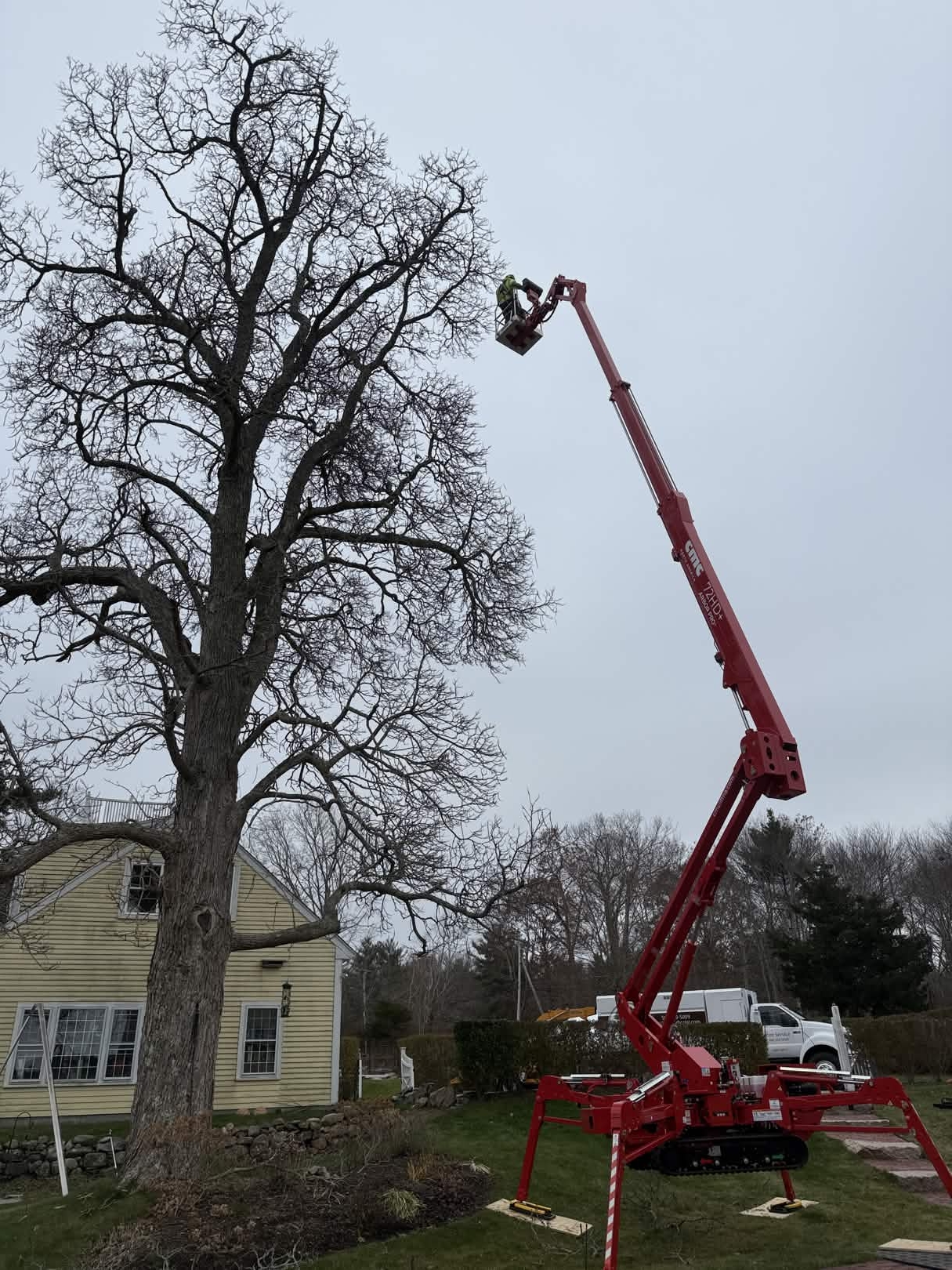
Safety is paramount in our work. We deploy certified climbers using rope-and-saddle techniques, bucket trucks for high-reach access, and silenced chainsaws to protect Fairhaven's quiet neighborhoods. As South Shore experts serving from Plymouth to New Bedford, we handle everything from detail pruning on a single black cherry in Poverty Point to shaping pitch pines along Sconticut Neck after winter gales. Homeowners choose us for our 508-369-5009 hotline, available for same-week consults, and our commitment to leaving your yard pristine.
Investing in professional ornamental trimming Fairhaven MA style protects your trees from coastal storms like those in 1938 and 1954 that ravaged the Neck's canopy. It boosts airflow to prevent fungal issues in humid summers and enhances aesthetics for historic district compliance. Whether your white pine needs thinning or your eastern red cedar requires shaping, our ISA certification guarantees results that last. Contact Southeast Arborist today at 508-369-5009 to schedule your free assessment and see why Fairhaven trusts us for tree care excellence.
Why Fairhaven Properties Need Ornamental Trimming
Fairhaven's coastal location in Bristol County exposes your trees to unique pressures that make ornamental trimming essential. With 16,000 residents spread across neighborhoods like Fairhaven Center and Sconticut Neck, the town's dense residential tree canopy—shaped by Rogers' philanthropy—includes red oaks, white oaks, and white pines planted over a century ago. These species dominate Main Street's heritage canopy, but salt-laden winds from the harbor stress their bark, causing cracking and branch failure.
Consider Sconticut Neck, where pitch pines and eastern red cedars endure relentless exposure to Buzzards Bay gales. The 1938 hurricane stripped much of this area's canopy, and modern storms compound salt spray damage, leading to needle scorch on white pines and twig dieback on cedars. Without containment pruning, branches encroach on waterfront homes, risking roof punctures during nor'easters. In East Fairhaven, harbor-side flooding saturates soils, weakening red maple and Norway maple roots. These trees develop co-dominant stems prone to splitting without early structural pruning.
North Fairhaven's inland lots host mature sycamores and honey locusts, battered by spongy moth defoliation from 2016-2017. Oaks lost 40-60% of their leaves, reducing vigor and inviting secondary pests like oak wilt. Ornamental trimming removes crossed limbs and epicormic shoots, restoring shape and airflow. Oxford Village properties feature black cherry and red oaks in tight yards; unpruned, they drop debris on patios and block sunlight from gardens.
Fairhaven's sandy loam soils, with pH levels around 5.5-6.5, retain moisture in winter but drain poorly during floods, promoting root rot in magnolias and dogwoods. Japanese maples, popular in Poverty Point for their fall color, suffer from sunscald on exposed south-facing branches without protective thinning. Local climate data shows average winds of 12-15 mph year-round, peaking at 25 mph in winter, which snaps unmaintained limbs on weeping cherries.
Heritage tree decline plagues Fairhaven Center's historic district. Rogers-specified white oaks along Center Street show decline from age and urban stressors like compacted soil near sidewalks. Detail pruning targets water sprouts and deadwood, complying with town preservation guidelines. Storm preparation is critical: post-1954 hurricane analysis revealed that thinned crowns withstood winds 30% better.
Practical advice for your Fairhaven yard: Inspect trees annually for codominant leaders—two main stems forming a V—common in young red maples after storm damage. If rubbing occurs, schedule structural pruning before growth season. For salt-stressed honey locusts on Sconticut Neck, leach soil with fresh water rinses post-winter, then trim affected tips to encourage recovery. In spongy moth zones like North Fairhaven, crown cleaning post-outbreak prevents borer entry.
Salt-tolerant replacements like eastern red cedar outperform Norway maples in waterfront spots; we recommend them during trimming consults. Disease prevention via improved airflow cuts powdery mildew risk in humid summers, where Fairhaven averages 45 inches of rain. Untrimmed trees increase liability—falling branches damage vehicles on Oxford Village streets or block emergency access in Poverty Point.
Southeast Arborist's ISA Certified team uses these insights to deliver ornamental trimming Fairhaven MA properties need. We monitor local weather patterns via NOAA data for proactive care, ensuring your trees withstand coastal challenges. Neglect leads to costly removals; proper trimming extends life by 20-30 years.
Our Ornamental Trimming Process in Fairhaven
Southeast Arborist follows a meticulous, ANSI A300-compliant process for ornamental trimming in Fairhaven, starting with a free on-site assessment. Our ISA Certified arborists arrive at your Fairhaven Center home or Sconticut Neck property equipped with resistograph tools to probe for decay in red oaks and white oaks without unnecessary cuts. We map your tree's structure, noting codominant stems in red maples or salt-damaged branches on pitch pines.
Step one: Hazard assessment. Using binoculars and drones for high canopies in North Fairhaven, we identify targets like deadwood in white pines or rubbing limbs on sycamores. For Japanese maples in Oxford Village, we check for girdling roots stressing the base. Safety protocols include securing the drop zone with tarps and traffic control for street-side jobs near Main Street.
Step two: Planning the cuts. We prioritize detail pruning for aesthetics—removing 25% or less live foliage per session on dogwoods and magnolias to avoid shock. Structural pruning on young weeping cherries targets narrow crotches under 60-degree angles, using reduction cuts to stubs with latent buds. Crown cleaning eliminates dead, diseased, or broken branches first, crucial for black cherry trees hit by spongy moths.
Equipment selection matches the job. For East Fairhaven's tight harbor-side lots, hand saws and pole pruners access honey locusts without bucket trucks. Silenced Stihl chainsaws handle larger limbs on Norway maples, while our 85-foot bucket truck reaches white pine crowns in open Poverty Point yards. Climbers in Petzl harnesses ascend eastern red cedars on Sconticut Neck using throw lines and friction savers to minimize bark tearing.
Step three: Execution with precision techniques. Thinning reduces density by 15-20%, spacing branches for light penetration—vital for airflow in humid Fairhaven summers. We make collar cuts outside the branch bark ridge on red oaks, preventing decay pockets. Containment pruning shortens limbs over roofs, dropping to lateral branches at least one-third the diameter. For heritage white oaks in Fairhaven Center, we use drop zone management to protect Rogers-era plantings nearby.
Disease prevention integrates throughout: improved airflow deters anthracnose in sycamores, while targeted removal of cankers on black cherry limits spread. Post-trim, we apply pruning sealant only on high-risk cuts per ISA guidelines, though natural compartmentalization handles most.
Step four: Cleanup and follow-up. Our crews rake every leaf and chip branches on-site for mulch, leaving your lawn pristine. We provide a digital report with before/after photos, ANSI compliance checklist, and a 12-month warranty. For waterfront properties, we advise salt mitigation like gypsum applications to sandy loams.
Fairhaven-specific adaptations include wind-resistant shaping: we taper crowns on pitch pines to shed gusts from Buzzards Bay. In flood-prone East Fairhaven, elevated cuts avoid water-trapped stubs on red maples. All work adheres to OSHA safety standards, with first-aid certified crews and liability insurance.
Homeowner tip: Water deeply post-trim—1 inch per week for the first month—to aid recovery in Fairhaven's variable soils. Avoid DIY on ornamentals; improper cuts on Japanese maples cause witches' broom deformities.
This process ensures your trees gain strength, beauty, and safety. Call Southeast Arborist at 508-369-5009 for ornamental trimming Fairhaven MA excellence.
Common Ornamental Trimming Projects in Fairhaven Neighborhoods
Fairhaven neighborhoods present distinct ornamental trimming needs, tied to local trees and conditions. In Fairhaven Center, heritage preservation dominates: we perform structural pruning on Rogers-planted white oaks and red oaks along Main and Center Streets. These 100+ year-old trees suffer decline from root compaction; crown thinning opens canopies, reducing wind sail on historic district properties near the Unitarian Memorial Church.
North Fairhaven sees frequent spongy moth recovery projects. White pines and black cherry stands weakened in 2016-2017 require crown cleaning to excise egg masses and deadwood, preventing borer infestation. Homeowners here request shaping for Norway maples shading family homes, improving turf health beneath.
East Fairhaven's harbor proximity drives salt stress management. Red maples and sycamores show foliar scorch; our containment pruning shortens tips while detail work on understory honey locusts enhances bloom display near Oxford Street. Flood response includes emergency limb clearance post-high tides.
Oxford Village yards feature compact ornamentals like Japanese maples and dogwoods. We specialize in fine pruning to accentuate layered branching, removing water sprouts for a refined look. Eastern red cedars here get reduction cuts to clear driveways, respecting tight lot lines.
Poverty Point properties battle urban edge issues: pitch pines encroaching on power lines need elevation pruning, while weeping cherries receive aesthetic shaping for spring color. Our crews navigate narrow alleys without property damage.
Sconticut Neck exemplifies coastal challenges. Pitch pines and white pines endure 1938 hurricane legacies; storm prep involves selective thinning to 70% density, bolstering against nor'easters. Magnolias on waterfront estates get protective wraps pre-trim, followed by airflow enhancement to combat salt-induced mildew.
Across neighborhoods, common projects include young tree training—cabling codominant stems in red oaks—and species-specific care, like epicormic removal on sycamores. We replace declining Norway maples with salt-hardy black cherry or cedar in East Fairhaven.
Local tip: In Sconticut Neck, test soil salinity annually (aim below 2 mmhos/cm); pair trimming with rinses for best results. Fairhaven Center owners: Check town ordinances for heritage tree permits before work.
Southeast Arborist tackles these with ISA expertise, serving all Fairhaven zip 02719 areas from our Plymouth base.
Ornamental Trimming Costs in Fairhaven, MA
Ornamental trimming costs in Fairhaven, MA, range from $350-$1,200 per tree, depending on factors like species, size, and complexity. A young Japanese maple in Oxford Village (15-20 feet) starts at $350 for detail pruning, including 2-3 hours of hand work. Mature white oaks in Fairhaven Center (40-60 feet) with heritage needs hit $800-$1,200, factoring crane access for Main Street jobs.
Key pricing drivers: Tree height and access. Bucket truck use for North Fairhaven white pines adds $150-$300, while climber-only on Poverty Point dogwoods keeps it under $500. Species matter—fine cuts on magnolias or weeping cherries command 20% premiums over rough oak work due to precision time. Location risks elevate costs: Sconticut Neck salt-stressed pitch pines require protective gear, adding $100.
Neighborhood variances: East Fairhaven harbor sites incur 15% flood-zone surcharges for matting. Fairhaven Center historic compliance needs arborist reports at $75 extra. Crew size impacts: solo pruner for small honey locust vs. three-man team for black cherry canopy cleaning.
Value proposition outweighs expense. Proper trimming prevents $2,000+ removals; a $600 investment on red maples extends life 15 years. Increased property value—Fairhaven homes with manicured trees appraise 5-10% higher. Insurance savings: trimmed trees reduce claim risks by 40%, per local adjusters.
Our transparent quotes break down: assessment (free), labor ($125/hour per arborist), equipment ($50-$200), disposal (included). Bundles save: three-tree residential package in North Fairhaven drops 10%. No hidden fees—ISA certification ensures ANSI compliance, avoiding rework.
Compared to nearby New Bedford or Acushnet, Fairhaven rates align due to coastal premiums, but our Plymouth efficiency cuts travel costs. DIY risks $500+ in damage; pros like us deliver ROI via health boosts.
Tip: Get three quotes, but prioritize ISA credentials. Schedule off-peak (fall) for 15% discounts.
Invest in your Fairhaven landscape—call 508-369-5009 for a customized estimate.
When to Schedule Ornamental Trimming in Fairhaven
Schedule ornamental trimming in Fairhaven during dormancy: late fall (November-December) or early spring (March-April), before bud swell. Fairhaven's mild winters (average low 25°F) allow late-season work without frost risk, ideal for oaks to compartmentalize cuts pre-sap flow.
Urgency signs demand immediate action: leaning stems post-storm on Sconticut Neck pitch pines, cracked bark on salt-stressed cedars, or deadwood exceeding 20% canopy in North Fairhaven white pines. Rubbing branches on Japanese maples signal structural needs now—delays invite splits in 15 mph winds.
Summer pruning suits detail work on dogwoods post-bloom (June), but avoid heavy cuts in humid heat to prevent sunscald. Spongy moth monitoring peaks May; trim weakened oaks pre-outbreak.
Seasonal advice: Pre-nor'easter (October) thinning for Neck properties; spring cleanup after floods in East Fairhaven. Biennial cycles for healthy trees, annual for heritage specimens.
Call 508-369-5009 now if urgency signs appear—we prioritize Fairhaven.
Frequently Asked Questions About Ornamental Trimming in Fairhaven
What is ornamental trimming, and how does it differ from standard pruning in Fairhaven? Ornamental trimming emphasizes aesthetic detail and health for species like Japanese maples and magnolias in Fairhaven, using fine cuts for shape and airflow. Standard pruning focuses on safety; ornamental adds artistry, per ANSI A300 Part 1, vital for historic Center Street trees.
How often should I trim my trees in Fairhaven neighborhoods? Every 2-3 years for most ornamentals in Oxford Village; annually for salt-exposed honey locusts on Sconticut Neck. Oaks post-spongy moth need yearly checks in North Fairhaven.
Is ornamental trimming safe for heritage trees in Fairhaven Center? Yes, our ISA arborists use minimal invasive cuts on Rogers-era white oaks, enhancing vigor without stress. We secure permits for Main Street compliance.
Can you trim during Fairhaven's stormy season? We schedule around forecasts but handle post-storm urgency on pitch pines. Safety protocols protect crews and your East Fairhaven property.
What equipment do you use for tight Fairhaven yards? Pole pruners and hand tools for Poverty Point weeping cherries; no heavy machinery damages lawns. Bucket trucks for tall red maples in open areas.
Does trimming help with spongy moth or salt damage in Fairhaven? Crown cleaning removes moth debris from oaks; thinning improves resilience to salt on Sconticut Neck cedars. Pair with IPM for best results.
How much does it cost for a Japanese maple in Fairhaven? $350-$600, based on size and access. Free quotes via 508-369-5009.
When's the best time for magnolia trimming in Fairhaven? Post-bloom in June for East Fairhaven, ensuring flower protection.
Ornamental Trimming Throughout Fairhaven
Southeast Arborist provides ornamental trimming across all Fairhaven neighborhoods: Fairhaven Center heritage care, North Fairhaven oak recovery, East Fairhaven flood response, Oxford Village detail pruning, Poverty Point compact jobs, and Sconticut Neck storm prep. We extend to nearby New Bedford, Acushnet, and Dartmouth from our Plymouth/Cohasset base, covering South Shore MA.
Your trees deserve expert care—call ISA Certified Southeast Arborist, LLC at 508-369-5009 for service today.