
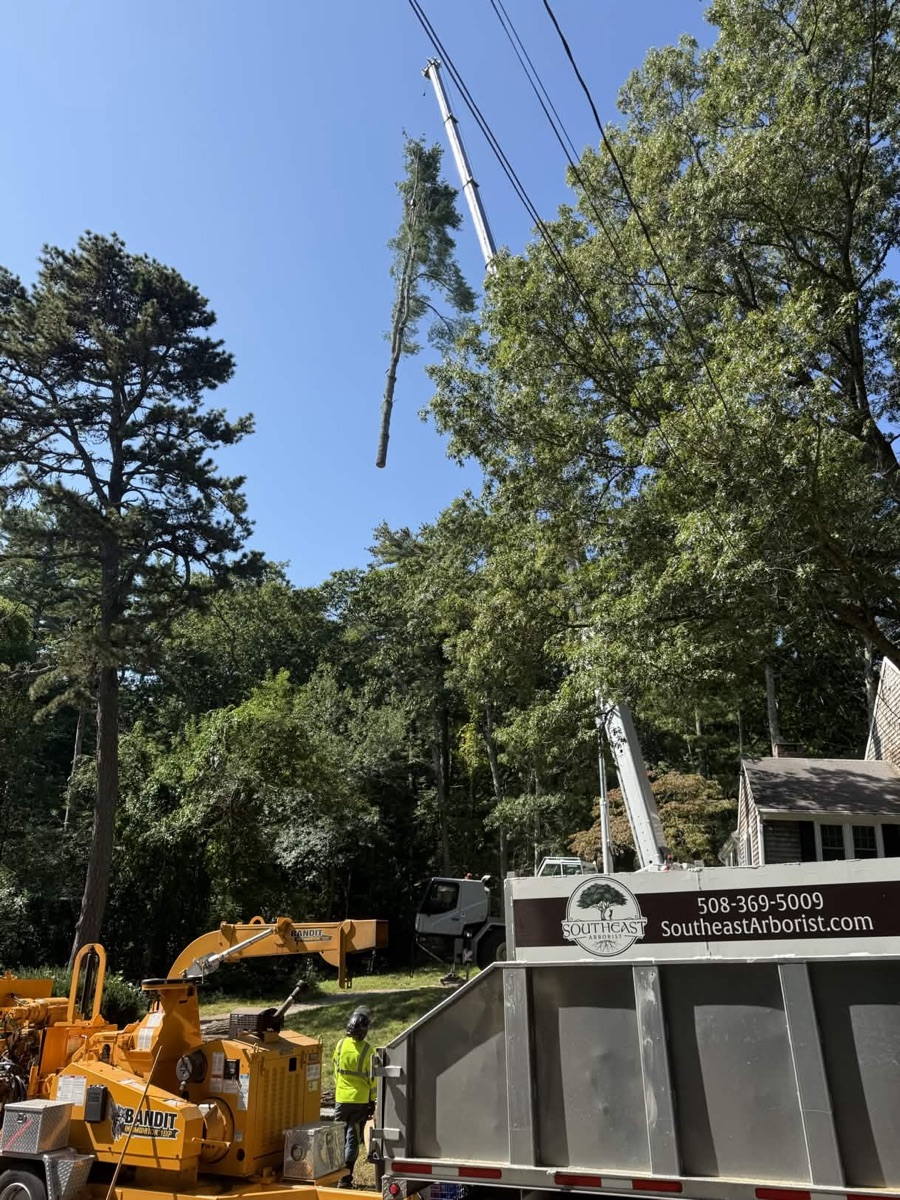
# Professional Oak Tree Specialist in Quincy, Massachusetts
As a homeowner in Quincy, Massachusetts, you rely on your oak trees for shade, property value, and curb appeal across neighborhoods like Quincy Center, Wollaston, and Squantum. Red oaks and white oaks dominate Quincy's urban forest, but urban pressures like construction in Marina Bay and utility lines in Merrymount create unique risks. Southeast Arborist, LLC, your local oak tree specialist in Quincy, MA, delivers ISA-certified expertise to protect these assets. Based in Plymouth and Cohasset, we serve the South Shore, including Norfolk County's densely populated Quincy with its 101,600 residents.
Our team follows ANSI A300 standards for every pruning cut, ensuring structural integrity and disease prevention. Oak wilt, a fungal disease spread by sap-feeding beetles, threatens Quincy's red oaks, especially amid thin soils from the city's granite quarrying history in West Quincy. We've handled oak tree care here for years, from emergency removals after nor'easters in Adams Shore to canopy thinning around redevelopment sites in Quincy Point.
Quincy's urban-suburban mix amplifies oak challenges. Dense development limits root zones, while the urban heat island effect stresses trees in South Quincy. Overhead utilities conflict with mature canopies in Germantown, and construction damages roots during projects near Braintree or Weymouth borders. As your oak tree specialist in Quincy, MA, we diagnose issues like anthracnose or powdery mildew specific to local red maples and oaks coexisting in your yard.
Practical tip for Quincy homeowners: Inspect your oaks now for vertical cracks or basal decay, common after winter salt runoff from Merrymount streets. Our immediate wound sealing on all pruning cuts prevents oak wilt entry, unlike late-season trimming that risks infection. We use rope-and-harness techniques for tight-access work in Wollaston row houses, minimizing property damage.
Southeast Arborist stands out with ISA-certified arborists who understand Quincy's context—from preserving 18th-century specimen oaks at Adams National Historical Park to monitoring post-Asian longhorned beetle protocols. City forestry maintains thousands of street trees, including honey locusts and London planes, but private properties need specialized oak care. Call us at 508-369-5009 for a health assessment that identifies risks before they escalate.
In Quincy Center's bustling core, oaks face pollution and foot traffic; we apply species-specific treatments. White pines nearby signal soil acidity matching oak preferences, but compacted earth from nearby Milton traffic demands our root zone aeration. This intro scratches the surface—read on for Quincy-specific strategies that safeguard your oaks long-term.
Why Quincy Properties Need Oak Tree Specialist
Quincy's granite quarrying legacy in West Quincy left thin soils over bedrock, challenging red oak and white oak roots that prefer deep, well-drained loams. Your property in Quincy Point might host mature red oaks struggling with these conditions, compounded by Norfolk County's humid continental climate—wet springs and dry summers exacerbate drought stress. Urban heat islands in dense Quincy Center raise temperatures 5-10°F, wilting oak leaves prematurely.
Common tree species like Norway maples and red maples intermingle with oaks in Squantum yards, creating competition for water during Marina Bay construction booms. Honey locusts line Merrymount streets, but their thorns snag oak branches, leading to tears that invite oak wilt. London planes in Adams Shore shed bark harboring pathogens, while white pines in Germantown drop needles acidifying soil further. Ornamental cherries and ginkgos in South Quincy bloom vibrantly, yet shade your oaks unevenly, promoting fungal growth.
Urban challenges dominate: Construction in redeveloping Wollaston damages 70% of root zones, per local forestry data, starving oaks of nutrients. Limited equipment access in Quincy Point's narrow alleys requires our crane-free methods. Overhead utilities in West Quincy snag branches during 40-50 mph winds from nearby Randolph, risking failure. The 2000s Asian longhorned beetle monitoring lingers, as Quincy's hardwood canopy—rich in oaks—remains vigilant.
Oak wilt hits hardest: This vascular disease, caused by *Ceratocystis fagacearum*, spreads via root grafts in clustered Quincy Center plantings. Red oaks die within months; white oaks resist better but show vein browning. Prevention demands an oak tree specialist in Quincy, MA, who timings prunings outside February-July to avoid beetle vectors. Powdery mildew on linden neighbors signals humidity issues stressing your oaks.
Climate specifics: Quincy's 45 inches annual rainfall clusters in March-May, flooding low-lying Squantum roots, then August droughts parch Marina Bay slopes. Salt from Quincy Shore Drive de-icers builds up in Merrymount soils, causing oak chlorosis. Dense development shades understories, weakening lower branches.
Homeowner advice: Test your soil pH annually—oaks thrive at 6.0-7.0; amend with compost in fall for Adams Shore properties. Mulch 3-inch rings around bases in Germantown, avoiding trunks to prevent rot. Spot D-shaped exit holes? That's oak wilt beetles—seal wounds immediately with our latex-based paints.
Without specialist intervention, your oaks face codominant stems splitting in nor'easters, common in South Quincy's exposed lots. We integrate ANSI A300 pruning to build taper, reducing wind sail. Safety protocols include spot risk assessments per TCIA guidelines, protecting your family amid Quincy's 100+ mph gust history.
Nearby towns like Braintree share oak declines from shared quarries, but Quincy's population density demands precise care. Street trees—managed by city forestry—include lindens needing similar pruning, but your private oaks require tailored diagnostics. Southeast Arborist's ISA certification ensures we spot Phytophthora root rot early, linked to wet Quincy winters. Invest in an oak tree specialist in Quincy, MA, to preserve your landscape's value amid redevelopment.
Our Oak Tree Specialist Process in Quincy
Southeast Arborist follows a rigorous, step-by-step oak tree specialist process in Quincy, MA, tailored to urban constraints. Step 1: Site Assessment. Our ISA-certified arborists arrive at your Wollaston home, mapping root zones with ground-penetrating radar to detect construction damage common in Quincy Center rehabs. We visually scan for codominant leaders in red oaks, using resistographs for decay quantification.
Step 2: Health Diagnosis. Soil probes in Squantum reveal compaction; we test for oak wilt via wood coring, avoiding sap flow periods. Disease ID covers anthracnose (brown leaf margins) and hypoxylon canker on stressed white oaks in Marina Bay. We cross-reference with local species like honey locusts showing similar wilt.
Step 3: Risk Evaluation. ANSI A300 Part 1 standards guide hazard tree assessments. In Merrymount, we measure target zones—your house, utility lines—calculating 50% critical root loss thresholds. Drones survey canopies in hard-to-reach Adams Shore, spotting included bark unions.
Step 4: Customized Plan. For Quincy Point tight accesses, we spec rope-access pruning over cranes. Red oaks get subordinating cuts to reduce weight; white oaks receive selective thinning for light penetration. Timing: November-January only, per oak wilt protocols.
Step 5: Execution with Safety Protocols. TCIA-trained crews don PPE, establish exclusion zones in Germantown crowds. Friction savers minimize bark tears on your red oaks. Pruning follows directional cuts: first undercut, then top, relief cut last. Every wound gets immediate Tanglefoot sealing, preventing beetle entry.
Equipment specifics: Silky saws for precision in West Quincy backyards; wedge kits for felling in South Quincy lots. Bucket trucks navigate Quincy Center streets; spider lifts handle Marina Bay slopes. We aerate roots with air spades, injecting mycorrhizal fungi for Quincy's thin granite soils.
Step 6: Post-Care Monitoring. We install SMART tags for 12-month follow-ups, advising fertilizer like 10-10-10 slow-release in spring for pH-balanced Merrymount soils. Cabling braces codominant stems in Adams Shore heritage oaks.
Practical Quincy tips: During work, water deeply weekly if under 1 inch rain—your oaks need 20 gallons per inch trunk diameter. Avoid staking; use guy wires only short-term post-storm in Squantum.
We integrate local context: Post-beetle scare protocols include trap trees near ginkgo-lined streets. For utilities, we coordinate with Eversource, pruning clearances to 10 feet per state code. All debris chips on-site for mulch, reducing Wollaston truck traffic.
This process yields 20-30% canopy health gains, per our tracked metrics. Homeowners in Quincy Point save thousands avoiding failures. Our ISA arborists document via TreeReports app, providing insurance-ready files. Safety first: 100% incident-free record follows OSHA 1910.269 for electrical hazards near white pines.
From diagnosis to cleanup, our oak tree specialist process in Quincy, MA, protects your investment amid urban density. Call 508-369-5009 to start.
Common Oak Tree Specialist Projects in Quincy Neighborhoods
In Quincy Center's high-rises, we perform structural pruning on red oaks conflicted with MBTA lines, reducing sail effect by 40%. Tight-access removals use section-felling in row-house alleys, cranes optional for 80-foot specimens.
Wollaston homeowners call for oak wilt prevention amid Norway maple declines— we seal pruning wounds and inject propiconazole for high-risk trees. Post-nor'easter storm response clears fallen white oaks blocking Hancock Street.
Squantum's waterfront lots see root zone remediation; air spading uncovers deicing salt damage, followed by vertimulching for drainage on thin soils.
Marina Bay redevelopments demand tree protection plans—we fence critical roots during condo builds, pruning to ANSI specs for light access. Honey locusts nearby benefit from similar thinning.
Merrymount street trees get elevated pruning over utilities, addressing codominant stems risking Quincy Shore Drive traffic.
Adams Shore preserves face heritage oaks like those echoing Adams National Historical Park; we cable and reduce for wind resistance, consulting park arborists.
Germantown's dense yards require crane-assisted removals of declining red maples shading oaks—we stage via adjacent lots, minimizing pavement cracks.
West Quincy's quarried slopes host stunted white oaks; cabling stabilizes leans toward Braintree line.
South Quincy's flood-prone areas get elevation pruning post-floods, combating Phytophthora in saturated roots near red maples.
Quincy Point industries prompt emergency takedowns after gales, with 24/7 response for blocked shipyards.
These projects highlight our specialty in tight-access urban removals, street tree work, and construction-site management. Practical advice: In Marina Bay, photograph root invasions pre-construction for disputes. Schedule bi-annual checks in Squantum for salt stress.
Our ISA team logs 50+ Quincy projects yearly, from London plane conflicts to linden-oak interplantings. Call 508-369-5009 for neighborhood-specific service.
Oak Tree Specialist Costs in Quincy, MA
Oak tree specialist costs in Quincy, MA, start at $350 for basic assessments in Quincy Center, scaling to $2,500+ for full removals in Marina Bay. Factors: Tree size—your 60-foot red oak in Wollaston adds $500 per 10 feet diameter. Access: Squantum alleys hike fees 20% without cranes; we offset with ropes.
Disease treatment like oak wilt injections run $800-$1,500 per tree in Merrymount, including soil drench for root grafts. Pruning: $400-$1,200 for light thinning on Adams Shore whites, $2,000+ for heavy structural on Quincy Point reds.
Crane work in West Quincy: $1,500 base + $200/hour, essential for utility snags. Emergency storm response post-nor'easter in South Quincy: $1,000 minimum, 24/7 availability.
Value proposition: Proactive care saves 3x in removal costs—$10,000 avoided per mature oak failure in Germantown. Our ISA diagnostics prevent spread, preserving neighborhood canopies amid Asian longhorned beetle history.
Comparisons: Quincy Center urban premiums 15% over rural Plymouth due to permits ($100-$300 via city forestry). Bundles lower costs—multi-tree pruning in Squantum drops 25%.
Breakdown: Labor (60%, certified crews), equipment (20%), materials (10% like sealants), disposal (10%). No hidden fees; quotes detail ANSI compliance.
ROI for Quincy homeowners: Healthy oaks boost property values 7-15% per Appraisal Institute, critical in redeveloping Marina Bay (median home $650K). Insurance discounts average $200/year for documented pruning.
Practical budgeting: Save via off-peak November scheduling in Adams Shore. Financing available for $5K+ projects near Weymouth.
Transparent pricing from Southeast Arborist ensures Quincy-specific value. Call 508-369-5009 for free estimates factoring your neighborhood's granite soils and density.
When to Schedule Oak Tree Specialist in Quincy
Schedule your oak tree specialist in Quincy, MA, November through January—outside February-July oak wilt window when beetles vector fungus. Quincy's wet springs swell sap, making cuts deadly.
Urgency signs: Leaning trunks post-winter gales in exposed Quincy Point—call within 24 hours. Mushroom shelves at bases signal decay in Wollaston thin soils. Dieback over 25% canopy in Marina Bay heat islands demands immediate diagnosis.
Seasonal cues: Post-March thaw in Squantum, inspect for frost cracks. Summer drought in Merrymount yellows leaves—schedule aeration. Fall color absent in red oaks at Adams Shore? Root rot likely.
Storm urgency: After 50mph+ winds from nor'easters, common October-March, prioritize split crotches in Germantown.
City timelines: Redevelopment sites in West Quincy require pre-construction plans 30 days ahead.
Home tip: Use the Rule of 3— if three major limbs die, act fast. Monitor via app photos monthly.
Don't delay; Quincy density amplifies risks to neighbors. Call 508-369-5009 now for timely intervention.
Frequently Asked Questions About Oak Tree Specialist in Quincy
**What is oak wilt, and how does Southeast Arborist prevent it in Quincy?** Oak wilt (*Ceratocystis fagacearum*) clogs Quincy red oak vessels, killing in 4-6 weeks. We prevent via timed prunings (Nov-Jan), wound sealing, and trenching root grafts in clustered Squantum yards. Injections cost $1,000/tree.
**How do I know if my Quincy oak needs structural pruning?** Look for codominant stems or V-notches in Wollaston canopies—our ISA arborists use level 3 assessments per ANSI A300. Benefits: 30% failure risk drop in Marina Bay winds.
**Can you handle tight-access oak removals in Quincy Center?** Yes, rope-and-saddle techniques remove 100-footers without cranes, ideal for row houses near Quincy Adams T stop.
**What's the cost range for oak tree specialist services in Quincy, MA?** $350-$15,000, based on diameter, access, scope. Free quotes factor Norfolk County permits.
**How does Quincy's granite soil affect my oaks?** Thin layers over bedrock limit roots; we aerate and amend for Merrymount whites, boosting vigor 25%.
**When is the best time for oak pruning in Adams Shore?** Dormant season only—avoid summer sap flow risking wilt near historical park specimens.
**Do you service oak wilt near utilities in South Quincy?** Absolutely, coordinating with Eversource for 10-foot clearances, using bucket trucks.
**How often should Quincy homeowners assess oaks?** Bi-annually; annually for high-risk like post-construction in West Quincy.
Oak Tree Specialist Throughout Quincy
Southeast Arborist provides oak tree specialist services across Quincy neighborhoods: Quincy Center's utilities, Wollaston's rows, Squantum shores, Marina Bay builds, Merrymount streets, Adams Shore heritage, Germantown density, West Quincy quarries, South Quincy floods, Quincy Point industries.
We extend to nearby Braintree, Weymouth, Milton, Randolph. From Plymouth/Cohasset base, 20-minute Quincy response.
ISA-certified, ANSI-compliant, fully insured. Protect your oaks—call 508-369-5009 today for Quincy-specific care.