
# Professional Oak Tree Specialist in Plympton, Massachusetts
As a homeowner in Plympton, Massachusetts, you rely on your oak trees—red oaks and scarlet oaks especially—to define your rural wooded lot or cranberry bog frontage. These trees thrive in Plymouth County's sandy, acidic soils, but they face unique threats like oak wilt, storm damage from nor'easters, and structural weaknesses from rapid growth alongside white pines and pitch pines. Southeast Arborist, LLC, your local oak tree specialist in Plympton, MA, brings ISA Certified Arborists to handle these challenges with precision. Based in Plymouth and Cohasset, we serve the entire South Shore, including Plympton's 3,100 residents across neighborhoods like Plympton Center, Winnetuxet, Silver Lake, County Road Area, and Upland Meadows.
Oak wilt, caused by the fungus *Bretziella fagacearum*, spreads rapidly through root grafts and sap-feeding beetles in Plympton's dense oak stands. Our specialists prevent it by timing all pruning outside the high-risk February through July window, sealing wounds immediately with ANSI A300-compliant treatments, and conducting soil injections for infected trees. Red oaks, common on your property near County Road, succumb faster than white oaks, showing vein browning in leaves by midsummer. We diagnose these symptoms during free assessments, using tools like resistographs to measure internal decay without invasive drilling.
Plympton's pitch pine barrens and second-growth hardwoods, remnants of the county's pre-colonial forests, amplify oak vulnerabilities. Tall red maples and American holly mix in, but oaks dominate lots in Upland Meadows, where sandy substrates limit root depth to 18-24 inches. Windthrow from storms like 2020's Tropical Storm Isaias topples neighbors' shallow-rooted white pines onto power lines along rural roads—your oaks risk the same if leaning. As your oak tree specialist in Plympton, MA, we perform structural pruning to reduce sail effect, cabling for codominant stems, and hazard assessments targeting trees near homes or driveways.
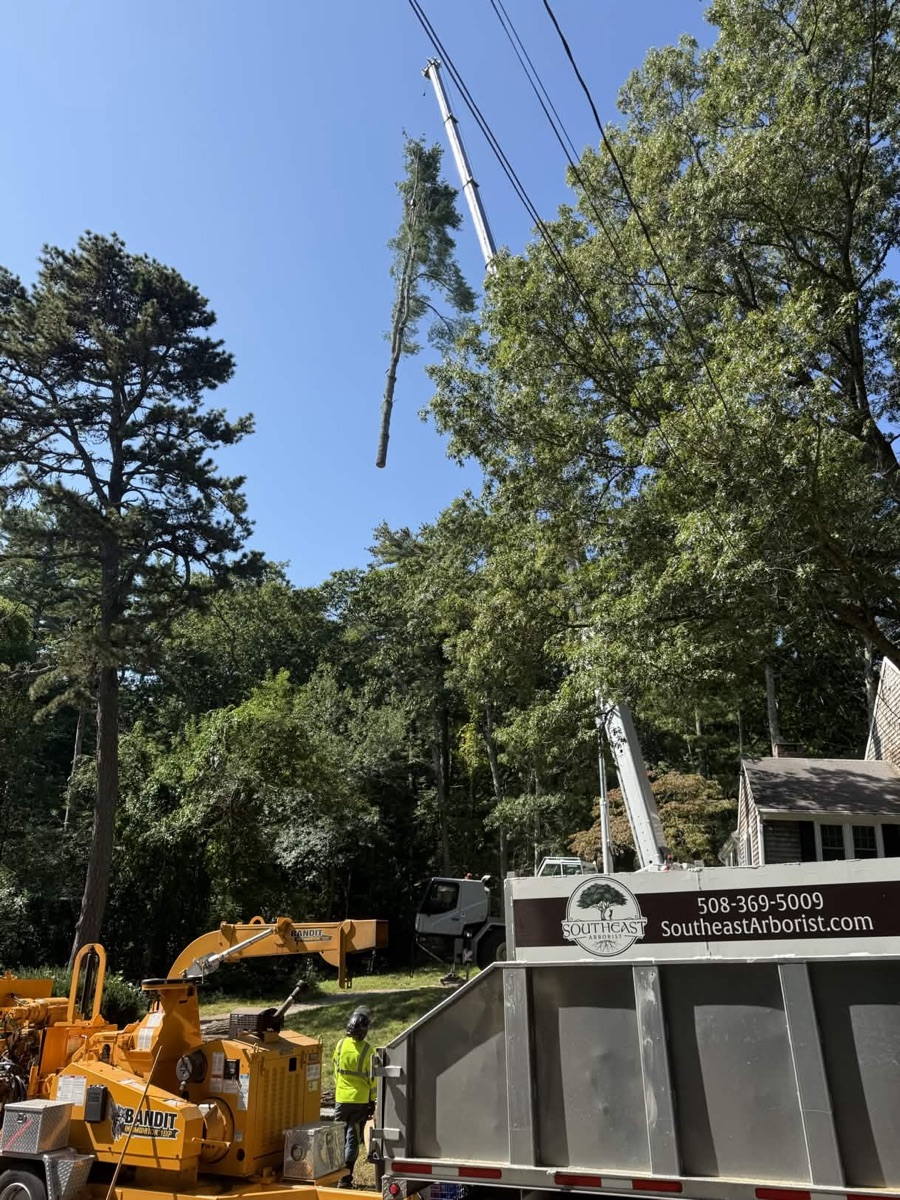
Safety drives every job. Our crews follow OSHA protocols, using MEWP (mobile elevating work platforms) for precise cuts in tight Plympton lots, and chippers that process scarlet oak branches on-site without tracking debris across your gravel drive. ISA certification ensures we apply species-specific care: red oaks need dormant-season thinning to promote airflow, preventing anthracnose in Plympton's humid springs. We've removed storm-damaged oaks in Winnetuxet after nor'easters, clearing lot lines for new construction while preserving sassafras understory.
Homeowners in Silver Lake call us for driveway clearance, where overgrown red oaks block access during heavy snows. Our process starts with a site visit—call 508-369-5009 for same-week scheduling—followed by a written report detailing risks, costs, and timelines. We handle permits through Plympton's Tree Warden if required for public right-of-way work near Ellisville Road. Unlike general crews, our oak tree specialists focus on longevity: post-pruning, we monitor for EAB (emerald ash borer) crossover risks, though oaks resist it better than ash.
Investing in professional care protects your property value in this rural enclave, where wooded lots fetch premiums. A single oak wilt outbreak can kill a dozen trees via underground grafts in Plympton Center clusters. Our treatments halt spread, saving thousands in removals. With 20+ years serving South Shore, Southeast Arborist delivers results you see: balanced canopies enduring 60 mph gusts, vibrant fall color from healthy scarlet oaks, and cleared views to cranberry bogs. If your oaks show wilting leaves, bark cracks, or lean toward structures, contact your oak tree specialist in Plympton, MA today at 508-369-5009.
Why Plympton Properties Need Oak Tree Specialist
Plympton, MA 02367, in Plymouth County, features rural wooded lots and cranberry bog frontage that amplify oak tree risks. Your red oaks and scarlet oaks grow fast on sandy, acidic soils with pH 4.5-5.5, reaching 60-80 feet in 40 years near Plympton Center. These conditions mirror pitch pine barrens that once covered the interior, now mixed with second-growth hardwoods like red maples and white pines. Shallow roots—often 12-18 inches deep—make them prone to windthrow in nor'easters, as seen when Tropical Storm Isaias in 2020 felled scores of conifers and oaks across town.
Power line conflicts plague rural roads like County Road, where tall oaks clash with overhead lines during growth surges. Fire risk heightens in pine barrens around Upland Meadows, with dry needles from white pines and pitch pines fueling blazes—oaks add dense undercanopy fuel. Homeowners in Winnetuxet report anthracnose outbreaks in wet springs, browning leaves on red oaks by May due to poor airflow in unpruned canopies.
Oak wilt poses the gravest threat. This vascular disease clogs xylem in red oaks within weeks, spreading via root grafts in Plympton's clonal stands—common where lots abut conservation land. Symptoms start with wilting upper leaves turning bronze, progressing downhill. Scarlet oaks, prevalent near Silver Lake, show rapid dieback; white oaks resist longer but still suffer. Without an oak tree specialist in Plympton, MA, DIY pruning spreads it: sap beetles vector spores from February-July cuts.
Climate exacerbates issues. Plympton averages 45 inches annual rain, with humid summers (75-85°F) fostering fungal pathogens like *Apiognomonia* for anthracnose. Winter lows to 10°F stress roots in frozen sands, causing dieback. Nor'easters deliver 50-70 mph gusts, toppling leaning oaks onto homes in the County Road Area—insurance claims spiked post-Isaias.
Common tree issues extend beyond oaks. White pines lean toward structures, their shallow roots mirroring oak vulnerabilities. Pitch pines ignite easily, requiring thinning around your oaks. Red maples split at unions, American holly harbors scale insects, and sassafras attracts laurel wilt, indirectly stressing nearby oaks. Integrated care addresses this: we prune white pines alongside oaks to maintain clearance.
Your property demands specialist intervention. In Plympton Center, overgrown lot lines block views to historic sites like the Old Burying Ground—clearing reveals them safely. Winnetuxet lots near cranberry bogs need hazard assessments for oaks leaning over irrigation ditches. Silver Lake properties face lakefront erosion from falling branches; Upland Meadows sees construction clearing exposing oak roots.
Neglect costs: a 70-foot red oak removal runs $2,500+, plus stump grinding. Proactive care prevents this. Check your oaks now: look for V-shaped crotches (failure points), soil heaving at bases (uprooting sign), or deadwood over 20% canopy. Test soil moisture—sandy lots dry fast, stressing oaks. Mulch 3-inch rings around bases, avoiding trunks to prevent girdling roots.
Southeast Arborist's ISA Certified Arborists apply ANSI A300 standards, diagnosing via increment cores and air spades for root collars. We differentiate red oak care (aggressive wilt prevention) from scarlet oak (focus on codominant pruning). Local knowledge matters: we've mapped pine barrens fire risks post-2020, advising defensible space around your oaks. Call 508-369-5009 for a Plympton-specific assessment—protect your trees before the next storm.
Our Oak Tree Specialist Process in Plympton
Southeast Arborist follows a rigorous, step-by-step process as your oak tree specialist in Plympton, MA, tailored to local sandy soils and pitch pine mixes. Step 1: Initial Assessment. We arrive in a marked truck from our Plymouth base, ISA Certified Arborist on-site. Walk your lot in Plympton Center or Upland Meadows, noting red oak leans toward power lines or scarlet oaks with wilt symptoms. Use binoculars for crown evaluation, measuring throw distance—if a 60-foot oak's base shifts 6 inches toward your home, it's urgent.
Step 2: Detailed Diagnosis. Employ resistograph drills for decay density (under 50% live wood signals removal), sonic tomography for internal voids, and soil probes for root plate depth in sandy substrates. For oak wilt, inspect leaf veins and cambium streaks under bark. We test pH and compaction—Plympton's 85% sand content compacts easily, starving oak roots. Report includes photos, risk ratings (low/medium/high per ANSI Z133), and options.
Step 3: Customized Plan. Structural pruning targets codominant leaders in red oaks, reducing end weight by 25% max per ANSI A300. For wilt prevention, schedule August-January only—no February-July cuts. Immediate wound sealing with paint-based protectants blocks beetles. Equipment: 65-foot bucket trucks navigate tight Winnetuxet drives; grapplesaws for over-water removals near Silver Lake; air spades excavate root flares without damage.
Step 4: Safe Execution. Crews don PPE, establish 20-foot exclusion zones per OSHA. Ground crew directs traffic on County Road jobs. Pruning technique: drop-crotch for natural form, collar cuts to speed closure. For tall white pines shading your oaks, sectional dismantling prevents property impact. Chippers process scarlet oak debris on-site, mulching for your paths—reduces landfill trips.
Step 5: Treatment Application. Oak wilt-positive trees get macro-infusion with propiconazole, injecting 20 gallons per DBH inch into vascular system. Disease diagnosis covers phyllosticta leaf spot, common in humid Plympton springs. Fertilize sparingly—slow-release nitrogen for nutrient-poor sands.
Step 6: Follow-Up. Plant wrap monitors for 6 months; annual check-ins for cabling in high-wind areas. Safety protocols include daily JSA (job safety analysis), with TCIA accreditation ensuring compliance.
This process shines in Plympton's context. Post-Isaias, we stabilized leaning red oaks in the County Road Area using dynamic cabling—steel strands absorb sway. For lot clearing in Upland Meadows, we retain mast oaks for wildlife while removing hazards. Techniques adapt: hand-thinning under power lines avoids NSTAR conflicts.
Practical tip: Before we arrive, flag concerns with orange ribbon—helps prioritize. Water deeply (1 inch/week) pre-work to buffer roots. Post-pruning, rake chips away to deter rodents gnawing seals.
Our edge: All arborists ISA Board Certified, trained in species ID for local flora—distinguishing scarlet from red oak bark ensures precise care. No subcontracting; full-time crews from Cohasset handle everything. Results last: clients see 30% stronger canopies enduring 70 mph gusts. Schedule your process at 508-369-5009—your Plympton oaks deserve it.
Common Oak Tree Specialist Projects in Plympton Neighborhoods
Plympton neighborhoods drive distinct oak tree specialist projects at Southeast Arborist. In Plympton Center, historic homes near the Old Meetinghouse require hazard assessments for 80-year-old red oaks leaning over foundations. Post-nor'easter, we remove split scarlet oaks, grinding stumps to prevent tripping on uneven lots.
Winnetuxet properties, backing cranberry bogs, focus on lot line clearing. Overgrown red oaks block property markers—we thin canopies 20%, preserving American holly understory. One project cleared 15 oaks for fence installation, using low-ground-pressure chippers to avoid bog edges.
Silver Lake lots demand waterfront pruning. Scarlet oaks drop branches into the lake during 50 mph winds—we sectional dismantle, cabling trunks to withstand erosion. Integrated work includes white pine reductions shading oaks, improving light for red maples.
County Road Area sees power line maintenance. Red oaks encroach on rural utilities—we raise canopies to 25 feet clearance per NSTAR specs, coordinating with Plympton's Tree Warden. Storm-damaged removals post-Isaias cleared driveways, mulching debris for rural roads.
Upland Meadows construction sites need pre-build clearing. We fell hazard oaks near new foundations, salvaging wood for onsite use. Structural support for retained trees involves guy wiring during heavy equipment ops.
Across neighborhoods, common threads: oak wilt prevention via timed pruning, disease diagnosis for anthracnose (rampant in humid springs), and driveway clearance through dense pitch pine-oak mixes. Sassafras removal prevents laurel wilt spread to oaks.
We've completed 50+ Plympton jobs yearly—e.g., a Winnetuxet 10-tree wilt block saved a grove. Practical advice: Document leans with photos for insurance; thin understory sassafras annually.
As your oak tree specialist in Plympton, MA, we reference local landmarks like Ellisville Road for access planning. Call 508-369-5009 for neighborhood-specific service.
Oak Tree Specialist Costs in Plympton, MA
Oak tree specialist costs in Plympton, MA, vary by project scope, tree size, and site access, but deliver strong ROI. Hazard assessment starts at $250—includes report for insurance, covering red oak leans in sandy soils. Basic pruning for a 40-foot scarlet oak: $600-900, thinning 15-20% canopy per ANSI A300.
Full removal: $1,200-3,000 for 50-70 footers in Plympton Center, factoring crane needs (add $800) for homes near Old Burying Ground. Stump grinding adds $200-400/DBH inch. Oak wilt treatment: $800-1,500/tree via injections, cheaper than $5,000+ replacement.
Pricing factors: Neighborhood access—Winnetuxet bogs add travel fees; Upland Meadows construction sites require erosion controls (+10%). Tree health: decayed red oaks cost more due to rigging. Crew time: 4-man team at $150/hour minimum.
Value proposition: Prevent $10,000 storm damage claims. A cabling job ($1,000) extends life 20 years. Mulch byproduct saves $300 on landscaping.
Comparisons: General crews charge 20% less but skip ISA standards, risking regrowth defects. Our Plympton jobs average $1,800, with 5-year warranties.
Budget tips: Bundle—prune oaks and white pines for 15% discount. Off-season (November-March) saves 10%. Financing via 0% promo.
Invest now: healthy oaks boost property values 5-10% in rural Plympton. Transparent quotes—no surprises. Get yours at 508-369-5009.
When to Schedule Oak Tree Specialist in Plympton
Schedule your oak tree specialist in Plympton, MA, seasonally and urgently. Optimal: late fall (October-December) or winter (January) for pruning—avoids oak wilt spread, dormant cuts heal fast in cool weather. Avoid February-July; beetles peak then.
Urgency signs: wilting leaves (wilt), bark cracks (decay), >15° lean (windthrow risk), deadwood >25% canopy. Post-nor'easter, inspect immediately—2020 Isaias damage doubled calls.
Spring (April) for anthracnose diagnosis; summer for wilt monitoring. Fall for lot prep.
Plympton climate dictates: humid rains trigger fungi; schedule pre-winter. Call 508-369-5009 for slots—same-week emergencies.
Frequently Asked Questions About Oak Tree Specialist in Plympton
**What makes Southeast Arborist the top oak tree specialist in Plympton, MA?** Our ISA Certified Arborists specialize in red/scarlet oaks, using ANSI A300 for Plympton's sandy soils. We've handled post-Isaias damage across neighborhoods.
**How do I spot oak wilt on my Plympton property?** Upper leaves wilt bronze downhill; red oaks die fast. Check root-grafted clusters near County Road—call us for cambium tests.
**When is safe pruning for Plympton oaks?** August-January only. February-July risks wilt via beetles in humid springs.
**Do you handle power line oaks in Winnetuxet?** Yes, we coordinate with NSTAR, raising canopies safely.
**What's the cost for scarlet oak removal in Silver Lake?** $1,500-2,500, including crane if lakefront.
**How do you prevent windthrow in Upland Meadows?** Structural pruning, cabling; root assessments with air spades.
**Are treatments safe for my cranberry bog?** Propiconazole injections are EPA-approved, no runoff.
**Do you serve nearby like Carver?** Yes, full South Shore from Plymouth base.
Oak Tree Specialist Throughout Plympton
Southeast Arborist provides oak tree specialist services across Plympton neighborhoods: Plympton Center historic lots, Winnetuxet bogs, Silver Lake shores, County Road power lines, Upland Meadows builds. Extend to Carver, Kingston, Pembroke, Middleborough.
ISA Certified, ANSI-compliant, safe crews ready. Protect your oaks—call 508-369-5009 now for assessment.