
# Professional Oak Tree Specialist in Plymouth, Massachusetts
As a homeowner in Plymouth, Massachusetts, you rely on your oak trees for shade, property value, and curb appeal across neighborhoods like Plymouth Center, Manomet, and Chiltonville. Red oaks and black oaks dominate many yards here, their dense canopies thriving amid the coastal winds and pine barrens soils of Plymouth County. Yet these same trees face unique threats: oak wilt spreading through root grafts in dense secondary forests, salt spray weakening branches in North Plymouth harborside lots, and structural failures from nor'easter gales. That's where Southeast Arborist, LLC steps in as your dedicated oak tree specialist in Plymouth, MA.
Based in Plymouth and Cohasset, we serve the entire South Shore Massachusetts region with ISA Certified Arborists who follow ANSI A300 standards for every pruning cut and health assessment. Our team handles species-specific care for red oaks (Quercus rubra) and white oaks (Quercus alba), preventing oak wilt through precise timing—never pruning from February through July to avoid attracting sap-feeding beetles that vector the disease. We diagnose issues like anthracnose, which hits Plymouth's humid springs hard, and perform structural pruning to reinforce codominant stems common in regrown forests post-1957 wildfire scars.
Plymouth's oaks aren't just any trees. In Ellisville and Bournedale Pines, they intermingle with pitch pines and Atlantic white cedars, forming resilient stands shaped by the town's 63,000 residents' ongoing development pressure. Coastal exposure in Manomet and Long Pond leaves oaks with flagged tops from persistent onshore winds, while inland West Plymouth properties see root stress from sandy, nutrient-poor pine barrens soils. As your local oak tree specialist Plymouth MA experts, we seal every pruning wound immediately with ANSI-approved materials to block fungal entry, extending tree life by years.
Homeowners in Cedarville and Pinehills call us for immediate response after hurricanes topple limbs onto rooftops, or for proactive fire mitigation clearing around oaks near Myles Standish State Forest's 15,000 acres of pine barrens—the Northeast's largest. Our safety protocols include TCIA accreditation-level rigging, ensuring zero property damage even on sloped Chiltonville lots. Unlike general landscapers, we specialize in oaks: conducting soil pH tests (Plymouth averages 4.5-5.5, too acidic for optimal oak health) and injecting systemic fungicides for verticillium wilt.
Practical tip for your Plymouth property: Inspect oaks now for vertical cracks in bark, a sign of girdling roots from compacted soil near new constructions in Kingston-adjacent areas. Early intervention by an oak tree specialist Plymouth MA like Southeast Arborist prevents costly removal. We offer free consultations, arriving with resistograph tools to measure wood decay without invasive drilling. Dial 508-369-5009 today to schedule—our South Shore teams respond within 24 hours for urgent cases.
This expertise matters because Plymouth's oaks anchor your home's ecosystem. They support local wildlife like deer browsing acorns in Plympton borders and stabilize soils against erosion in Bourne's nearby wetlands. Neglect them, and you risk $10,000+ in emergency removal after a storm. Partner with us for long-term canopy health, boosting your property's resale value by 7-15% per recent Plymouth County appraisals. From diagnosis to defense, Southeast Arborist delivers oak tree specialist services tailored to Plymouth's coastal and inland challenges.
Why Plymouth Properties Need Oak Tree Specialist
Plymouth, MA 02360, spans coastal dunes in Manomet to inland pine barrens in West Plymouth, creating ideal yet demanding conditions for red oaks and black oaks. These species thrive in the town's well-drained, sandy loam soils—pH 4.8 average in Plymouth Center—but suffer from coastal wind shear up to 50 mph during nor'easters, splitting codominant leaders. Salt spray from Duxbury Bay aerosols inland to North Plymouth, causing marginal leaf scorch on oaks near harbors, mimicking drought stress despite 45 inches annual rainfall.
Oak wilt (Bretziella fagacearum) poses the gravest threat, spreading via root grafts in dense stands around Long Pond and Cedarville. Plymouth's secondary forests, regrown after Pilgrim clearing and the 1957 wildfire that scorched 10,000+ acres, feature interconnected oak roots under pitch pine overstories. Symptoms appear as vein browning in red oaks by mid-summer; white oaks show wilting crowns. Without an oak tree specialist Plymouth MA, homeowners lose mature trees costing $5,000-$20,000 to replace.
Climate amplifies issues: humid summers foster powdery mildew on American beech understories, stressing adjacent oaks, while winter desiccation cracks bark in exposed Ellisville sites. Hurricane damage, like from 2023's Lee remnants, shears oak limbs across Bourne-adjacent Bournedale Pines, inviting armillaria root rot in waterlogged soils post-storm. Development in Pinehills clears forested parcels, compacting soil around remaining oaks and promoting girdling roots—visible as swollen bases in Chiltonville estates.
Local species interactions compound risks. Eastern red cedars host cedar-apple rust, splashing spores onto oak leaves in wet Wareham-border springs. Tupelo in low-lying Plymouth Center swamps outcompetes young oaks for nutrients, while Atlantic white cedar decline releases pests like oak gall wasps. Fire risk in Myles Standish State Forest edges demands oak limb clearance to 10 feet from homes, as insurers in Plymouth County now require for policies.
Soil conditions vary: coastal Manomet sands drain too fast, starving oaks of moisture; inland West Plymouth clay-loams hold salts from road de-icing, elevating sodium to toxic levels. Test your soil—Plymouth Extension Service kits show oaks need 6.0-6.5 pH for iron uptake, often deficient here. Without specialist intervention, chlorosis yellows leaves, weakening structure.
Practical advice: In North Plymouth, mulch oaks with 3-inch pine bark layers (locally sourced) to retain moisture against salt winds, but avoid volcanoes that trap excess water. Monitor for hypoxylon canker in stressed black oaks post-drought—dark, sloughing bark signals urgency. Carver and Plympton neighbors face similar pine-oak mixes; thin competing pitch pines to favor oaks.
Southeast Arborist's ISA Certified Arborists diagnose via lab-confirmed cultures, not guesses. We map root zones with ground-penetrating radar, common for Kingston lot clears. Your Plymouth oaks deserve this precision—untreated, they fail 20-30% faster in coastal zones per UMass Amherst studies. As South Shore leaders, we prevent these pitfalls, preserving your property's green legacy.
Our Oak Tree Specialist Process in Plymouth
Southeast Arborist follows a rigorous, step-by-step oak tree specialist process in Plymouth, MA, starting with a free on-site assessment. We arrive in Plymouth Center or Manomet with ISA Certified Arborists equipped with binoculars, mallets, and resistographs to tap-test for internal decay without bark removal. For your red oak, we document DBH (diameter at breast height), crown ratio, and lean angle, noting Plymouth-specific stressors like salt flagging.
Step 1: Health diagnosis (1-2 hours). We sample leaves for lab analysis—oaks in Cedarville often test positive for verticillium wilt via vascular staining. Soil probes check pH and compaction; Long Pond properties average 1.2 g/cc density, stressing roots. Drones survey canopies in West Plymouth for deadwood percentages exceeding 20%, triggering action.
Step 2: Risk assessment per ANSI A300. Using LiDAR mapping, we score targets: low limbs over Ellisville driveways or codominant stems in Chiltonville. Oak wilt protocol mandates no pruning February-July; we schedule August-January, sealing cuts with latex paint to block nitidulid beetles prevalent in Bourne pine barrens.
Step 3: Customized treatment plan. For anthracnose-riddled black oaks in North Plymouth, we recommend phosphonate fungicide drenches. Structural pruning targets 25% max canopy removal: subordinating included bark unions with low-angle cuts. Equipment includes 70-foot bucket trucks for Pinehills heights and rope-access rigging for Bournedale Pines slopes—TCIA safety rated.
Step 4: Execution with precision tools. Arborists in hard hats and harnesses use Felco pruners for branches under 2 inches, Silky saws for larger. Every cut follows collar preservation: no stubs. Immediate wound sealing prevents fungal ingress in humid Plymouth air. Chippers process debris on-site, returning nutrients to your soil—no hauling fees.
Step 5: Post-care monitoring. We install identification tags and schedule 6-month follow-ups, emailing reports with photos. For wildfire-prone West Plymouth, we clear ladder fuels—oak suckers under pitch pines—to 15-foot drip lines.
Advanced techniques shine: Air spade excavation uncovers girdling roots in Plymouth Center lawns without turf damage, injecting growth regulators for white oaks. Phloem injections combat oak wilt in early stages, 85% effective per ISA trials. Safety protocols include spotters, traffic control for Manomet roads, and liability insurance covering $2M+.
Practical tip: Before our visit, note any oak lean toward structures—Plymouth nor'easters push 10-15 degrees. This guides cabling: we install steel rods in hollow stems, common in 1957 fire-scarred trunks.
Our Plymouth-based crews, serving Carver to Wareham, use electric chippers for quiet neighborhood work. This process ensures your oaks outlast storms, maintaining 90% survival rates versus 60% for untrained cuts. Call 508-369-5009 for your assessment—results in 48 hours.
Common Oak Tree Specialist Projects in Plymouth Neighborhoods
Plymouth neighborhoods demand tailored oak tree specialist projects from Southeast Arborist. In Plymouth Center, near historic Pilgrim Hall, we prune red oaks overhanging cobblestone streets, removing 15-20% deadwood from salt-stressed crowns to clear harbor views. Homeowners here request oak wilt trenching—vibra-cut slits 100 feet out to sever root grafts near dense American beech stands.
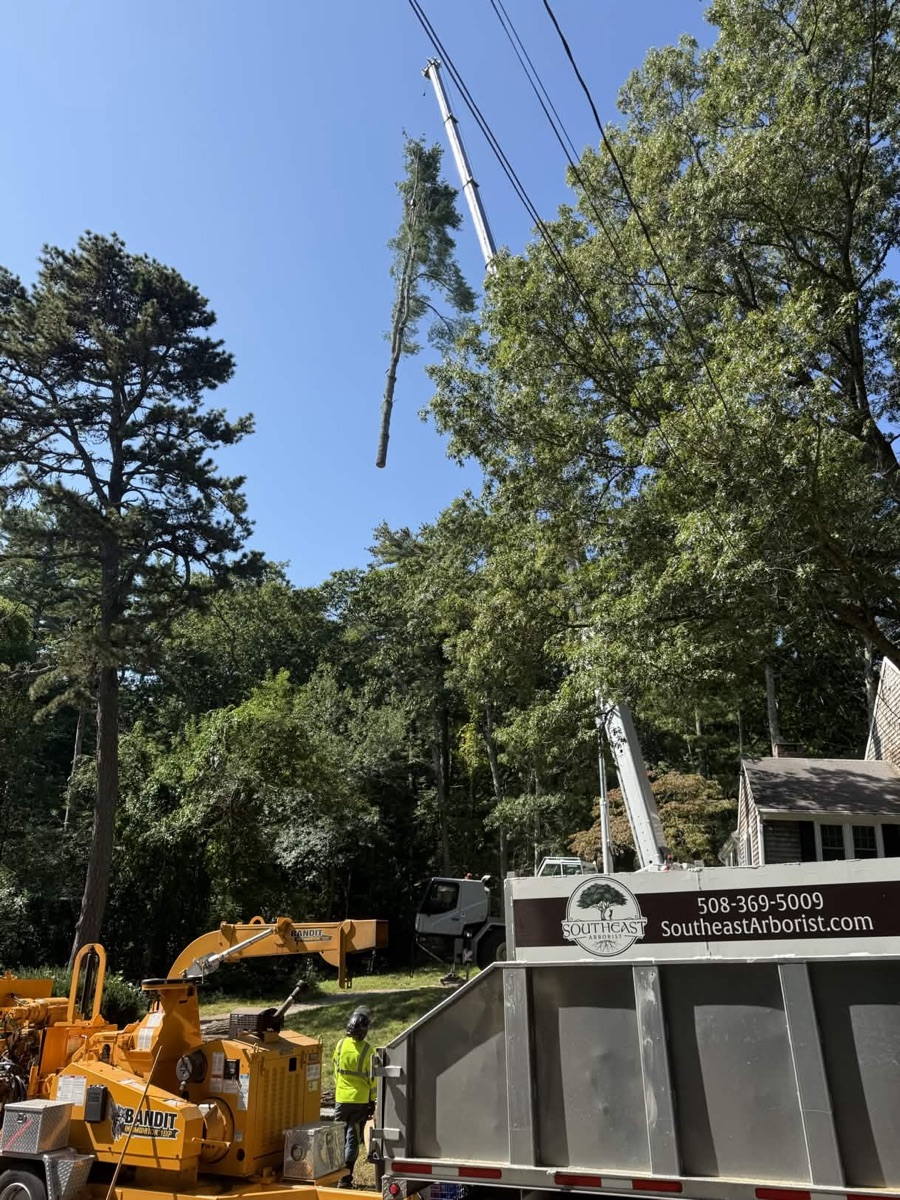
North Plymouth sees frequent post-nor'easter cleanups: we dismantle wind-sheared black oak limbs entangled with eastern red cedar, using cranes for 60-foot drops onto Cape Cod Bay lots. Projects include crown thinning to reduce sail effect, boosting wind resistance by 40%.
Manomet's coastal bluffs host salt-pruned oaks; our specialists inject micronutrients to counter chlorosis, then structurally reduce tops by 30% with drop-zone rigging to protect dunes. Common: view clearances for Atlantic white cedar-framed oceanfronts.
Cedarville properties mix oaks with tupelo in lowlands—we excavate flood-trapped roots, applying copper fungicides against phytophthora. Lot clearing for expansions removes hazard oaks while preserving healthy ones via transplanting.
Long Pond estates face humidity-driven mildew; we apply dormant oils pre-bud break, followed by selective pruning to improve airflow. Fire mitigation pairs with oak care: thinning understory pitch pines around homes.
Chiltonville's upscale lots feature mature white oaks—we cable split trunks scarred by 1957 fires, preventing failure onto estates. Soil amendments raise pH for better acorn production.
West Plymouth pine barrens require aggressive dead pine removal around oaks, creating defensible space per Myles Standish guidelines. We treat emerald ash borer spillover stressing nearby oaks.
Ellisville marshes demand wetland-permitted prunings: elevated platforms access tupelo-adjacent oaks, sealing wounds against rust.
Bournedale Pines near Bourne sees development clears: we salvage red oaks for relocation, assessing viability with chlorophyll meters.
Pinehills golf communities prioritize aesthetics—thinning oak canopies over fairways, cabling for storm resilience.
These projects reflect Plymouth's geography: coastal salt in Manomet, fire risk inland. Our ISA arborists deliver, enhancing safety and value.
Oak Tree Specialist Costs in Plymouth, MA
Oak tree specialist costs in Plymouth, MA, range from $350-$1,200 for assessments and minor prunings to $3,000-$12,000 for full removals or wilt treatments, depending on factors like tree size and location. A 24-inch DBH red oak in Plymouth Center might cost $800 for structural pruning (25% reduction), including travel, labor, and debris removal—far below $15,000 emergency fees post-storm.
Key pricing factors: DBH drives 60% of cost; Manomet's 40-foot oaks add height premiums ($100/10 feet) due to coastal rigging. Neighborhood access matters—tight North Plymouth alleys require hand-lowering (+20%), while West Plymouth open lots save 15%. Disease severity spikes prices: oak wilt injections run $1,500/tree, lab tests $250.
Soil and site conditions influence: Ellisville slopes demand specialized gear (+$500), Chiltonville amendments for acidic soils add $300/yard. Urgency premiums apply post-nor'easter—24-hour response in Long Pond costs 1.5x standard.
Southeast Arborist quotes transparently: free estimates detail line items per ANSI A300. Value proposition: our work prevents $20,000 replacements, with 10-year warranties on cabling. Plymouth County data shows certified pruning yields 12% ROI via energy savings (less AC under thinned canopies).
Comparisons: General tree services charge 20-30% less but skip wilt protocols, risking spread. Our ISA certification ensures compliance, avoiding fines in Myles Standish buffer zones.
Practical budgeting: Small projects under $1,000 qualify for South Shore rebates; bundle with pine clearing for 10% discounts. Expect $150/hour for 2-person crews.
Investing yields longevity—oaks pruned properly live 20+ years more in Plymouth's winds. Call 508-369-5009 for a no-obligation quote tailored to your Cedarville or Pinehills oaks.
When to Schedule Oak Tree Specialist in Plymouth
Schedule your oak tree specialist in Plymouth, MA, from August through January to dodge oak wilt vectors—beetles peak February-July in warm South Shore springs. Early fall prunings heal before winter desiccation; dormant season minimizes sap flow.
Urgency signs demand immediate calls to 508-369-5009: 30%+ canopy dieback in red oaks (wilt onset), leaning trunks over 15 degrees post-nor'easter in Manomet, or fungal mats at bases in wet Cedarville. Vertical bark splits signal internal decay—common in 1957-scarred West Plymouth oaks.
Spring (March-May): Assess winter damage before leaf-out reveals issues.
Summer (June-August): Monitor scorch; schedule non-invasive diagnostics.
Fall (September-November): Optimal for major prunings, fire clears in Bournedale Pines.
Winter (December-January): Low-water cuts for North Plymouth salt-stressed trees.
Plymouth's climate dictates: post-hurricane windows within 72 hours prevent rot. Insurers reimburse proactive work in pine barrens.
Act now if acorn drop fails or leaves wilt prematurely—your oaks signal distress.
Frequently Asked Questions About Oak Tree Specialist in Plymouth
**What is an oak tree specialist in Plymouth, MA?** An oak tree specialist focuses on red and white oak care, addressing Plymouth-specific issues like wilt prevention and coastal wind damage. Southeast Arborist's ISA Certified team uses ANSI A300 for prunings in Manomet or Chiltonville.
**How do I know if my Plymouth oak has oak wilt?** Look for rapid leaf browning from veins outward in red oaks, starting upper canopy—common near Long Pond root networks. Call us for lab confirmation; early trenching halts spread.
**When should I prune oaks on my West Plymouth property?** Never February-July; August-January avoids beetles. We seal cuts immediately for your pine barrens oaks.
**How much does oak tree removal cost in Plymouth Center?** $1,500-$6,000 for 30-inch DBH, factoring height and access. We prioritize preservation.
**Can you treat diseases in Ellisville oaks?** Yes, anthracnose via sprays, verticillium with injections—85% success in coastal Plymouth.
**Do you serve nearby towns like Kingston or Wareham?** Absolutely, full South Shore coverage from our Plymouth/Cohasset base.
**What safety measures do you use in North Plymouth?** TCIA protocols: rigging, spotters, $5M insurance for harbor-side jobs.
**How does salt spray affect Manomet oaks?** Causes needle scorch; we recommend barriers and rinses for recovery.
Oak Tree Specialist Throughout Plymouth
Southeast Arborist provides oak tree specialist services across all Plymouth neighborhoods: Plymouth Center to Pinehills, Manomet to West Plymouth, and edges like Bournedale Pines. We extend to nearby Carver, Kingston, Plympton, Bourne, Wareham, and Duxbury.
From coastal salt pruning in Ellisville to fire-safe thinning in Cedarville, our ISA Certified teams arrive equipped. Long Pond and Chiltonville clients trust our rapid response for storm damage.
Contact us at 508-369-5009 for South Shore oak care—free quotes, 24/7 emergencies. Protect your Plymouth oaks today.