
# Professional Oak Tree Specialist in Pembroke, Massachusetts
As a homeowner in Pembroke, Massachusetts, you rely on your oak trees for shade, property value, and natural beauty amid the town's suburban-rural landscape. Red oaks and scarlet oaks dominate many yards in Pembroke Center and along the Indian Head River, but gypsy moth damage from the 1980s and 2010s has left countless stands weakened and hazardous. Southeast Arborist, LLC, your local oak tree specialist in Pembroke MA, steps in with ISA Certified Arborists who understand these challenges intimately. Based in nearby Plymouth and Cohasset, we serve the South Shore, including all of Pembroke's 18,500 residents across its pine-oak woodlands and cranberry bog heritage areas.
Our team specializes in oak tree care tailored to Pembroke's sandy, acidic soils and wetland restrictions. We prevent oak wilt—a fungal disease that spreads rapidly through root grafts in dense oak groupings common near Hobomock ponds—while diagnosing issues like gypsy moth defoliation scars that compromise structural integrity. Every job follows ANSI A300 standards for pruning and safety, using TCIA-accredited protocols to protect your property and our crews.
Picture a mature red oak in your North Pembroke yard leaning toward your home after years of storm stress from Nor'easters battering Plymouth County. Without expert intervention, it risks failure during the next high wind event. As Pembroke's oak tree specialist, we conduct thorough health assessments, identifying early decline from overcrowded canopies or unstable roots in sandy soil. Our immediate wound sealing on pruning cuts prevents infection entry points, a critical step for oaks in this region's humid summers.
Pembroke's forests, regrown around historic cranberry bogs, feature pitch pine and white pine mixed with red maple and swamp maple in wetter zones like West Pembroke. Atlantic white cedar lines swamp edges near the Indian Head River, but oaks face unique threats: wetland setback rules limit removal options for properties bordering conservation land, sandy soil leads to shallow root systems prone to topple, and second-growth stands create overcrowding that starves lower branches.
Southeast Arborist brings decades of South Shore experience. Our ISA Certified Arborists hold credentials ensuring precise diagnosis of oak-specific diseases, from anthracnose in spring rains to armillaria root rot in poorly drained Hobomock lots. We use species-specific pruning—never cutting from February through July to avoid oak wilt vectors—preserving your trees' longevity. Homeowners in Pembroke Pines call us for lot clearing ahead of new builds, where we selectively thin hazard oaks while complying with Pembroke Conservation Commission bylaws.
Safety defines our work: all crews wear PPE, rigs meet OSHA standards, and we deploy aerial lifts for precise access in tight Bryantville neighborhoods. Whether addressing a single scarlet oak drop threat or a full stand in Indian Head River Area, we deliver results that boost curb appeal and reduce liability. Our phone, 508-369-5009, connects you directly to a specialist ready to assess your oaks today.
In Pembroke's climate—wet springs, dry sandy summers, and fierce winter winds—oaks demand proactive care. We've helped families in every neighborhood avoid costly failures, turning potential disasters into thriving landscapes. As your trusted oak tree specialist Pembroke MA provider, Southeast Arborist ensures your property stays safe and your oaks endure.
Why Pembroke Properties Need Oak Tree Specialist
Pembroke, MA 02359, in Plymouth County, blends suburban homes with rural cranberry bog remnants and extensive wetlands, creating ideal yet challenging conditions for oaks. Your red oaks and scarlet oaks thrive in the sandy, acidic soils between bogs, but gypsy moth infestations in the 1980s and 2010s stripped canopies, leaving trees with deadwood and decay now posing hazards. As an oak tree specialist in Pembroke MA, Southeast Arborist addresses these issues head-on for properties in Pembroke Center, Bryantville, and beyond.
Local climate amplifies risks: heavy spring rains from the Indian Head River watershed promote fungal pathogens like oak wilt, which kills by blocking vascular tissue. Summer humidity fosters bacterial leaf scorch, while Nor'easter winds up to 60 mph stress leaning oaks in exposed North Pembroke fields. Sandy soils drain too quickly, causing drought stress even near bogs, and low pH limits nutrient uptake, weakening root anchors.
Common tree species heighten the need for specialists. Pitch pine and white pine dominate dry ridges in West Pembroke, often overcrowded from second-growth regrowth post-logging for cranberry expansion. Red oaks, with their broad crowns, compete poorly here, leading to codominant stems that split in ice storms. Scarlet oaks, prevalent in Bryantville uplands, suffer gypsy moth damage exposing heartwood to canker fungi. Along swampy Hobomock edges, swamp maples and highbush blueberry mix with Atlantic white cedar, but oaks nearby face root rot from fluctuating water tables restricted by 100-foot wetland buffers.
Gypsy moth legacy defines Pembroke's oaks: weakened trees in Indian Head River Area now drop branches during routine winds, endangering homes near Route 3A. Sandy soil instability means roots spread wide but shallow, toppling in saturated ground post-rain—evident after 2023's heavy floods. Overcrowded pine-oak stands in Pembroke Pines starve interior oaks of light, causing self-pruning that invites pests.
Wetland regulations complicate care: Pembroke Conservation Commission enforces strict setbacks, prohibiting removal within 25-50 feet of bogs without permits. Your property bordering Great Sandy Bottom Bog requires an oak tree specialist familiar with filings to avoid fines. Storm damage from hurricanes like Bob in 1991 lingers, with suppressed oaks now hazardous.
Practical advice for Pembroke homeowners: inspect oaks annually for vertical cracks or soil heaving at bases, signs of instability in sandy lots. Test soil pH—aim for 5.5-6.5 with lime amendments to counter acidity. Avoid topping, which invites decay in gypsy moth-scarred trees. Monitor for oak wilt symptoms: vein browning from leaf tips in summer, wilting branches by fall.
Southeast Arborist's ISA Certified Arborists diagnose via resistograph probing for internal decay and soil core sampling for compaction. We differentiate gypsy moth stress from acute oak decline bacteria, using lab-confirmed treatments. In Pembroke's context, we prioritize structural pruning to reduce wind sail on red oaks near power lines in North Pembroke.
Nearby towns like Hanover, Marshfield, Duxbury, Hanson, and Kingston share these traits, but Pembroke's bog-centric forests demand hyper-local expertise. Without a specialist, your oaks risk total loss—property values drop 10-15% from hazard trees per local appraisals. Call us at 508-369-5009 for a free assessment tailored to your lot's soil and regulations.
Our Oak Tree Specialist Process in Pembroke
Southeast Arborist follows a rigorous, step-by-step oak tree specialist process in Pembroke MA, customized for local sandy soils, wetland rules, and gypsy moth-weakened oaks. Our ISA Certified Arborists start with a site visit to your Pembroke Center home or Hobomock property, using ANSI A300 Part 1 standards for assessments.
**Step 1: Initial Consultation and Visual Assessment (30-60 minutes).** We arrive in a fully equipped truck, scanning your red oaks and scarlet oaks for codominant leaders, included bark unions, and gypsy moth scars. In North Pembroke's open lots, we gauge wind exposure; near Indian Head River, we note wetland buffers. You walk with us, learning signs like fungal conks on swamp maples nearby indicating shared root risks.
**Step 2: Advanced Diagnostics (1-2 hours).** Resistographs drill minimally invasive cores to measure decay density in trunks—essential for pitch pine-oak mixes in West Pembroke where heart rot hides. Air spades expose roots without damage, revealing sandy soil compaction. We test for oak wilt via plug samples sent to UMass labs, confirming if sapwood streaking matches local vectors. Drones survey canopies in Bryantville's dense stands for deadwood percentages.
**Step 3: Customized Care Plan Development.** Leveraging diagnostics, we outline options: structural pruning for canopy balance, cable bracing for leaning scarlet oaks in Pembroke Pines, or removal if >50% decay risks failure. Wetland-adjacent plans include Conservation Commission NOI filings. We quote transparently, factoring sandy soil access challenges.
**Step 4: Pruning Execution with Precision Timing.** Never February-July to dodge oak wilt beetles—optimal windows are late summer dormancy or winter. Our crews use hand saws, pole pruners, and aerial lifts for clean cuts on red oaks, sealing wounds immediately with latex paint to block pathogens in humid Pembroke air. Techniques follow ANSI A300: drop-crotch for size reduction, not topping, preserving live crowns.
**Step 5: Specialized Treatments.** For disease, we inject propiconazole systemically against oak wilt in high-risk Indian Head River groves. Fertilize with slow-release nitrogen for nutrient-poor sands, pH-adjusted for acidic bogs. Highbush blueberry understories get mulched to suppress competition.
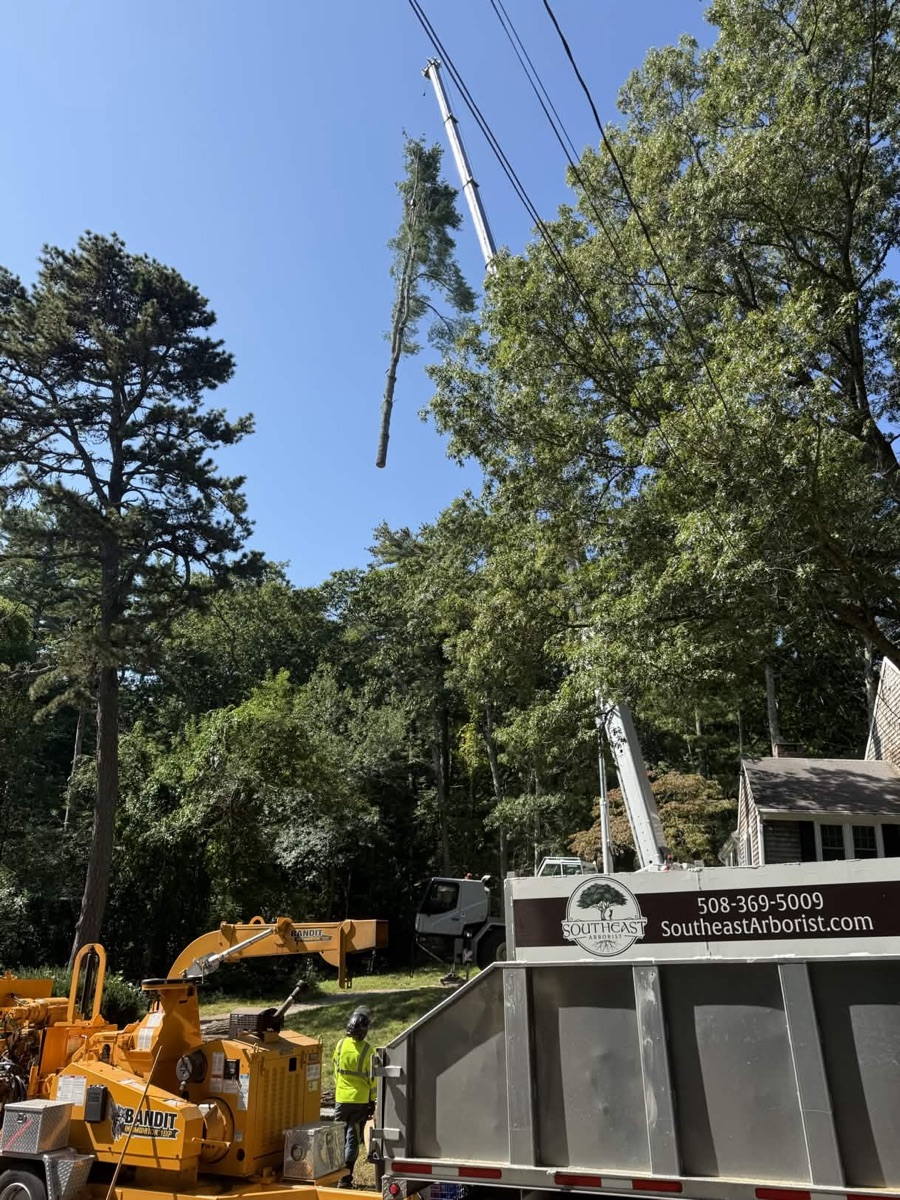
**Step 6: Rigorous Safety and Cleanup.** All work meets OSHA and TCIA standards: harnesses, hard hats, traffic control for Route 139 sites. Bucket trucks navigate tight West Pembroke drives; cranes lift sections over houses in North Pembroke. We chip debris onsite for bog-friendly mulch, hauling away stumps to prevent regrowth.
**Step 7: Follow-Up Monitoring.** Six months post-work, we re-inspect for healing, providing you a report with photos. In overcrowded pine stands near cranberry relics, we schedule thinnings.
Equipment includes 85-foot lifts for tall pitch pines, grapples for storm debris, and soil injectors for treatments. Our process minimizes disruption—jobs wrap in 1-3 days for most Pembroke yards.
Homeowner tip: Prepare by marking utilities and clearing access; this speeds our work and cuts costs. For your oaks amid white pines and Atlantic white cedar, this process ensures compliance and longevity. Contact Southeast Arborist at 508-369-5009 to start.
Common Oak Tree Specialist Projects in Pembroke Neighborhoods
Pembroke neighborhoods present distinct oak tree specialist projects, from hazard removals in Pembroke Center to thinnings in Hobomock. As your oak tree specialist Pembroke MA team, Southeast Arborist handles them with local precision.
In **Pembroke Center**, historic homes along Route 27 feature mature red oaks weakened by gypsy moth history. Common projects: structural pruning to lighten crowns over garages, preventing storm splits. A recent job removed a 60-foot scarlet oak with 40% decay, using a 90-ton crane to protect nearby colonial structures.
**Bryantville**'s upland lots mix pitch pine and oaks on sandy slopes. We thin overcrowded stands, removing suppressed white pines to favor healthy red maples and oaks. Lot clearing for expansions complies with 50-foot wetland buffers, preserving highbush blueberry edges.
**North Pembroke** faces wind exposure near fields. Projects include cabling leaning oaks post-Nor'easters, with root barriers against invasive roots near foundations. One family avoided a 70-foot drop via selective pruning, saving their barn.
**West Pembroke**'s rural parcels border bogs. Hazard removals navigate conservation rules— we filed for a NOI to fell gypsy moth casualties near cranberry relics, using air spades to confirm root zones.
**Pembroke Pines** sees new construction booms. Full lot clearing thins oak-pine mixes, retaining specimen trees per town bylaw. Storm response clears downed swamp maples entangled with Atlantic white cedar.
**Hobomock**'s pond-dotted wetlands demand care. Oak wilt prevention treats root-grafted red oaks, with pruning timed for August. We braced a canopy over a dock, sealing cuts against humid fogs.
**Indian Head River Area** properties hug swamps. Projects focus on decline diagnosis—armillaria in oaks near red maples. Selective removal of hazards maintains river views while meeting 100-foot setbacks.
Across Pembroke, gypsy moth legacies drive 60% of calls; storm cleanup 25%. Our ISA arborists ensure safe, compliant outcomes. Dial 508-369-5009 for your neighborhood project.
Oak Tree Specialist Costs in Pembroke, MA
Oak tree specialist costs in Pembroke MA vary by project scope, tree size, and site factors like sandy soil access or wetland proximity. Southeast Arborist provides transparent pricing as ISA Certified experts, delivering value through ANSI-compliant work that prevents expensive failures.
Basic health assessments start at $250-$400, including visual and resistograph diagnostics for your Pembroke Center red oak. Pruning a 40-foot scarlet oak—removing 20% deadwood from gypsy moth scars—runs $800-$1,500, factoring lift time and wound sealing. Hazardous removal of a 60-foot pitch pine-oak hybrid in North Pembroke: $2,500-$5,000 with crane, stump grinding extra at $300-$600.
Full stand thinning in Bryantville (5-10 trees) costs $3,000-$7,000, selectively targeting overcrowded white pines stressing oaks. Oak wilt treatment via injections: $500-$1,200 per tree, critical for Hobomock root grafts. Lot clearing in Pembroke Pines for builds: $5,000-$15,000 per acre, including permits.
Pricing factors: Tree diameter (DBH) at 12" adds $200+ per foot; height over 50 feet requires cranes ($1,000+). Wetland filings add $500 in admin. Sandy West Pembroke slopes hike mobilization 20%. Urgency post-storm: 25-50% premium.
Value proposition: Our work averts $10,000+ in property damage—one failed oak equals foundation repairs or roof replacement. ISA certification ensures insurance compliance, boosting resale by 5-10%. Long-term: pruned oaks live 20+ years vs. 5 without care.
Pembroke-specific savings: Bundle assessments with pruning for 15% off. Mulch from chips cuts landscaping costs. Compare: unlicensed crews risk fines ($1,000+ for wetland violations) and regrowth.
Get a free quote at 508-369-5009—tailored to your Indian Head River lot or beyond. Investing now safeguards your Pembroke property.
When to Schedule Oak Tree Specialist in Pembroke
Timing your oak tree specialist in Pembroke MA maximizes health and minimizes risks amid local climate swings. Southeast Arborist recommends late August to January for pruning—avoiding February-July oak wilt season when beetles vector fungus in humid air.
Schedule urgently if spotting urgency signs: leaning trunks (>15 degrees) in North Pembroke winds, soil heaving at bases from sandy instability, or >25% dead canopy from gypsy moth legacy. Wilting leaves with vein browning signals oak wilt—call within 48 hours for injections. Post-storm, like after 50 mph gusts, inspect for cracks immediately to prevent splits.
Spring (March-May) suits assessments before leaf-out reveals decline in Bryantville oaks. Summer (post-July) for wilt treatments. Fall (September-October) ideal for thinnings in overcrowded Hobomock pines. Winter for removals—bare limbs ease access in West Pembroke.
Practical tip: After leaf drop, check for heavy fruit loads stressing scarlet oaks. Monitor during wet springs when Indian Head River floods saturate roots.
Don't delay hazard oaks near power lines or homes—Pembroke fire department reports rising tree-related calls. Call 508-369-5009 now for seasonal slots.
Frequently Asked Questions About Oak Tree Specialist in Pembroke
**What makes oaks in Pembroke prone to issues?** Pembroke's sandy, acidic soils and gypsy moth history weaken red and scarlet oaks, compounded by wetland restrictions and overcrowding with pitch pines.
**How do I know if my oak needs a specialist?** Look for dead branches, bark cracks, or leaning in your Pembroke Pines yard. Our ISA arborists confirm via resistograph.
**Can you prune oaks year-round?** No—avoid February-July to prevent oak wilt. We schedule late summer/winter for Pembroke's oaks.
**What about wetland rules for removal?** We handle Conservation Commission filings for Hobomock properties, ensuring 50-100 foot compliance.
**How much does oak wilt treatment cost?** $500-$1,200 per tree, including injections effective against local strains.
**Do you service all Pembroke neighborhoods?** Yes—from Bryantville thinnings to Indian Head River hazards.
**What's involved in structural pruning?** ANSI A300 techniques reduce wind resistance, sealing cuts immediately for gypsy moth-scarred trees.
**How long does recovery take post-pruning?** Visible healing in 6-12 months; we monitor for Pembroke's humid conditions.
Call 508-369-5009 for answers on your oaks.
Oak Tree Specialist Throughout Pembroke
Southeast Arborist delivers oak tree specialist services across Pembroke neighborhoods: Pembroke Center hazards, Bryantville thinnings, North Pembroke bracing, West Pembroke clearings, Pembroke Pines pre-builds, Hobomock wilt prevention, and Indian Head River diagnostics. We extend to nearby Hanover, Marshfield, Duxbury, Hanson, and Kingston.
Our Plymouth/Cohasset base ensures rapid South Shore response. ISA Certified, ANSI-compliant, safe. Schedule your consultation: 508-369-5009. Protect your oaks today.